
Das erste Anzeichen eines Problems mit Metallgarn an einem Webautomaten ist eine fehlende helle Linie in der Stoffoberfläche. Der Metallfaden ist während der Fachbildung gerissen, der Webstuhl lief weiter, und der Fehler versteckt sich in der Textur bis zur Inspektion. Das Weben von Metallgarn ist eine Disziplin aus Spannung, Platzierung und Geschwindigkeit, und Webereien, die das gut beherrschen, behandeln es als eigenen Prozess, nicht als Variante des Wollwebens. Die Strangfärben vs. Spulenfärben im Vergleich erklärt, warum metallische Garne im Strang gefärbt werden müssen.
Bei Fursone werden seit 2020 metallische Garne auf Webmaschinen in Chanel-Style-Tweed verwebt. Unsere Partnerwebereien in Wenzhou betreiben über 300 Webstühle mit ISO-Zertifizierung und Pilling-Beständigkeit der Note 3-4 nach ISO 12945-2, und dieselben Linien fertigen Lagerbestellungen über 100 Meter und Custom-Produktionen über 300 m. Dieser Artikel behandelt die drei Familien metallischer Garne, wie sie in die Bindung gelangen und welche webstuhlseitigen Kontrollen sie intakt halten.
Die drei Familien der Metallic-Garne
Metallgarne teilen sich in drei Familien, und jede verhält sich am Webstuhl anders. Lurex ist eine metallisierte Folie, meist Polyesterfolie mit aufgedampfter Aluminiumschicht, die zu feinen Bändchen geschnitten wird. Es ist die häufigste Metallkomponente in Tweed, weil es Helligkeit und Kosten ausbalanciert und deutlich günstiger ist als Varianten mit massivem Metalldrahtkern. Um einen Kern aus Baumwolle oder Nylon verzwirnt, wird Lurex zu einem Garn mit rundem Profil, das sich gleichmäßiger in Bouclé- und Strukturgewebe einfügt.
BoPET-Folienfäden, im Handel als Garne vom Mylar-Typ bekannt, verwenden biaxial orientierte Polyethylenterephthalat-Folie. Beim Metallisierungsprozess wird Aluminiumdampf in einer Vakuumkammer auf die Folie aufgebracht, wodurch eine spiegelartige Oberfläche entsteht. BoPET-Garne halten Farbe besser als Lurex, und die Metallschicht haftet fest genug, um beim Ausrüsten – etwa beim Dekatieren oder Krabben – nicht abzuplatzen. Bei stückgefärbtem Tweed behalten BoPET-Garne ihren Glanz, während die Wollkomponente den Farbstoff aufnimmt, was den Zweiton-Effekt erzeugt, der den Chanel-Style-Metallic-Tweed ausmacht.
The third family is spun metal and wire-core yarn: stainless steel, silver, or gold-plated copper, either spun directly or wrapped around a textile core. These produce the most authentic luster and the most problems on the floor. Wire-core yarns are heavier, add measurable weight to the fabric, and accelerate loom component wear. On Fursone’s 300+ loom configuration they require specialized tension settings and reduced running speeds to prevent reed damage. They appear mostly in couture and stage costume work, where visual impact outweighs production efficiency. For a real-world example of how a costume house sourced metallic tweed for stage and film, see our Fallstudie zum Kostüm aus Metallic-Tweed.
Wo metallische Garne im Gewebe sitzen
Metallic-Garne kommen in zwei primären Konfigurationen in Tweed, und die meisten Chanel-Style-Programme kombinieren beide. Die erste setzt Metallic-Garn als ergänzenden Schuss ein, der die Wollkette in regelmäßigen Abständen kreuzt und horizontale Metallic-Linien oder verstreute Highlights erzeugt. Dieser Ansatz minimiert die Umrüstung des Webstuhls: Der Kettbaum bleibt reine Wolle, und das Metallic-Garn läuft von einem separaten Spulengatter. Die zweite Konfiguration webt Metallic-Garn in die Kette selbst ein und erzeugt vertikale Metallic-Streifen, die das Licht einfangen, wenn sich das Bekleidungsstück bewegt.
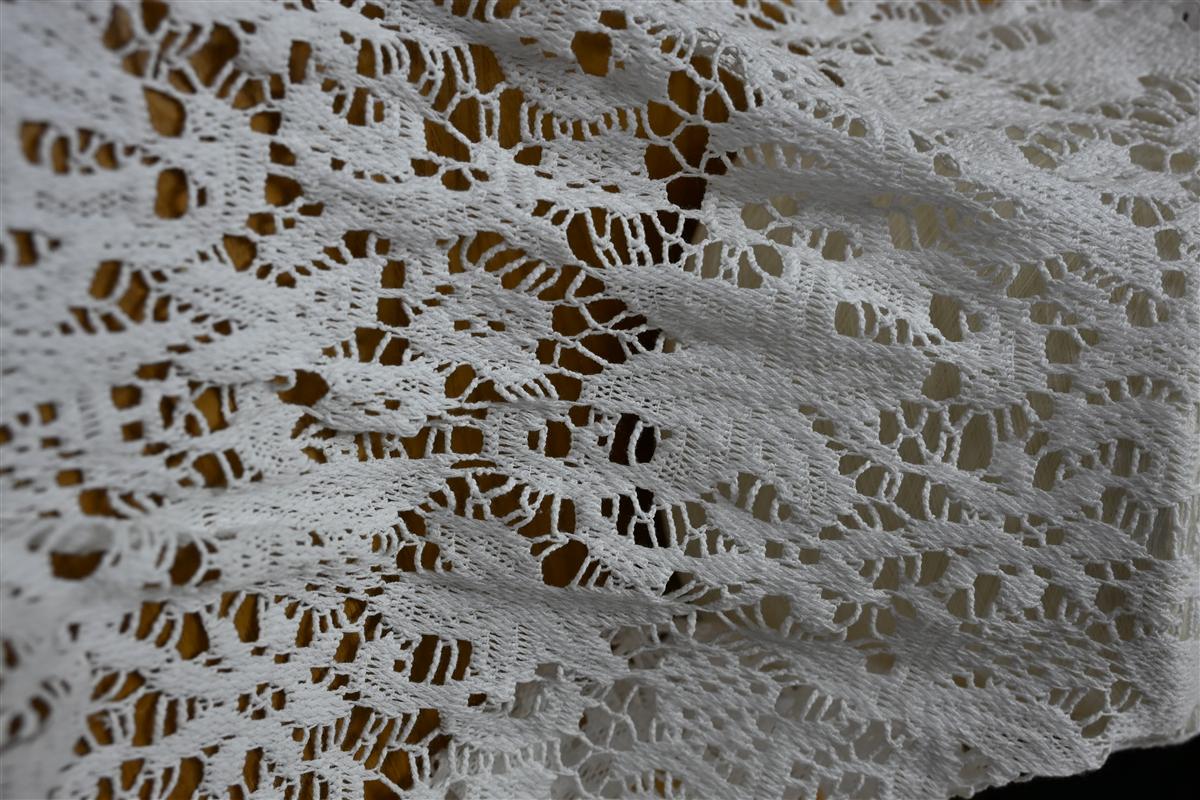
Die in den meisten Chanel-Style-Tweeds verwendete Kombination ist eine Wollkette mit unterbrochenen metallischen Kettfäden plus ein Bouclé-Schuss mit metallischen Slubs. Diese Struktur erzeugt das verstreute, unregelmäßige Funkeln, das metallischen Tweed von gleichmäßig glänzendem Brokat unterscheidet. Der Metallanteil ist eine Designentscheidung auf Garnebene und wird im Spezifikationsblatt fixiert, bevor die Kette eingezogen wird. Eine Weberei, die die Metallplatzierung mitten im Auftrag ändert, zieht die Kette neu ein – deshalb gehört die Platzierung in die Musterfreigabe und nicht in die Serienprüfung.
Die Einbindung des Metallicgarns treibt auch die Kosten. Ergänzendes Metallic-Schussgarn läuft von einem Seitengatter und lässt sich zwischen Bestellungen mit minimaler Umrüstung ergänzen oder entfernen. Metallische Kettfäden belegen einen Anteil am Riet und am Kettbaum und binden die Webstuhleinstellung für die gesamte Partie. Einkäufer, die im Lagerversuch metallischen Glanz wollen, starten meist mit Metallic nur im Schuss und wechseln erst zur vollständigen Einbindung in Kette und Schuss, wenn das Design fixiert ist.
Der Bouclé-Schuss trägt seine eigene Feinheit. Bouclé-Garne bestehen aus einem Kern, einem Effekt und einem Binder, und metallische Noppen können in die Effektkomponente eingedreht werden, sodass der Glanz auf den Schlingenspitzen landet und nicht im Stoffgrund. Deshalb wirkt metallisches Bouclé wie verstreute Glanzlichter statt wie eine massive glänzende Fläche. Die Schlingenbildung selbst, einschließlich der Frage, wie Effektgarn-Übervorschub die Schlingen erzeugt, ist in unserem wie Bouclé-Schlaufen gebildet werden Leitfaden, und dieselbe Overfeed-Mechanik entscheidet, wo der metallische Slub auf der fertigen Warenoberseite sitzt.
Spannungskontrolle und Fadenbruch
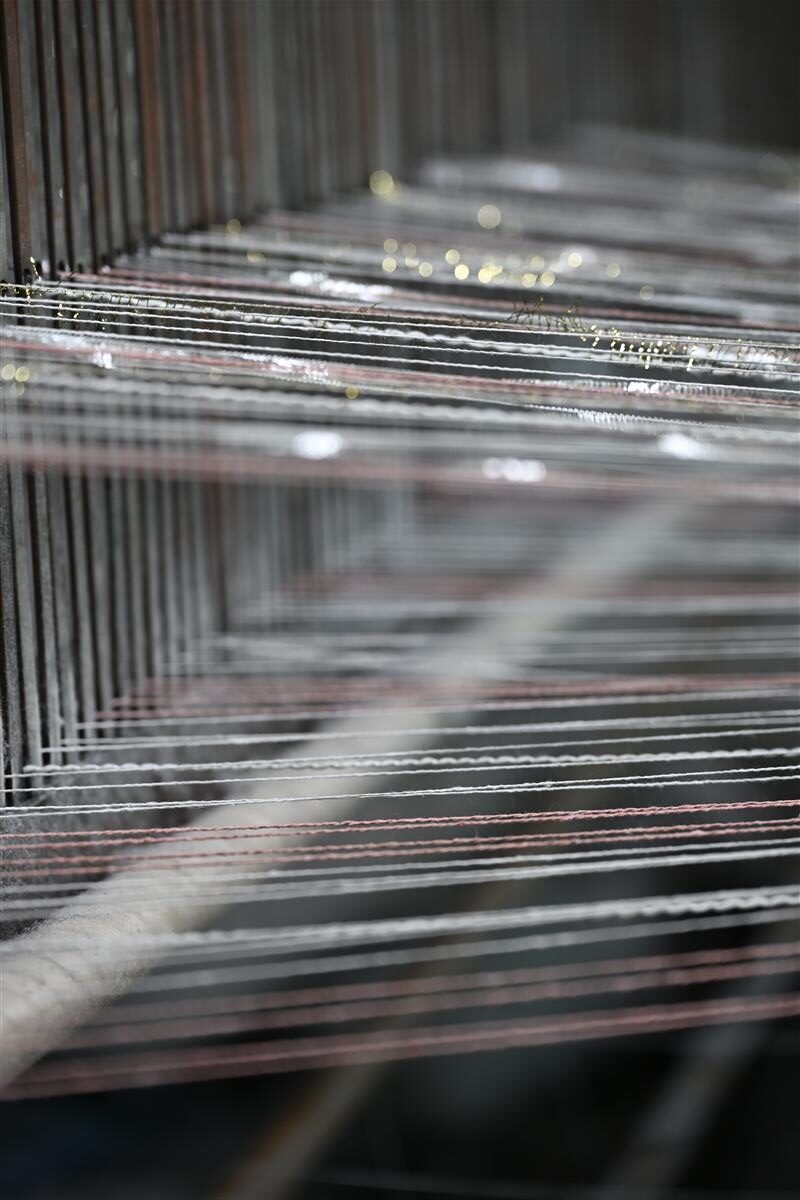
Metallic-Garne dehnen sich anders als Wolle, und dieser Unterschied ist die Wurzel der meisten Webfehler. Wolle dehnt sich unter Spannung deutlich und erholt sich wieder. Metallic-Filmgarnen dehnen sich weit weniger, bevor die metallisierte Schicht dauerhaft verformt wird. Auf einer Webmaschine mit mehreren hundert Schuss pro Minute erzeugt die Fehlpaarung zwei Fehlerbilder: Metallic-Garn reißt, wenn die Wollspannung während der Fachbildung spitzt, und gedehntes Metallic-Garn erzeugt lockere, wellige Stoffpartien, die die Prüfung nicht bestehen.
Die Lösung ist differenzielle Spannung. Bei Fursone läuft das Gatter, das das Metallgarn zuführt, mit geringerer Spannung als die Wollkette, sodass sich das Metallgarn in die Bindung einlegt, ohne über seine Dehngrenze gezogen zu werden. Produktionsaufzeichnungen zeigen, dass die Fadenbrüche bei korrekt gespanntem Metallgarn im Vergleich zu einheitlichen Spannungseinstellungen deutlich sinken, was Abfall reduziert und die Serienkonstanz verbessert. Ein Lieferant, der Metallgarn mit derselben Spannung wie Wolle verarbeitet, spart keine Zeit; er legt die Fadenbrüche schon im Auftrag an.
Buyers can audit this without visiting the floor. Ask how the mill tensions metallic yarn relative to the wool warp, and ask what the breakage rate was on the last metallic production lot. If the answer is “same as normal yarn,” the mill has not tuned for metallic, and the risk lands on your delivery date and your defect allowance.
Was sich in der Weberei ändert
Metallic-Garn verändert drei Dinge in der Weberei: Geschwindigkeit, Wartung und Kettvorbereitung. Garne mit Drahtkern erzwingen reduzierte Laufgeschwindigkeiten, weil die Metalloberfläche bei jedem Schuss gegen das Riet schleift. Dasselbe Riet, das bei reinen Wollprogrammen jahrelang hält, zeigt bei Metallic-Läufen messbaren Verschleiß – deshalb widmen Webereien, die regelmäßig Metallic weben, dem Arbeiten eigene Webstühle und Riete, statt sie über die ganze Fläche zu rotieren.
Die Kettvorbereitung ist wichtig, bevor der Webstuhl startet. Metallische Kettfäden müssen mit ihrem eigenen Spannungsprofil auf den Kettbaum gewickelt werden, und der Baum muss vor Webbeginn auf beschädigte Fäden geprüft werden. Ein einzelner beschädigter Metallfaden, der bei der Kettvorbereitung nicht markiert wird, wird zu einem wiederkehrenden Fehler über die gesamte Länge der Rolle. Bei einem 300-Meter-Custom-Lauf ist das kein kleiner Fehler; es ist ein 300-Meter-Problem, das die Inspektion am Ende findet.
Auch die Ausrüstung ändert sich. Metallische Filamentgarne verhalten sich unter Hitze und Druck anders als Wolle, und Ausrüstungen wie Dekatieren und Krabben können eine schlecht gebundene Metallschicht abplatzen lassen. Garne auf BoPET-Basis widerstehen dem besser als Lurex — deshalb zeigt sich die Wahl der Garnfamilie erneut in der Ausrüstungsleistung, nicht nur am Webstuhl. Unsere Arten von Metallic-Tweed-Garnen und ihre Pflege Leitfaden behandelt die Seite des fertigen Gewebes bei dieser Entscheidung.
Qualitätskontrollpunkte für Metallic-Tweed
Metallanteil verändert die Qualitätshürden, die ein Einkäufer erwarten sollte. Pilling steht an erster Stelle. Metallfolie oder -draht können unter Reibung die umliegenden Wollfasern abschmirgeln, deshalb wird die Pillingnote an der metallhaltigen Konstruktion gemessen und nicht an der Grundwolle. Fursone hält bei seinen metallischen Tweed-Qualitäten ISO 12945-2 Note 3-4, und der Prüfbericht muss aus der Produktionspartie stammen, nicht aus einem früheren Muster.
Die Konstanz der Färbepartie ist die zweite Hürde. Metalldichte und Farbtiefe der Grundfarbe können zwischen Partien abweichen, und bei Programmen, deren Bekleidungsteile aus mehreren Rollen zugeschnitten werden, werden solche Abweichungen zu sichtbaren Retouren. Custom-Aufträge mit Metallic sollten in einer einzigen Färbepartie auf demselben Webstuhl-Setup laufen. Ein Programm mit 200 Kleidern und einem Verbrauch von 400-600 Metern Metallic-Tweed passt in einen Custom-Auftrag ab 300 Metern, was die richtige Stufe ist, da der gesamte Bedarf als eine Partie läuft.
Die Prüfung ist das dritte Tor. Bruchfehler an metallischen Fäden verstecken sich in der Textur, deshalb muss die Prüfung darauf trainiert sein, nach fehlenden Metallfäden zu suchen, nicht nur nach Farb- und Webfehlern. Ein 4-Punkte-Prüfprotokoll, das Metalllücken als Hauptfehler zählt, erkennt, was eine übliche farborientierte Prüfung übersieht. Wenn Sie die Prüfung mit der Weberei verhandeln, benennen Sie Fehler durch Metalllücken ausdrücklich in den AQL-Kriterien.
Spezifikationen und Zeitpläne für Bestellungen mit Metallic-Garnen
Metallic-Tweed folgt demselben Bestellgerüst wie jeder individuelle Stoff, nur mit zusätzlichen Spezifikationsfeldern. Beginnen Sie mit der Garnfamilie: Lurex, BoPET oder Wire-Core, sowie dem Metallanteil in der Oberfläche. Geben Sie die Platzierung an: nur Schuss, Kette oder Kombination. Geben Sie das Basiswollgewicht in GSM und die fertige Breite in Zentimetern an. Geben Sie die Ziel-Pillingnote an und fordern Sie den Prüfbericht aus dem Produktionslos.
Die Zeitpläne bei Fursone halten die Standard-Gates ein. Muster kommen in 7 Tagen zurück, mit drei Waschzyklen im Vorfeld zu Einlauf, Pilling und Farbechtheit, auf Basis einer Garnbank mit über 200 vorgefärbten Farbstellungen. Custom-Serien laufen 4–6 Wochen nach Musterfreigabe. Lagerware wird in 3–7 Tagen ab 100-m-Rollen versandt. Metallgarne ändern diese Zeitfenster nicht, denn die Spannungseinstellung gehört zur Standard-Webstuhlkonfiguration und ist kein Sonderprojekt.
Eine Zeitplanregel sei wiederholt: Platzierung und Dichte von Metallicgarn müssen bereits in der Musterphase fixiert werden. Ein Wechsel des Metallicgarns oder seiner Platzierung nach Produktionsstart bedeutet Umschären und Neujustieren der Spannung – deshalb sollte die Musterfreigabe eine schriftliche Spezifikation von Garnfamilie, Platzierung und Dichte enthalten. Unser in der Partnerweberei in Wenzhou mit 300 Webstühlen Durchlauf zeigt, wie die Prüfstufen von Anfang bis Ende funktionieren, und die garngefärbter vs. stückgefärbter Tweed Vergleich erklärt, wie sich Metallic-Garne in den einzelnen Färbeverfahren verhalten.
Die Faserauszeichnung ist der letzte Spezifikationspunkt, und sie ist eine gesetzliche Vorgabe. Gemäß 16 CFR 303, die FTC-Vorschrift zur Faserkennzeichnung, Metallfaser ist eine anerkannte generische Faserbezeichnung, die im Faseranteils-Etikett erscheinen muss. Ein Tweed mit Metallgarn ist nicht 100 % Wolle, und das Etikett muss das ausweisen. Käufer, die in die USA importieren, sollten vor dem Versand bestätigen, dass das Faseranteils-Etikett der Weberei mit der Rechnung übereinstimmt, denn Etikettierungsfehler fallen beim Zoll und bei der Compliance-Prüfung im Handel auf.
Häufig gestellte Fragen
Woraus besteht Metallic-Garn?
Metallic-Garn ist meist eine metallisierte Folie, in der Regel Polyesterfolie mit Aluminiumschicht, zu Bändchen geschnitten. Varianten mit Drahtkern wickeln Metallfasern um einen textilen Kern.
Kann metallisches Garn auf einem Webstuhl mit Motor gewebt werden?
Ja, mit differenzierter Spannung und reduzierter Geschwindigkeit bei Garnen mit Drahtkern. Webmaschinen weben täglich Metallic-Tweed; die Weberei muss die Spannung auf die jeweilige Garnfamilie abstimmen.
Warum reißt metallisches Garn beim Weben?
Metallic-Folie dehnt sich weit weniger als Wolle, bevor sie dauerhaft verformt wird. Wenn die Spulengatter-Spannung der Wollspannung entspricht, reißt das Metallic-Garn, sobald die Fachbildung die Spannung spitzenmäßig anhebt.
Was ist der Unterschied zwischen metallischem Garn aus Lurex und Mylar?
Lurex ist metallisierte Polyesterfolie – günstiger und glänzender. BoPET-Garne vom Mylar-Typ halten Farbe besser und widerstehen dem Abblättern beim Dekatieren und Krabben.
Beeinflusst der Metallanteil die Pilling-Note?
Ja. Metallische Folie oder Metallfäden scheuern an den umliegenden Wollfasern, deshalb muss die Pillingnote auf der metallischen Konstruktion gemessen werden. Fursone hält ISO 12945-2 Grad 3-4 bei metallischen Tweed-Linien.
Fazit
Das Weben von Metallic-Garnen auf Webmaschinen ist ein gelöstes Problem, wenn die Weberei es als solches behandelt: die passende Garnfamilie für das Design wählen, sie im Schuss, in der Kette oder in beiden platzieren, die Spannung getrennt von Wolle einstellen und auf die Fehler prüfen, die Metallic-Garne tatsächlich erzeugen. Die Garnfamilien sind Lurex für Kosten und Glanz, BoPET für Farbstabilität und Ausrüstungsbeständigkeit und Wire-Core für Couture-Glanz mit entsprechenden Produktionskosten.
Wenn Sie ein Programm für metallischen Tweed planen, kann Fursone die Garngruppe, die Platzierung und die Dichte in einer Spezifikation festhalten und innerhalb von 7 Tagen ein Muster aus der Produktion in Wenzhou liefern. Unsere Chanel-Stil-Tweed-Kollektion deckt das komplette Metallic-Sortiment auf mehr als 300 Webstühlen ab. Angebot anfragen mit Ihrem gewünschten Metallic-Effekt und dem Gewicht des fertigen Kleidungsstücks, und wir bestätigen die Webstuhl-Einstellung und den Testplan, bevor Sie Geld in die Musterung investieren.
Informationen zu häufigen Webfehlern und zur Vermeidung von Noppen, Fehleinträgen und Flottierungen finden Sie unter häufige Webfehler und wie man Noppen, Fehleinträge und Flottierungen vermeidet.

Verwandte Einblicke

Farbfreigabe ohne Überraschungen: Lab Dips, Webzustand und Lichttisch
Color is the most common reason a tweed bulk run disappoints. Not because mills cannot...

Fulling and Finishing: The Mill Steps That Change Tweed’s Hand Feel
Two tweeds can leave the loom with identical yarn, identical weave and identical weight, and...

Garment Dyeing vs Piece Dyeing: Cost, Color Control and When Each Wins
Garment dyeing, dyeing the finished garment instead of the fabric roll, has quietly become a...