

Een klein dameskledinglabel in Zuidoost-Azië kwam bij ons met een probleem dat op een ontwerpfout leek, maar een fout in de stofspecificatie bleek. Hun bestverkochte tweed blazer - een cropped model met één knoop, gericht op vrouwen onder 160 cm - hing stijf op het lichaam. Klanten klaagden dat het jasje boxy en onflatteus oogde. Het designteam had alles geprobeerd, van het hertekenen van het patroon tot het toevoegen van coupenaden, maar het fundamentele probleem was de stof zelf.
Het probleem: 480 GSM tweed op een klein postuur
The label had been sourcing a 480 GSM woolen tweed for their blazer line. At 480 grams per square meter, this is a substantial, heavyweight fabric — appropriate for a men’s overcoat or an oversized unstructured jacket. On a petite frame, however, the same fabric creates bulk at the shoulders and waist that no amount of pattern engineering can fully resolve. The fabric’s bending length (a measure of stiffness) was measured at 48 mm on the cantilever test, well above the 30-35 mm range that produces a flattering drape on a close-fitting garment.
The brand’s designer described the issue as the jacket “standing away from the body instead of following it.” This is exactly what happens when the fabric’s flexural rigidity exceeds what the garment’s geometry can manage. On a larger frame, the same fabric drapes adequately because the panels are wider and the curves are gentler. On a petite frame, the shorter panel lengths and tighter curves amplify the stiffness.
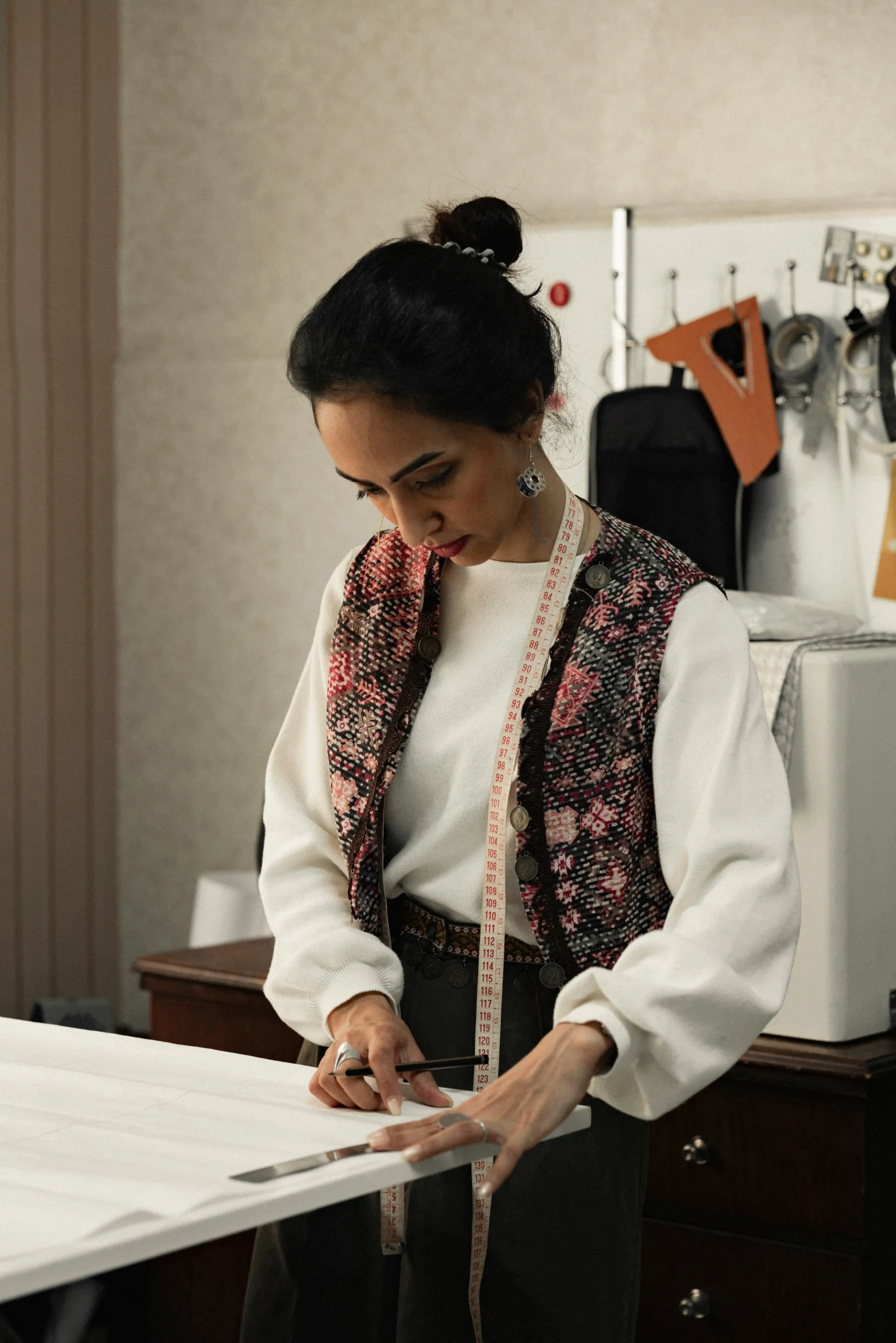
De oplossing: verlagen naar 380 GSM met een dichtere binding
Ons advies was om het stofgewicht te verlagen van 480 GSM naar 380 GSM met behoud van dezelfde garensamenstelling (85% wol, 10% polyamide, 5% viscose voor de inslag). Alleen de gewichtsverlaging zou de drape al verbeteren, maar we hebben ook de weefdichtheid opgevoerd van 22 inslagen per centimeter naar 26 inslagen per centimeter. Dat leverde een stof op die lichter maar stabieler was - de dichtere binding voorkwam dat de lichtere stof slap aanvoelde of zijn tweedtextuur verloor.
The 380 GSM version measured 33 mm on the cantilever test — within the target range for a structured but supple drape. The bending rigidity dropped by approximately 35%, which translated to a visible softening of the jacket’s silhouette on the body. The cropped hem, which had previously stood slightly away from the hip, now followed the body’s contour.
Tijdlijn bemonstering: 7 dagen van briefing tot goedgekeurd monster
Het label wilde het verschil zien en voelen voordat het zich aan een wijziging in de bulkorder vastlegde. We maakten drie lab dips in hun bestaande kleurcombinaties (antraciet, camel en ivoor) op 380 GSM, lieten van elk 5 meter weven en stuurden de monsterset binnen 7 dagen na ontvangst van de oorspronkelijke brief. Deze doorlooptijd is standaard voor onze programma voor maatwerkproductie, die is opgebouwd rond de beperking dat kleine labels niet 6-8 weken kunnen wachten op een stofmonster.
The label’s designer approved the charcoal 380 GSM sample within 48 hours of receipt. She noted that the hand feel was “noticeably softer” and that the fabric “moved with the body” when draped over a dress form. The camel and ivory were approved two days later after minor shade adjustments to match the existing bulk in the other colorways.
Resultaten van bulkorders: retourpercentage en klantfeedback
The label switched their entire cropped blazer line to 380 GSM tweed for the following season. The results were measurable: the return rate for the blazer dropped from 14% to 6%, with the most common previous return reason — “stiff and boxy fit” — essentially eliminated. Customer reviews mentioned “much more comfortable” and “actually fits my body shape” at three times the previous frequency.
De kostenimpact was minimaal. De 380 GSM-stof gebruikte 21% minder vezels per meter, wat het extra aantal inslagen van het dichtere weefsel compenseerde. De prijs per meter daalde met ongeveer 8%, en het snijrendement van het kledingstuk verbeterde licht doordat de lichtere stof gemakkelijker te snijden was op een spreidlaag met minimale verschuiving.
Lessen voor andere petite- en nauwsluitende kledingmerken
De bredere les is dat stofgewicht een ontwerpparameter is, niet alleen een kostenparameter. Een GSM-verandering van 100 punten — van 480 naar 380 — transformeerde de prestaties van het kledingstuk op het beoogde lichaamstype zonder het patroon, de samenstelling of de visuele identiteit van de stof te veranderen. Merken die tweedkleding voor petite- of nauwsluitende silhouetten ontwikkelen, moeten prototypen maken met 350-400 GSM voordat ze standaard kiezen voor zwaardere constructies.
Voor merken die soortgelijke specificatie-uitdagingen aangaan, onze stofmonster-vergelijkingsservice laat u meerdere GSM-opties naast elkaar testen voordat u zich vastlegt op bulk. textilelearner.net’s gids voor stofinspectie zorgen ervoor dat de GSM die u specificeert, de GSM is die u bij elke rol ontvangt.
Als uw tweedkleding niet valt zoals uw ontwerpen bedoelen, is het stofgewicht mogelijk de variabele die u als eerste moet testen. Neem contact op met ons team met uw huidige GSM en kledingtype, en wij sturen u binnen 7 dagen een vergelijkend stalenpakket.
Veelgestelde vragen over GSM en val
Welk GSM-bereik werkt het beste voor getailleerde tweedjasjes?
Voor getailleerde en petite tweedjasjes biedt 350-400 GSM de beste balans tussen structuur en val. Zwaardere gewichten (450-550 GSM) werken voor oversized of ongestructureerde silhouetten waarbij de stof zijn eigen vorm moet behouden in plaats van het lichaam te volgen.
Maakt een lagere GSM de stof minder duurzaam?
Niet noodzakelijk. Duurzaamheid hangt meer af van weefdichtheid en garentwist dan van alleen GSM. Een 380 GSM tweed geweven met 26 inslagen per centimeter kan een 450 GSM stof geweven met 20 inslagen per centimeter overtreffen in slijtvastheid. De sleutel is om zowel gewicht als weefdichtheid samen te specificeren.
Kan ik verschillende GSM-opties testen voordat ik in bulk bestel?
Ja. De meeste weverijen bieden stalenpakketten aan met meerdere GSM-opties in dezelfde kleurstelling en samenstelling. Een monster van 5 meter in elk gewicht is doorgaans voldoende om een valvergelijking op een paspop te maken en de specificatie te finaliseren vóór de bulkbestelling.
Een uitgewerkt voorbeeld van leveranciersconsolidatie op fabrieksniveau, de casestudy over consolidatie naar zes leveranciers doorloopt de cijfers.
Meer informatie: Tweed stoffengids · Ontdekken Chanel-stijl Tweed. Heeft u monsters nodig? Vraag gratis stalen aan.

Gerelateerde inzichten
Casestudy: Tweedlijn behaalt ISO-graad 4-pillingresultaten in bulk.
A UK outerwear brand came to us with a pilling problem wearing a quality-gate costume:...
Case Study: Startup Brand’s Two-Phase MOQ Strategy: Stock First, Custom Later
A two-person womenswear label came to our desk last year with a collection pinned on...
Case Study: Startup Brand’s Two-Phase MOQ Strategy: Stock First, Custom Later
The most expensive mistake a startup fabric buyer makes is ordering custom fabric for a...