
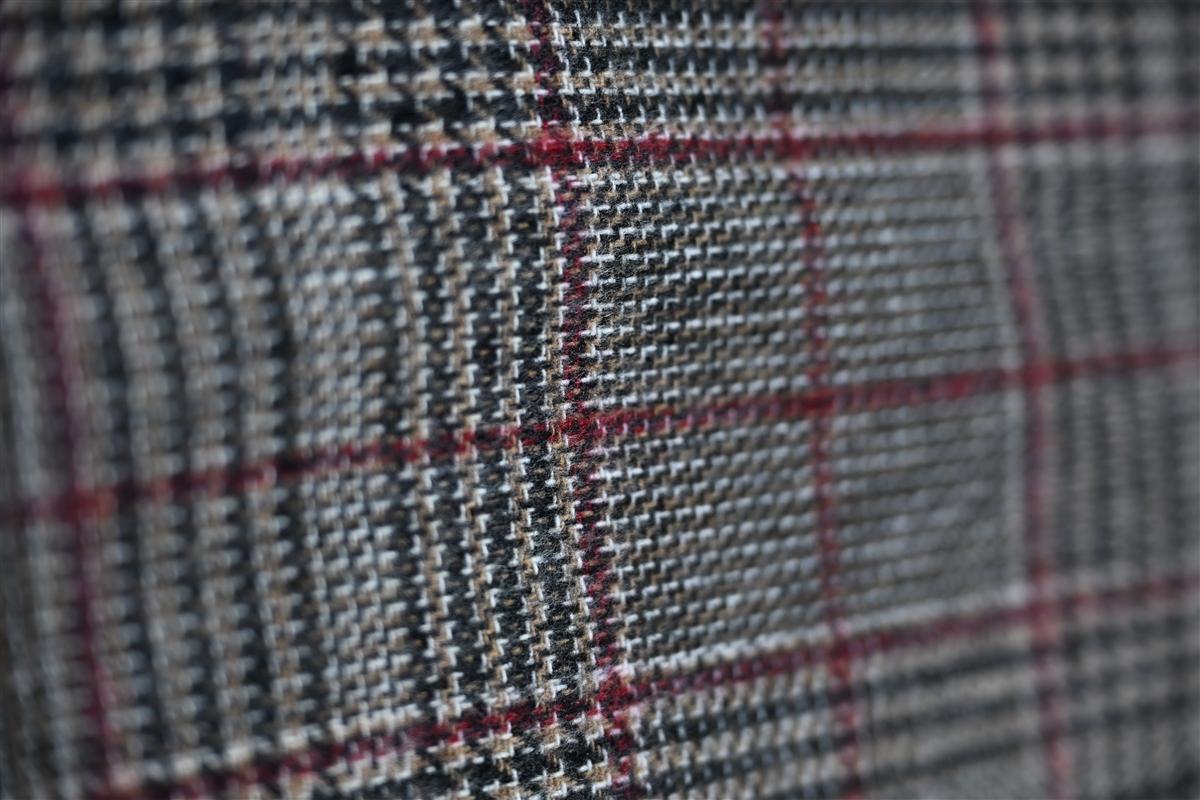
If the rolls have no tickets and the account changes with every email, treat the offer as unverified stock rather than deadstock until the seller puts one version of the story in writing and proves it against the cloth you are being asked to buy. Before money moves, ask for a dated provenance statement, a roll by roll list with measured usable metres, a signed replacement ticket carrying your own order number, full width samples cut from the actual rolls in the lot, and fibre composition confirmed by a quantitative test instead of a verbal assurance. Then hold payment until the evidence matches the goods. Missing roll tickets are common on genuine old stock. Missing verification is not, and that difference is the whole negotiation.
Freeze the Story Before You Talk About Money
A shifting account is not automatically a lie. It is what happens when someone reconstructs a story from memory instead of reading it off a record. Records produce the same answer twice. Reconstructed stories drift, and they drift towards whatever the listener seems to want. So stop gathering answers in conversation and start closing the account down in writing.
Ask for one provenance paragraph that answers a fixed set of questions: which mill and which site wove the cloth, which finishing house handled it, the year or season it was made, why it became surplus, who has owned it since it left the loom, and where it has been sitting. Ask for it dated and signed by the person who is accountable for it inside their company, not by whoever writes the friendliest emails.
Then run the comparison yourself. Put the last three messages and the new statement side by side and list every number and every name that moved: metres offered, roll count, composition, origin, years in storage. A figure that moves once may be a correction. A figure that moves in the same direction each time you push may be a figure being managed. Ask the same question twice, a fortnight apart, phrased differently and from a different angle, and keep your own preference out of the way while you do it.
Finally, send your own summary back and ask them to confirm or correct it line by line. Silence is not confirmation. If nobody in the business will put a single version of events on paper, you are not buying documented deadstock. You are buying an unidentified cloth with a good story attached, and it should be priced as one.
Sort What Can Be Missing From What Must Be Proven
Old stock genuinely loses paper. Rolls get separated from their tickets when a store is cleared, the original customer name is often confidential, dye lot labels fall off, and the original test report may have been filed by someone who left the company years ago. None of that, on its own, means the lot is bad.
What is never acceptable is a refusal to verify. A seller who will not measure the rolls on live video or in front of you, who will not cut a sample from the stock being sold, who cannot say which building the cloth has been sitting in, or who will not put composition, width and weight into the order confirmation is not protecting a confidential client. They are protecting themselves. Paper can be rebuilt. Verification cannot.
Establish who is actually selling. A mill, a converter, a jobber and a trader all look the same in an email signature, and the provenance chain is longer than you think when the goods are being brokered rather than owned. Ask who holds title to the rolls at this moment and who carries the risk between their warehouse and yours. If the answer involves a third party, your documents should show that third party.
Where the original tickets are gone, a replacement schedule is the practical substitute. Insist that the new document is built for your use rather than theirs: your order number on every line, a unique roll number, measured usable length, measured width, shade reference, roll count, the date of measurement, and the initials of the person who held the tape. Ask for a photograph of each tagged roll end, taken with the tag visible.
Be clear about what that replacement ticket proves. It documents the condition and quantity of the goods on the day they were measured. It does not prove who wove them. Keep those two ideas in separate columns of your own file, or you will end up repeating the seller’s story as though it were your own evidence.
Take the Sample Set From the Stock, Not From the Archive
A handsome archive swatch proves that the mill once made something like this. It does not prove that the lot in the warehouse is that cloth. Ask for full width cuts, selvedge to selvedge, taken from several rolls, and pick rolls that come from different pallets or different corners of the store rather than the three at the front of the rack.
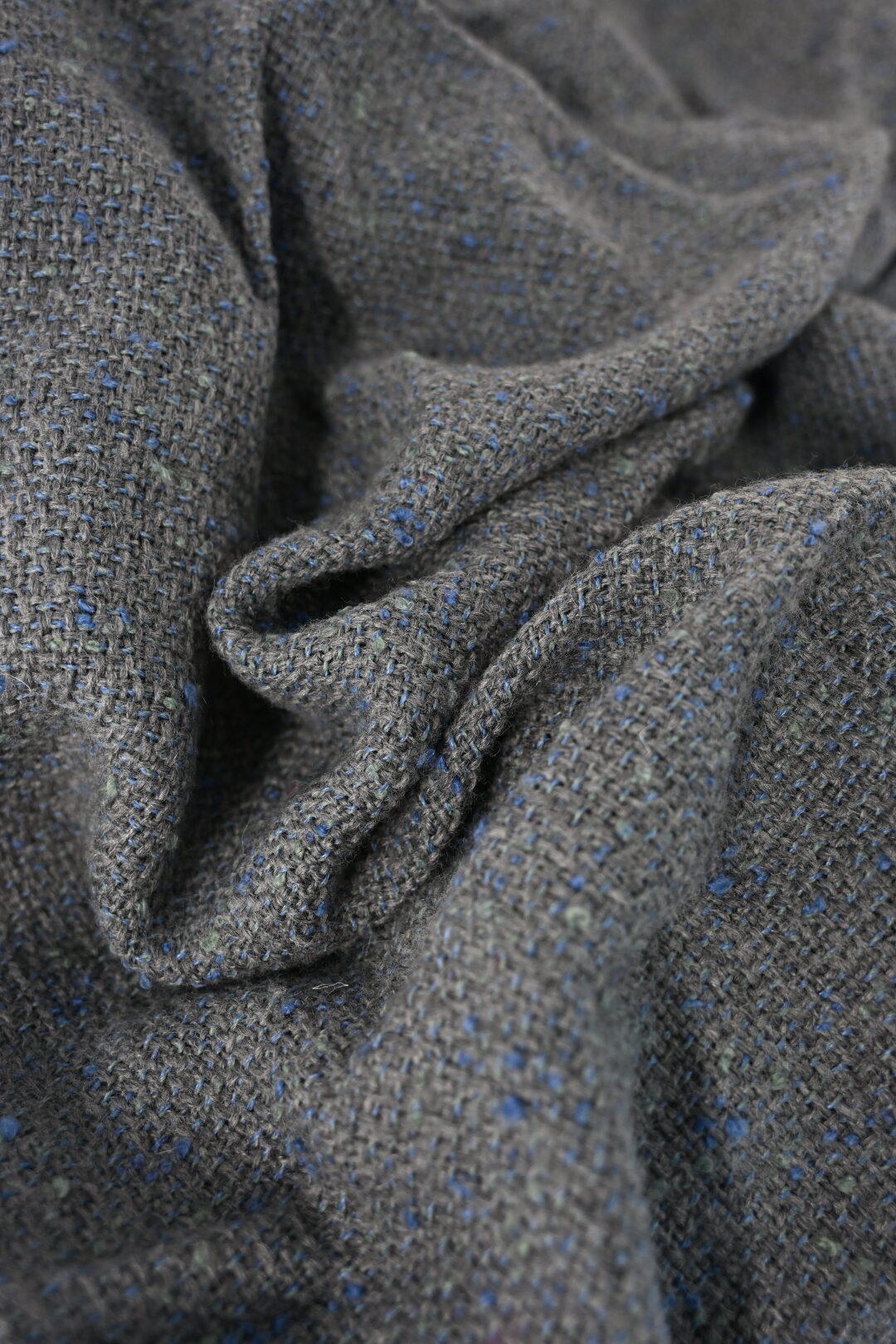
Cut big enough to see the repeat, feel the hand, fold the cloth and press it. A ten centimetre square tells you colour and almost nothing else. Ask for pieces from both ends of a roll as well as the middle, because two ends of the same cloth can differ in width, shade and handle after years in storage, and you would rather find that out at the desk than at the cutting table.
Tweed is a family of woven wool cloths rather than one fixed specification, which is exactly why a name on a price list is not a substitute for a composition figure. That distinction matters here more than in ordinary buying, because in a limited drop the fabric story is part of what you are selling.
Testing has limits worth knowing before you rely on it. A burn test can suggest which fibre families are present. It cannot quantify a blend, and two cloths with very different wool shares can behave similarly under a flame, particularly if a finish sits on the surface. If the drop depends on wool content, the answer is a quantitative fibre analysis from a laboratory, run on samples drawn from more than one roll.
Then put the claim into the paperwork. In many markets, textile products placed on the market must carry accurate fibre composition and origin information, and the duty usually lands on whoever puts the finished garment on sale rather than on the mill that wove the cloth. If you cannot substantiate a percentage, you cannot print it, and an email from a seller is not substantiation. The paper trail that supports a fibre claim is worth assembling before the fabric is cut, not after the first customer asks.
Turn Verified Metres Into the Drop Size, Then Set the Date
The figure you need is not “about three hundred metres”. It is the measured usable length of each roll after the damaged outer turns, the compressed inner end and any splice have been taken out. Ask how the number was produced as well: a tape run along the cloth, a roll weight converted through the GSM, or a measuring counter each carry a different error, and the method is what you will argue about when the shortfall appears.
Once you have measured lengths and measured widths, do the arithmetic in the right order. Fit the style to the narrowest usable width rather than the average, deduct the metres your marker cannot use, and hold a reserve for defects and remakes inside the plan instead of discovering it halfway through the run. The verified total sets the size of the drop. It does not stretch to fit a launch plan you wrote first.
Decide the shade policy before anything is cut. If the rolls came from more than one original dye lot, choose now between a single shade drop, where some rolls may simply not be usable, and a shade graded drop, where each garment stays on one roll. A limitation the customer can see is a design decision. The same limitation discovered mid run is a fault, and it will read as one in every review of the collection.
Set the drop date after the inspection, never before. An announced date is a lever the seller can use on you, and it takes away your cheapest option, which is walking away while nothing is at stake. Agree the walk away point too: the minimum usable metreage below which you do not proceed, and the price adjustment you will accept between that figure and the quantity originally promised. Both numbers should be written down before you are standing in the warehouse with a launch calendar in your pocket.
Write “Limited” Into the Agreement, Not Only the Caption
Limited is a promise to your customers, and it needs to mean something specific in your purchase agreement or the seller can dismantle it without breaking a single rule. Define four things: the quantity cap, the territory, the time window, and whether the mill may sell the same stock to another brand before your release closes.
Ask directly whether you are being offered a reserved quantity or an exclusive. If it is an exclusive, for how long, in which markets, and does it survive the seller advertising the remainder elsewhere as similar cloth? If your drop sells out in two days and you want a second release, what happens to the fabric that is left, and at what price? These are easy questions while the order is still yours to place, and awkward ones afterwards.
Put the condition of the goods into the same document. Either the lot is sold as inspected with the known defects listed, or it is warranted free of undisclosed major faults. Name the inspection window after delivery, and name the remedy if the measured length does not match the list: replacement, price adjustment, or return at the seller’s freight cost. A remedy you did not write down is a remedy you will negotiate from a weak position.
Payment should follow the same logic. A deposit against the measured list with the balance released after you or your agent has seen the rolls is normal for stock of this kind, and it costs a real seller very little to accept. A paid sample cut, ordered and invoiced as a normal purchase, tells you more about the fabric than any page of description. A seller who wants the full amount before any measurement has answered the question for you.
Keep the Verification File Working After the Drop
Whatever you verify now is worth more than one collection. Keep the measured roll list, the photographs of the tagged roll ends, the sample set, any laboratory report you commissioned and the signed provenance statement in one folder, and reference that folder from the purchase order so the connection survives staff changes on both sides.
Leftover metres are the part everyone forgets. If you buy a whole lot and cut only part of it, the remainder becomes undocumented stock in your own workshop the moment the drop closes. Written up properly at intake, the same file lets the next project use those metres without a fresh round of questions, which is the difference between buying mill leftovers and buying problems. Your own workshop ticket should carry your order number, the tested composition and the roll or shade reference, so a garment cut six months later can still be traced back to the measured list.
If you intend to describe the drop as surplus cloth kept out of waste, the claim that will be questioned is the reason the cloth became surplus in the first place. The provenance statement is the document that answers that question, which is one more reason to have it signed while the seller still wants your order.
One last discipline: keep the seller’s claims out of your own marketing copy until the documents support them. A product page can state what you verified. It should not repeat a mill name, a country of origin or a wool percentage that exists only in an email. The rule to hold onto through all of this is simple. Missing paper can be rebuilt. Missing verification cannot. A seller with a real lot will measure the rolls, cut the samples and sign the list, because it costs them an afternoon and wins them an order. A seller with a story will offer you a discount instead. Take the measurement.

Insights Relacionados

Twenty Metres a Month From One Weaving Run?
A blanket order is one total commitment released in parts, and at twenty metres a...

A Name in the Selvedge: What the Edge Can Hold?
A woven name is a construction decision before it is a design decision. On a...
Backup Mill: What to Duplicate, What to Skip?
A backup mill is a second plant, not a second development. A buyer who already...