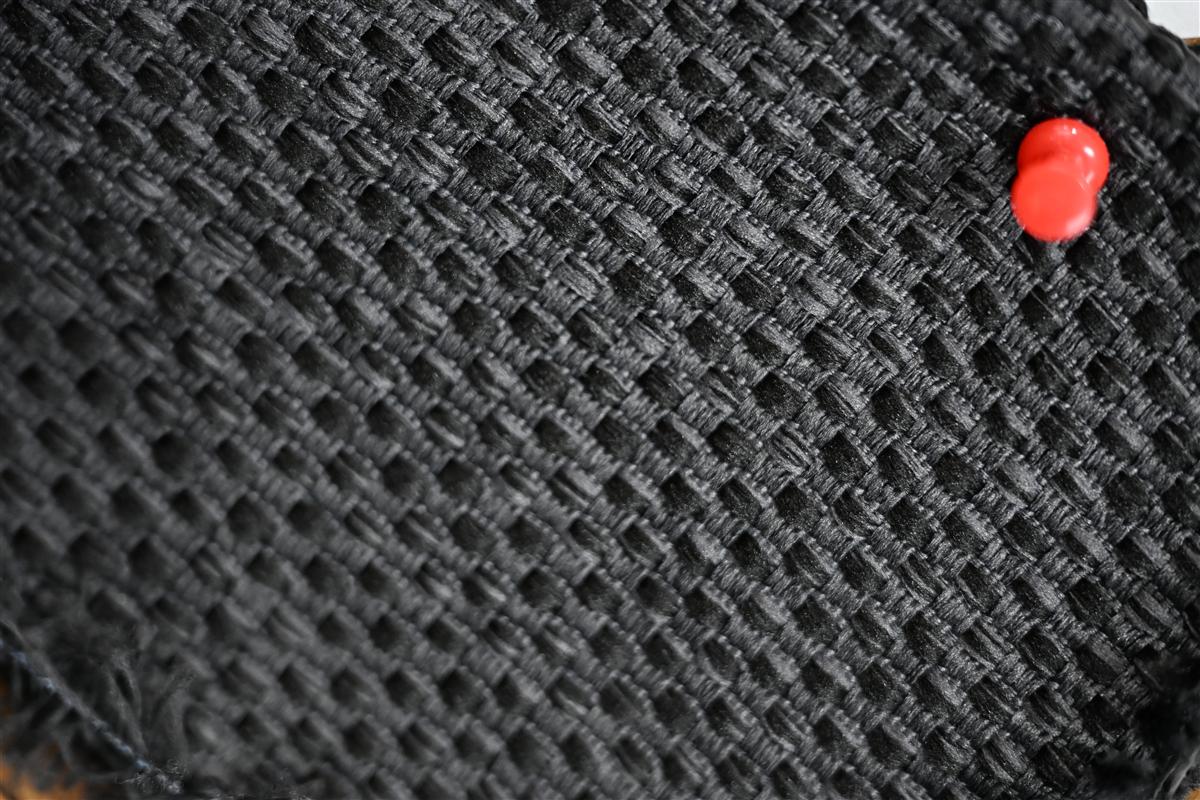
boucl vs tweed cost is the first checkpoint buyers should lock before they approve a supplier, budget, or production slot. An emerging designer researching bouclé vs tweed cost usually has a spreadsheet with a hard $15/m ceiling. The terror is real: order the wrong textile and a first capsule bleeds cash before a single garment sells. The per-meter sticker price, however, is only the bait.
The actual cost gap opens at the minimum order. Bouclé stock fabrics from a mill like Fursone start at 100m—$800 to $2,200 total, shipped in 3-7 days. Custom tweed, even at a “cheap” $5/m, frequently locks you into 1,000m. That’s a $5,000 minimum cash outlay before you see a yard. For a small brand, that’s the difference between a launch and a canceled line. A high-end shoe release recently exposed another trap: tweed uppers demanded 3x extra trimming and cleaning just to stop shedding before finishing. That hidden labor doesn’t appear on any fabric price sheet, yet it devours margins on short-run production.
Bouclé sidesteps that fraying chaos. Samples land in a week, not four to six. The cash commitment stays under $2,500. The price comparison below is about fiber blend and weave density, but the real savings live in what you don’t pay after the bolt leaves the mill.
Price Per Meter: Bouclé vs Tweed
Bouclé achieves softness with 20-40% less fiber weight than tweed—the cost savings are structural, not synthetic.
The sticker price tells you less than the fiber bill. Bouclé runs $8–$22 per meter; tweed spans $5–$30. At the low end of either range, you are buying polyester-acrylic blends with minimal wool. A $5/m tweed contains zero wool. An $8/m bouclé uses hollow polyester to simulate loft. Both fabrics deliver genuine wool hand-feel only above $15–$18/m. Below that threshold, you pay for visual approximation, not textile performance.
Bouclé’s cost advantage is physics, not discounting. The looped, curly yarns trap air inside the weave. That trapped air creates softness and bulk without dense fiber mass. A 380 g/m² bouclé feels as plush as a 500 g/m² tweed. Less raw material per meter cuts fiber cost, shipping weight, and loom time. Tweed, woven tight and flat, earns softness through expensive wool content and higher density—there is no air pocket to do the work for free.
- Wool Percentage: Every 10% increase in wool content adds roughly $1.50–$3.00 per meter to either fabric. A 20% wool bouclé at $10/m jumps to $16–$18/m at 60% wool. Tweed’s baseline wool requirement is higher because its tight weave exposes fiber quality directly—cheap acrylic has nowhere to hide.
- Weave Density (GSM): Bouclé achieves luxury hand-feel at 300–450 g/m². Tweed needs 450–600 g/m² for equivalent perceived quality. Higher GSM means more yarn consumed, longer loom time, and heavier shipping crates. The density gap alone makes tweed 15–25% more expensive to produce at identical fiber content.
- Mill Geography: European mills (Italy, France, UK) command a 30–50% premium over factory-direct Asian production. That premium buys brand heritage, not necessarily better yarn. A $22/m Italian bouclé and a $14/m factory-direct bouclé from Wenzhou can share identical Australian Merino inputs. The price gap is labor cost, energy cost, and brand markup—not raw material quality.
| Fator de Custo | Bouclé | Tweed | Hidden Cost Alert | Vantagem Fursone |
|---|---|---|---|---|
| Price Per Meter (Factory-Direct) | $8 – $22/m (polyester-wool blends) | $5 – $30/m (wool-rich) | Sub-$10 bouclé often uses 100% acrylic → pills within 3 wears. Sub-$12 tweed may shed excessively, tripling trimming labor. | 30–50% below European mills; in-house yarn spinning ensures wool-rich blends at accessible price points. |
| Fiber Composition (Typical) | 50% polyester / 30% acrylic / 20% wool | 80–100% virgin or recycled wool | Mills labeling acrylic as ‘wool-blend’ without percentage disclosure. Always request a fiber-content test report. | Full transparency on blend ratios; GRS-certified recycled polyester and OEKO-TEX compliant dyeing available. |
| Fabric Weight (g/m²) | 300 – 500 g/m² | 350 – 600 g/m² | Heavier tweed (500+ g/m²) drives up shipping weight and per-unit freight cost by 15–25% versus lighter bouclé. | Stock bouclé optimized at 350–450 g/m² — substantial hand-feel without freight penalties. |
| Pedido Mínimo Quantity (Stock) | 100 meters ($800 – $2,200 total outlay) | 1,000 meters ($5,000 – $30,000 total outlay) | Custom tweed MOQ locks pequena marcas into 10x the upfront cash commitment. Deadstock risk if designs don’t sell through. | 100m stock bouclé ships in 3–7 days. Test-market your capsule before scaling to custom programs. |
| Sampling Cost & Lead Time | $5 – $15/swatch; 7-day rapid sampling available | $20 – $50/swatch; 4–6 weeks typical turnaround | Tweed swatches that arrive late or shed excessively can derail a collection timeline and inflate prototype waste by 3x. | 7-day bouclé sampling from stock inventory. Request anti-shed pre-treated swatches to eliminate post-production surprises. |
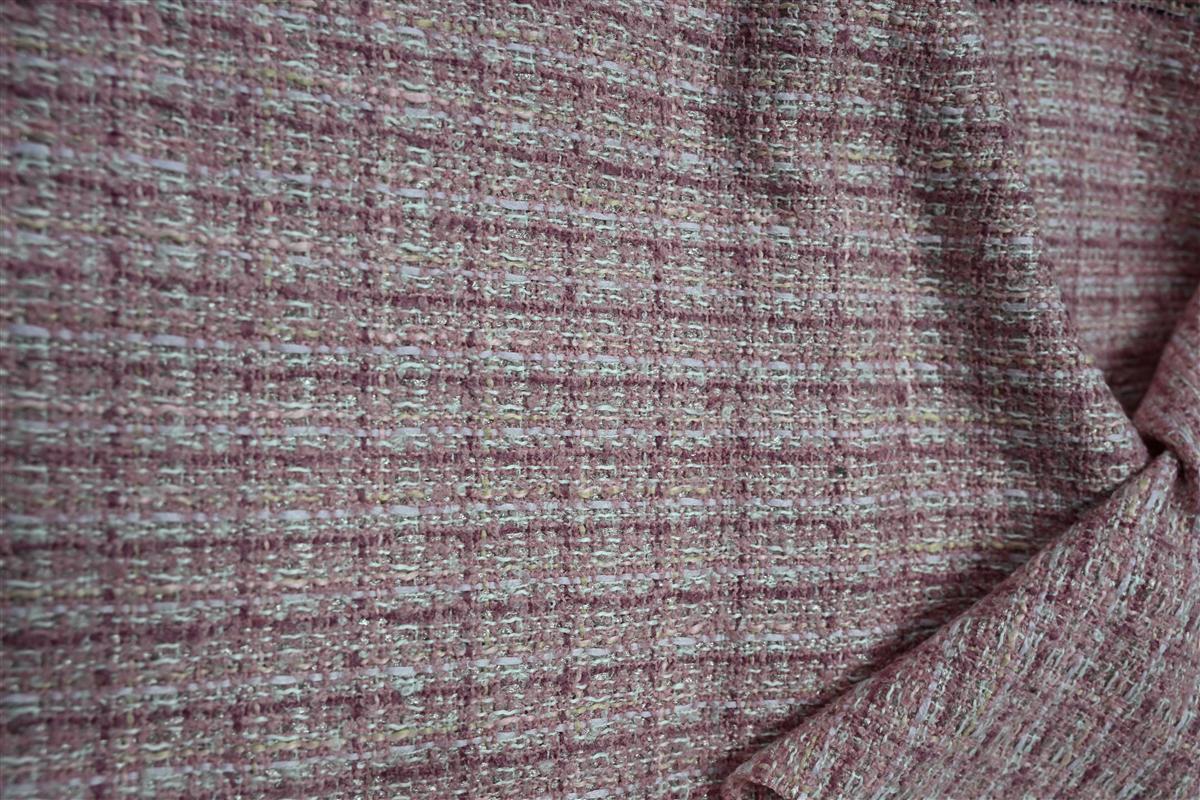
MOQ Showdown: 100m vs 1000m
The $800 vs $5,000 gap isn’t just about quantity — it’s about which risks you can afford to carry.
Most mills operate a two-tier system that emerging designers don’t see until they start emailing suppliers. Stock fabrics — usually bouclé in standard colorways — sit pre-woven in a warehouse. The mill already ate the setup cost, so they sell from as little as 100 meters. Custom tweed weaves are different. Someone has to spin the yarn, program the loom, run trial yardage, and discard the first 30-50 meters that come out wrong. No factory absorbs that cost for a 200-meter order. They quote 1000m because below that threshold, setup eats the entire margin.
- 100m stock bouclé at $8/m (entry polyester-wool blend): $800 total. Ships from Fursone warehouse in 3-7 days. No setup fees, no lab-dip charges.
- 100m stock bouclé at $22/m (premium wool-rich blend): $2,200 total. Same 3-7 day turnaround. Enough for 40-60 garments depending on pattern efficiency.
- 1000m custom tweed at $5/m (basic wool blend, no certifications): $5,000 minimum commitment. 4-6 week sampling cycle before production even begins. Add $150-$300 for lab-dip color matching.
- 1000m custom tweed at $30/m (high-wool content, GRS-certified): $30,000 total outlay. This is European mill territory on pricing, but factory-direct Asian sourcing cuts 30-50% off that number.
- What 100m bouclé buys you: Market testing with minimal exposure. Run 40-60 pieces, gauge buyer response at your stockist appointment, and reorder only what sells. Wrong color? You lose $800, not $8,000.
- What 1000m tweed demands: Confidence in your sell-through. You’re betting on a specific texture, color, and weight before a single buyer sees it. The upside is exclusivity — no other brand has that exact weave. The downside is one slow-selling colorway eating your operating budget for six months.
The $5,000 figure that floats around sourcing forums is a floor, not a ceiling. Add strike-off charges ($100-$200), shipping from Wenzhou to LA or London ($400-$800 for a 1000m roll), and import duties (5-12% depending on fiber composition and trade agreements). A “$5,000 tweed order” lands closer to $6,200 by the time it hits your cutting table. For a designer launching a 6-piece capsule that needs 150-200 meters total, buying 1000m means 800 meters of deadstock. That’s capital frozen in fabric instead of funding lookbook shoots, pattern grading, or trade show fees.
There’s a post-production cost nobody talks about either. A footwear brand documented that their tweed uppers required 3x the trimming and cleaning time versus smooth textiles, purely to control fraying and shedding. For a small atelier paying $25/hour for finishing labor, that translates to real money. Bouclé’s looped yarn structure naturally resists edge fraying. Designers working with complex seam patterns or unlined garments should factor this into the real cost comparison — not just the price per meter on the invoice.
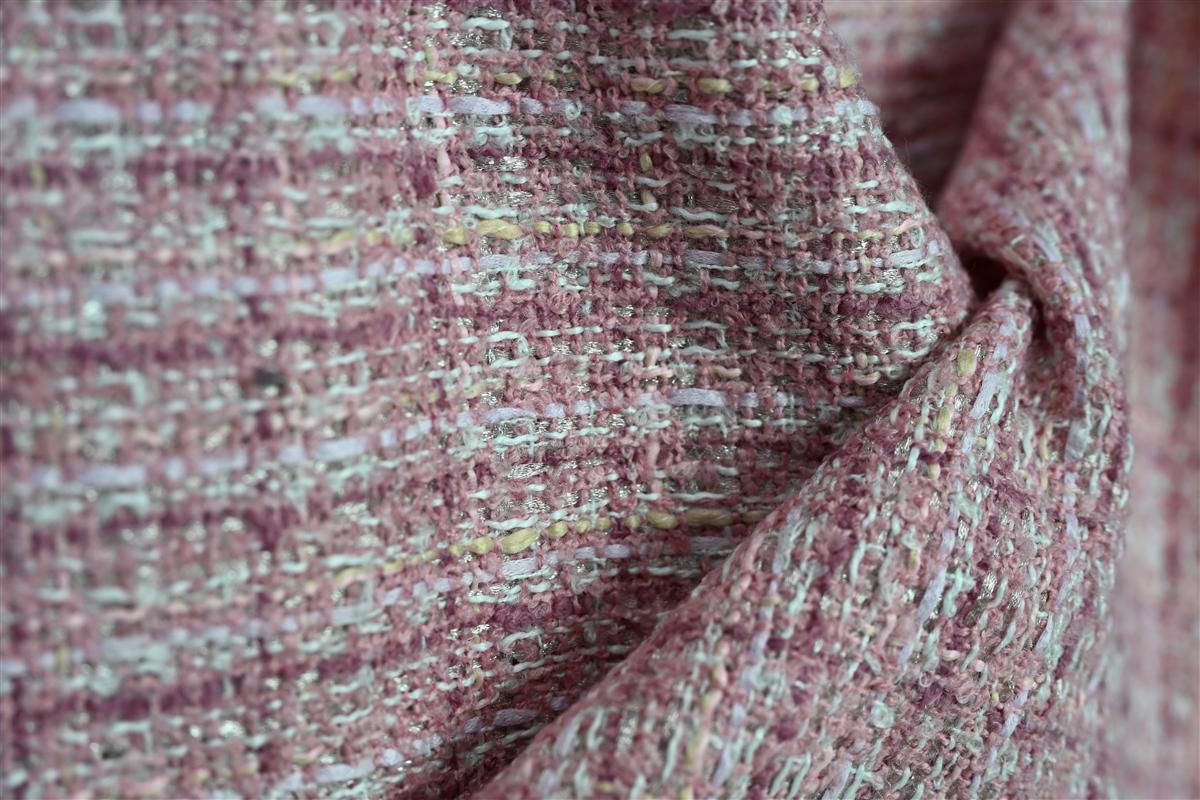
Hidden Sourcing Costs: Sampling, Duties & Shipping
Sampling tweed can quietly burn $300 before you order a single meter.
Most first-time buyers fixate on the per-meter price and completely miss the pre-production cash drain. Sampling costs, courier fees, and import duties stack up fast — and they hit harder on tweed than bouclé. The numbers aren’t hidden; they’re just never volunteered.
- Bouclé swatch: $5–$15 per piece. Mills with in-house yarn spinning keep this low because they control the fiber blend and don’t subcontract dyeing.
- Tweed swatch: $20–$50 per piece. The wider range reflects fiber content — a 100% wool tweed swatch from a European mill hits $50, while a wool-acrylic blend from an Asian mill lands closer to $20.
- Why the gap matters: Request 5 bouclé swatches and you spend $25–$75. Request 5 tweed swatches and you’re at $100–$250 before shipping. For an emerging designer testing colorways, that difference is a pattern-making fee.
- Sample roll courier (Wenzhou to US/EU): $50–$150 via DHL or FedEx for 1–3 kg. Heavier tweed swatch sets push toward the upper end because the fabric density adds weight fast.
- Import duties on fabric samples: 5–12% of declared value, depending on fiber composition and destination country. Wool-rich tweed attracts higher tariff codes than polyester-blend bouclé in most HS classification systems. Budget an extra $15–$40 per shipment.
- Bulk shipment baseline: If you later order 100m of bouclé, sea freight from Wenzhou runs $200–$400 depending on volume, and duties scale with the commercial invoice. Factor 8–12% landed cost on top of FOB price.
Sampling speed creates a second cost layer that nobody talks about. Bouclé swatches from a factory-direct mill in Wenzhou ship in 7 days. Standard tweed sampling from mills running custom weave programs takes 4 to 6 weeks. That 5-week gap isn’t just waiting — it’s a calendar risk. If your collection deadline is 12 weeks out, losing 6 weeks to sampling means you’re cutting pattern revisions, fitting sessions, or photo shoots.
This is where the 7-day rapid sampling capability changes the math. A bouclé program lets you request swatches, confirm hand-feel, and place a production order inside 10 days. A tweed program burns a month and a half just getting physical references in your hand. For a first capsule collection where timing determines whether you hit the buying season, the faster fabric wins by default.
There’s a post-production cost that almost no fabric guide covers: shedding and edge fraying. A high-end footwear brand publicly documented that their tweed uppers required triple the normal trimming and cleaning labor because the weave shed fibers continuously during lasting. That labor cost — invisible on the per-meter invoice — ate into their margin on every pair. If your design involves complex seam lines, cutouts, or bonded panels, tweed’s edge instability becomes a real production expense.
The same brand cited a 2-year R&D timeline to fuse tweed with synthetic uppers without fraying at the cut edge. Two years. For a designer launching a first collection, that kind of material engineering timeline isn’t viable. Bouclé’s looped-yarn construction is inherently more stable at cut edges and sheds significantly less. If your pattern has curves, notches, or raw-edge design elements, bouclé saves you the hidden factory-floor labor that tweed quietly demands.
Before you commit, ask any mill two straight questions: ‘What anti-shed pre-treatment do you apply to your tweed?’ and ‘Can you send a laser-cut sample edge instead of a scissor-cut one for stability testing?’ If they hesitate on both, their fabric will cost you more on your cutting table than it did on their invoice.
| Categoria de Custo | Bouclé (Factory-Direct) | Tweed (Typical Mill) | Impact on Budget | Solução Fursone |
|---|---|---|---|---|
| Sampling Cost per Swatch | $5 – $15 per swatch, often waived for serious buyers | $20 – $50 per swatch, rarely refundable | Kills early-stage cash flow when testing 5–10 swatches | 7-day rapid sampling; factory-direct pricing; complimentary stock swatches available |
| Sampling Lead Time | 3–7 days for stock swatches, 7-day custom turnaround | 4–6 weeks for custom tweed swatches | Misses market windows, delays design cycle by 1+ month | Stock bouclé ships in 3–7 days; custom tweed samples in 7 days, not 6 weeks |
| Shipping Cost (Sample Roll) | $50 – $100 express from Wenzhou | $100 – $150 for heavier, bulky swatch packages | Adds 10–20% to a small sample budget, often unquoted upfront | Optimized logistics with transparent quotes; roll weight kept low for cost efficiency |
| Duties & Tariffs | 5–12% duty, compliant HS codes provided | Similar 5–12%, wool-rich blends may trigger higher tariffs | Unexpected 10%+ invoice spike for first-time importers | Pre-calculates duty estimates; offers DDP shipping options to lock total landed cost |
| Post-Production Waste (Shedding) | Minimal shedding, stable edge finish | 3x extra trimming & cleaning labor (real case: John Geiger shoe project) | Hidden labor cost of 15–25% on tweed garments | Available anti-shed pre-treatment; recommends bouclé for low-waste modern designs |
Quality vs. Price: When Cheap Bouclé Fails
Sub-$10/m bouclé almost always substitutes acrylic for wool—and pills within weeks.
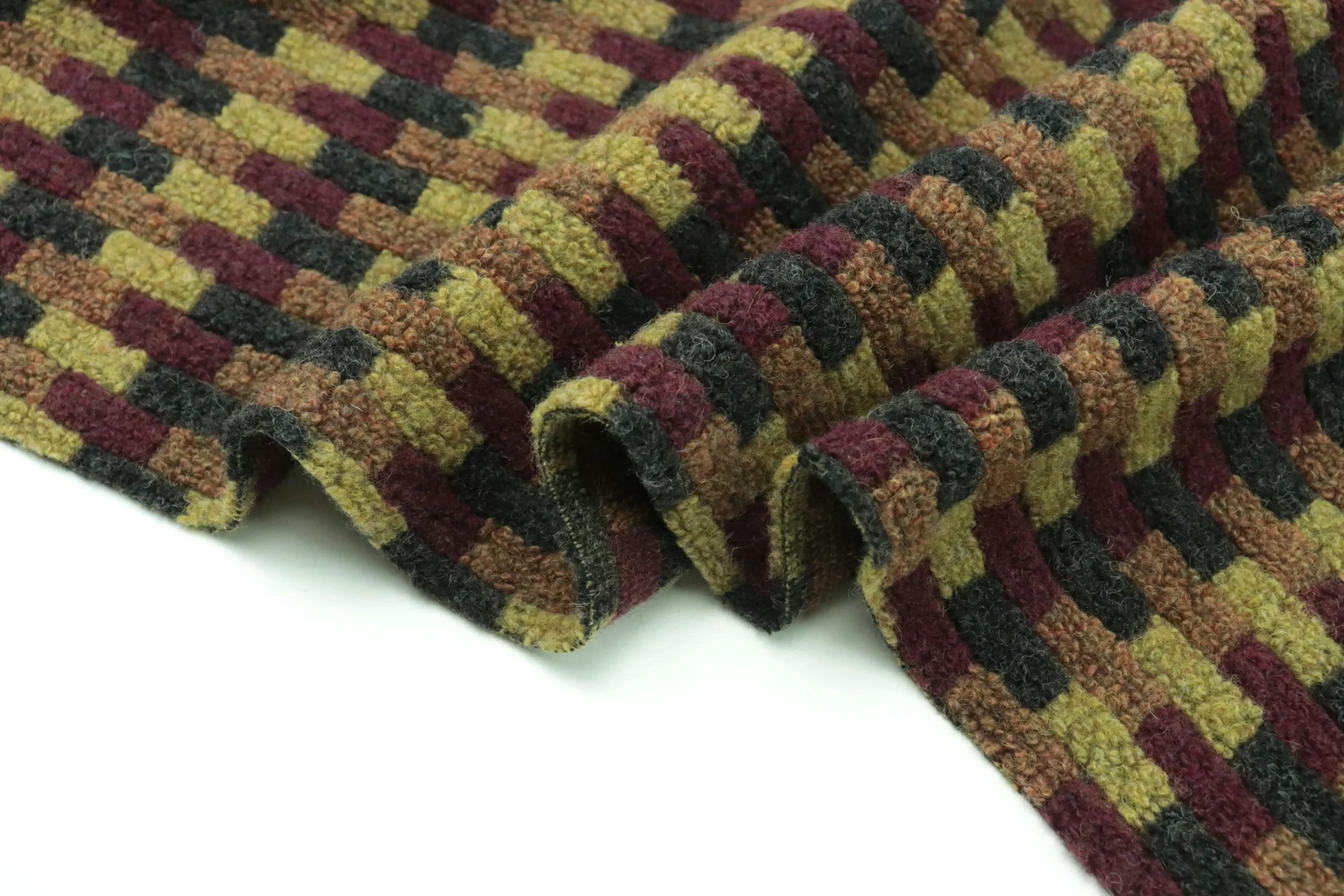
When bouclé fabric drops below $10 per meter, the mill has made a trade-off you won’t see on a spec sheet. The standard composition for mid-market bouclé runs roughly 50% polyester, 30% acrylic, and 20% wool. Cheap versions push acrylic to 50% or higher and strip wool out entirely. Acrylic fibers are short-staple and brittle. Under friction—a jacket rubbing against a bag strap, a sleeve brushing a desk—those short fibers work loose and ball up on the surface. You don’t catch this on a swatch pinned to a mood board. You catch it after three wears when the garment looks five years old.
Factory-direct mills that spin their own yarns solve this at the source. Instead of buying commodity acrylic yarn from a supplier catalog, they engineer the fiber blend for a specific hand-feel and abrasion resistance. A properly spun bouclé yarn—using longer-staple wool blended with polyester for structure—holds its looped texture through cutting, sewing, and daily wear. The difference is immediately visible in a side-by-side swatch comparison: cheap bouclé feels plasticky and compresses flat under pressure; properly spun bouclé bounces back and has a dry, wool-like hand that designers associate with luxury ready-to-wear.
- Fiber content disclosure: Request the exact blend percentage in writing. Anything exceeding 40% acrylic is a pilling risk. A minimum 20% wool content is the floor for authentic bouclé texture and drape.
- Surface friction test: Rub two faces of the same swatch together 20 times with moderate pressure. If fibers begin balling immediately, the fabric will degrade after one dry-cleaning cycle. Quality bouclé shows minimal surface change.
- Compression recovery: Ball the fabric tightly in your fist for 10 seconds, then release. Properly spun bouclé springs back within 2 to 3 seconds. Cheap acrylic-heavy versions hold the crease and look crushed.
- Price anchor reality: If a supplier quotes under $8 per meter for what they call wool-blend bouclé, the wool claim is almost certainly false. Real wool-blend bouclé starts at $12 to $15 per meter factory-direct, and that’s with an efficient supply chain behind it.
This is where the factory-direct model shifts the math in your favor. A Fábrica europeia selling wool-blend bouclé at $28 to $35 per meter isn’t using dramatically better fibers. You’re paying for brand prestige, multi-tier distribution markups, and higher labor overhead. A Wenzhou-based mill with in-house spinning and dyeing—operating on thinner margins and shipping directly to your cutter—can deliver equivalent hand-feel and durability at $14 to $20 per meter. The 30 to 50 percent savings isn’t from cutting quality. It’s from cutting out three layers of wholesalers who each added 15 percent along the way. For an emerging designer ordering 100 meters, that’s the difference between a $2,800 bill and a $1,600 bill—cash you keep for sampling, pattern adjustments, or your next design.
| Quality Factor | Cheap Bouclé ($5–$10/m) | Fursone Bouclé ($12–$22/m) | Why It Matters |
|---|---|---|---|
| Fiber Composition | 50–70% acrylic, minimal wool; stiff hand-feel, traps heat | Proprietary wool-acrylic-polyester blend; soft, breathable drape | Cheap acrylic pills in 5–8 wears; wool blends maintain texture through 30+ dry cleans |
| Yarn Source | Off-the-shelf commodity yarns; generic, copyable texture | In-house spun slub, bouclé, and chenille yarns; exclusive textures | Exclusive yarns prevent market duplication — your collection stays unique |
| Pilling & Shedding | Surface pills within 3 months; loose fibers shed on trimming tables | Anti-shed pre-treatment available; tight yarn twist minimizes fraying | Labor cost from trimming shed fibers can add $2–$4 per garment — erasing your fabric savings |
| Sample-to-Bulk Match | Sample swatch often hand-picked; bulk order uses lower-grade yarn | Same proprietary yarn lot for samples and bulk; 7-day swatch turnaround | Nothing kills a debut collection faster than samples that don’t match production |
| Cost vs. True Value | $800 for 100m stock; hidden in rework, returns, and brand damage | $1,200–$2,200 for 100m stock; 30–50% below European mill pricing | European mills charge $30+/m for equivalent quality — Fursone delivers the same hand-feel at accessible luxury pricing |
Which Fabric Saves You More for Your First Collection?
Bouclé lets you launch for $800.
Here is the math that most fabric blogs will not show you. A 100-meter bouclé stock roll at $8 to $22 per meter puts your total fabric outlay between $800 and $2,200. You can receive that roll in 3 to 7 days and have a cutter working by next week. Custom tweed, at a 1,000-meter minimum, locks you into $5,000 to $30,000 before your first garment sells. For an emerging designer testing a market, that gap is everything.
- Bouclé cash outlay: 100 meters at $8–$22/m = $800–$2,200 total. Stock ships in 3–7 days from a Wenzhou mill. Sampling costs $5–$15 per swatch with 7-day turnaround. You validate demand before committing to scale.
- Tweed cash outlay: 1,000 meters at $5–$30/m = $5,000–$30,000 total. Sampling adds 4–6 weeks and $20–$50 per swatch. An Italian mill quotes 30–50% more for the same wool-rich composition. The capital exposure is 6x higher before market feedback.
- Production waste trap: A high-end shoe brand publicly noted their tweed required 3x extra trimming and cleaning to stop shedding during assembly. That labor cost hits after the fabric invoice is paid. Ask a mill about anti-shed pre-treatment before committing — or choose bouclé and avoid the post-cutting cleanup entirely.
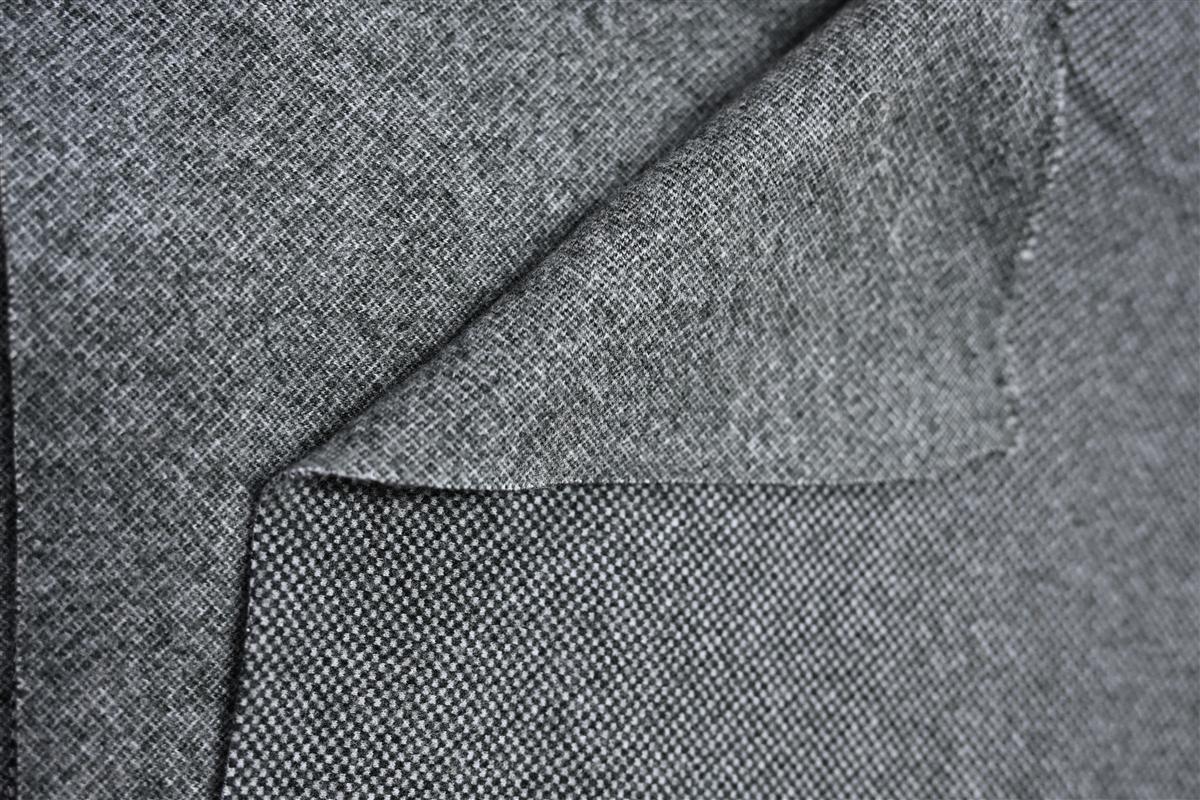
Tweed makes sense when your collection aesthetic depends on a heritage weave and you already have confirmed buyer interest. The weight range — 350 to 600 g/m² — gives structured tailoring that bouclé does not replicate. But if you have not sold a single unit yet, committing to 1,000 meters of tweed means betting $5,000 that the market agrees with your taste. Bouclé at 300 to 500 g/m² delivers the soft, looped texture that reads as luxury without the same financial bet.
One more factor: fabric fraying on complex pattern pieces. A competitor brand spent two years in R&D trying to fuse tweed with synthetic uppers because the weave unraveled at every cut edge. If your design has curved seams, notched collars, or laser-cut details, ask the mill directly about edge stability. Bouclé’s looped-yarn construction handles shaped cuts with far less fraying, which means fewer rejects and lower stitching-room cost.
The pragmatic path is not complicated. Order 100 meters of stock bouclé in a neutral colorway. Sample three silhouettes. Test the market in 30 days. If demand is real, scale into custom color development with the same mill — the relationship is already built, the yarn sourcing is proven, and you are not starting from zero. Tweed can be collection two, when you have revenue to absorb the MOQ and the appetite for risk that a 1,000-meter commitment demands.
Conclusão
The math on bouclé vs tweed cost separates into upfront fabric price and downstream risk. A $22/m bouclé that ships from stock at 100m costs less to sample and delivers clean seams, while a $25/m custom tweed can trigger 3x the finishing labor for shedding—a budget killer for a small run. Protecting cash flow on a first capsule means accounting for the variables a standard price sheet hides.
Get the exact weight, blend, and hand-feel in your hands before committing. Request a physical swatch of the bouclé profile that fits your target cost per meter to test drape and pilling resistance directly against your pattern specs.
Perguntas Frequentes
Is tweed the same as bouclé?
No. Tweed is a woven wool fabric, while bouclé is a yarn with looped curls that forms a fabric. Specify whether you need tweed, bouclé, or a bouclé tweed blend when sourcing.
Quais são as desvantagens do bouclé?
The open-looped texture of bouclé makes it prone to pilling and snagging, especially in cheaper acrylic blends. Durability drops fast under friction. Always request a wash-and-wear swatch test before committing to a bulk order.
A Chanel usa tweed ou bouclé?
Chanel’s signature fabric is a bouclé tweed—a tweed-woven cloth using looped bouclé yarns. It is neither pure tweed nor pure bouclé but an intentional hybrid. Be exact on the term bouclé tweed when discussing Chanel-style fabrics with suppliers.
O bouclé é considerado luxo?
High-quality wool bouclé is a luxury textile thanks to its Chanel heritage and soft hand. However, cheap synthetic bouclé at $8/m is not considered luxury. Luxury status depends entirely on fiber content and mill craftsmanship.
Qual é o tecido mais prejudicial para vestir?
No single fabric is the most unhealthy, but unregulated synthetic blends with harsh chemical finishes often cause skin irritation. Cheaply dyed polyester can trap moisture and bacteria. Always verify OEKO-TEX or equivalent safety certifications for skin-contact garments.

Insights Relacionados
Tweed vs Bouclé: Which One Fits Your Collection?
tweed vs boucl is the first checkpoint buyers should lock before they approve a supplier,...
Malhas de Cabo Heritage: Por que esta textura clássica retorna a cada temporada
Tricôs de trança heritage voltam a cada estação por uma simples razão: vendem. Não porque...
Tweed de Qualidade de Moinho Europeu a 40% Menos Custo
Toda coleção nova começa da mesma forma — encontrar um fornecedor de tweed que forneça europeu...