
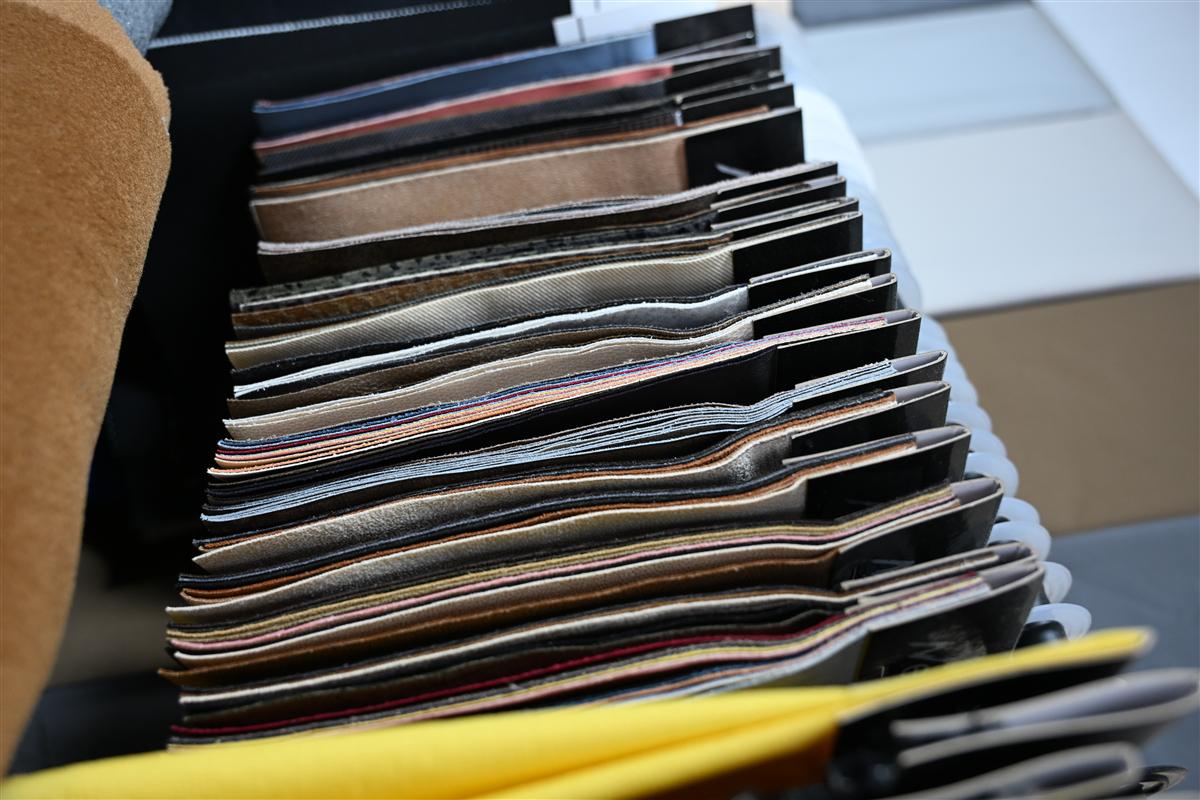
Greige is cloth exactly as it leaves the loom, and a greige approval is a real approval of the weaving. A booked finishing line does not change that. The finishing slot moves the date on which finished cloth can be approved, and leaves the evidence required for approval where it was. That distinction is the whole answer, and it is the sentence a mill’s request usually leaves out. In practice the request bundles two decisions: permission to keep the loom running, and approval of the cloth. Only the first is urgent. This page separates the two and runs six steps. Step 1 books a pilot length from the same yarn lot. Step 2 writes two sign-offs, each carrying the state its numbers were measured in. Step 3 seals two masters. Step 4 puts a release list in writing. Step 5 locks the finishing route, and Step 6 re-measures at receiving against a sealed master, not a memory. The closing table holds one row per step, with the document produced and the name of the signer.
What Does a Booked Finishing Line Actually Change?
A booked finishing line changes the approval date, not the approval requirement, and the difference decides who carries the risk. Two decisions arrive bundled in one request. Decision one is commercial and urgent: whether the loom may keep running while the finisher is occupied. Decision two is technical and unchanged: on what evidence the cloth is approved. According to the AHM International fabric-testing guide, the approved sample “says what a lot can be, not what every lot is”, which is why a later approval costs schedule rather than certainty. First, write the two decisions on two lines. Second, put a date on the commercial line only. Third, refuse to trade the technical line for the earlier date. In practice, a cut date unable to absorb the finishing slot is a scheduling problem, and calling it a quality problem is how a mill gets a signature nobody should give.
What Can a Loom-State Piece Prove?
Greige proof is evidence about the loom, and the list is longer than a flat refusal suggests. A loom-state piece can be checked for weave structure and repeat, the order and count of the two yarn systems, ends and picks per unit length, reed and selvedge construction, loom-origin faults, and greige width and mass recorded as greige values. According to Weaverine’s description of the greige stage, greige is “cloth exactly as it leaves the loom, woven, unbleached, undyed, still carrying the sizing and the weaving oils”, and the same page states that the construction frozen at greige limits what finishing can fix later. First, write the list as construction facts rather than quality claims. Second, label every number with the state in which the reading was taken. Third, attach the yarn lot and the roll traceability. In practice, missing ends, broken picks, reed marks and stop marks are cheap to find on greige and expensive to find on a finished roll.
What Can Greige Not Prove, and Why Not?
Greige cannot prove any property finishing creates, and the reason is mechanical. Scouring, milling, pressing and heat setting produce width, mass, hand, lustre, surface and shade, so no loom-state reading describes finished width, finished mass, finished hand or finished shade. Wet processing also creates or fixes dimensional stability, and the loom’s oils and sizing dull the shade until scouring removes the film. On a yarn-dyed overcheck the limit is sharper. The loom-state piece shows the geometry of the check, its repeat and the order of the yarns, and never the finished contrast, because both colours’ apparent depth and the ground’s cleanliness move together in the same wet steps. Loom width and full-width shade gates belong to the half-width argument, not here. First, sort every requirement into created by weaving and created by finishing. Second, put the second column in the finished sign-off. Third, do not let a greige photograph stand in for the second column.
Step 1: Why a Pilot Length and Not a Lab Range?
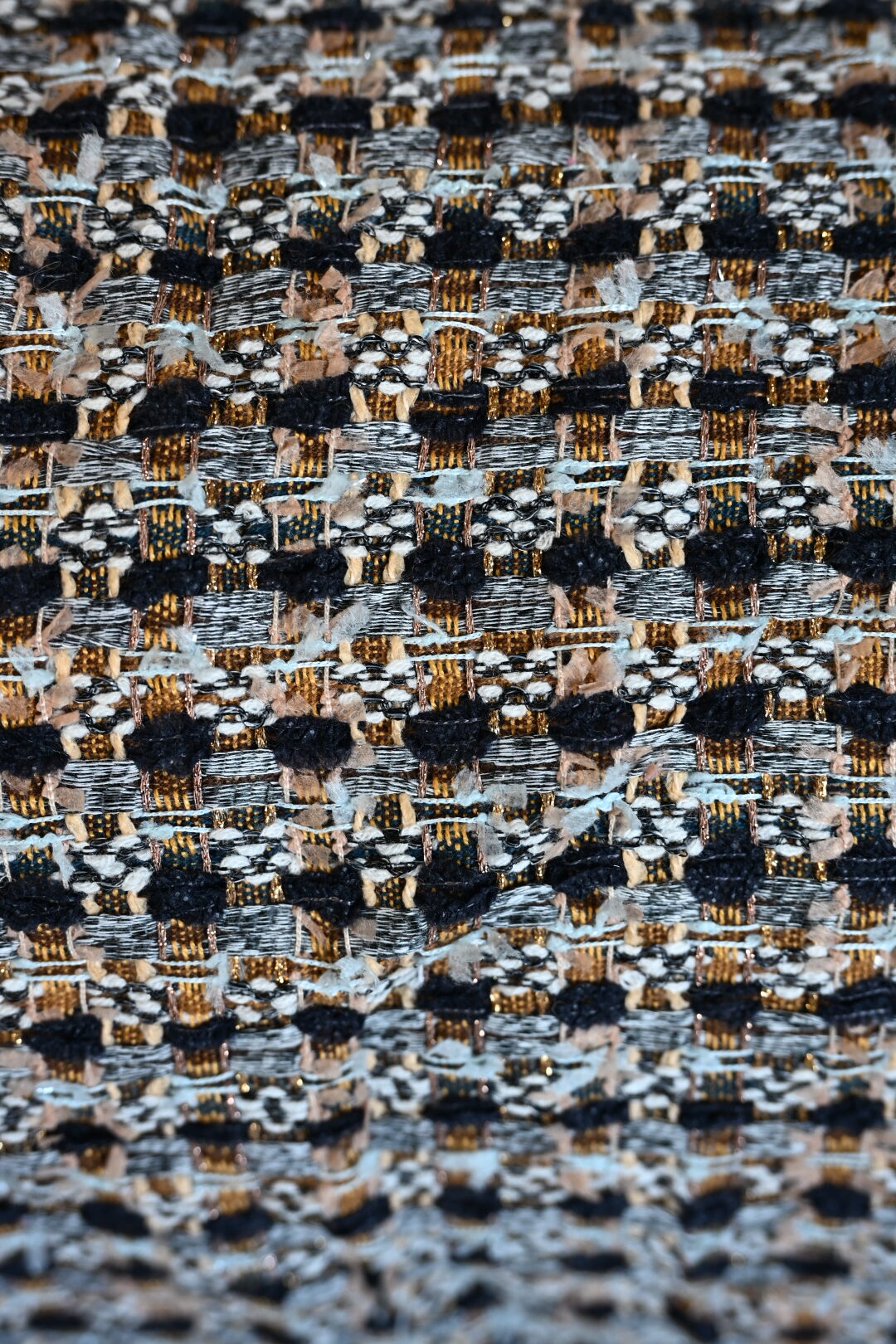
Step 1 is the remedy for a crowded line, and the remedy is a short length from the same yarn lot put through the whole contracted sequence on the contracted machines. A lab range is the trap rather than the remedy. Hand, lustre and surface are exactly the properties a laboratory stenter reproduces least faithfully, so a lab result describes a laboratory. The pilot length has to be long enough to measure and to keep, and to travel with the yarn lot identity. First, name who books the pilot slot on the production line. Second, name who pays for the run. Third, write that the pilot result approves its own length and nothing beyond. In practice, the sentence preventing a dispute is written before the slot is booked: the pilot is evidence about the route, and the bulk is approved on the bulk. A pilot run on a different machine answers a different question.
Step 2: What Goes in the Two Sign-Offs?
Step 2 is a column rather than a paragraph, because every tolerance in the order carries four fields: the value, the state in which the value was measured, the method, and the sampling. The greige sign-off covers construction facts and says “construction only” in words on the page. The finished sign-off covers every property finishing creates. According to the same buyer guide’s field table, a mass per unit area entry has to say “whether the weight is before or after finishing”, which is the state rule in one sentence. Method numbers belong beside each field: ISO 139 for the conditioning atmosphere, ISO 7211-2 for threads per unit length, ISO 22198 for width, ISO 3801 for mass per unit area. First, add the state column to the order. Second, delete every tolerance without a state. Third, keep one sampling rule for approval and for receiving. In practice, a greige width and a finished width requirement are never comparable, and a dispute comparing the two quotes the same order twice.
Step 3: Two Sealed Masters from One Lot
What Does Each Master Answer?
A master is a physical reference against which a later roll is measured, and two masters are needed because two objects get approved. The greige master holds the construction facts: weave, yarn order, ends and picks, reed, selvedge, greige width and greige mass. The finished master holds the properties finishing created: finished width, mass, hand, surface, shade and the visual grade. Both are sealed, both dated, both labelled by roll and lot, and both drawn from the approved lot. First, seal the greige master when the greige sign-off is signed. Second, seal the finished master from the first length approved on finished cloth. Third, record the roll behind each master and the holder of each copy. In practice, one master kept by the mill and one travelling with the shipment covers the two questions a later dispute asks. A master without a label is a sample, and a sample without a state is an opinion.
What Happens When the Two Masters Disagree?
A disagreement between the masters is a finding about the route rather than about the sample, and every finding needs an owner. Where the finished master and a delivered roll differ on a finished property, either the finishing route moved or the cloth never matched the approved lot, and the two causes sit with different parties. Where the greige master and a new loom-state piece differ, the loom or the yarn lot changed. First, compare each roll against the master for the state in which the property was approved, never across states. Second, write the disagreement on one line with the value, the state, the method and both dates. Third, send the sealed master to a referee laboratory where the two sides still disagree. In practice, a dispute about hand or shade is unresolvable without a sealed master from the approved lot, and settles within a day with one.
Step 4: What May Be Released to Cutting?
Step 4 is the answer most approval clauses never give, and the answer is a written list rather than a legal position. A construction-only approval can release pattern work, marker and lay planning, non-shell components and long-lead trims. The same approval cannot release shell cutting, bulk fusing or bulk pressing, because those commit cloth that finishing has not yet described. A physical sample binds a mill in ways a drawing does not, and stops short on properties the sample never showed, as the 10 cm cutting argument sets out. First, write two columns, may start and may not start. Second, place the cut date beside the second column. Third, name who lifts the hold and on which document. In practice, this step turns a refusal into a production plan, and the whole list is answerable from the papers already in the file.
Step 5: How Do You Lock the Finishing Route?
Step 5 names the route and the settings that define the route, because a change of route is a change of object. The sentence is short: any change of finisher, recipe, machine or reprocess is a re-approval, with a named payer and a re-run window. According to the buyer guide’s scope warning, a test “does not describe the next production lot”, which is the rule that makes a route lock a document rather than a courtesy. First, write the sequence as an ordered list of steps. Second, write who may change the sequence and who must be told. Third, write what happens to metres already woven when the sequence changes. In practice, a finishing route remembered by one person cannot be re-run after that person leaves, and a re-approval clause with no payer fails at the first change. A code on an invoice is not a route; a code is not a specification either.
Step 6: What Does the Receiving Re-Measure?
Why Re-Measure Instead of Compare?
Receiving is a measurement rather than a comparison, because a comparison against a memory has no method behind it. The check runs at the same points used at approval, under the same conditions, by the same method, and lands against the finished master rather than against a verbal expectation. Finishing-state measurements exist for exactly this purpose, and the residual-shrinkage method is one example, covered on its own page. First, fix the points before the first roll arrives. Second, record the conditions, the method and the assessor. Third, write the result against the master’s value rather than against zero. In practice, a receiving report with no reference master answers a question nobody asked, and a receiving report with the wrong state column answers a different roll. One assessor and one light source keep two rolls comparable.
What Does the Closing Table Carry?
The closing table is the page a production manager opens before the cut, and each row is a sentence somebody can sign. Seven rows cover the six steps of a 2026 approval. First, fill the document column from the papers already in the file. Second, write the sentence as an instruction rather than a hope. Third, let the release list row prevent the delay, because a greige approval signed without one stops the line anyway.
| Step | Document it produces | Sentence to write | Who signs |
|---|---|---|---|
| Pilot booking | Pilot slot confirmation | Pilot length from the same yarn lot, whole contracted sequence on contracted machines. | Production manager and mill |
| Greige sign-off | Construction-only approval page | Construction only, with values as measured at loom state. | Mill and buyer |
| Finished sign-off | Finished approval page | Value, state, method and sampling for every property finishing creates. | Mill and buyer |
| Sealed masters | Two labelled and dated master samples | One greige master and one finished master, both from the approved lot. | Mill and buyer |
| Release list | May start and may not start sheet | Pattern work may start; shell cutting waits on the finished sign-off. | Покупатель |
| Route lock | Finishing route sheet | Any change of finisher, recipe, machine or reprocess is a re-approval. | Mill and finisher |
| Receiving re-measure | Receiving report against the master | Same points, same conditions, same method as the approval. | Buyer and inspector |

Связанные статьи
Navy Bleed on a Pale Ground: Which Dry-Clean Test?
A dry-cleaning colourfastness test is the right request for a navy overcheck on a pale...

Old Report, New Dyehouse: Does It Still Cover the Cloth?
An old report does not cover cloth that ran through a different dyehouse, and the...
A One-Way Lay Costs Metres: Who Books Them?
A one-way lay is a marker in which every pattern piece faces the same direction,...