Walk into any tweed mill in Wenzhou and you will hear the same question from new buyers within the first five minutes: “What is the difference between woolen and worsted?” The answer is not a matter of fiber content. Both systems start with the same raw material—sheep’s wool. The split happens at the spinning frame. Woolen yarn keeps fibers short, random, and loosely twisted. Worsted yarn combs those fibers into alignment, trims out anything under 40 mm, and inserts a tighter twist. That single process decision changes the drape, hand, pilling behavior, and end-use of the finished tweed.
At Fursone, we run both woolen-spun and worsted-spun yarns across our 300-loom floor. This article breaks down what each spinning system actually does to the yarn, how that translates into fabric behavior on the cutting table, and which construction your next garment program should call for.
How Woolen Spinning Works
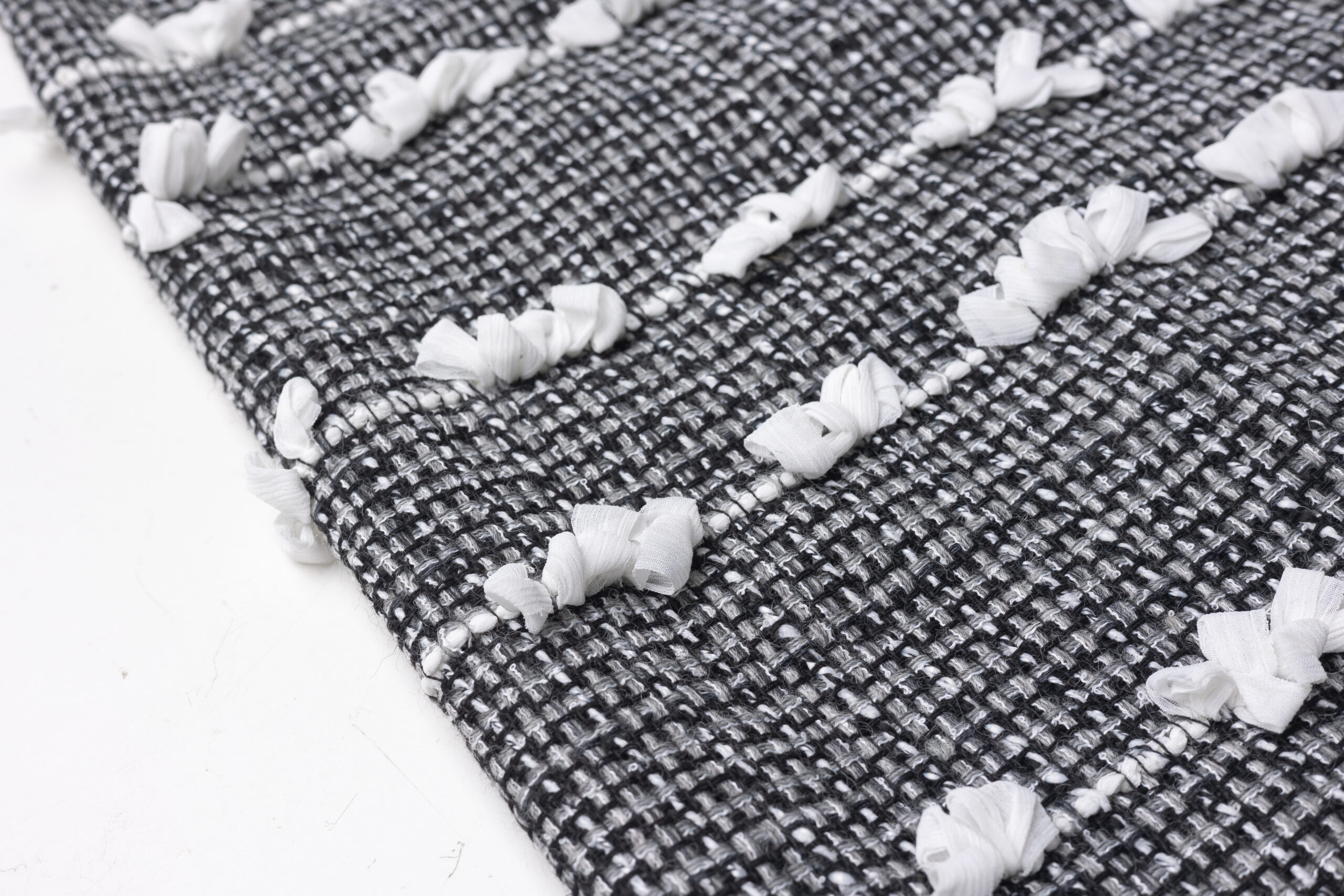
Woolen spinning follows the oldest path from fleece to yarn. After carding, the fiber goes directly to the spinning frame with no combing step. The result is a yarn where fibers sit in all directions—short staples (typically 30–70 mm), mixed lengths, and a lofty, uneven structure. Twist levels run between 180 and 350 turns per meter for a standard Nm 2/10 to Nm 2/16 tweed yarn.
Because the fibers are not aligned, woolen yarn traps more air. That loft gives the fabric insulation and a soft, fuzzy hand. The trade-off: woolen-spun yarns pill more readily and have lower tensile strength than worsted equivalents. A typical woolen-spun tweed yarn breaks at 12–18 cN/tex, compared to 20–30 cN/tex for a comparable worsted count.
The fabric that comes off the loom from woolen yarn has a characteristic matte surface with visible fiber ends. This is the classic Donegal and Harris tweed look—textured, rustic, and warm. If your brand positions around heritage craft or country-style outerwear, woolen-spun yarn is the default. For coat programs, our ylletyg för överrockar range is built on woolen and semi-worsted yarns woven at coating weights on the same Wenzhou floor.
How Worsted Spinning Works
Worsted spinning adds two steps before the spinning frame: gilling and combing. Gilling blends and parallelizes the fiber sliver. Combing then removes short fibers (anything under roughly 40 mm) and lays the remaining long staples in strict alignment. The output is a smooth, dense yarn with twist levels of 400–700 turns per meter for the same Nm 2/10 to Nm 2/16 range.
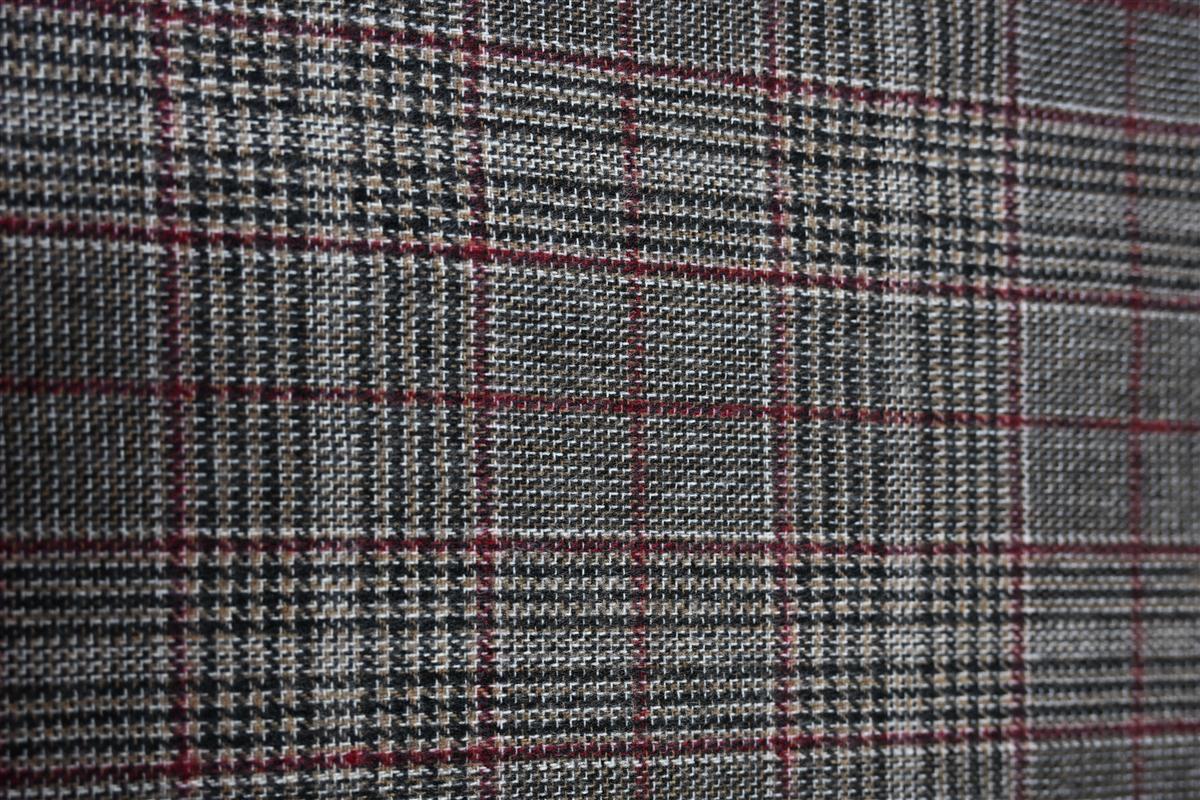
The structural consequence is significant. Worsted yarn has higher tensile strength (20–30 cN/tex), lower hairiness, and a smoother surface. Fabrics woven from worsted yarn drape with a cleaner line, show less pilling over the garment’s life, and accept finer weave structures such as 2/2 twill or herringbone at tighter sett densities (18–24 ends per cm).
Worsted-spun tweed is the choice for suiting, structured blazers, and any program where the fabric must hold a sharp crease or clean silhouette. Most Savile Row and Milanese tailoring houses specify worsted or semi-worsted yarns for their suitings.
Drape and Hand: The Practical Difference
Drape is how fabric falls under its own weight. Hand is how it feels between your fingers. Both are direct outputs of yarn structure.
| Egenskap | Kardgarns-tweed | Kamgarns-tweed |
|---|---|---|
| Fiberriktning | Slumpmässig, flerriktad | Parallell, kammad |
| Typisk stapellängd | 30–70 mm | 60–120 mm |
| Tvinning (Nm 2/12) | 180–350 vridningar/m | 400–700 vridningar/m |
| Garnludd | Hög | Låg |
| Tygvikt (260 g/m²) | Mjukare, fylligare känsla | Fastare, slätare känsla |
| Draperingskoefficient | Högre (mer flexibel) | Lägre (mer strukturerad) |
| Nötningsresistens / pillningsresistens (ISO 12945-2) | Klass 2–3 | Grad 3–4 |
| Typisk slutlig användning | Countrytweed, kappor, jackor | Kostymer, kavajer, strukturerade plagg |
En kardgarnsspunnen tweed på 260 gsm känns mjukare och mer eftergivlig när du kramar ihop den i handen. Den faller med mjuka kurvor och absorberar rörelse – idealisk för ostrukturerade jackor och overshirts. En kamgarnsspunnen tweed vid samma vikt känns fastare, faller i rakare linjer och håller formen bättre vid sömmar.
Halvkammad: Mellanläget
Inte varje garn hamnar tydligt i en av dessa två kategorier. Halvkammade garner genomgår ett kardningssteg men hoppar över full kamming, eller använder en lättare kam som behåller fler kortfibrer. Resultatet ligger mellan kardgarn och kamgarn: mer riktat än kardgarn, men med tillräckligt med luftighet för att hålla tyget mjukt. Många av de tweedtyger vi tillverkar hos Fursone för modevarumärken i mellansegmentet använder halvkammade garner i intervallet Nm 2/10 till Nm 2/14, vilket balanserar fall och hållbarhet till en lägre kostnad än helt kamgarn.
För varumärken som vill ha den visuella texturen hos traditionell tweed men behöver bättre pillningsprestanda för detaljhandeln är halvkammad ofta den bästa kompromissen.
Vilket spinnsystem bör du specificera?
Beslutet handlar om tre faktorer:
- Plaggtyp. Strukturerade kostymer kräver kamgarn. Ostrukturerade ytterplagg och lantjackor kräver ylletyg. Mellanklassblazers och -rockar fungerar med halvkamgarn.
- Prispunkt. Kamgarnsspinning kostar 15–25% mer per kilo garn på grund av kammningssteget och fiberavfall (noil). Om ditt grossistpris inte kan absorbera det, är ylle eller halvkamgarn det praktiska valet.
- Prestandakrav. Om din köpare specificerar noppningsgrad 3 eller högre (per AATCC test methods), you need worsted or a high-twist semi-worsted. Woolen yarn rarely clears Grade 3 without chemical anti-pilling treatment.
When you send an RFQ to a tweed mill, specify the spinning system alongside yarn count, fiber content, and fabric weight. It eliminates the most common source of sampling revisions.
Yarn Count and the Spinning System Interaction
The spinning system you choose constrains which yarn counts are achievable. Woolen spinning excels at coarser counts (Nm 2/6 to Nm 2/14) because the short, random fibers cannot be drafted to fine widths without breaking. Worsted spinning handles the full range from Nm 2/8 to Nm 2/32, but its economic advantage appears above Nm 2/16 where the combing step pays for itself in reduced breakage during weaving.
At intermediate counts (Nm 2/10 to Nm 2/16), both systems can produce acceptable yarn. The choice then becomes a function of the fabric character you want. A Nm 2/12 woolen-spun yarn will give a bulkier, more textured fabric at the same sett density. A Nm 2/12 worsted-spun yarn will produce a flatter, more uniform surface. Most tweed mills in Wenzhou stock both options in this range because buyer demand splits roughly 60/40 between woolen-character and worsted-character constructions.
Impact on Garment Manufacturing
The spinning system does not just affect the fabric. It changes how the fabric behaves during cutting and sewing. Woolen-spun tweed, with its higher loft and lower cohesion, tends to shift slightly under the cutting knife. Operators need to use sharper blades and lighter table pressure to avoid distorting the fabric ply. Worsted-spun tweed cuts cleanly with minimal shift, which is why it is preferred for precision-cut garments like tailored blazers where pattern pieces must align at seam lines.
Sewing thread tension also interacts with yarn structure. Woolen-spun fabric tolerates higher thread tension because the loft absorbs some of the pull. Worsted-spun fabric, being smoother and firmer, shows puckering more readily if thread tension is too high. Garment factories working with worsted-spun tweed typically reduce presser foot pressure and use finer needles (size 70/10 or 80/12) compared to woolen-spun constructions.
Understanding these downstream effects helps you specify the right spinning system not just for fabric performance, but for manufacturing efficiency. When you send an RFQ to a mill, include your garment construction method so the mill can recommend the optimal yarn system. Use our RFQ template to ensure all critical specifications are captured.
Vanliga frågor
Can woolen and worsted yarns be blended in the same fabric?
Yes. Some tweed constructions use a woolen-spun weft for loft and a worsted-spun warp for strength. This is common in heavier coating fabrics above 350 gsm where you want body without sacrificing tensile strength in the warp direction.
Does worsted yarn always mean 100% wool?
Nej. Worsted är en spinnmetod, inte en fiber. Du kan spinna worstedgarner av merino, kashmirblandningar eller till och med bomull-ull-blandningar. Nyckeln är att fibern kammas och rätas ut före spinning.
Varför noppar mitt ylle spunna tweedtyg efter några användningar?
Korta, oalignerade fibrer lossnar från garnstrukturen vid nötning. Detta är inneboende för ylle spinning. Specificera en hårdare twist (över 300 T/m för Nm 2/12) eller gå över till semi-worsted för att minska noppning utan att förlora yllekaraktären.
Hur skiljer jag ylle från worsted genom att titta på tyget?
Ylle spunnet tyg har en luddigare yta med synliga fiberändar och en matt finish. Worsted spunnet tyg ser slätare ut, har en svag lyster, och vävstrukturen (kypert, fiskbensmönster) är skarpare och mer definierad.
Underhåll av tygets prestanda genom klädvård
Spinnsystemet påverkar också hur den färdiga plagget bör skötas. Ylle spunnet tweed, med sin luftigare struktur och mer exponerade fiberändar, är mer känsligt för filtning vid maskintvätt. Den slumpmässiga fiberarrangemanget innebär att omrörning får fibrerna att låsa ihop och krympa tyget. Av denna anledning bör ylle spunna tweedplagg kemtvättas eller handtvättas i kallt vatten med minimal omrörning.
Worsted spunnet tweed, med sina riktade fibrer och hårdare twist, motstår filtning mer effektivt. Många worsted spunna kostymtyger tål skonsam maskintvätt vid 30 grader C utan betydande krympning. Denna skötselfördel är en anledning till att worsted spunna tyger dominerar kostymtygsmarknaden, där konsumenter förväntar sig enkelt underhåll tillsammans med skarpt utseende.
För varumärken som utvecklar skötselråd bör spinnsystemet informera era tvättråd. En ylle spunnen tweedjacka och en worsted spunnen tweedjacka med samma fiberinnehåll kommer att ha olika skötselkrav. Att specificera spinnsystemet i er produktdokumentation hjälper klädfabriken att sätta lämpliga skötselråd och minskar konsumentklagomål.
Oavsett om ert program kräver ylle, worsted eller semi-worsted garn, kan teamet på Fursone spinna enligt era specifikationer över vår produktionsvåning med 300 vävstolar. Skicka er tekniska specifikation så returnerar vi labbdoppsprov inom 7 dagar. Läs vår inköpsguide för att förbereda er första beställning, eller jämför tweed- och ylletyger för mer sammanhang kring fiberval.
Relaterade insikter

Tweedtygets bredd: Hur 58″ och 60″ rullar ändrar din tygmängd
Most tweed rolls leave the mill at 58 inches (147 cm) or 60 inches (152...
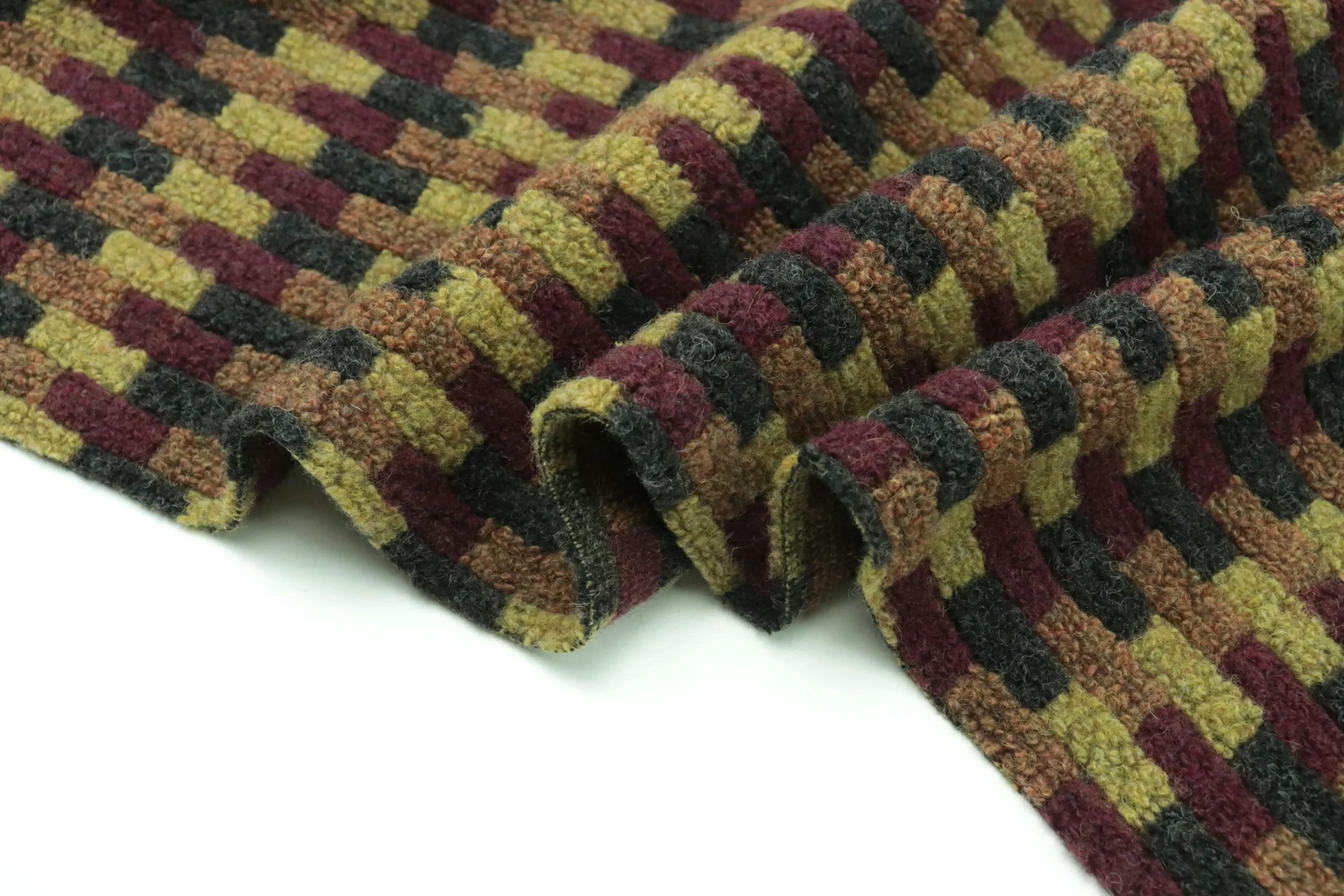
Boucle Stickat vs Vävt Boucle: Vilken konstruktion för vilket plagg
Gå in på vilket tyginköpsmöte som helst om bouclé så dyker en fråga upp före allt annat...
Vad är metallic tweed? Garntyper, vävstruktur och skötsel
metallic-tweed-bridal-fabric-case-study/” rel=”noopener”>Metallic-tweedtyg förenar traditionell ullvävning med reflekterande metalltrådsgarner, vilket producerar ett tyg...