
What Defines Authentic Harris Tweed?
Many buyers question why Harris Tweed can cost three times more than regular tweed when both appear similar by eye. The answer lies in measurable realities: 100% virgin Cheviot wool spun and dyed entirely in the Outer Hebrides, handwoven on Hattersley foot-powered looms, and certified under the Harris Tweed Act of 1993.
This guide unpacks those specifics—how the Orb Mark enforces geographic authenticity, why 290–310 g/m² handwoven density changes texture and durability, and how legal traceability transforms cloth into a certified heritage product.
What Defines Authentic Harris Tweed?
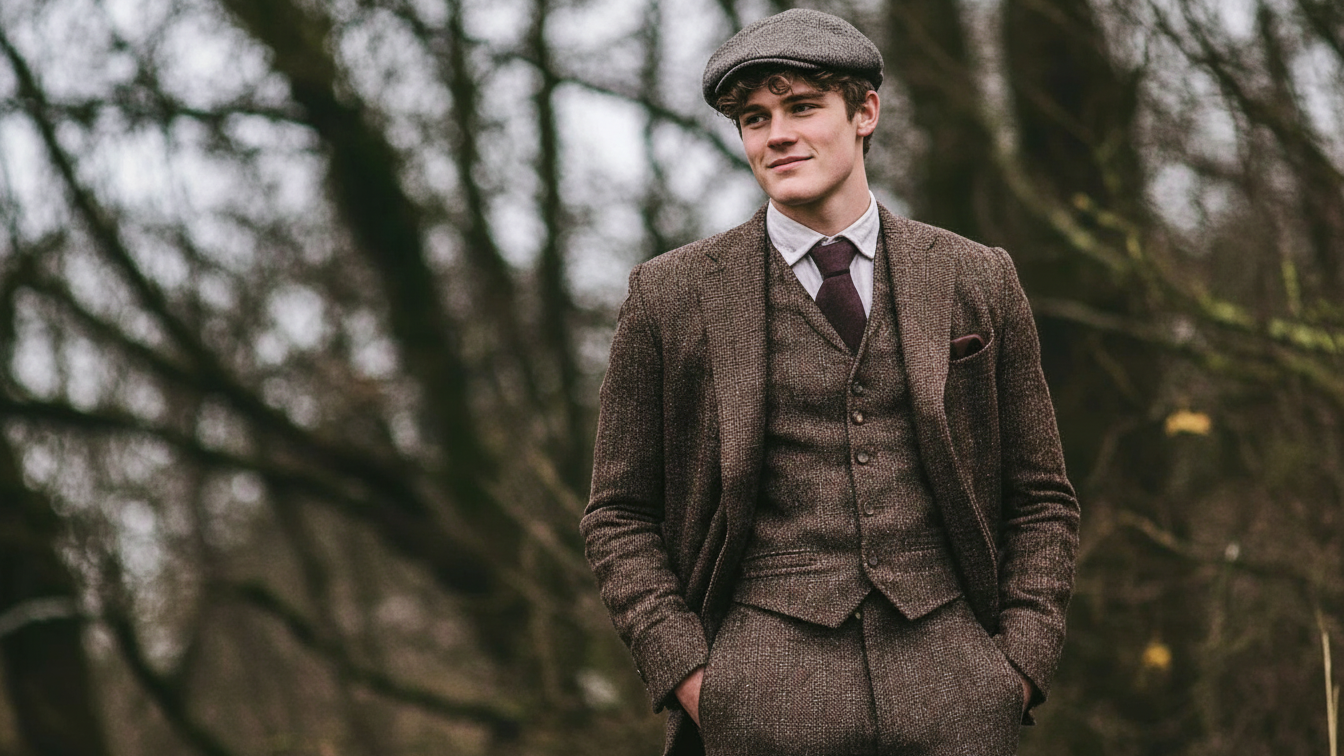
Authentic Harris Tweed is made from 100% pure new wool that is dyed, spun, and hand-woven by islanders in their own homes in the Outer Hebrides of Scotland.
Each piece is finished locally and certified by the Harris Tweed Authority with the Orb mark — a symbol of its origin and integrity.
Among fabric connoisseurs, Harris Tweed stands apart not only for its durability and texture but also for the strict law that protects its authenticity. It’s not merely a type of wool; it represents a living craft bound by heritage, geography, and legislation.
When people compare Harris Tweed vs. regular tweed, what sets the genuine article apart is how it’s created — through deeply rooted tradition and legal protection rather than mass production.
Core Definition and Legal Requirements
The Harris Tweed Act of 1993 defines the term “Harris Tweed” to safeguard the fabric’s authenticity and prevent imitation. This legal framework ensures that all true Harris Tweed maintains its connection to the Outer Hebrides.
- Must be hand-woven by islanders in their homes in the Outer Hebrides.
- Made entirely from 100% pure new (virgin) wool, sourced mainly from Blackface, cross-bred, and Cheviot sheep.
- All processes — dyeing, spinning, and weaving — must take place within the Outer Hebrides.
This legal clarity means every centimetre of fabric is traceable to its place of origin. It operates like an appellation in wine — geography and method define its authenticity.
Certification, Materials, and Production Process
Harris Tweed production combines age-old craftsmanship with strict technical control. Every weaver works with traditional looms, and every roll undergoes inspection before earning the famous Orb mark certification.
- Uses Hattersley single-width or double-width rapier looms powered solely by foot.
- Finishing steps like washing, milling, and cropping are completed at approved local mills in the Hebrides.
- Every metre is inspected and certified by the Harris Tweed Authority, then stamped with the Orb — the UK’s oldest certification mark.
- Strict labeling rules ensure every final product remains fully traceable and authentic.
This degree of precision is rare in textile production. Similar to a craftsman signing their creation, the Orb mark confirms both the maker’s identity and the fabric’s legal origin.
At Fursone, we deeply respect this level of craftsmanship. While our specialty lies in custom woven women’s fabrics developed through our integrated supply chain in China, we share the same philosophy — design integrity and production accountability. The same spirit that sustains Harris Tweed continues to guide modern textile innovation.
The Orb Mark: Certification & Origin
The Orb Mark serves as the legal and cultural seal of authenticity for Harris Tweed. Defined by the Harris Tweed Act 1993, it certifies that every piece of cloth is handwoven by islanders in the Outer Hebrides from locally spun and dyed virgin wool.
This mark ensures that Harris Tweed maintains its unique heritage while giving consumers confidence in the origin and quality of what they buy.
The Orb Mark is not just a logo. It acts like a guarantee stamp linking every meter of Harris Tweed to its birthplace and its makers. Behind this mark stands a combination of craftsmanship, law, and history that protects one of Scotland’s most famous textiles.
For customers comparing Harris Tweed vs. regular tweed, the Orb Mark is the key difference—it proves authenticity, while regular tweeds lack legally enforced origin standards.
Definition and Legal Significance of the Orb Mark
The Orb Mark is formally registered as UK Certification Trade Mark No. 319214. It stands under the legal protection of the Harris Tweed Act 1993, which defines when and how the term “Harris Tweed” can be used.
- Only fabrics woven by hand at the weavers’ homes in the Outer Hebrides can carry the Orb Mark.
- The material must be made entirely from pure virgin wool that is dyed and spun within the same islands.
- The islands included cover Lewis, Harris, North Uist, South Uist, Benbecula, and Barra.
- It remains the oldest certification mark in the United Kingdom, reflecting both heritage and authenticity.
- The Harris Tweed Authority manages and enforces these standards worldwide with recognized legal rights.
Similar to a geographical indication for wine or cheese, the Orb guarantees that what you’re buying truly originates from its claimed source. It safeguards both the livelihood of local weavers and the integrity of the Harris Tweed name.
Technical Application and Enforcement of the Orb Mark
Before any cloth earns the Orb, it passes through a strict inspection. Each roll, typically 58 or 75 meters long, is examined independently to check the weave, color consistency, and finish quality.
- After verification, an iron-on Orb transfer is placed on the reverse selvedge at both ends and the midpoint of the fabric.
- Woven labels featuring the Orb accompany each certified piece for garment makers to attach later.
- The Harris Tweed Authority carries out periodic audits in local mills to ensure proper weaving methods and material sourcing.
- Their legal team protects the Orb Mark in many countries, addressing any misuse or imitation.
- These measures preserve traceability and uphold the premium value of Harris Tweed fabrics across global markets.
This approach forms a closed quality loop—from wool to weave to labeling—making the Orb one of the most controlled textile marks in the world.
At Fursone, we appreciate the discipline behind the Orb Mark. In our own supply chain—spanning design in Wenzhou and weaving in Jiangxi—we follow the same principle of origin integrity and traceable craftsmanship. Quality stories like these remind us why fabric should always carry both heritage and precision.
Production: Hand-Woven vs. Machine Loomed
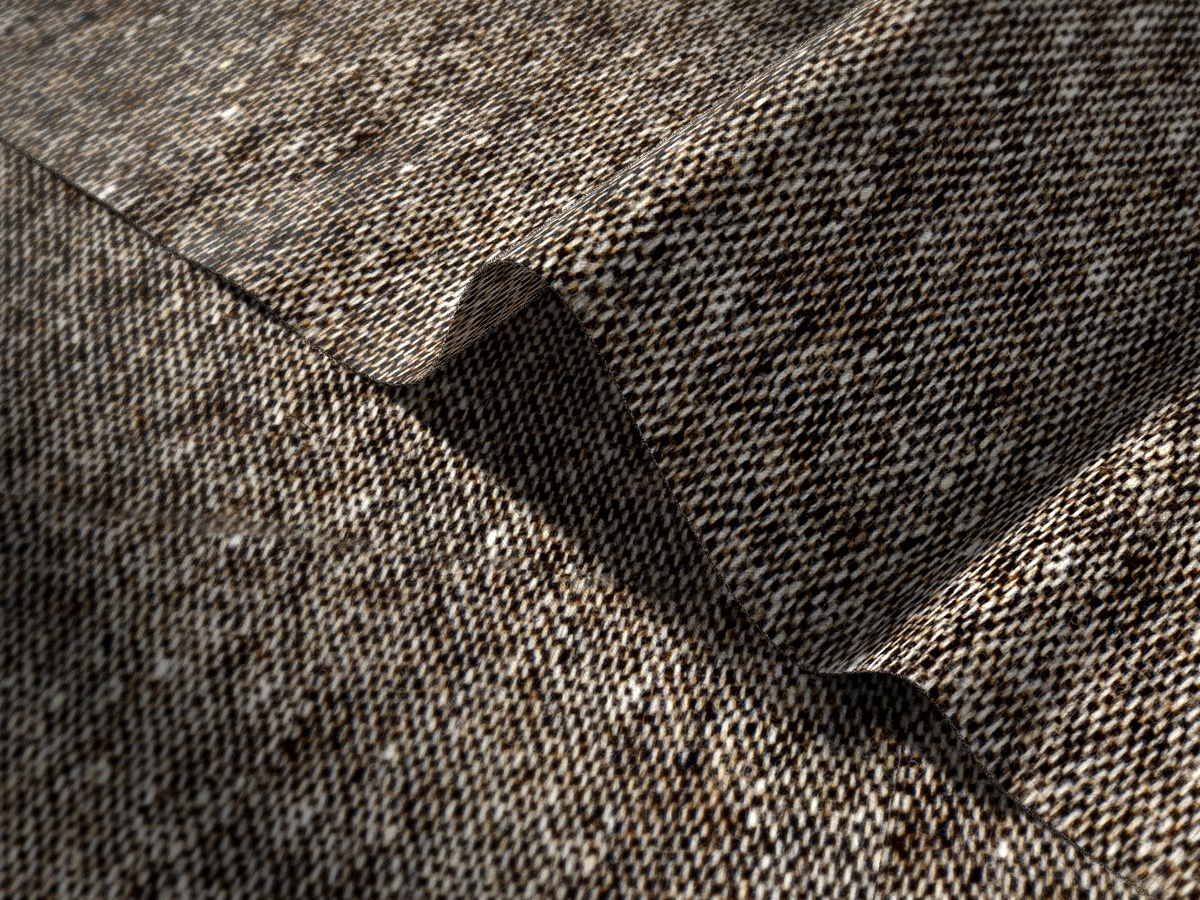
Hand-woven fabrics are powered by human energy alone, giving them a denser body, softer drape, and subtle surface variations that reflect individual skill. Machine-loomed fabrics rely on mechanical drive systems, yielding a more uniform, thinner structure that lacks those handcrafted traits.
This difference in technique defines not just the texture but also the authenticity of Harris Tweed, where hand-weaving is a legal and cultural requirement.
When exploring the world of tweed, one of the most critical distinctions lies in how it’s woven. The energy that drives the loom—human or mechanical—directly shapes the feel, weight, and integrity of the cloth itself. Harris Tweed’s global reputation is anchored in this difference.
Defining Hand-Woven vs. Machine-Loomed Production
In hand-woven production, every movement comes from the weaver’s body. The loom is powered entirely by human muscle, using pedals to control the threads and hands to manage tension. Each pass of the shuttle captures the rhythm of the maker’s movements.
- Hand-woven fabric is created on treadle looms driven solely by human muscle power, with no electric or motor assistance.
- Machine-loomed fabric uses power looms where mechanical or electric drives operate shedding, beating, and pick-up cycles.
- In textile craft terminology, “handwoven” means the weaving motion is manually controlled, unlike automated power looms.
- For Harris Tweed, only hand-woven cloth qualifies for certification and the Orb Mark.
Imagine a pianist playing a piece by hand compared to a player piano performing mechanically—the notes may be the same, but one carries the performer’s timing and emotion. Hand weaving is much the same in textile form.
Technical Differences and Certification Implications
Beyond the method of production, the resulting fabrics differ in tangible ways. The physical structure, airflow, and handle of the fabric reveal its method of birth. Certification bodies like the Harris Tweed Authority exist precisely to protect this integrity.
| Aspect | Hand-Woven Fabric | Machine-Loomed Fabric |
|---|---|---|
| Density & Weight | Heavier and bulkier due to variable tension and manual beat-up pressure. | Thinner and more compact thanks to consistent, rapid cycles. |
| Fabric Feel | Softer drape, natural irregularities, and a tactile warmth. | Stiffer hand, uniform pattern, and flatter surface texture. |
| Airflow & Durability | Better breathability; gentle action reduces fibre stress. | Less air permeability and slightly higher fibre abrasion rate. |
| Certification | Qualifies for the Harris Tweed Orb Mark, verifying human-powered weaving by Hebridean artisans. | Cannot carry the Orb Mark; classified as regular tweed. |
The Harris Tweed Authority enforces strict standards: each yard must be hand-woven at home by islanders using only their own physical strength. Machine-loomed tweed, even if made with the same wool, is legally defined as regular tweed and not Harris Tweed.
At Fursone, we draw inspiration from this heritage while integrating modern production methods in our Jiangxi facility. Our approach combines craftsmanship excellence with technical precision, helping global brands distinguish their fabrics with authenticity and reliable quality.
Fursone: Your Trusted Partner in Global Textile Supply
Price Breakdown: Why Harris Costs 3x More
Harris Tweed costs roughly three times more than generic tweed because of its unique legal protections, handmade production, and limited supply.
Each metre is made from 100% virgin Scottish Cheviot wool, handwoven on non-powered looms in the Outer Hebrides, and certified by the Harris Tweed Authority—the blend of tradition and rarity naturally drives up the price.
Many first-time buyers are surprised by how costly Harris Tweed can be. The difference isn’t just in the look or feel; it’s rooted in law, location, and limited production methods that preserve its authenticity.
Similar to how vintage wine is tied to its vineyard, Harris Tweed’s origin defines its value. Below, we break down each factor shaping its premium cost.
Authenticity and Production Requirements
Harris Tweed follows one of the strictest textile production laws in the world. Every stage—from dyeing to spinning—must take place in the Outer Hebrides, ensuring legitimate locality and craftsmanship.
- Harris Tweed must be woven from 100% virgin wool dyed and spun exclusively in the Outer Hebrides.
- The weaver produces the cloth by hand at home using a non-motorised loom on one of the designated islands.
- Only fabric finished on the islands and stamped with the official Orb Mark is recognized as genuine Harris Tweed, which adds both certification and trust value.
This strict process is more than a tradition—it’s a legal standard. It controls quality and safeguards the region’s identity while naturally raising production costs and limiting output.
Cost Factors: Raw Material and Production Scale
Harris Tweed’s price also reflects its supply limits and human-scale production. Each metre involves hours of skilled manual labor and relies on one of the rarest wool sources in Scotland.
- Scottish Cheviot wool, the sole source for Harris Tweed, draws on a significant share of the nation’s wool clip—pushing up raw fiber costs.
- Limited spinning capacity keeps supply low and prices high.
- Every piece is handwoven and manually finished, which increases labor hours per metre compared to factory-made tweed.
- The result: a lasting price premium, with mid-weight Harris Tweed retailing at a premium price per metre.
For global fabric brands, sourcing Harris Tweed is about heritage, not volume. At Fursone, we understand that same balance—the harmony between craftsmanship and scalability. Our integrated design and production hubs in Wenzhou and Jiangxi give clients consistent quality without losing creative depth.
Harris Tweed stands as a reminder that true authenticity has a cost. It’s not simply fabric—it’s a story woven by hand, and every metre reflects that heritage.
Alternatives: High-Quality Wool Blends
High-quality wool blends merge natural wool with synthetic or other natural fibers. These mixtures, often around 70% wool and 30% polyester, offer a balance of durability, breathability, and shape retention.
They serve as practical alternatives to Harris Tweed, providing a similar texture and warmth but with easier maintenance and better cost efficiency.
Wool blends are increasingly favored by brands looking to retain the classic look and feel of tweed while improving its functional performance. The result is a fabric that looks refined yet stands up to modern everyday wear.
At Fursone, this approach aligns with our philosophy of combining craftsmanship with innovation. By working with advanced textile technologies, we produce wool blends that respect tradition while meeting today’s practical needs.
Overview of Wool Blends as Alternatives
Wool blends act as refined substitutes for pure Harris Tweed, retaining much of its tactile richness and ability to insulate. They are often crafted in medium to heavy weights, giving a substantial drape and presence that echoes traditional tweed.
- Fabrics usually weigh between 260–400+ g/m², creating a structure similar to heritage tweeds used for coats and suits.
- Common blend ratios include 70–80% wool combined with a meaningful percentage synthetic fibers like polyester or nylon, which boost durability and help maintain shape.
- These materials keep wool’s natural warmth and breathability while gaining improvements such as better wrinkle resistance and easier care.
The combination works much like reinforcing a natural structure with a modern framework—it stays authentic yet becomes more resilient. Fursone works closely with production partners to fine-tune these ratios for specific uses and texture goals.
Technical Specifications and Typical Applications
With controlled fiber diameters and fabric weights, wool blends can cover a wide range of end uses, from business suits to field jackets. The blend composition directly influences softness, durability, and how the fabric handles moisture.
- Fine apparel wool typically ranges from 19–22 µm for a soft, balanced hand feel. Coarser fibers above 22 µm may be added for increased abrasion resistance.
- Common fabric widths are 140–150 cm, with weights spanning from 260–320 g/m² for suiting to 320–400+ g/m² for heavier outerwear.
- Performance blends, such as 80% merino wool with 20% synthetics, deliver stronger tear resistance and quicker drying—ideal for outerwear.
- Other popular mixes include wool–polyester (around 70/30) for toughness or wool–cotton and wool–linen (around 60/40) for lightweight, airy designs.
Similar to how alloying metals yields a stronger material, blending fibers creates fabrics that perform beyond what each component could achieve alone. This synergy allows Fursone to offer tailored solutions where character, comfort, and function meet seamlessly.
Best Applications for Each Type
Harris Tweed is prized for its authenticity, warmth, and limited production, making it ideal for heritage garments and premium fashion collections. Regular tweed is more flexible in texture and origin, suited for everyday wear and mass-produced applications.
Both have their place—one as a mark of craftsmanship, the other as an accessible workhorse of the textile world.
The best use for each tweed depends on the balance you need between authenticity, budget, and function. Below is a simple comparison showing where each excels in real-world use. At Fursone, we guide clients in matching fabric personality to garment purpose—so each design feels right and wears well.
| Application Type | Best for Harris Tweed | Best for Regular Tweed |
|---|---|---|
| Luxury Coats & Jackets | Ideal for tailored winter coats and premium blazers that highlight craftsmanship and heritage. | Suitable for fashionable coats needing a similar texture but with lighter weight and lower cost. |
| Accessories | Used in high-end bags, hats, and wallets where the authentic Orb mark adds brand value. | Used in scarves, caps, and gloves designed for everyday use or casual collections. |
| Home Textiles | Perfect for limited-edition upholstery or interior accents where natural texture matters. | Good for decorative throws, cushions, and curtains that balance cost with durability. |
| Corporate or Custom Orders | Favored in small-scale, branded collections that highlight origin authenticity, such as “Made in Scotland”. | Used for large-scale production or when specific weave patterns must align with seasonal trends. |
When brands work with Fursone, we help map fabric selections to product goals. Our weaving base in Jiangxi and design center in Wenzhou allow precise control—from yarn quality to finishing touches—ensuring consistent performance whether the fabric is Harris Tweed or a custom tweed blend.
In short, Harris Tweed tells a story of heritage, while regular tweed delivers practical versatility. Each has its stage, and knowing where to use them makes every design feel intentional and complete.
Final Thoughts
Choosing Harris Tweed isn’t about luxury—it’s about traceability, skill, and fabric integrity that outlasts trends. Its protected origin and handwoven structure stand as proof that genuine quality must be earned, not replicated.
For brands, understanding that distinction pays off. Investing in materials with verifiable craftsmanship builds long-term trust and product longevity—values that keep collections relevant and reputations strong season after season.
Frequently Asked Questions
Why is Harris Tweed so expensive?
Harris Tweed costs more because it is a legally protected, hand-woven wool cloth produced entirely in the Outer Hebrides. Each length is inspected and certified with the Orb Mark, which increases labor and quality control costs compared to regular tweed.
It works like a luxury certification — every meter is audited to ensure heritage craftsmanship and authenticity.
How to spot fake Harris Tweed?
Check for the Harris Tweed Authority Orb certification mark on the fabric edge and sewn-in label. Genuine Harris Tweed must be handwoven at islanders’ homes in the Outer Hebrides and independently inspected and stamped under the Harris Tweed Act 1993.
It’s like checking a passport — the Orb mark certifies the fabric’s origin and legitimacy.
Is Harris Tweed itchy?
Modern Harris Tweed is generally not considered itchy due to mechanical finishing that softens the wool. It is made from 100% pure new wool and typically weighs around 290–310 g/m², designed to be worn over base layers; sensitive skin may still notice some prickling.
It feels more like brushed wool — firm yet softened to reduce roughness against the skin.
Can you wash Harris Tweed?
Harris Tweed is best treated as dry clean only. Occasional hand washing in lukewarm water (max 30°C) with a gentle wool detergent is allowed for simple items, followed by reshaping and air drying flat. Avoid tumble drying or wringing.
Think of it like caring for a tailored suit — gentle handling preserves its structure and texture.
Where is Harris Tweed made?
By law, Harris Tweed must be made exclusively in the Outer Hebrides of Scotland. It is handwoven by islanders at their homes using virgin wool dyed and spun locally, then finished on the islands to qualify for the Orb certification mark.
It’s as local as fabric gets — every stage of its life happens within the wind-swept Hebrides.
Is Harris Tweed waterproof?
Harris Tweed is naturally water-repellent but not fully waterproof. It sheds light rain and moisture but may wet through in heavy or sustained rain without an additional waterproof liner or coating.
It behaves like waxed wool — great in drizzles, but not meant for downpours.
Related Reading
- Custom tweed & bouclé manufacturing (300m MOQ, 7–10 day sampling)
- Ready-stock tweed program (100m MOQ, 72h dispatch)
- Chanel-style tweed collection (280–550 g/m²)
- Woolen overcoat fabric (450–800 g/m²)
- Knitted overcoat fabric (shrinkage ≤ ±3%)
Authoritative References
[}, }, ]}]
Related Insights

Shipping Tweed Through Humid Seasons: Moisture, Bale Packaging and Mold Prevention
Wool fabric has an inconvenient relationship with the ocean: it absorbs moisture, and a shipping...
Exchange Rate Risk in Fabric Imports: 3 Ways to Hedge
Fabric importers quote retail prices months before they pay their mills, and currency moves in...

Demurrage and Detention on Fabric Containers: The Clocks That Eat Margins
A fabric container that arrives on time can still lose its margin in the port...