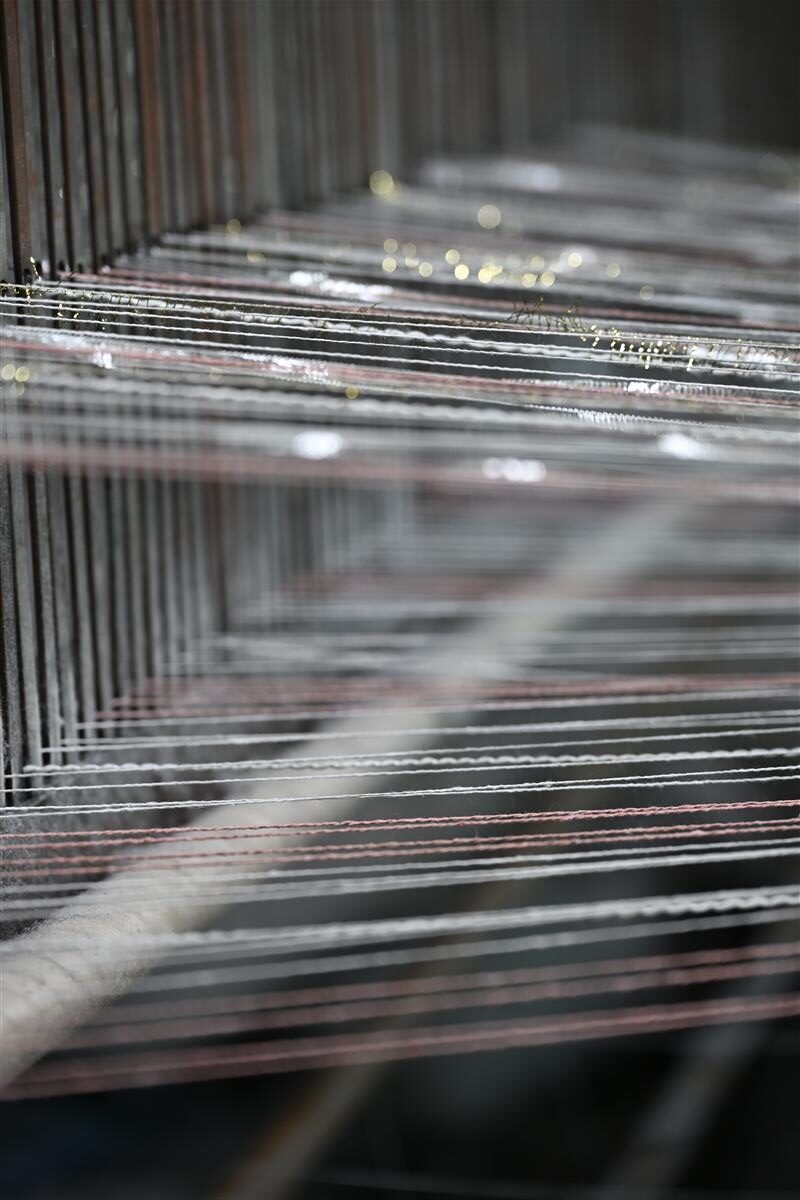
Ensuring product quality and consistency from a preliminary design to large-scale manufacturing starts with accurate sample evaluation. For B2B buyers, verifying material properties and performance early saves significant time and cost, bridging the gap between a small test item and the final product.
This article explores the technical assessment of samples, from their role as representative proxies to detailed comparison of tools like swatch kits—where sizes as small as 2-4 inches aid initial color matching. We cover standardized evaluation methods for hand-feel and shrinkage testing, noting that standards like NFPA 2112 allow no more than 10% thermal shrinkage for flame-resistant fabrics. We also touch on the financial models impacting sample procurement.
Technical Role of Samples
In 2026, samples serve as critical, measured proxies for extensive material populations or dynamic processes, ensuring that analysis yields statistically sound and legally defensible data. Their technical role centers on maintaining representativeness from collection to laboratory testing, guided by international and industry-specific standards.
Samples as Representative Proxies for Material Evaluation
Samples function as measured proxies for a larger material population, process stream, or site condition, enabling evaluation without analyzing the entirety.
The primary technical objective is to produce statistically valid and legally defensible analytical results from sample testing.
ISO 17025 defines general competence requirements for testing and calibration laboratories, ensuring samples yield reliable, defensible data.
Maintaining representativeness across the entire sampling lifecycle—from collection to storage—is paramount for accurate characterization.
Standardized Methodologies for Sampling Design and Data Traceability
ISO 18400 (soil) and ISO 5667 (water) series specify sampling design including frequency, locations, preservation chemicals, and storage temperatures to maintain analyte stability.
ASTM E122 provides formulas to calculate sample sizes, allowing estimation of a process mean with a pre-set confidence level and precision.
Caltrans Concrete Technology Manual requires aggregate samples of approximately 400 lb, formed from three random grab increments, for gradation analysis.
Geotechnical guidelines formalize chain-of-custody, labeling, and preservation, tracing each physical sample to specific borings, depths, and laboratory tests.
NIST identifies reference materials and calibration artifacts that anchor sample-based measurements to national and international scales, ensuring traceability.
Swatch Kit vs. Sample Roll
By 2026, swatch kits are compact fabric collections (typically 2-4 inches) designed for rapid preliminary assessment of color, texture, and GSM in early design stages. In contrast, sample rolls are larger cuts (e.g., 6×6 inches or more) taken directly from production runs, essential for validating drape, pattern scale, and true batch fidelity before mass manufacturing.
Defining Purpose and Initial Use
Swatch kits provide compact, tactile references, optimized for rapid color, texture, and GSM assessment for designers.
Sample rolls deliver larger sections, excised directly from production bolts, capturing drape, pattern scale, and batch fidelity.
Swatch kits serve for initial screening and preliminary property checks, such as identifying GOTS or OEKO-TEX® labeled eco-variants.
Sample rolls are critical for validation in prototyping or bulk orders, ensuring a true-to-batch representation.
Technical Specifications and Evaluation Metrics
Swatch sizes range from 2-4 inches for color matching to 6×6 inches for solids/patterned fabrics, with 3×12 inches for stripe repeats.
Swatch kits can contain 26 swatches (e.g., knit structures) or up to 138 fabrics in pocket-size packs, often specifying yarn gauge like 7Nm for knit swatches.
Sample rolls are cut from actual production rolls, offering the most accurate representation for color, texture, weight (GSM), and drape validation.
Key evaluation metrics for both include GSM (weight), shrinkage (wash/dry change), colorfastness (rub/sunlight/wash), and stretch recovery (for rib/spandex materials).
Top 5 Fabrics in Standard Kit
Standard clothing kits typically use versatile cotton fabrics, selected based on weight (GSM) and intended use. Lightweight fabrics like jersey and poplin suit breathable tops, while midweight and heavyweight materials such as twill are for more structured or durable items. Fabric choices, detailed in a Bill of Materials, ensure consistent drape, stretch, and fit from prototype to production, often with certifications for safety.
| Fabric Type | Description & Weight (GSM) | Typical Use & Characteristics |
|---|---|---|
| Jersey | Lightweight knit cotton, 140–180 GSM | Stretchy for t-shirts, casual tops, activewear; high breathability, smooth for printing |
| Interlock | Thicker knit cotton, 100–160 GSM (kidswear) | Smooth for babywear, polos; durable wash cycles |
| Poplin/Cambric/Cotton Lawn | Woven cotton, 100–130 GSM | Crisp for shirts, blouses, button-downs; holds shape, lightweight layering |
| Twill | Diagonal weave cotton, 220–400 GSM (bottoms) | Durable for chinos, jackets, pants; abrasion resistance implied |
| Slub Knit | Textured knit cotton, 140–180 GSM | For basics, tees; natural stretch, breathability |
Technical specifications for clothing kits, known as tech packs, detail fabrics within a Bill of Materials (BOM). These documents specify composition, weight (GSM), and intended use to ensure manufacturing precision. Basic items, like t-shirts, often feature simpler BOMs with knit fabrics, while more intricate garments may include linings and other components.
Standard clothing kits typically favor versatile cottons, categorized by their Grams per Square Meter (GSM). Lightweight cottons, ranging from 80–150 GSM (e.g., jersey, poplin), suit breathable tops and blouses. Midweight fabrics (150–250 GSM) are used for casual and multi-purpose garments. Heavier materials, exceeding 250 GSM (e.g., twill, canvas), are chosen for structured and durable items. This GSM-based selection helps maintain consistent drape, stretch, and fit from initial prototypes through to mass production.
Fabric selection also considers performance metrics such as tensile strength, abrasion resistance, and moisture-wicking properties. Knitted fabrics, like jersey and interlock, are often preferred for basic garments requiring stretch and movement. Woven fabrics, such as poplin and twill, offer more structure. Furthermore, certifications like Oeko-Tex and EN71-3 ensure the safety of fabrics used in kits.
It’s worth noting that no official ‘Top 5’ list or specific kit standards (like ASTM/ISO for apparel kits) exist in the research. The presented data synthesizes common Bill of Materials entries typically found in designer sample kits, drawing from various tech pack guides.
Build on Trust: Fursone’s Global Supply Chain Excellence

Evaluating Hand-Feel & Tolerance
Hand-feel evaluation quantifies subjective textile properties like softness and flexibility using instrumental and sensory methods. Tolerance defines acceptable ranges for these properties, ensuring consistent quality and performance through standardized testing protocols.
| Standard / Instrument | Description | Key Metric / Application |
|---|---|---|
| FZ/T 01166-2022 | China standard for “Textile Fabric Touch Determination and Evaluation Method: Multi-Index Integration Method.” | Specifies testing scope, physical indicators, calculation formulas, and subjective evaluation modeling. |
| FTT® Fabric Touch Tester (SDL Atlas) | Instrument compliant with FZ/T 01166-2022. | Multi-index hand-feel evaluation of textiles. |
| KES (Kawabata Evaluation System) | System with specialized testers for mechanical fabric properties. | Measures tensile/shear, bending, compression, surface friction/roughness. |
| PhabrOmeter® (Nu Cybertek, Inc.) | Implements AATCC TM 202:2014. | Determines relative hand value of sheet-type fibrous products instrumentally. |
| AATCC Evaluation Procedure 5 | Guidelines for subjective fabric hand evaluation. | Utilizes hand panel tests with bipolar scales (e.g., Warm–Cool, Hard–Soft). |
| TSA (Tissue Softness Analyzer) (emtec Electronic) | Upgraded sensor for hand feel (HF) of fiber resources/hand sheets. | Measures long/short fiber mix effects on softness, correlates to haptic tests. |
| Pain Threshold Forces (N) for Protective Materials | Measures resistance of glove palm structures to applied force. | Examples: Single cotton (37.73 N), triple-layer cotton/two leather (77.40 N). |
Defining Hand-Feel Evaluation & Tolerance
Hand-feel evaluation measures tactile properties like softness, roughness, and flexibility using objective instruments and subjective panel tests.
The industry is moving from purely sensory judgments to multi-parameter objective assessments for consistent quantification.
Tolerance in hand-feel refers to the permissible range of variation from a target hand-feel value, which is crucial for product consistency.
AATCC Evaluation Procedure 5 uses subjective panel tests with bipolar scales, such as Warm–Cool or Hard–Soft, to define sensory attributes.
Objective limits for tolerance are derived from instrument outputs, setting quality thresholds for textile products.
Key Methodologies and Instrumental Standards
FZ/T 01166-2022 (China standard) guides textile fabric touch determination using a multi-index integration method.
The FTT® Fabric Touch Tester (SDL Atlas) complies with FZ/T 01166-2022 for comprehensive hand-feel evaluation.
The Kawabata Evaluation System (KES) uses specialized testers for tensile/shear, bending, compression, and surface friction/roughness.
PhabrOmeter® (Nu Cybertek, Inc.) applies AATCC TM 202:2014 for relative hand value measurement in fibrous products.
The Tissue Softness Analyzer (TSA) by emtec Electronic measures hand-feel (HF) for fiber resources, correlating to haptic tests.
For protective materials, pain threshold forces are measured; for example, 37.73 N for single cotton, up to 77.40 N for triple-layer cotton/two leather gloves.
Deductible Sample Fee Model
By 2026, a deductible sample fee model establishes a contractual arrangement where an initial sample fee is later credited against a qualifying first production order. This system helps suppliers manage sample costs and gauge serious inquiries, while internally, samples are often treated as tax-deductible promotional expenses.
Commercial Structure and Qualifying Terms
Suppliers invoice a sample fee (including set-up or small-lot overhead) to signal value and filter non-serious requests.
The invoiced fee is contractually committed to be credited against the first qualifying production order.
At Fursone, sample fees are credited against qualifying first production orders (custom MOQ: 1,000 m/color; stock orders from 100 m).
Explicit fee schedules with ‘Sample fee,’ ‘Credit condition,’ and ‘Credit cap per project’ clarify the terms.
Internal Accounting and Tax Treatment
Product samples used for business generation are typically tax-deductible as ordinary and necessary business expenses under U.S. IRC §162.
Bookkeeping commonly records samples as ‘prepaid promotion expense’ when produced, reclassifying to ‘samples expense’ upon shipment.
For ‘charged then credited’ samples, the initial invoice is revenue, with a corresponding contractual liability reversed upon booking a qualifying production order.
Companies distinguish ‘free samples’ (fully expensed) from ‘charged samples’ (invoiced and credited) for revenue and tax control.
Testing Samples for Shrinkage
Shrinkage testing quantifies material dimensional changes after exposures like washing or heating. It ensures textiles and films maintain their intended size and performance, utilizing industry standards such as ISO 3759 for fabrics or ASTM D2732 for plastics to provide precise data for design and quality control.
| Material Type | Standard / Method | Description / Details |
|---|---|---|
| Textiles (Laundering) | ISO 3759 / ISO 6330, ASTM D1966 | Measures dimensional changes in fabrics after domestic washing and drying cycles. |
| Plastics / Films (Thermal) | ASTM D2732 | Measures unrestrained linear thermal shrinkage (length/diameter change) after specified heating. |
| Plastics / Films (Thermal) | GB/T 13519-2016, Labthink methods | Specifies oil-bath (e.g., 140°C for 20s), drying-oven, or air-heating for shrinkage ratio/force. |
| Plastics / Films (Shrink Tension) | DIN 53369 | Determines shrink tension vs. time by clamping specimens to a load cell under heat. |
| General Shrinkage Frameworks | ISO 294-4 (Plastics), ISO 175 (Rubber), ISO 3759 (Textiles) | Provides general procedures for shrinkage and dimensional change across various materials. |
| FR Fabrics (Performance) | NFPA 2112 | Sets a pass/fail limit of not more than 10% thermal shrinkage for flame-resistant fabrics. |
Fundamentals of Dimensional Stability Testing
Shrinkage testing quantifies dimensional changes materials undergo after exposure to conditions like laundering or heat. This ensures consistent fit and structural integrity in finished garments and various products.
A standardized calculation determines the percentage change: \((L_0 – L_1)/L_0 \times 100\%\), where \(L_0\) is the initial dimension and \(L_1\) is the final dimension.
Material-Specific Standards and Test Procedures
For **textiles**, ISO 6330 and ISO 3759 define methods for determining percentage length and width changes in fabrics. These standards often include detailed procedures for washing and drying cycles.
**Plastics and films** often use ASTM D2732 for unrestrained linear thermal shrinkage. Test methods include oil-bath (e.g., 140 °C for 20 s) and air-heating to assess film behavior under heat.
Beyond simple percentage shrinkage, measurements can include shrink force and contracting force, especially for advanced film applications.
Performance criteria, such as NFPA 2112 for flame-resistant fabrics, often specify a maximum thermal shrinkage, for example, limiting it to 10%.
Final Thoughts
Samples are critical technical tools, connecting initial designs to final production outcomes. At Fursone, rapid sampling takes 7–10 days with Pantone matching at 98% accuracy. Each type, from small bouclé swatches for quick checks to larger rolls for full validation, has a distinct purpose. Evaluating them carefully, following industry standards and clear metrics, helps confirm materials meet specifications. This process drives reliable decisions and ensures consistent quality from development through manufacturing.
Success in product development and manufacturing relies on understanding and applying these sample evaluation principles. This means adhering to technical standards for testing properties like hand-feel and shrinkage, while also navigating commercial aspects such as deductible sample fees and defining precise production tolerances. Clear communication through detailed tech packs and an appreciation for the specific function of each sample type are essential for achieving desired product quality. Explore Fursone’s custom manufacturing process or browse ready-stock fabrics for immediate evaluation.
Frequently Asked Questions
Is a small hanger swatch sufficient for evaluation?
A hanger swatch alone is not considered sufficient for material evaluation. Designers should use larger hanging samples or technical data. Standard small swatches (around 4″ x 4″) are for basic color comparison only. For assessing drape, pattern scale, and overall effect, larger hanging samples (often 17″ x 17″ up to 26″ x 26″) are needed. Technical swatch cards also provide performance specifications like flame resistance, UV resistance, and abrasion ratings.
Does the sample always identically match bulk production?
There is no cross-industry standard guaranteeing an identical match between sample and bulk production. Instead, technical specifications and contracts define allowable variation (tolerances). Acceptance relies on whether bulk production stays within these numeric tolerances and visually matches an approved control sample or mock-up. Designers should require a contract “control sample” and specify explicit tolerances (e.g., color ΔE, dimensional tolerances) in the specification.
Why are samples typically charged?
The provided research does not identify a direct industry standard or technical specification that explains why samples are charged. Studies often focus on equipment protocols and safety, rather than physical product samples for designers. Thus, there’s no standard-based data on sample charging practices identified in this context.
Can durability testing be conducted in-house?
Yes, durability can be tested in-house using standard benchtop equipment, provided tests follow established ASTM/ISO methods (e.g., ASTM A370, ISO 6892-1 for tensile; ISO 6508 for hardness; ISO 148-1 for impact) with defined loads, cycles, temperatures (typically 23 °C ±5 °C), and exposure times. This includes tests for tensile strength, hardness, impact, corrosion, wear, weathering, and chemical resistance. In-house testing typically requires equipment like universal testing machines, hardness testers, impact testers, and environmental chambers.
Is it possible to order multiple colorways for samples?
In apparel and soft-goods, designers typically request 2–3 colorways per style in a sample round. This practice is driven by fabric and dyeing minimums, as mills often require minimum yardage per color for production. Fursone’s custom MOQ is 1,000 m/color; ready stock ships from 100 m. Ordering more sample colorways is practical when using stocked/base colors or when prepared to meet these per-color minimum order quantities (MOQs). Designers manage multiple colorways via tech pack colorway sheets, specifying separate Pantone (or RAL/HEX) codes.

Related Insights
ISO Grade 3-4 Pilling Resistance: What the Rating Really Means
When a fabric spec sheet lists “ISO grade 3-4 pilling resistance,” most buyers read it...

How Boucle Loops Are Formed: Yarn Twist and Loop Engineering
A buyer opens a fabric swatch, runs a thumb across the surface, and feels those...
Inside a 300-Loom Wenzhou Tweed Factory: How Orders Flow
Every order that enters a wenzhou tweed factory with 300 looms follows the same spine:...