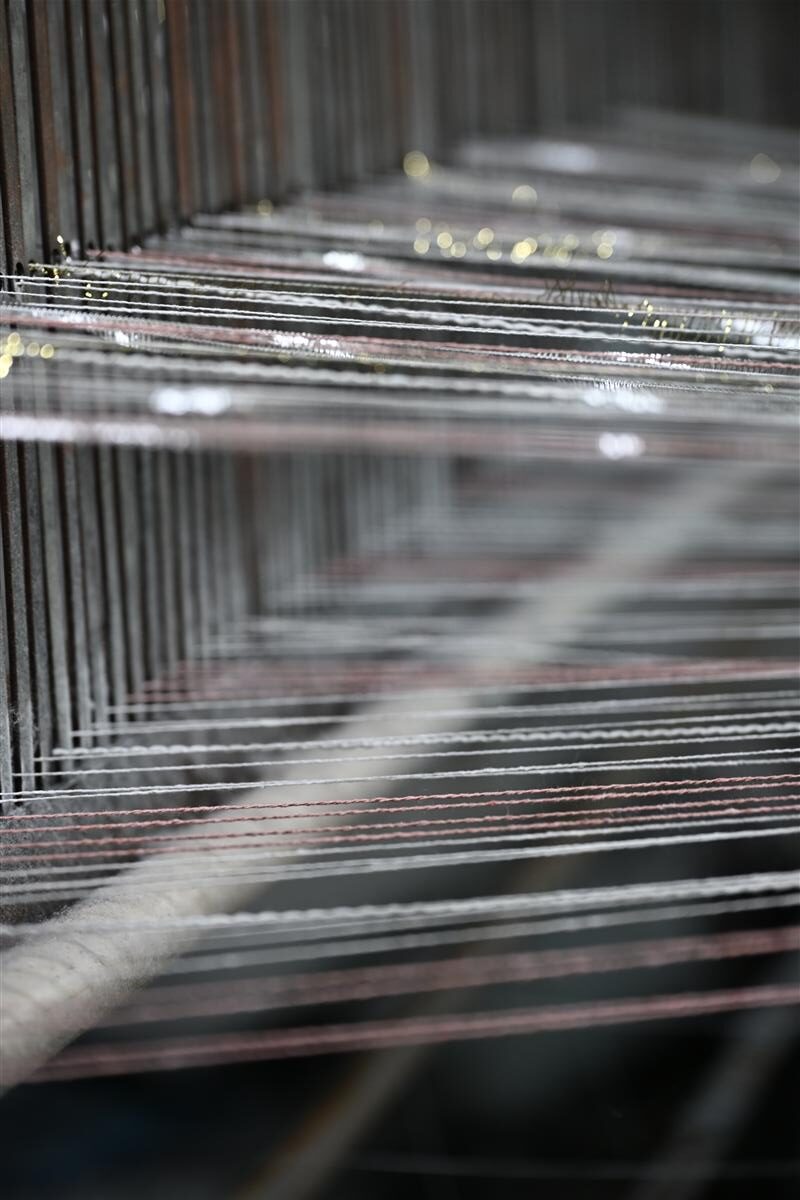
Selecting the right textile for high-traffic furniture involves looking beyond surface texture. If a fabric falls below 30,000 Martindale cycles, it will likely struggle in a commercial environment. Using heavyweight tweed—specifically options exceeding 450 GSM—prevents the sagging and seam slippage that often compromise large-scale seating projects.
This guide analyzes the technical standards required for professional upholstery, including weave density and fire safety compliance under 16 CFR Part 1640. We look at the differences between residential and commercial-grade weights while providing a framework for verifying durability through international rub test standards.
Start Here – Is Tweed Really Right for Your Sofa or Project? (Top)
Tweed provides a textured, resilient surface suitable for high-traffic furniture when rub tests exceed 30,000 Martindale cycles. For 2026 projects, selecting weights above 450 GSM ensures the fabric maintains its shape without sagging, while integrated fire-retardant properties satisfy international safety standards for both residential and commercial exports.
Functional Benefits for High-Traffic Upholstery
Dense weaves using pure new wool or polyviscose blends reduce pilling and hide surface wear better than flat-woven textiles. Textured patterns like herringbone or twill minimize the visibility of pet hair and minor stains, making them practical for family-oriented furniture designs. Heavyweight options reaching 16 oz provide the necessary thickness to prevent seam slippage on large sofa cushions and high-use seating. These characteristics ensure the material holds its form under the mechanical stress of daily use.
Essential Technical Specs and Rub Test Standards
Heavy commercial applications require a minimum of 30,000 Martindale rubs to ensure long-term durability. Specific textiles like Soft Herringbone FR Tweed exceed 35,000 cycles, while DC Dalgliesh heavyweight wool reaches 50,000 rubs, matching the upper limits of laboratory testing. Compliance with BS 5867 Part 2 B fire safety standards ensures the fabric is ready for immediate use in commercial contract markets and international exports. Weight benchmarks of 450+ GSM (15-17 oz) distinguish professional upholstery-grade tweed from lighter apparel fabrics that lack the necessary structural stability for furniture manufacturing.
The Difference: Apparel vs. Upholstery Tweed (Top)
Upholstery tweed requires a heavier weight, typically 13 oz (330 GSM) or more, and a denser weave than apparel tweed. While apparel prioritizes drape and breathability for movement, upholstery tweed focuses on dimensional stability and high thread counts to withstand friction and prevent sagging on furniture frames.
Structural Integrity: Weave Density and Weight Requirements
Upholstery tweed utilizes tight twill or basketweave structures with high thread counts to ensure opacity and prevent shape change. Weight thresholds for furniture-grade tweed start at 13–14 oz (330–450 GSM), whereas apparel tweed often uses lighter weights for comfort. These tightly interlaced yarns minimize diagonal stretch, ensuring the fabric remains taut over sofa cushions and arms without slouching under the pressure of daily use.
Performance Standards: Backings, Fiber Blends, and Friction
Upholstery versions often include synthetic backings or bonding layers to provide the tensile strength needed for stapling and tensioning during the manufacturing process. Wool-synthetic blends involving nylon or polyester increase Martindale abrasion cycles, reaching commercial durability levels that pure apparel wool cannot sustain. Pure wool upholstery weighing over 13 oz offers natural fire resistance, meeting safety standards for project exports without the need for additional chemical treatments.
Understanding Durability: Martindale Abrasion (Top)
The Martindale test measures fabric wear resistance by rubbing material in a multi-directional figure-8 pattern. For 2026 upholstery standards, residential tweed requires 15,000 to 25,000 cycles, while commercial projects demand 40,000+ cycles to ensure long-term durability against friction. This quantitative data ensures fabric meets international performance standards.
| Application Type | Martindale Cycles | Recommended Usage |
|---|---|---|
| General Domestic | 15,000 – 25,000 | Light upholstery and occasional-use furniture. |
| Heavy-Duty Residential | 25,000 – 30,000 | Daily-use sofas, recliners, and home offices. |
| Heavy Commercial | 40,000+ | Hotels, restaurants, and public transportation. |
| International Standard | ISO 12947-1:2015 | Global benchmark for textile abrasion testing. |
The Mechanics of the Martindale Abrasion Test
The Martindale abrasion test replicates real-world friction by moving an abrasive surface across a fabric sample in a multi-directional figure-8 pattern, known as a Lissajous motion. This complex movement ensures the fabric experiences wear from all angles rather than a single direction, simulating the natural movement of people sitting and shifting on furniture. Testing protocols follow ISO 12947-1:2015 and ASTM D4966 standards to provide consistent durability data that global sourcing teams use to verify material quality.
Engineers identify the failure point of the material when the test reveals yarn breakage, noticeable holes, or significant thread degradation on the tweed surface. For tweed specifically, which features a complex weave, these results help manufacturers predict how the texture will hold up against pilling and shedding over years of use. This quantitative approach removes guesswork from fabric selection, allowing designers to match material strength with the intended environment.
Performance Thresholds for Residential and Commercial Use
Industry standards set clear numeric thresholds for different furniture applications. Light domestic use typically requires a rating between 15,000 and 25,000 cycles. For heavy-duty residential furniture, such as family room sofas or motion furniture like recliners, 30,000 cycles provide the necessary resilience against pets and daily wear. These ratings ensure the fabric maintains its aesthetic integrity even under constant frictional stress.
High-traffic commercial environments demand much higher performance levels, frequently mandating 40,000 cycles or more. Hospitals, airports, and schools rely on these high counts to justify the investment in long-term upholstery. When comparing international specifications, 40,000 Martindale cycles translate to roughly 30,000 Wyzenbeek double rubs. Understanding these conversions helps B2B buyers navigate global sourcing requirements and select textiles that meet specific regulatory and performance compliance standards.
Maximize Your Agility with Fursone’s Global Tweed Supply Chain
Fire Safety Standards Made Simple (Top for projects/exports)
Fire safety for tweed upholstery centers on smolder resistance, primarily governed by 16 CFR Part 1640 and CA TB 117-2013 in the U.S. These standards ensure fabrics resist ignition from heat sources like cigarettes, while commercial projects often require additional NFPA 260 or NFPA 701 certifications to meet public safety and export regulations.
| Standard Code | Key Performance Metrics | Primary Application |
|---|---|---|
| 16 CFR Part 1640 / CA TB 117-2013 | Char length ≤ 1.8 inches; no flaming after cigarette exposure. | Mandatory U.S. national baseline for upholstered furniture. |
| NFPA 260 (Class 1/A) | After-flame < 2.0s; char length < 6.5 inches. | Commercial upholstery (hotels, offices, public spaces). |
| ASTM E84 (Steiner Tunnel) | Flame spread index ≤ 25; smoke development ≤ 450. | Interior finishes and wall coverings. |
| NFPA 701 | Pass/fail based on weight loss and flame spread. | Commercial drapery and hanging fabrics. |
U.S. Federal Smolder Standards for Upholstery
The 16 CFR Part 1640 mandate establishes CA TB 117-2013 as the uniform national standard for all upholstered furniture sold within the United States. This regulation prioritizes smolder resistance to prevent fires caused by abandoned heat sources. Testing labs expose the tweed fabric surface to a lit cigarette under controlled conditions. The material earns a passing grade only if the resulting char length remains below 1.8 inches and no open flaming occurs. Manufacturers must verify compliance using the ASTM E1353 test method, which aligns specifically with California’s rigorous safety protocols.
To meet federal export and sale requirements, every finished piece of furniture must carry a permanent label. This label confirms the product complies with U.S. CPSC requirements for upholstered furniture flammability. While many tweed fabrics naturally possess some fire resistance due to wool content, those that fail individual tests often utilize fire-resistant barrier interliners. These interliners sit between the cover fabric and the internal filling, ensuring the entire composite system meets safety thresholds without requiring heavy chemical treatments on the decorative surface.
Commercial Project Codes and Performance Metrics
Commercial environments like hotels and offices demand stricter performance metrics than residential settings. NFPA 260 Class 1/A serves as the industry benchmark for high-occupancy spaces, requiring an after-flame time of less than two seconds. For interior finishes, the ASTM E84 Steiner Tunnel test measures how quickly flames spread across a surface and the volume of smoke produced. Safe interior environments require a flame-spread index of 25 or less and smoke development scores below 450. These metrics ensure that in the event of an ignition, occupants have sufficient time to evacuate safely.
Drapery components used alongside tweed upholstery must adhere to NFPA 701, which evaluates the flammability of hanging fabrics. Because vertical materials burn differently than horizontal ones, this test tracks how long the fabric continues to burn after the flame source is removed. We analyze these combined certifications to ensure project compliance across all textile applications. By prioritizing materials that meet both smolder and flame spread standards, designers can guarantee their projects satisfy local building codes and international export safety regulations.
Backing & Bonding: The Real Reason Sofas Fail
Most sofa failures occur when the bond between the tweed fabric and its backing delaminates, leading to sagging, seam slippage, or safety violations. Proper backing stabilizes the weave, prevents excessive stretching, and serves as a mandatory fire barrier to protect combustible foam cores in compliance with 2026 safety standards.
Structural Integrity and the Role of Fire Safety Barriers
Federal safety compliance under TB 117-2013 requires backing to function as a technical barrier. This material limits airflow between the exterior cover and the resilient filling, which prevents rapid ignition. To meet these standards, the barrier must fully encase foam cushions on all sides. This setup is mandatory if the primary tweed fabric or the underlying foam fails individual smolder tests.
Engineered backing also provides the mechanical tension needed to maintain a sofa’s shape over time. Loose-weave fabrics like tweed naturally elongate under weight. By bonding a stable secondary layer to the fabric, manufacturers control this stretch and prevent the sagging often seen in budget furniture. Quality bonding increases tear resistance and seam strength, ensuring the fabric does not pull apart at high-stress points during heavy use.
Material Performance: Comparing Knit Backing and Synthetic Coatings
Material choice determines how a sofa feels and reacts to pressure. Polyester jersey and terry loop knit backings are common in residential furniture because they preserve a soft hand-feel. These materials allow the tweed to bounce back after use, maintaining a crisp appearance. Specialized coatings like acrylic and polyurethane offer waterproofing and chemical resistance, though they add more rigidity to the textile than knit options.
The adhesive bond represents the most common point of failure. Low-cost manufacturing often relies on inferior adhesives that degrade within one to three years. When the bond fails, the fabric delaminates, causing wrinkles and compromising the fire-retardant properties of the piece. Testing standards like the IMO 2010 FTP Code Part 8 use specific 1.8 lb/ft³ foam substrates to verify that the fabric-backing bond remains effective under heat and mechanical stress.
Choosing Weight, Width & Composition
Fabric selection for 2026 upholstery centers on GSM and ounce weight to ensure structural integrity. Residential projects typically utilize 200-350 GSM (5.9-10.3 oz/yd²) for a balance of drape and durability, while high-traffic contract environments require heavy-duty weights exceeding 350 GSM to prevent sagging and withstand intense Martindale testing.
Weight Metrics and Density Standards
Fabric weight metrics in GSM (grams per square meter) or oz/yd² provide the most reliable data for determining upholstery longevity. Medium-weight tweed between 200-350 GSM (5.9-10.3 oz/yd²) offers an ideal balance of drape and durability for residential seating and decorative accents. We treat the 10 oz/yd² (~339 GSM) standard as the baseline for high-quality domestic sofa manufacturing to prevent premature wear.
Heavy-duty applications require benchmarks exceeding 350 GSM (10.3 oz/yd²) to withstand contract-grade traffic. Industrial use cases, including rugged bags and intense commercial seating, often utilize weights between 15-18 oz/yd² (509-610 GSM). Increasing the fabric density directly limits the risk of pilling and structural sagging over extended periods of use.
Fabric Width and Fiber Composition
Standard fabric widths allow furniture factories to minimize cutting waste and optimize production cycles. Cotton-poly blends at 150-250 GSM provide higher tear resistance than pure natural fibers. Modern wool blends maintain the classic tweed aesthetic while enhancing elasticity and recovery during quality checks, ensuring the fabric returns to its original shape after use.
Aramid-enhanced blends exceeding 300 GSM address extreme durability and fire resistance requirements. While these heavier weight blends increase density, they require specialized sewing equipment to manage bulk at the seams. Manufacturers must account for this increased material thickness during the assembly phase to maintain clean lines and structural seams.
Home vs. Commercial Use: Different Checklists
For 2026, home upholstery typically requires 13-14oz (330-450 GSM) tweed for a balance of comfort and wear. Commercial environments demand heavier 15-17oz (450+ GSM) pure new wool to survive 50,000 to 200,000 Martindale rubs and frequent cleaning in high-traffic public spaces.
Residential Tweed: Balancing Softness and Family Durability
Medium-weight tweeds ranging from 13-14oz (330-450 GSM) provide the best profile for family sofas and armchairs. These materials offer sufficient density to resist daily pilling and maintain the furniture’s shape through natural wool elasticity. Tighter weaves in domestic grades help hide occasional spills and pet hair more effectively than looser, decorative textures.
While lightweight options like 8oz (250 GSM) polyviscose work for decorative pieces in low-moisture rooms, they lack the density required for heavy seating. Most residential projects benefit from the 330-450 GSM range because it balances a soft tactile feel with the strength needed to prevent sagging under moderate daily use.
Commercial Grade Requirements: Weights and Wear Resistance
Commercial specifications for 2026 focus on 15-17oz (450+ GSM) pure new wool to ensure longevity in business premises. Heavy-duty fabrics must pass 50,000 to 200,000 Martindale rub cycles to withstand constant friction in lobbies or public areas. This weight ensures the fabric maintains its structural integrity despite the high volume of users in hospitality or office settings.
Tartan and heavy tweed at 500 GSM (15oz) or 466 GSM (16oz) offer the stiffness needed to prevent seam slippage and structural failure. Dense wool builds provide inherent fire retardancy and superior stain resistance, which reduces the need for chemical-heavy secondary treatments. These specifications allow for frequent cleaning and long-term use in high-traffic environments without visible wear or thinning.
Stock Service vs. Make‑to‑Order for Tweed Upholstery
Stock service provides immediate access to fabrics meeting TIER 1 and TIER 2 standards for bow and skew, ideal for quick-turnaround furniture. Make-to-order (MTO) supports large-scale projects requiring specific ASTM certifications, custom color blending, or adherence to the 1993 Harris Tweed Act for authentic regional production.
Immediate Availability and Standard Performance Ratings
Inventory items meet TIER 1 standards with a maximum 0.5-inch bow and 1.0-inch skew to ensure reliable pattern alignment during the manufacturing process. Pre-produced rolls typically undergo Wyzenbeek testing to verify 15,000 to 250,000 double rubs before reaching the warehouse, providing guaranteed durability for immediate furniture production.
Stock service minimizes lead times for residential projects by utilizing existing evaluation data from ASTM D4852 protocols. Buyers obtain consistent 16 oz/yd weights and verified lightfastness ratings without the delays associated with new yarn spinning or complex dyeing cycles.
Custom Specifications and High-Volume Production Control
Make-to-order cycles utilize 80-meter warp beam lengths to maintain color and texture consistency across hundreds of furniture units. These custom runs facilitate strict adherence to the 1993 Harris Tweed Act, ensuring that finishing, quality control, and Orb Mark certification occur specifically in the Outer Hebrides.
Engineers adjust yarn slippage resistance during the weaving process to meet ASTM D4034/D4034M-19 standards for high-traffic commercial seating. Production teams integrate specific colored flecks or specialized fiber blends to match brand-specific palettes that standard stock collections do not carry.
How We Work with Furniture Clients
We provide an integrated workflow that combines trend forecasting with industrial-scale weaving. Furniture brands receive fabrics tested against 2026 performance standards, including Martindale abrasion cycles and seam slippage resistance, ensuring every shipment supports high-traffic commercial use and aesthetic longevity.
Integrated Development from Design to Final Weaving
The Wenzhou Design Center manages 2026 trend forecasting and market research to align every textile project with global furniture aesthetics. Our team translates these insights into technical specifications, ensuring the material meets the visual and functional demands of upcoming furniture collections. By centralizing the creative phase, we reduce the time between initial concept and production readiness.
The Jiangxi production base executes the weaving process using advanced looms that maintain precision across large volumes. This transition from design to manufacturing allows for end-to-end supply chain management, giving us full control over the fabric quality from the first yarn to the finished roll. We also provide customization options, allowing furniture manufacturers to adjust weave density and fiber composition to suit specific upholstery needs, such as heavy-duty contract seating or residential sofas.
Verification Protocols for Durability and Safety Compliance
We verify abrasion resistance using ASTM D4157 Wyzenbeek tests, reaching up to 50,000 double rubs for coated fabrics, and ASTM D4966 Martindale cycles with a 40,000 minimum. These benchmarks guarantee that the material survives the friction and wear typical of high-traffic commercial environments. For structural integrity, we apply ASTM D4034 standards to measure resistance to yarn slippage at sewn seams, which prevents sofa failure at critical tension points.
Colorfastness testing via AATCC 16 Grade 4 at 40-60 hours ensures the fabric resists fading during prolonged UV exposure in sunlit residential or office spaces. During the weaving process, our factories implement ISO 9001 monitoring to regulate humidity and tension, which significantly minimizes pilling and sagging in the finished product. Before shipment, every roll passes through rewinding machines for a final inspection to identify and remove defects, ensuring furniture builders receive 100% usable material without waste.
Final Thoughts
Picking a suitable tweed comes down to aligning fabric weight with expected wear. Heavyweight options above 13 oz provide the density needed for sofas to keep their form without pilling or stretching. When Martindale ratings exceed 30,000 cycles, the material handles the friction of busy households or commercial lobbies, ensuring the investment lasts.
Safety compliance and structural testing define the quality of the finished piece. Integrating fire-resistant barriers and checking seam slippage ratings helps avoid common failures seen in budget upholstery. Professional projects gain reliability by sticking to high GSM benchmarks and certified smolder standards, which keep furniture safe and functional for the long term.
Frequently Asked Questions
Is tweed a bad choice for a sofa because of pilling?
No. High-quality tweed with a Martindale score of 35,000+ is extremely durable. Pure wool options between 13 and 17 oz resist pilling naturally due to their dense weave and sturdy fiber structure, which prevents premature wear.
How can I balance a tight budget with long-term durability?
Select commercial-grade polyolefin blends or heavy-duty synthetic tweeds. Options like high-performance synthetic tweed offer up to 250,000 double rubs, meeting heavy commercial standards while keeping costs manageable for large-scale projects or budget-conscious residential builds.
Will a tweed sofa survive children and pets?
Yes, provided the fabric exceeds 10,000 Martindale rubs. For active households, a 13-oz pure new wool with a 35,000-rub rating provides a dense barrier against snags. Wool also features natural stain resistance, which can be enhanced with anti-stain coatings.
How do I ensure tweed fabric meets safety codes for commercial projects?
Verify that the fabric passes specific fire standards such as CAL-117, UFAC Class 1, or Crib 5. For 2026 project inspections, ensure the tweed also meets the 30,000 Wyzenbeek double rub threshold required for heavy-duty commercial applications.
How can small brands test fabric quality without high minimum orders?
Small factories should purchase 5 to 10 yards of sample yardage and send it to independent labs like the Manufacturing Solutions Center. Testing for seam slippage and Martindale cycles—aiming for at least 23,000 rubs—confirms performance before committing to bulk production.
What weight and rub count should I look for in a standard sofa?
Residential furniture requires at least 10,000 Martindale rub cycles. For better longevity, select a heavyweight wool tweed between 13 and 17 oz (330-450+ GSM). This weight ensures the sofa maintains its shape and surface integrity over 10 or more years of use.
Authoritative References

Related Insights
Fall/Winter 2026-27 Fabric Forecast: Boucle, Tweed, and Cable Knit
The fall winter 2026 fabric forecast for tweed and knit buyers is not a mood-board...
Tweed vs Bouclé: Which One Fits Your Collection?
{ “@context”: “https://schema.org”, “@type”: “Article”, “headline”: “Tweed vs Bouclu00e9: Which One Fits Your Collection?”, “author”:...

Cable Knit vs Bouclé: Which Fabric Builds Better for Fall 2026
{ “@context”: “https://schema.org”, “@type”: “Article”, “headline”: “Cable Knit vs Bouclu00e9: Which Fabric Builds Better for...