
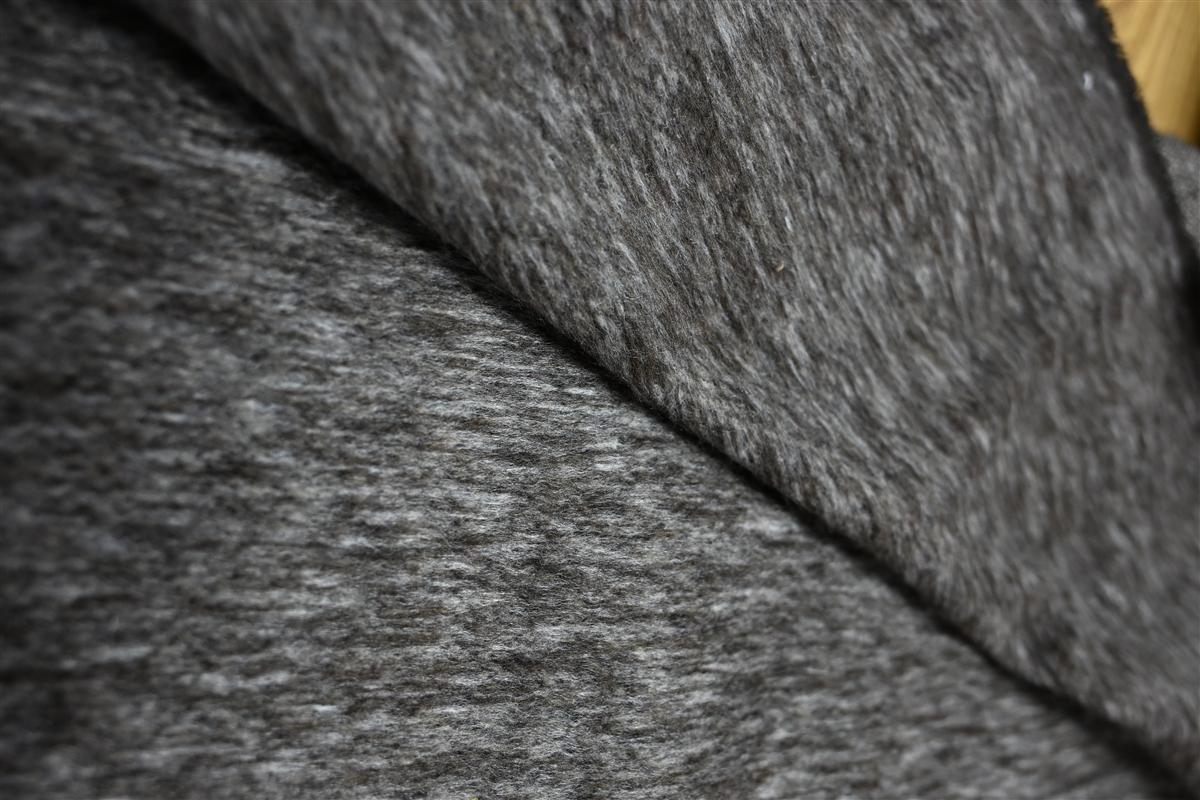
The 40 m is not something you take out of the lot; it is a second, shorter piece woven inside the same beam, and every useful question follows from that. Ask the mill to make the beam up with the sample plus the waste the sample itself creates, to weave a named running-in length before the sample is cut, and to cut it as a full-width section with every warp end kept and the join tied or spliced by a method they can describe. Then fix the paper: one yarn lot, one sizing batch, one beam reference carried on both the sample roll ticket and the balance piece ticket, and one finishing route for both pieces. Last, settle whether the balance waits for your written approval or runs straight through, and how the 40 m is counted and priced against the order.
Fix the beam length before anything else is decided
The beam is the fixed quantity in this conversation. Once the warp is wound and sized, the metres on that beam are what the order can deliver, and the sample metres have to come from inside that number unless the mill agrees to wind more. So the first question is arithmetic rather than attitude: how many metres will the warp carry in total, and what does the mill count as waste?
Start waste and end waste, tying-in knots, take-up while weaving, and the running-in length at the head all sit between the wound length and the saleable cloth. Ask the mill to state the allowance they hold for each of these on a beam of this construction, and then ask whether your 40 m sits inside that allowance or on top of it. A sample carved out of the waste behaves very differently from one that takes 40 m of saleable length, and the difference shows up in what reaches your warehouse, not in the mill’s office.
Then settle what the figure means. Loom length, greige length measured on the roll, and finished length after washing, pressing, and relaxation are three different numbers, and the gap between them does not move in your favour. Ask which figure the sample will be measured on and which figure the balance will be delivered on, and have both written into the confirmation. Ask as well whether the order is 400 m plus the sample or 400 m including it. Both positions are workable; a mill assuming one while the buyer assumes the other is how a short delivery begins. If the conversation needs a shared reference point, the way warp and weft are defined and combined in a woven cloth is a useful place to start, because the sample and the balance have to be the same cloth in both directions.
Take the sample from a named place on the beam
Where the 40 m comes off the beam changes what it can prove. The first metres off a freshly beamed warp have not settled yet: let-off and warp tension need a running-in length before pick density and selvedge behave the way they will behave for the rest of the piece. A sample cut from the very head of the beam is a sample of the loom’s first hour rather than of your order.
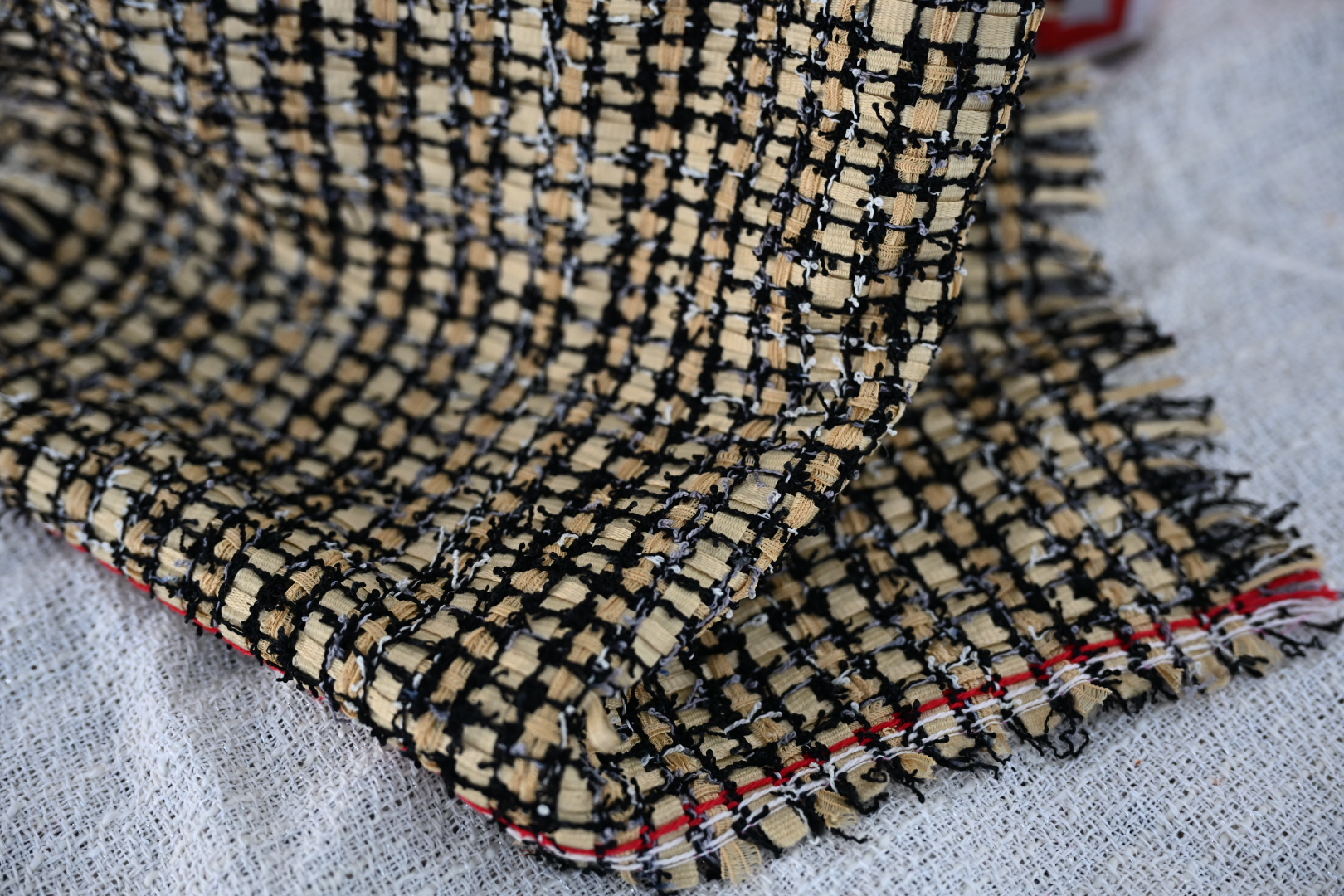
If the sample comes off the front, the loom stops mid-run, the cloth is cut off, and the warp is tied or knotted back so weaving can continue. Ask how that restart is carried out, whether every end is accounted for, and what it leaves behind. Ask where the join falls, whether the knot is made in the warp or the weft direction, how many ends may be tied at one place, and whether the join is marked in the selvedge and recorded on the piece ticket so the same place can be found months later.
Taking the sample from the tail end, after the balance has been woven, removes the restart problem and creates a timing problem. You will not see the sample until the whole lot is off the loom, which is fine if your selling season allows it and useless if the showroom date comes first. Say which of the two you need before the beam is made up; discovering it on the day of the cut costs everyone a schedule change.
One lot, one beam, one set of references
The phrase “same beamed yarn” is worth only what the paperwork behind it is worth. A warp is made from yarn drawn off cones, and cones carry lot references. Ask whether every end on this warp comes from a single yarn lot and a single dye lot, and whether the sizing was done in one batch for the whole beam. Then ask the same question about the weft that will run against the sample. If the weft changes partway through the run, the sample and the balance are not the same cloth even though the warp never changed.
The references on the beam card are the ones to copy onto both tickets: beam reference, number of ends, length wound, yarn lot, dye lot, sizing batch, and the date the beam was made. Ask that the sample roll ticket and the balance piece ticket both carry the beam reference, so that a swatch cut in a showroom six months later can still be traced back to the beam it came from. If your programme runs on chain-of-custody documents, those lot references are also what later transaction documents hang from, and a mill cannot evidence a lot it never recorded at beaming.
Decide what the 40 m has to do, and how much of it survives
Forty metres sounds generous until you list what it feeds. Memo swatches for the sales team, hanger and blanket lengths for agents, a set for your own pattern room, a length reserved for testing, and one piece kept uncut as a reference against future questions. All of that comes out of the same 40 m, and the metres that go to a testing house do not come back.
Ask the mill how a length like this is normally handled on their side, then ask your own team how many metres the selling season actually consumes. If the two numbers do not meet, the answer belongs in the beam length rather than in a smaller sample. It also helps to be precise about the purpose, because a stage that proves construction and a stage that proves colour and surface behave differently. The way fabric development rounds are usually separated, each with its own budget and its own question, is a reasonable model here: name the question this sample is meant to answer, and the size and the cutting plan follow from it.
Match the finishing route, or the sample describes a different cloth
Finishing is what turns the cloth that leaves the loom into the cloth you sell. Washing, steaming, pressing, and any raising or brushing move the hand, the surface, and the dimensions. A sample finished on its own, at a different time or through a different line, can read differently from the balance even when both pieces came off the same beam, and the argument afterwards is hard to win because nobody wrote down what happened.
Ask whether the sample will be finished in the same pass on the same route as the balance, and if not, what the mill proposes instead and what they expect that to change. Have the route noted on the sample ticket next to the beam reference. This is the same principle that makes a sample from one loom and bulk from another such an awkward comparison: the value of the same-beam sample is that the two pieces are made the same way, and every separate step you allow erodes it. If the sample has to travel early for a showroom date, ask for the deviation to be recorded, so a later difference can be explained with a document rather than a phone call.
Make the cut a release gate and put it in the confirmation
There are three ways to sequence this, and the mill will choose one for you unless you state a preference. The balance can be held on the loom until your approval arrives, it can be woven straight through while the sample travels, or the sample can be woven first and the beam held while you decide. Holding a beam consumes loom time and schedule; weaving through costs you the option to stop. Neither choice is automatically wrong, but it has to be made before the warp is wound, not on the day of the cut.
Then write the terms into the order confirmation: the sample length and where on the beam it will be cut, the running-in length before it, the join method, the beam reference, a statement that no yarn lot change occurs mid-beam, the finishing route for both pieces, how each length will be measured, how the 40 m is counted against the ordered quantity, and how it appears as a line on the invoice.
The clause most buyers forget is the one about refusal. If the balance has already been woven when your sample fails, a rejection gives you very little room. Fix the options before the loom runs: the balance waits for written approval or until an agreed number of days passes, after which the mill may treat silence as acceptance; a rejected sample comes back with a written explanation and a proposed remedy; and if the fault sits in the beam itself, the remedy is agreed in advance instead of negotiated under time pressure. Ask for a photograph of the beam card and the sample roll ticket as soon as the sample is cut, and keep them with the confirmation. The whole conversation is inexpensive while the warp is still a plan, and it becomes expensive the moment the warp is on the loom.

Verwandte Einblicke
Three Seasons Same Cloth: Yarn Shade Finish Locks
Running the same cloth for three seasons like a larger brand means locking yarn, shade,...
Shrink vs Stretch Returns: Separating Cloth From Care
A shrink-versus-stretch attribution is a controlled comparison that separates cloth change from care change on...

Lab Dip Close to Pantone: What to Sign Before Bulk Dye
A lab dip approval is a signed colour standard that freezes dye recipe, substrate, illuminant,...