

Shrinkage complaints on knitwear rarely come from bad fiber; they come from unrelaxed fabric cut before it finished moving. Knit structures are elastic by construction, so every process from knitting to dyeing stores tension that releases later, in the washing machine instead of the finishing range. Controlling shrinkage is a manufacturing discipline: relax the fabric before cutting, measure it the way the customer will wash it, and write the numbers into the spec. Here is how that discipline works.
Why Knits Shrink: Three Mechanisms
Relaxation shrinkage is the big one: knitting under tension stretches loops lengthwise, and the first wash lets them spring back, commonly the largest single movement in a garment’s life. Felting shrinkage affects animal fibers: wool scales interlock under heat, moisture and agitation, irreversibly densifying the fabric. Hygral expansion is wool’s moisture cycling, fibers swelling and shrinking with humidity, which shows as movement between wears rather than one wash. Each mechanism has a different fix, which is why a shrinkage spec that just says “3 percent” without a method is not a spec.
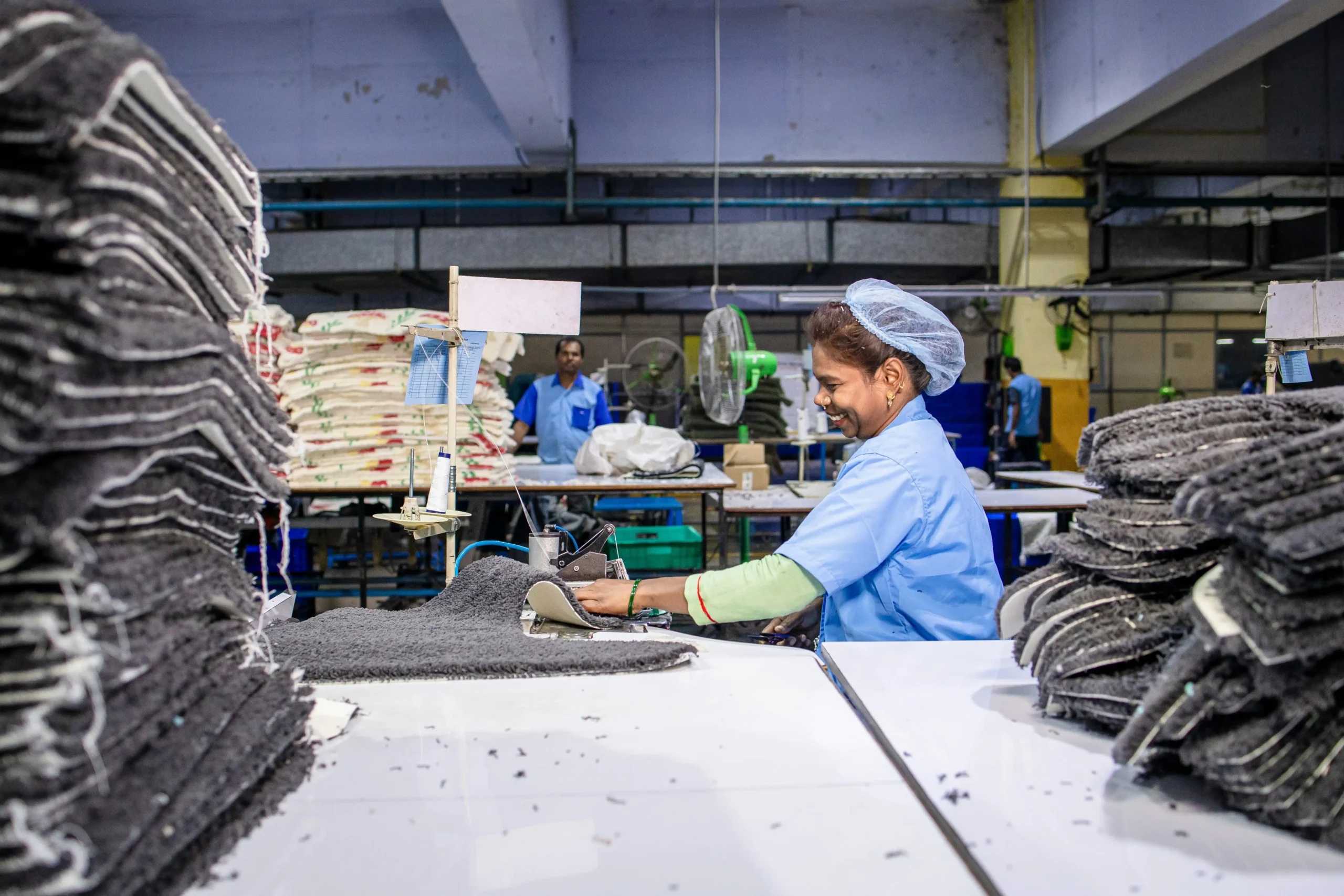
Pre-Shrinking and Relaxation in the Mill
Mills control shrinkage before the fabric ships. Compacting (or overfeed finishing) runs the fabric through a zone where it is deliberately overfed so loops relax on the machine rather than in the customer’s wash. Pre-shrinking for wool-rich knits pairs controlled washing with stabilized drying to get the felting movement out early. Stress relaxation time matters too: knit that rests before rolling finishes calmer than knit rolled hot off the tenter. On our lines, boucle and knit tweed go through relaxation finishing before inspection, because loop geometry is as sensitive to residual tension as length and width; the same tension logic behind twist and ply in pilling control shows up here in dimensional form. These controls run across the whole knit fabric program, from sweater knits to boucle.
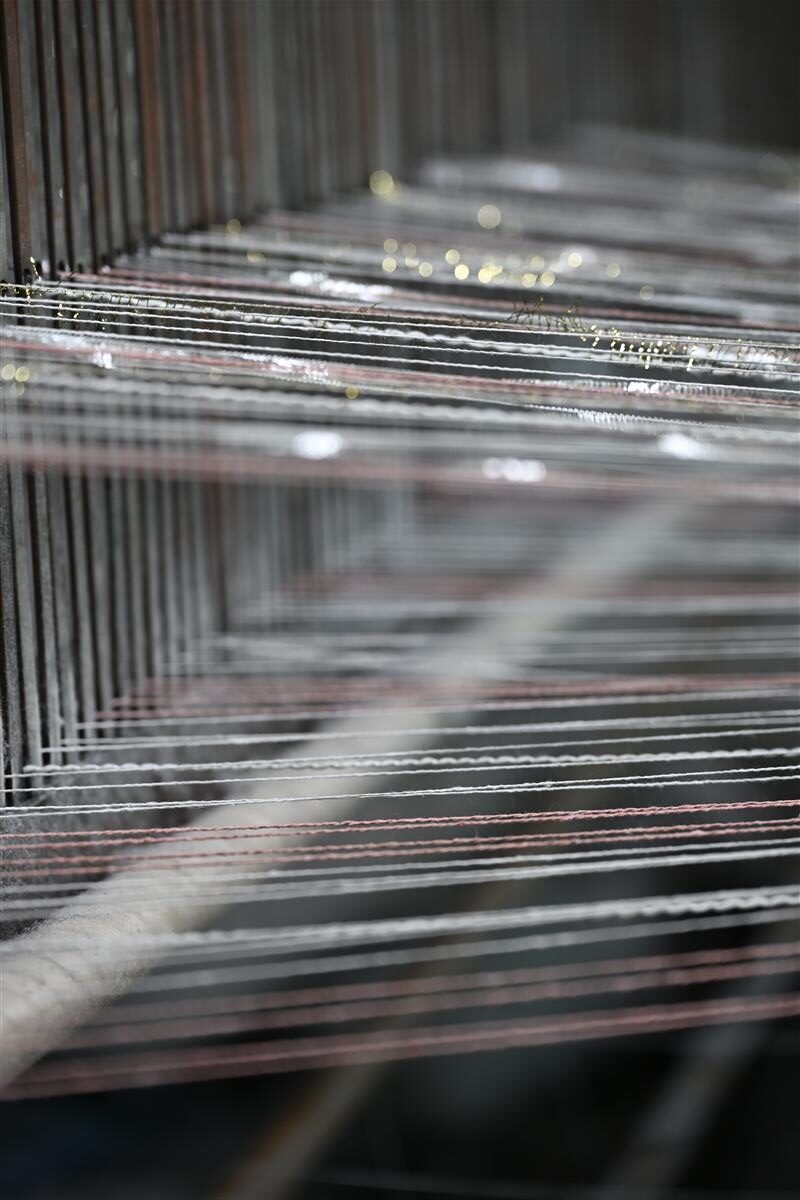
Measuring Shrinkage the Way Buyers Wash
Dimensional stability testing follows defined wash-and-dry cycles: specimens are marked, washed under a set program, dried by a set method, and measured after rest. Standards bodies publish the methods; the BSI knowledge base is a good entry point to the dimensional-change test family used across Europe. The discipline that matters for buyers: agree the wash program, drying method and cycle count that match your customer’s real care label, because a gentle-cycle result tells you nothing about a 40-degree wash. Our GSM and drape guide covers the companion measurement discipline for weight, which moves alongside shrinkage.
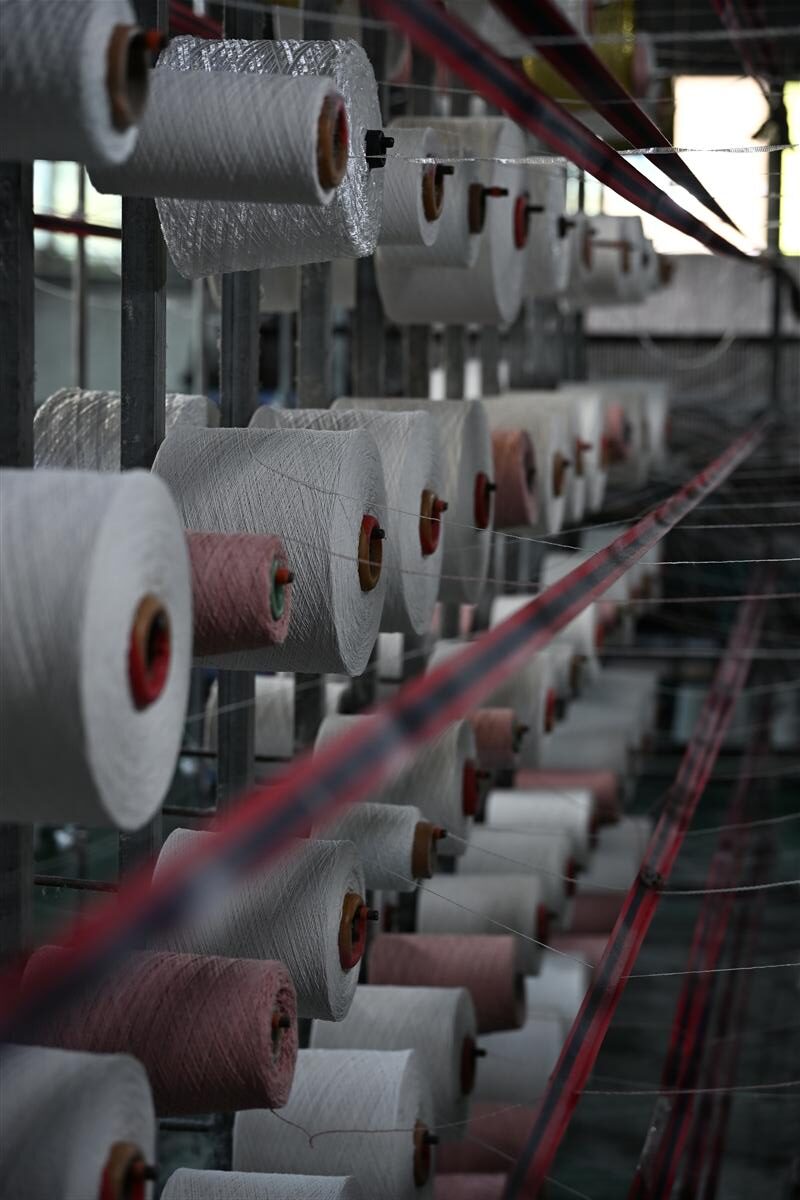
What to Write in the Spec
Four lines hold the line in production. One: maximum dimensional change after the named wash cycles, length and width separately, typically single digits. Two: test method and drying regime named. Three: garment-maker’s allowance, so the cutting room works to pre-relaxed dimensions. Four: re-test rights on bulk lots, since relaxation behavior can drift between dye lots. Bulk roll stability pairs with the running-yarn checks we describe in the boucle running-yarn review, and both live under the same inspection discipline.
A Practical Control Plan
Sample with the real wash test, not a visual check. Bulk-test the first and middle lots. Keep relaxation finishing on the route sheet even when schedules tighten, because skipping it exports the problem to your customer’s returns desk. Fursone runs 300+ looms in Wenzhou with ISO-certified finishing, and custom knit development starts at 1,000 meters with 7-day sampling; send your wash standard to info@fursone.com or WhatsApp +86 134 5607 1339 and we will return tested dimensional data with the sample.
Verwandte Einblicke

Raising and Brushing: How Nap Is Built in Wool Finishing
Two wool fabrics can leave the loom identical and arrive as different products. One is...

Steaming and Mending Before Packing: The Mill’s Final Pass on a Tweed Roll
Between the loom and the bale there is a department most buyers never see. In...

Garment Filler and Stiffening: How Weight Changes a Tweed’s Hand
Two cloths can share a blend, a weight and a colour reference and still feel...