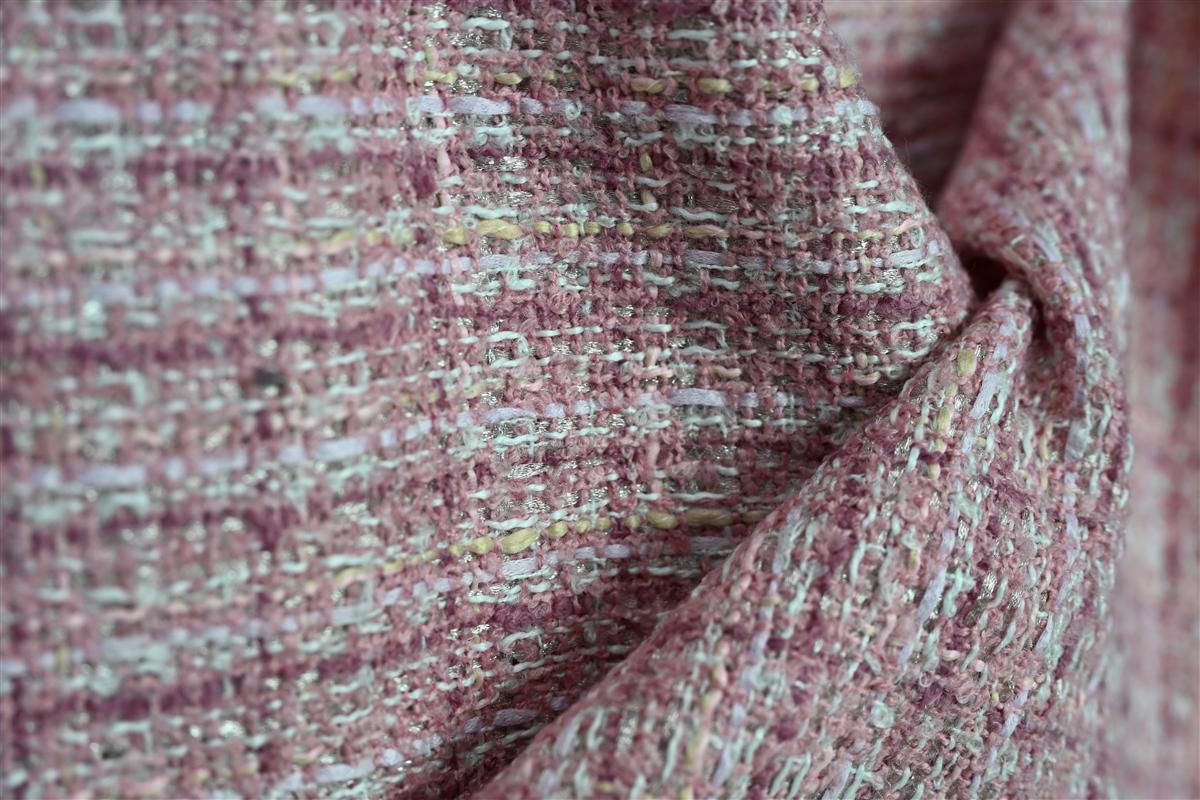
tweed vs boucl is the first checkpoint buyers should lock before they approve a supplier, budget, or production slot. The first time you hold a bouclé swatch next to a tweed swatch, the confusion is real. Both have that nubby, dimensional surface that signals luxury. But the tweed vs bouclé question stops being academic the moment you translate it into a production order — one fabric holds a structured lapel through a 12-hour wear test, the other drapes into a relaxed silhouette at 30% lower cost per meter. Pick the wrong construction for your silhouette, and you’re not just fixing a sample. You’re eating a full minimum order quantity.
Most first-time buyers walk into sourcing conversations focused on color and hand feel. That’s what gets you sold a roll of knitted bouclé mislabeled as tweed — and a jacket that bags at the elbows after three wears. The real decision sits at the yarn level: twisted multi-ply slubs versus looped singles, 250 gsm versus 180 gsm, factory-direct stock at $8–12/m versus imported woven at $25–40/m. Your collection doesn’t need the “better” fabric. It needs the one that matches your pattern weight, your price point, and your customer’s tolerance for dry-cleaning.
What Is Tweed? Structure, weight, and heritage
If you buy knitted bouclé expecting tweed-like tailoring stability, you’ll lose shape after three wears.
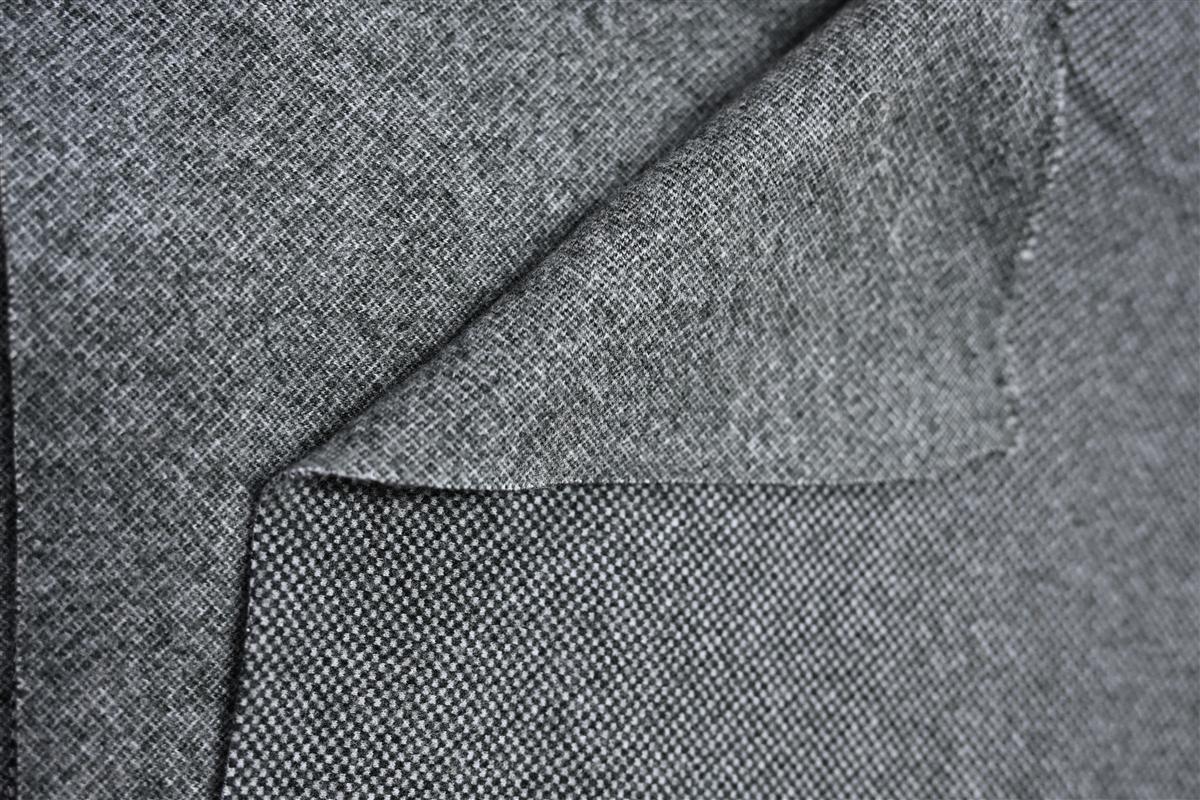
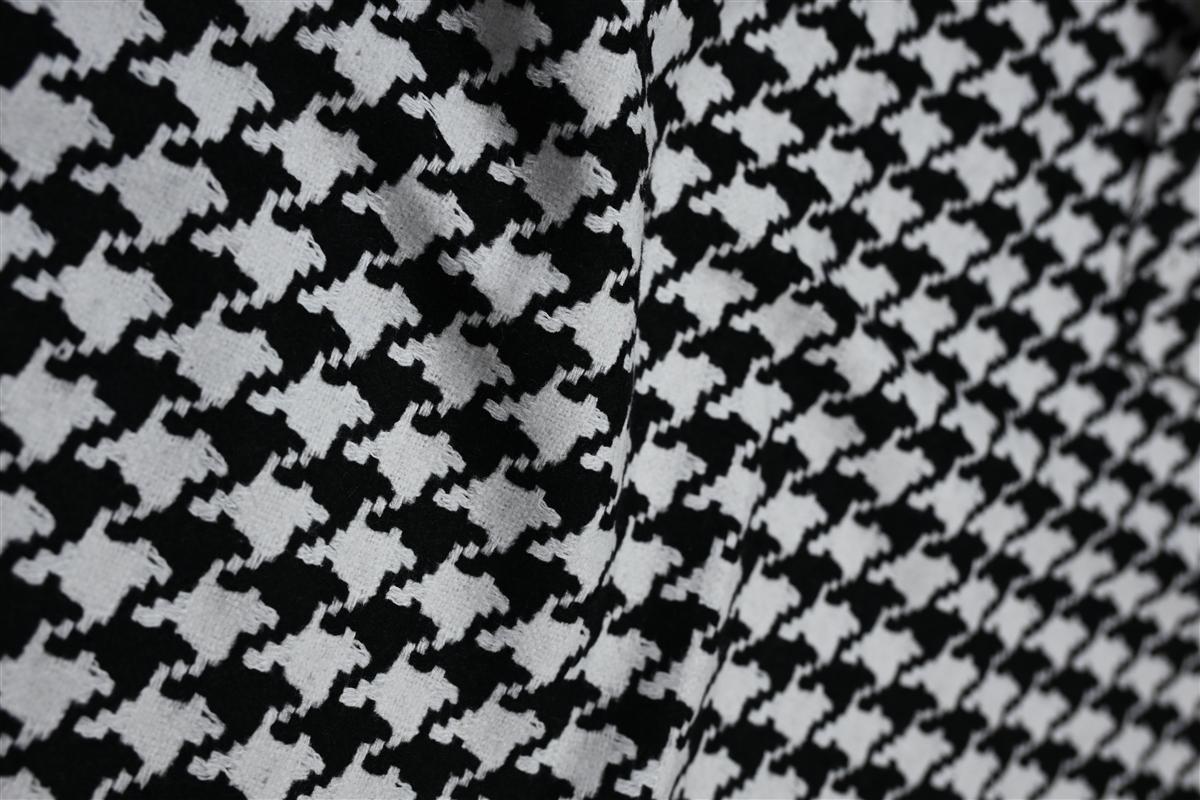
Tweed is a tightly woven wool or wool-blend fabric. The structure relies on a twill or herringbone weave — each weft yarn passes over two or more warp yarns on a diagonal, creating a dense, stiff hand. This weave geometry is why a tweed blazer holds a sharp lapel and stands away from the body instead of collapsing.
Most commercial tweed sits between 250 and 400 gsm. At 250 gsm you get a midweight suiting cloth with decent drape; at 380–400 gsm you enter overcoat territory where the fabric resists folding and demands interlining. For a structured jacket, 320–350 gsm is the sweet spot — enough body to control silhouette without turning the garment into armour.
The surface texture comes from multi-ply slub yarns. A genuine tweed yarn contains two or more coloured plies twisted together with thick-and-thin irregular slubs. When woven, those slubs scatter across the face as little flecks — three, four, sometimes five distinct colours in a single yard. That’s the heritage look: a heathered depth that flat-dyed plain weaves never achieve.
- Weave: Twill or herringbone; 2/2 twill is the workhorse for jackets. It locks yarns tighter than plain weave and gives diagonal surface ridges.
- Gewicht: 250–400 gsm. Stock tweed from a Wenzhou mill typically lands at 320–360 gsm — deliberately chosen for Chanel-style jackets that need structure without weight.
- Yarn construction: Multi-ply twisted slub yarns. Three-ply woollen spun slubs are common; the twist improves abrasion resistance and prevents the fabric from bagging at elbows.
- Colouration: Stock-dyed or yarn-dyed. Yarn-dyed is mandatory for the flecked tweed look. Piece-dyed tweed reads flat and signals cost-cutting.
- Shape retention: High. The tight weave and twisted yarns create a fabric that resists creasing and holds tailored lines through multiple wears — critical for structured jackets and pencil skirts.
A practical note for first-time buyers: when you handle a swatch, try to pull it on the bias. A properly woven tweed will barely give. If it stretches noticeably, you’re looking at a loose sett or a high-synthetic blend that has been over-softened to mimic drape — it won’t survive production pressing. Ask for the yarn count: a solid twill tweed for tailored outerwear will be in the 2/15 Nm to 2/28 Nm range. Anything finer starts to behave more like a dress-weight flannel and loses the structural integrity you need.
What Is Bouclé? Loops, softness, and drape
Bouclé’s texture comes from the yarn, not the weave.
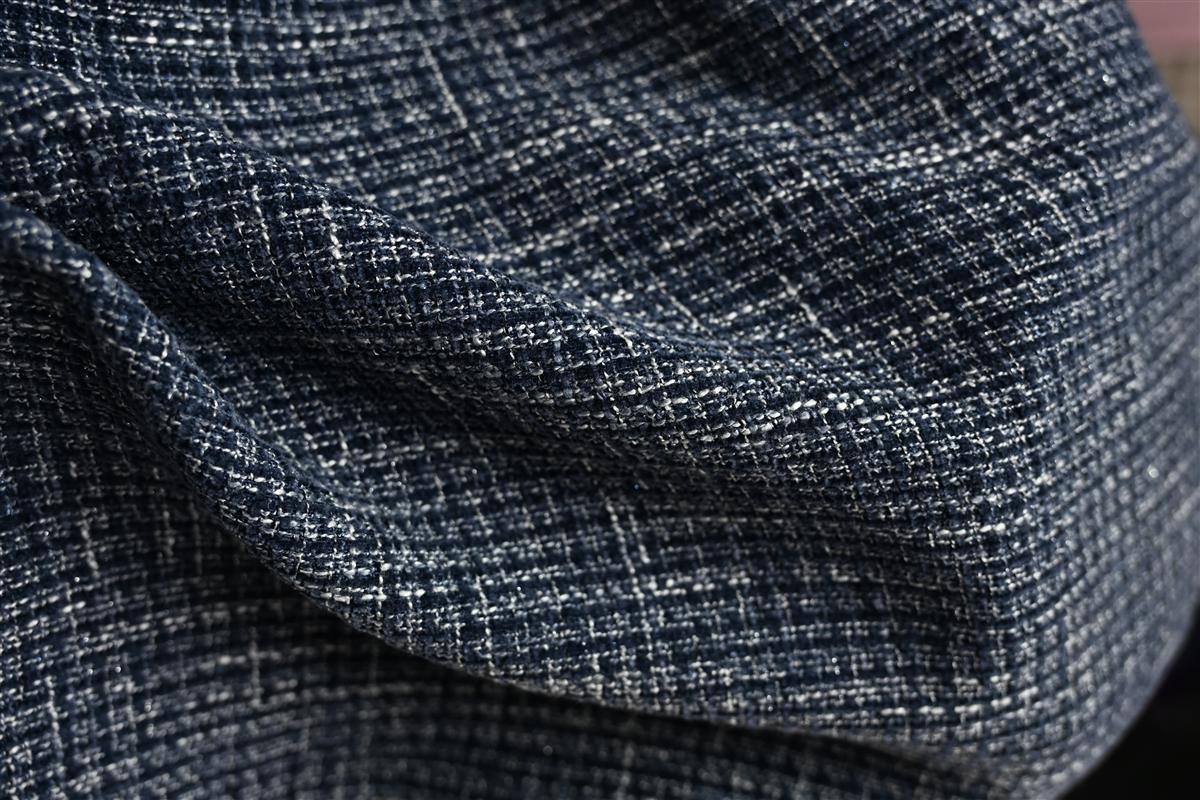
Bouclé is a fabric defined by its yarn. The core thread is wrapped with a second, looser yarn that forms small, irregular curls and loops. When this looped yarn is knit or woven, it creates a bumpy, spongy surface that feels soft to the touch and has a distinct three-dimensional texture. If you run your hand over bouclé, it feels nubby and springy—nothing like the flat, hard surface of a tightly woven tweed.
The confusion with tweed happens because both can use wool blends, both appear in similar jacket silhouettes, and both carry a rustic-luxury aesthetic. But the source of texture is different. Tweed gets its body from dense twill or herringbone weaves. Bouclé gets its personality from those thousands of tiny loops sitting on the fabric face. This is why a bouclé jacket looks softer and drapes more fluidly than a tweed one, even at similar weights.
Weight typically falls between 180 and 280 grams per square meter, making bouclé a midweight fabric that works for relaxed tailoring, cardigans, and soft coats. When knit, bouclé can stretch significantly and feels almost like a plush sweater. Woven bouclé has less give but still retains a much softer hand than comparable woven tweed. Many mills add fine metallic threads into the loop yarn—Japanese lurex is a common choice—to give the fabric a subtle sparkle without adding stiffness.
One small detail that separates average bouclé from premium bouclé is loop frequency. Cheap versions use sparse loops, which leaves the fabric looking patchy and increases snagging risk. Tighter, more consistent loop placement creates a richer surface and better durability. When you compare swatches, count the loops per inch. A solid bouclé will show a dense, even loop distribution, not scattered clusters of curls.
- Yarn structure: Single or twisted looped yarn wrapped around a core thread. Twisted-loop yarns reduce pilling by roughly 30% compared to single loops.
- Surface feel: Spongy, nubby, and soft. The looped surface creates air pockets, which is why bouclé feels warmer than its weight suggests.
- Drape behavior: Knitted bouclé drapes loosely and stretches; woven bouclé holds shape better. Neither version has the structured stiffness of a dense tweed.
- Common add-ins: Metallic lurex threads, viscose slubs, or recycled poly fibers are frequently blended into bouclé yarns for luster and sustainability claims.
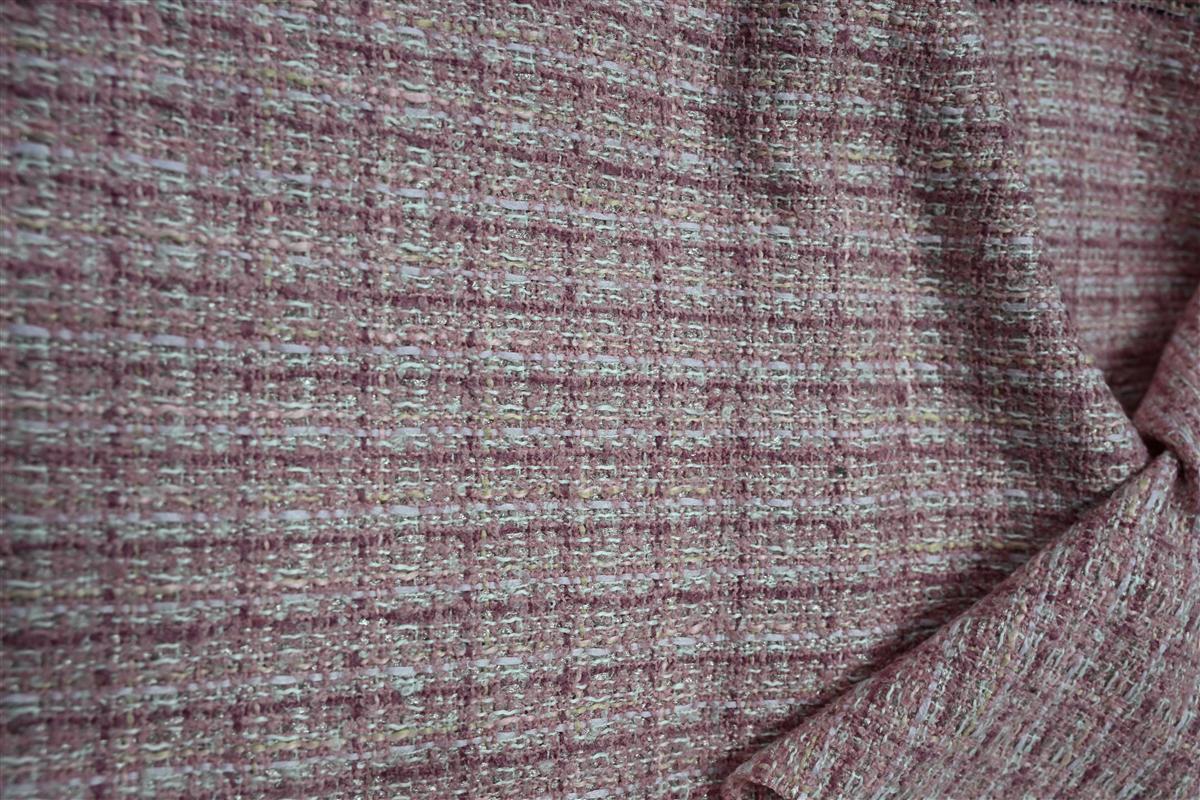
Tweed vs Bouclé: Side-by-side comparison table
Tweed stays sharp under strain; bouclé saves cost but loops snag fast.
- Texture: Tweed: Tight, slightly coarse surface with visible slubs and color flecks from multi-ply twisted yarns. Bouclé: Soft, bouncy, nubby loops that feel spongy underhand; often incorporates metallic threads for shimmer.
- Gewicht: Tweed: 250–400 gsm, with 300 gsm common for structured blazers. Bouclé: 180–280 gsm, with 220 gsm typical for drapey cardigans and relaxed jackets.
- Structure / Flexibility: Tweed: Dense twill or herringbone weave resists stretching; holds sharp lapels and seam lines. Bouclé: Looped yarn face on a woven or knitted base — woven versions offer moderate structure while knitted bouclé stretches and compresses easily.
- Fall: Tweed: Stiff, architectural drape that holds shape away from the body; ideal for tailored pieces. Bouclé: Soft, fluid drape that follows the body; works for relaxed silhouettes and slouchy outerwear.
- Best Garment Types: Tweed: Structured blazers, shift dresses, A-line skirts, formal coats where crisp edges matter. Bouclé: Chanel-style jackets (woven bouclé), cocoon coats, soft cardigans, and lounge sets where comfort and texture lead.
- Durability / Pilling Risk: Tweed: Tight weave resists abrasion; pilling results are typically minimal even in high-friction zones. Bouclé: Single-loop yarns show 20–30% faster pilling on sleeve undersides and bag contact points. Request twisted-loop yarns — they cut snagging by ~40% and pilling by ~30% for only 10–15% cost increase.
- Cost per Meter (Factory-Direct Stock): Tweed: $12–18/m from direct mills. Bouclé: $8–12/m — 30–50% less than comparable tweed. Custom programs: tweed around $18–25/m, bouclé $15–20/m. European equivalents run $25–40/m for bouclé alone.
| Attribute | Tweed | Bouclé |
|---|---|---|
| Textur | Dense, structured, flat-woven with visible slubs and flecks of color | Soft, nubby, spongy surface with curled looped yarns |
| Gewicht (GSM) | 250–400 gsm (typical tailored weight: 300 gsm) | 180–280 gsm (lightweight drape: 220 gsm common) |
| Structure & Flexibility | Twill or herringbone weave; very stable, holds shape with minimal stretch | Looped yarn face (knitted or woven); woven bouclé is firmer, knitted is elastic and stretchy |
| Drape | Stiff, structured, maintains crisp silhouettes | Soft, fluid, molds to the body; relaxed drape, less stiffness |
| Best Garment Types | Structured blazers, formal coats, tailored trousers, A-line skirts | Chanel-style jackets (woven bouclé), cardigans, relaxed dresses, soft separates |
| Durability & Pilling Risk | High durability; low pilling due to tight weave and twisted multi-ply yarns | 20–30% faster pilling in friction zones if using single-loop yarns; loops can snag on jewelry |
| Typical Cost (Stock, per meter) | $12–18/m factory-direct (European mills $25–40/m) | $8–12/m factory-direct (30–50% less than comparable imported tweed) |
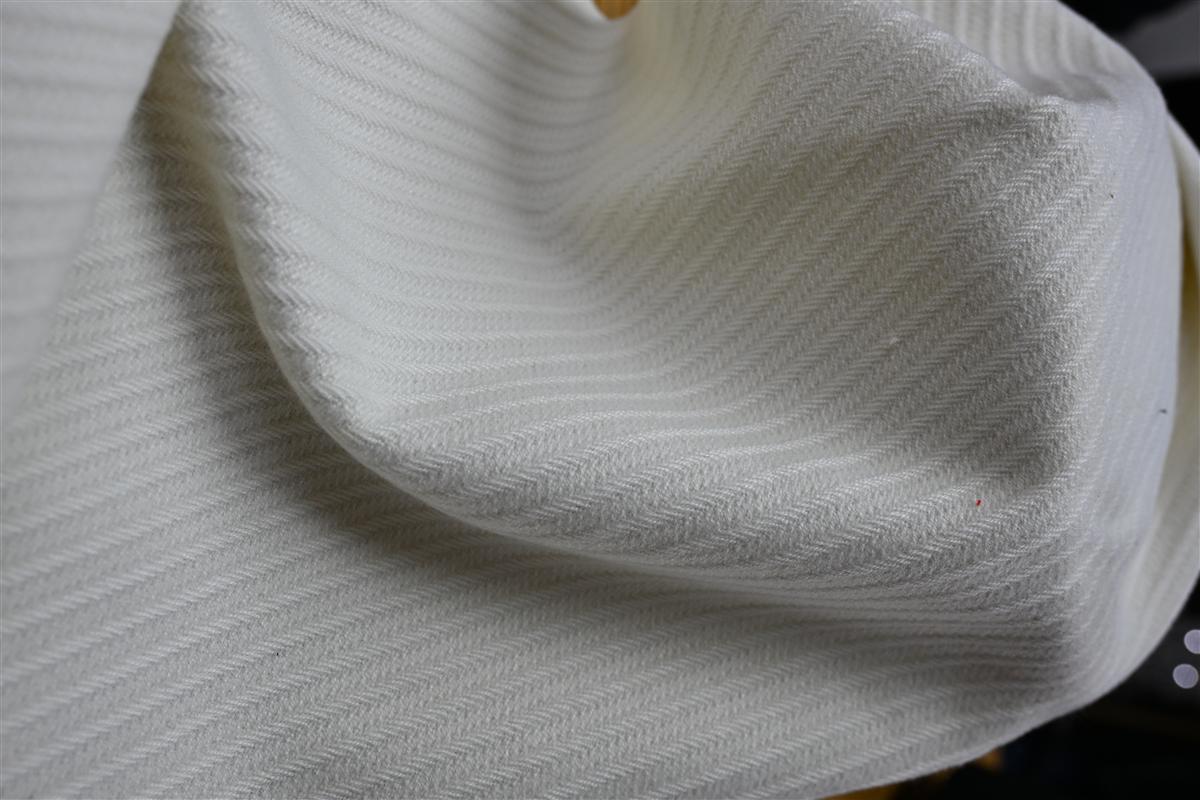
Bouclé Disadvantages: What beginners miss about snagging and pilling
Loose loops are the entire aesthetic — and the biggest risk.
Bouclé gets its character from open, curled loops that sit on the fabric surface. Those same loops are what make the fabric vulnerable. Tweed’s tight twill weave locks fibers down; bouclé leaves loops exposed to catch on rings, zippers, bag hardware, or even a rough fingernail. Once a loop snags and breaks, the surrounding yarns begin to unravel. A single ruined thread can kill the front panel of a jacket.
- Jewelry and hardware snagging: Open loops catch easily. A 180 gsm bouclé cardigan worn with a metal bracelet will show pulled threads within the first 2-3 wears if the yarn is single-loop. Knitted bouclé is worse here — the looser gauge gives loops more room to stand up and grab.
- Pilling after 10–15 wears: Low-quality bouclé uses single-loop yarns — one un-twisted strand of loops. Under arm friction or bag straps, those loops mat together into pills. Internal data shows bouclé pills 20–30% faster than tweed in high-friction zones when twisted yarn loops are not used. For a customer, this means visible fuzz balls under the arms of a $300 jacket before the season ends.
- Stretch and shape loss: Lightweight bouclé under 200 gsm, especially knitted versions, lacks structural memory. In cardigans or relaxed blazers, the garment will sag at the elbows and hem after a full day of wear. The fabric feels soft on day one but loses its silhouette fast. Woven bouclé at 280–350 gsm resists this — which is exactly why Chanel-style jackets use a heavier woven base.
- The twisted-loop quality indicator: The single cheapest way to upgrade bouclé durability is to order fabric made with twisted-loop yarns instead of single-loop. Twisted loops reduce snagging by approximately 40% and pilling by roughly 30%, yet increase raw yarn cost by only 10–15%. When a supplier offers bouclé at $8–12/m stock, ask point-blank: “Are the loops twisted?” If they cannot answer, you are probably buying single-loop yarn that will fail early.
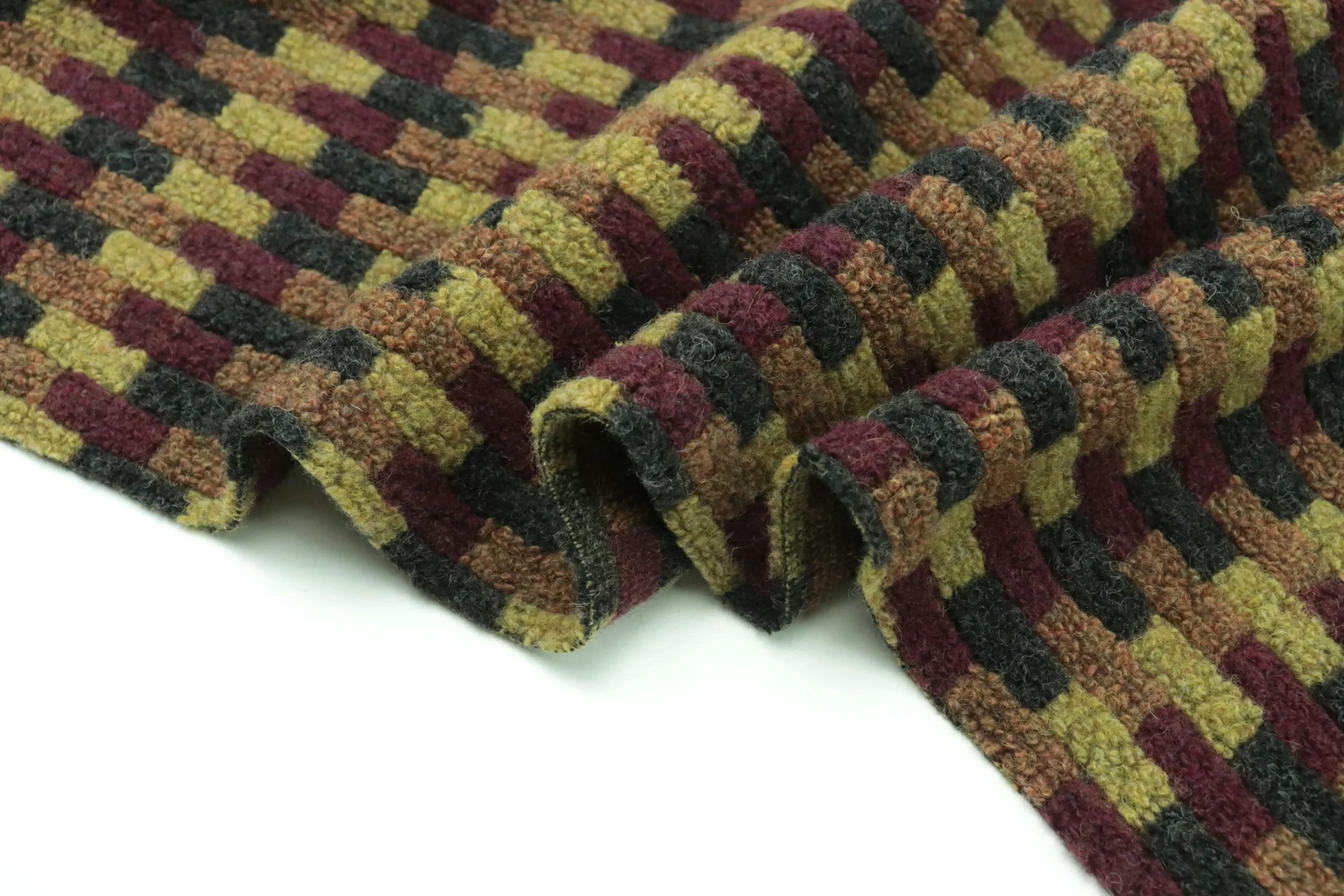
Which fabric for Chanel-style jackets? The real answer
Stop calling it tweed—Chanel jackets are built on woven bouclé.
The fabric inside a genuine Chanel jacket isn’t the rustic tweed you’d find on a British shooting coat. That confusion costs new designers entire sample runs. Chanel uses a woven bouclé construction—a stable woven base with a looped, nubby surface. This gives you the textured hand you want without the sagging, stretching disaster that comes from knitting. If you’ve ever touched a vintage Chanel piece, you know the body: firm, controlled, minimal mechanical stretch. That’s the weave locking the loops in place. A knitted bouclé, no matter how rich it looks on a swatch card, will bag out at the elbows and refuse to hold a tailored shape after a few wears.
- Structure: Woven base, bouclé yarn face. Never knitted. A simple pull test reveals the difference: knitted stretches; the right woven only yields with force.
- Handfeel: Firm, structured, with a dry, springy resilience. Soft but resistant when you try to crush it in your fist.
- Weight target: 280–350 gsm. Below 280 gsm you lose the tailored drape; above 350 gsm you’re getting into heavy coating territory that won’t ease into a jacket sleeve head.
- Stretch test: Minimal give horizontally and vertically. A properly woven bouclé has less than 3% mechanical stretch before seaming—essential for lapel roll and pocket welt stability.
- Durability hack: Request twisted-loop yarns instead of single-loop. This adds 10–15% to the meter cost but cuts pilling by roughly 30% and snagging by around 40%—critical for high-friction zones like the inner arm and side panels.
- Price reality: European mills charge $25–40/m for this specification. Factory-direct from a Wenzhou mill like Fursone drops stock woven bouclé to $8–12/m with the same OEKO-TEX certified inputs, meaning you can prototype at a fifth of the cost.
- Finishing tell: Always check the cut edge. A clean, non-raveling selvedge or a tightly bound raw edge means proper finishing. Fraying at the cut edge signals loose weave integrity that will unravel during production.
The single biggest sourcing mistake we see is brands ordering a ‘Chanel-style tweed’ from a factory that ships a knitted bouclé instead. It arrives, looks beautiful laid flat, then fails in the fitting. The jacket pulls open between buttons, the shoulders droop, and you’ve burned your development budget. Overseas, this mislabeling is widespread because the visual texture sells. Structurally, they’re two different animals. If you’re working with a mill, specify woven construction and ask for a wale and course count just like you would on a woven suiting. Real woven bouclé should show a distinct warp and weft when you reverse the swatch, not the looped back of a knit stitch.
Sourcing decisions: Cost, MOQ, and timing for startups
Stock bouclé lets you test luxury texture at startup scale—no 1000m gamble required.
When you’re funding your first production run, every meter counts. The fabric decision between tweed and bouclé isn’t just aesthetic—it dictates your cash flow, lead time, and minimum order quantity risk. Most emerging designers over-invest in tweed because it feels ‘classic,’ then realize they’re locked into a 1000-meter custom order with 6-week lead times and no guarantee of sell-through.
Choose bouclé if you need soft drape, lower weight, and a lower financial barrier. Stock bouclé at Fursone lands at 180–280 gsm, sits in the $8–12/m range, and ships in 3–7 days from a 100-meter minimum. That’s 30% less per meter than comparable stock tweed and roughly 50–60% less than European mill pricing for the same visual impact. Use it for relaxed blazers, cardigans, and soft-tailored pieces where drape matters more than rigidity.
Choose tweed when your silhouette demands structure, sharp lapels, and a crisp handfeel. Tweed is heavier (250–400 gsm), woven tight enough to hold a press, and survives years of wear without losing shape. The tradeoff is the upfront commitment: custom tweed production at this mill starts at 1000 meters with a 4–6 week lead time. If you only need 100 meters, check available stock tweed at $12–18/m, but understand that the in-stock color range won’t be exclusive.
- Lager-Bouclé: 100m MOQ, $8–12/m, ships 3–7 days. Ideal for soft silhouettes, cardigans, and woven Chanel-style jackets (request twisted-loop yarn for 30% less pilling at ~10% cost increase).
- Custom Tweed: 1000m MOQ, $15–20+/m, lead time 4–6 weeks. Best for structured blazers, formal coats, and capsule collections that can absorb the inventory risk.
- Sneaky Mid-Ground: Heavyweight stock bouclé (280–350 gsm woven) mimics tweed’s stability at bouclé pricing. Ask for a sample with smooth edge finishing to prevent seam unraveling—this is the single biggest quality gap between budget bouclé and luxury mill output.
Wenn
| Faktor | Bouclé | Tweed | Insider Advice |
|---|---|---|---|
| Stock Fabric Cost (per meter) | $8 – $12 | $12 – $18 | Bouclé underpins Chanel-style pieces at 30–50% less cost; stock availability avoids MOQ delays. |
| Custom Development MOQ | From 500 m | Typical 1,000 m | Start with bouclé for lower commitment; request twisted-loop yarn (+10–15% cost) to cut pilling by ~30%. |
| Lead Time (Stock / Custom) | 3–7 days / 4–6 weeks | 3–7 days / 4–6 weeks | Stock fabrics launch collections immediately; custom programs require 5-week planning but deliver exclusivity. |
| Durability & Pilling Risk | Higher snag/pill risk (20–30% faster without twisted loops) | Tightly woven; minimal pilling | Upgrade bouclé with twisted-loop yarns and request smooth edge finish to prevent unravelling. |
| Chanel-Style Authenticity | Woven bouclé (280–350 gsm), firm hand, looped face | Not genuine Chanel; often mislabeled knitted bouclé as tweed | Use woven bouclé—not knitted—for jackets with shape retention; avoid stretchy knits. |
| Budget-Conscious Sourcing Strategy | Order 100 m stock bouclé; test market with low risk | Reserve custom tweed for structured, formal pieces when MOQ 1,000 m is justified | Combine stock bouclé with rapid 7-day sampling to validate designs before bulk commitment. |
Fazit
The choice between tweed and bouclé hinges on structure versus softness, and on your willingness to engineer durability into the yarn itself. A factory-direct woven bouclé with twisted loops gives you that Chanel look at 30–50% less per meter than imported tweed—without the snagging nightmare that plagues cheaper single-loop knits.
Browse the signature textile collections to request swatches of heavy bouclé and structured tweeds side by side. A 100-meter stock run ships in under a week, so you can feel the difference before committing a single yard of custom.
Häufig gestellte Fragen
What is the difference between bouclé and tweed?
Tweed is a dense, twill-woven wool fabric with structure; bouclé is a novelty-yarn fabric with soft, looped texture. For designers, tweed holds shape for tailored pieces, while bouclé drapes softly but risks snagging. Choose based on garment function and longevity needs.
Was sind die Nachteile von Bouclé?
Bouclé’s looped yarn surface snags and pills more easily than tight weaves. It also tends to have less structural stability than tweed for tailored garments. Always request a snag test when sampling bouclé fabrics.
Verwendet Chanel Tweed oder Bouclé?
Chanel famously uses Chanel-style tweed, a luxurious, multi-yarn woven fabric, not bouclé. Their signature jackets rely on tweed’s structure and durability. Explore our Chanel-style tweeds for that iconic hand-feel and drape.
What is the best type of tweed?
The best tweed depends on end-use: for high-fashion tailoring, a dense, multi-colored yarn-dyed tweed like our classic Chanel-style tweed offers premium structure and aesthetic. Match the tweed weight and blend to your garment’s function.
Sind Tweed und Bouclé dasselbe?
No, they are distinct. Tweed is woven from tightly twisted yarns; bouclé is defined by looped, curly yarns that create a nubby surface. Always verify fabric construction, not just appearance.

Verwandte Einblicke
Bouclé vs Tweed: Was ist der tatsächliche Kostenunterschied?
boucl vs tweed cost is the first checkpoint buyers should lock before they approve a...
Heritage-Zopfstrickmuster: Warum diese klassische Textur jede Saison zurückkehrt
Heritage-Zopfmuster-Strickwaren kommen jede Saison aus einem einfachen Grund zurück: sie verkaufen sich. Nicht weil...
Europäische Mühlenqualität Tweed zu 40% geringeren Kosten
Jede neue Kollektion beginnt auf die gleiche Weise – einen Tweed-Lieferanten zu finden, der europäische... liefert.