
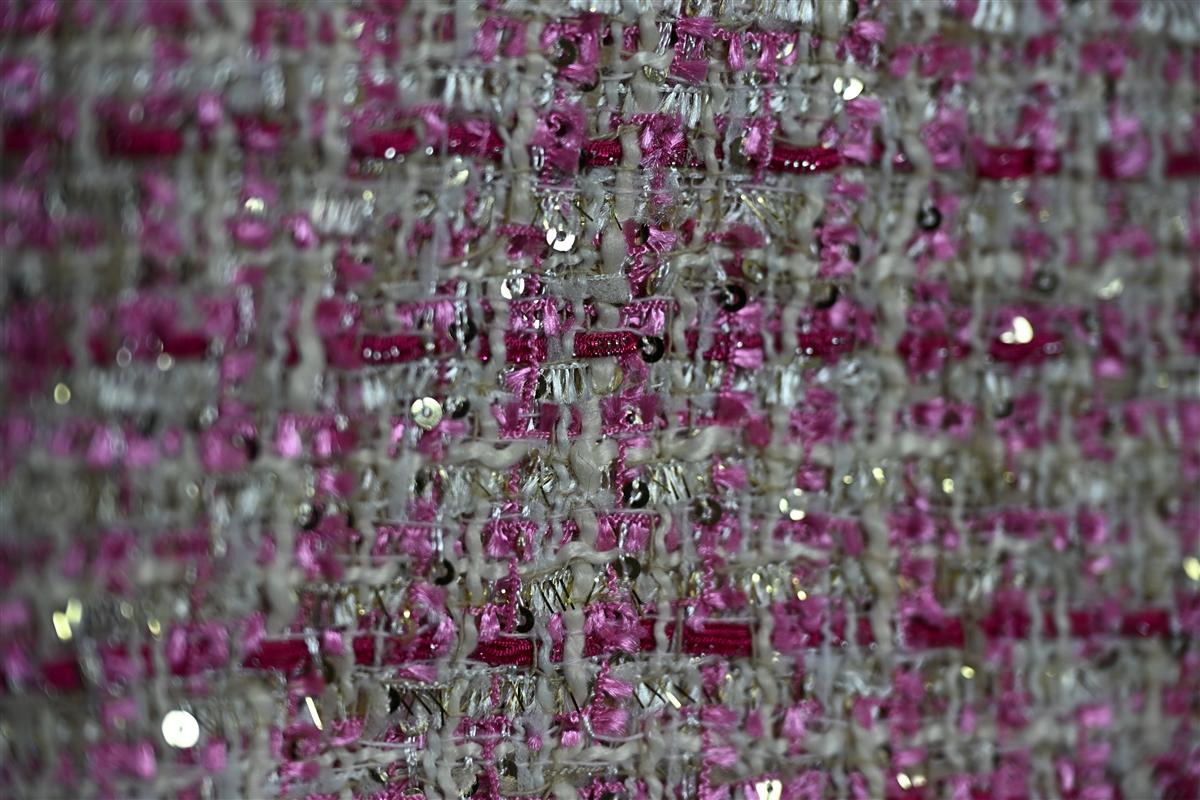
Say yes only when the mill’s substitution file proves four things in writing: that the replacement weft is a specification match rather than a colour-name match; that cloth woven with it behaves like the approved cloth; that replenishment coats will hang beside current store stock without a visible split; and that labels, care claims and scope sit under control with a named cut-in date. A substitute yarn that merely carries the same nominal count and fibre percentage is not equivalent, because spinning method, twist and finish change the surface, strength and dye uptake of finished cloth. The decisive proof is a finished coat cut from the substitute lot and compared against a garment already in stores. If the file cannot close that loop in documents you can hold, the answer is not yet.
What the Yarn Identity Block Has to Match
The substitution file opens with an identity block, and this is where the weft yarn substitution file requirements stop being abstract. Ask the mill for the substitute yarn’s own technical data sheet, signed and dated, set line by line against the approved specification: article number and supplier of both yarns, fibre composition in exact percentages, count in the numbering system the mill actually weaves to, ply, twist direction and twist level, spinning method, any finish or treatment, colour standard, and the lot numbers and origin of the cones they propose to run. Retain cones of both yarns as physical references until the file is closed.
Read that block with suspicion wherever two yarns look numerically equal. A ring-spun yarn and an open-end yarn at the same count weave into cloth with different hairiness, different strength and a different surface. Twist level changes hand, drape and pilling. A plied yarn and a single at the same resultant count do not behave alike on the loom or in the worn coat. If the substitute is spun, wound, dyed or conditioned by a different supplier, every one of those differences is live. Equivalent is a conclusion the file has to earn with data, not a word the mill gets to assert in an email.
Compare the Cloth, Not the Cone
Yarn data is only the claim; the proof is woven. Require cloth made with the substitute weft on the production looms, at the production pick density, through the same finishing route as bulk, because finishing, more than weaving, drives hand, drape and shrinkage. This is the only honest way to see the impact of a weft yarn change on fabric quality, and no cone label can short-cut it.

On that cloth, compare weight and width, thickness, pick density, cover, drape and hand against the approved standard, then run the performance family the coat’s specification already names: tensile and tear strength, seam slippage, abrasion and pilling, dimensional change after the care route on the label, and colourfastness to washing, rubbing and light. A coat lives on a handful of critical to quality characteristics for coat fabric: the way it hangs, the way the face reads across a room, the way it survives brushing, weather and a cleaner’s press. Two wefts of equal count can weave into cloth that fails one of those quietly, and the customer finds it before the lab does.
Remember what is actually changing. A weft yarn interlaces across the warp to form the visible face of most tweeds, so a substitution touches the surface the customer touches, not some hidden component. If the mill offers a swatch from a hand loom or an adjusted finishing recipe, treat it as a proposal, not evidence; the comparison has to come off the machines that will run the bulk.
The Test That Matters: Continuity Against Store Stock
The file’s hardest question is not whether the substitute is a decent yarn. It is whether a coat cut from the substitute lot can hang on the same rail as the coats already selling under one style number. Customers do not read your file; they compare garments. If replenishment units shade a step away from current stock, that difference becomes the defect, and it is found on the shop floor, not in the mill.
So make the file prove shade continuity in both directions. Insist on lab dips dyed from the actual substitute yarn, through the same dye route production will use, before any bulk cloth is woven; approvals built on screen renders prove nothing about dye uptake. Then close the loop against reality: take a cutting from a garment already in stores and compare it, physically, against cloth woven with the substitute, under daylight and under the colour temperature of the retail floor. A pair that matches in the mill can split under shop lighting and still pass every reading on paper.
Treat the approval as a new chapter in colour continuity across tweed runs rather than a one-off match. Ask which reference governs future lots: the original standard, or a new standard cut from substitute-yarn cloth, and when the handover happens. A substitution file that answers with a promise to match a dip, without naming the reference, the light sources and the tolerance, has not answered the question your stock is already asking.
Labels, Care Claims and Chemical Declarations
The coats in stores already carry sewn-in labels and hangtags that state fibre percentages, care instructions and origin. The substitution file has to prove that those printed statements stay true on every unit built with the substitute yarn. If the replacement shifts the fibre blend, even within the mill’s own tolerance, check the result against the fibre labelling rules that govern your markets and against the wording already printed on your labels, because relabelling live inventory is a cost no stock-out justifies. If the substitute yarn behaves differently through washing, pressing or dry cleaning, the care instructions on the existing labels must still hold; otherwise you are selling stock whose label no longer describes the garment inside.
The same logic runs through declarations. Restricted substance declarations, dye and finish disclosures, and any content or origin claims attached to the style were made for the original yarn. The file must refresh them for the substitute lot specifically, tied to the lot numbers proposed for production, not carried over as a general statement from the original approval. None of this is exotic; it is the same paperwork the style was first approved on, run again for a new input. What the file cannot do is leave a claim floating on old evidence while the cloth underneath it has changed.
Scope, Cut-In Date and the Documents That Control Production
Buyers who ask what documentation should a textile mill provide for a yarn substitution usually get a list of tests in reply. Tests are half the answer. The other half is scope: a written deviation notice that names the affected purchase orders, the production lots, the quantities and the markets involved, and states the exact cut-in date where the original weft stops and the substitute begins. Until that line exists, nobody on either side can say which coats carry which yarn, and equivalence becomes an argument instead of a record.
The notice should arrive with production controls attached: a first-off inspection at the loom and again at the sewing floor once substitute cloth starts to run, a segregation plan that keeps original-yarn and substitute-yarn goods physically apart until you release them, and a rule that the two wefts never share a lay without written approval. The revised specification and bill of materials should be reissued as a version, with the substitution referenced by purchase order and date, so the document set stays a single source of truth. If a third party later had to trace any given coat back to the yarn lot that made it, the file, the labels and the production records should agree without a phone call. That traceability is what turns an approved swap into a managed change, and its absence is what turns one into a dispute.
Sign Only What Names Its Criteria
Approval works when the acceptance criteria are agreed before the trials run: which tests, on which comparison basis, judged by whom when a result sits on the line. If the criteria are written after the results come back, the file becomes a negotiation. Put the criteria in your reply to the mill, require the results to be reported against them, and keep a sealed counter-sample of the approved substitute cloth beside the original standard, so the next lot, and the next mill conversation, has something physical to be measured against.
Then force the question mills like to leave vague: is this a bridge or a destination? Ask the mill to state, inside the file, whether the original yarn will return and when, whether the substitute is available as a standing supply, and which specification governs if the style is rebooked. A one-time swap approved quietly becomes the permanent default the day someone reorders against the last shipment. Record the decision, name its owner, and version the specification to match.
Sign-off belongs to technical quality and merchandising together, with the conditions and the acceptance of risk written into the approval itself. Judged against the criteria for equivalent yarn substitution in textiles that this trade runs on, a file that proves identity, woven performance, continuity against store stock, intact labels and a bounded scope deserves a yes. A file that offers a data sheet and the word equivalent does not. Wait for the original yarn, or approve a controlled deviation with the conditions above, and let the mill decide which answer it can live with.

Verwandte Einblicke
Tweed Collar Fray: Check Construction Before Changing Cloth
When a tweed jacket collar frays after a month, customers often blame the cloth first....

June Show, September Delivery: Three Mill Gates You Must Lock
A mill gate is a signed freeze on samples, yarn and dye, or loom start...
Whose Line Is It: The Invoice Fields No Trader Can Sign
A commercial invoice for a cloth shipment is a single declaration assembled from three record...