

La mayoría de los presupuestos de tejido lentos y confusos se remontan a la misma causa: en la solicitud faltaba algún dato que la fábrica necesita para valorar el trabajo. Un plantilla de RFQ de tejido soluciona eso. Envíe los doce campos que figuran a continuación y recibirá cifras comparables en días en lugar de una semana de correos de seguimiento, tanto si valora precios de programas de tweed y bouclé como de tejido de punto.

The twelve fields
One: fabric type and construction, named precisely – boucle, cable knit, double-cloth tweed – with a reference photo attached. Two: composition, with percentages, because a wool-rich blend and a wool-look acrylic price a world apart. Three: weight in GSM, measured not estimated; if you are unsure, name the garment it is for. Four: usable width. Five: colour, as a Pantone reference or a physical lab dip you already hold. Six: finish requirements, from anti-pilling to water repellency.
Seven: quantity, split into sampling quantity and production quantity, because the two price differently. Eight: target price if you have one, and the basis – per metre FOB, CIF, or DDP. Nine: test requirements, citing the methods you need, since colourfastness and fibre analysis follow AATCC test methods en la mayoría de los manuales del comprador. Diez: expectativas de plazo de entrega para muestra y pedido al por mayor. Once: requisitos de obligado cumplimiento, por ejemplo el certificado de alcance GRS o la clase OEKO-TEX. Doce: destino de envío e incoterms, de modo que el presupuesto incluya el coste real del transporte y no una estimación a ojo.
Por qué cada campo se gana su sitio
The fields that slow quotes down most are weight, colour and quantity. A mill cannot quote a knit without knowing whether you mean a 300 GSM cardigan fabric or a 550 GSM coat fabric, and the difference is not linear. Colour given as “camel-ish” invites a conservative price with a buffer. Quantities that move between the first email and the third restart the pricing exercise entirely. Twelve fields feel like homework until you compare the response times: a complete RFQ comes back priced in days, and our own flujo de trabajo de fabricación personalizada convierte las consultas completas en muestras de 7 días precisamente por este motivo.
A worked example
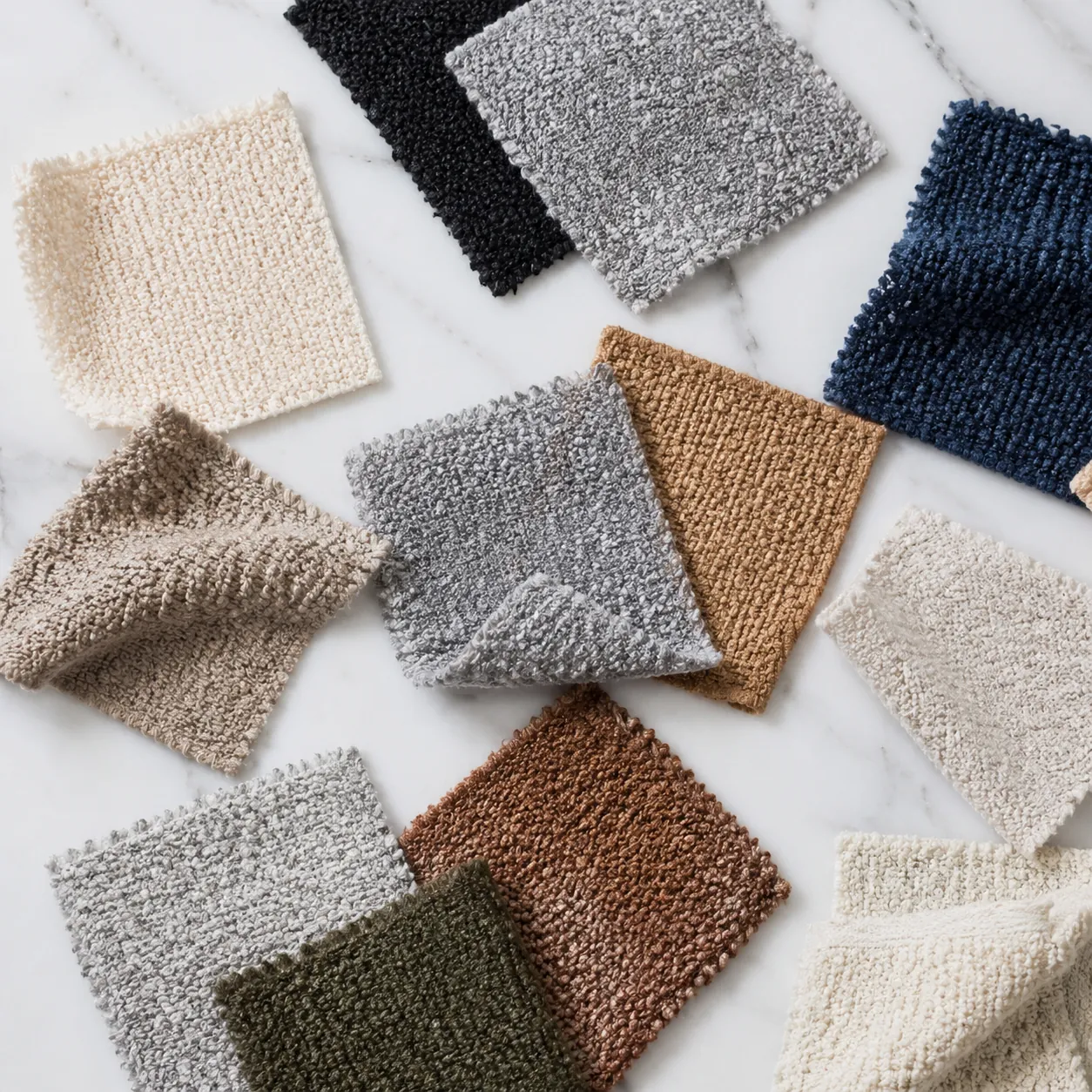
Take the same boucle asked for two ways. Version one: “Please quote your nice cream boucle, around 400 grams, for a jacket program.” The mill assumes a wool-nylon blend at a stock weight, quotes a safe number, and three emails later you are still agreeing on width. Version two: “Boucle, 62% wool / 36% nylon / 2% other, 420 GSM at 150 cm usable, Pantone 12-0605 TCX lab dip to match, anti-pilling finish, sample 20 metres then 800 metres production, FOB Ningbo, colourfastness to AATCC methods, sample in 15 days.” One email, one quotation, one sample round. The second version is not longer because the writer is thorough; it is longer because the twelve fields give every detail a slot.
Lograr que la plantilla se consolide
A template only works if it survives the reply-all chaos of a real sourcing inbox. Save it as a form with one field per line, attach it to every new enquiry, and refuse to forward quotes internally until the twelve lines are filled. Teams that enforce this report the same side effect: half the questions they used to ask suppliers get answered by their own form, because writing “weight: measured” forces someone to actually measure. The template also becomes your onboarding document – a new sourcing hire who can fill all twelve fields knows what matters in a fabric specification.
Errores frecuentes que la plantilla evita
The most expensive mistake is asking for “something like this photo” with no composition. The mill assumes a construction, quotes it, and the sample arrives heavy or limp. The second is skipping test requirements, which surfaces at the buyer’s third-party inspection as a surprise failure. The third is mixing incoterms across quotes, which makes a higher unit price look cheaper once freight lands on your account. Compare quotes on identical terms, and our checklist on comparar presupuestos de proveedores más allá del precio muestra la tabla comparativa completa.
Si está probando una nueva fábrica asociada, mantenga la primera RFQ pequeña y verificable. Nuestro enfoque en tres pasos, en sample-first sourcing combina bien con esta plantilla, y los puntos de revisión de muestras en qué comprobar en una muestra de tejido le indican qué evaluar cuando llegue la muestra.
Vídeo: plantilla de RFQ de tejido
Guarda los doce campos como un formulario de una página y envíalo con cada nueva consulta, y el tiempo de respuesta de cotización se convierte en un proceso en lugar de una negociación. Fursone desarrolla tejidos fantasía desde Wenzhou desde 2020 en más de 300 telares; envía un RFQ completo a info@fursone.com y te devolveremos una cotización detallada con precios en dos días hábiles.
Lectura relacionada: Tejido de punto athleisure: lo que necesitan las marcas

Perspectivas relacionadas

Leer un libro de muestras como una estrategia: combinar existencias y tweed a medida
A fabric wholesaler’s swatch book is not a catalog, it is a sourcing strategy printed...

How Long Does a Custom Fabric Order Take? The 5-Stage Timeline Buyers Can Negotiate
A custom fabric order takes 30 to 60 days from confirmed spec to ex-factory, and...

What Certifications to Ask a Fabric Supplier For
Asking a fabric supplier for certificates is not paperwork ritual; it is how a brand...