

Tweed and boucle on a dress form behave differently than on a jacket stand, and the spec sheet that works for outerwear quietly fails on dresses. A 450 GSM jacketing tweed holds a coat’s architecture; on a fit-and-flare dress the same fabric turns the skirt into a lampshade. Dress designers need two numbers and one test: the right GSM band, a drape judgment made with the fabric moving, and a lining plan matched to both. This guide turns those into concrete ranges and sampling steps.
GSM Bands for Dress Construction
Start with the construction, not the mood board. For a bodice-heavy dress or a sheath, tweeds between 280 and 350 GSM give structure through the body without adding bulk at the waist seam. Fit-and-flare and A-line dresses want 220 to 300 GSM, where the skirt still swings instead of propping out. Bias-cut and slip-layered designs drop to 180 to 240 GSM, and at that weight the fabric choice shifts from tweed toward fine boucle and knits that bend without cracking at the fold lines. Fabric weight measurement itself is standardized: ASTM D3776 covers fabric mass per unit area, which is the number behind every quoted GSM, so a quoted figure should trace to a weighed specimen, not a swatch guess.
The waist seam is where dress specs are won or lost. A fabric at the top of a band still drapes; a fabric 50 GSM over it does not bend, and the skirt breaks at the seam line instead of flowing below it. Ask the mill for the GSM tolerance in writing: plus or minus 5 percent is a normal band, and a dress spec living near a band edge should plan for the heavy end of tolerance in the fit session.

Drape: Test It Moving, Not Flat
A flat swatch hides the property dressmaking cares about most. Drape shows itself when the fabric moves: hold the swatch at two corners and sway it, then drape it over a hand and watch whether folds fall in soft rounds or stiff blades. On boucle, also watch the loops during movement: a loop structure that springs back after a fold keeps its texture through a working day; one that stays creased will look tired by afternoon. Cowl necklines and bias skirts amplify everything here, which is why the drape test belongs on the full-width roll, not the 15-centimeter swatch: 30 centimeters of width cannot lie about how a skirt panel behaves.
Weight and drape are two sides of one trade. Lower GSM buys movement and costs structure; higher GSM buys architecture and costs swing. The tradeoff runs through garment silhouettes in both directions, mapped in our note on how GSM turns into drape and silhouette, and it interacts with fabric width: a narrower usable width changes panel layout on full skirts, which the width and selvedge planning guide covers from the cutting-table side.
Boucle Versus Tweed on a Dress
On dresses the two fabrics split by weight of hand. Fine boucle in the 200 to 280 GSM band has become the default for dress construction because the loop texture reads at close range on a garment that sits against the body, and the yarns bend with the figure. Heavier classic tweeds earn their place on trapeze and shift shapes, where the fabric is the silhouette and the design wants stand rather than swing. The failure mode is borrowing the jacket fabric for the dress: texture that photographs well on a coat swatch and wears like cardboard through the bodice.
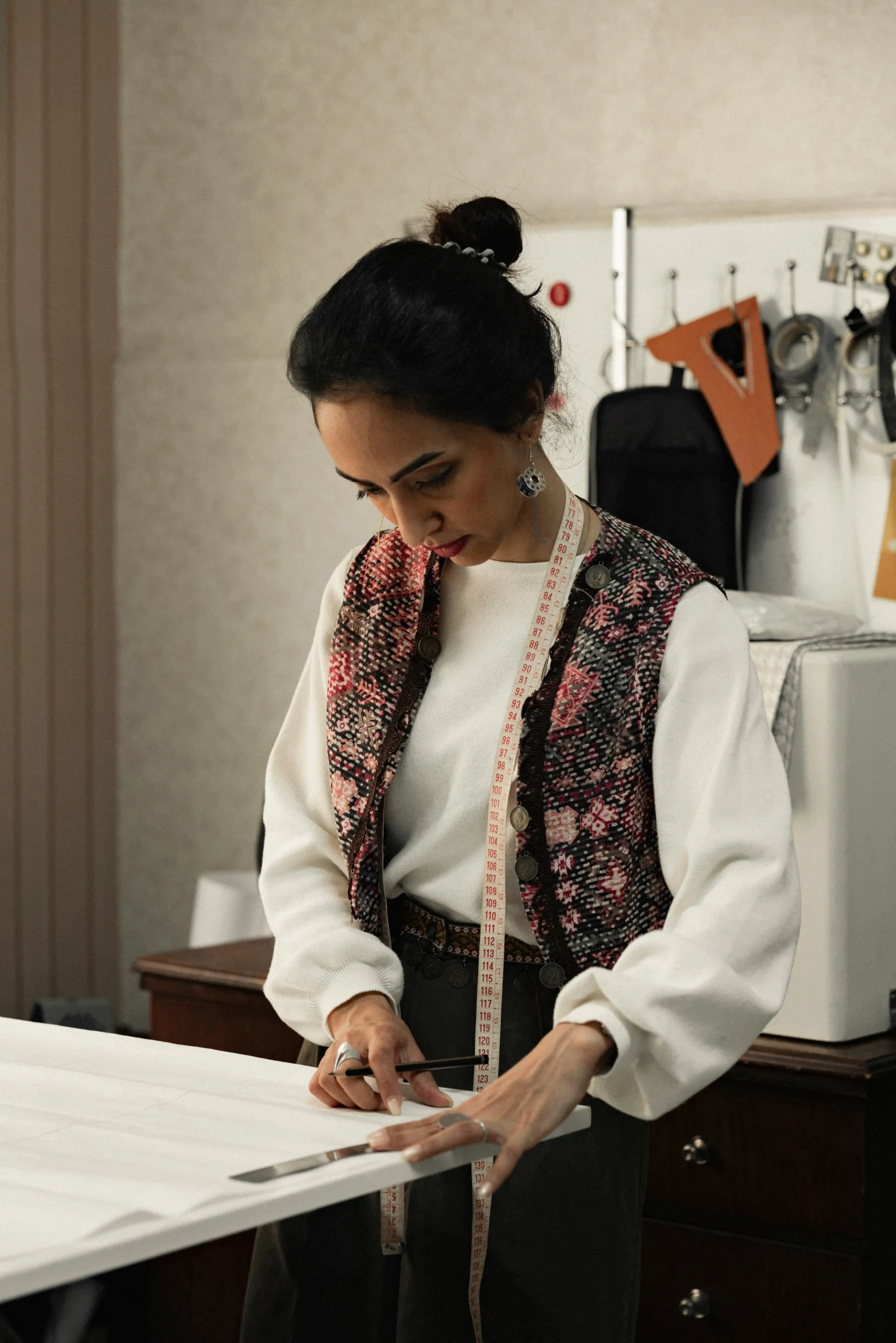
Lining and Interfacing: The Hidden Half of the Spec
Dresses live in a lining, and the lining changes what the face fabric needs. A full lining reduces the abrasion the loops take from skin and hosiery, which matters on boucle: loops at armhole and waistline zones take the wear a jacket spreads across a sleeve head. Cupro and viscose linings slide over boucle without dragging loops; stretch linings suit fitted knit-boucle blends. Interfacing follows the same logic in reverse: fusibles need a pressing schedule gentle enough not to crush loops, and on loop-heavy faces the sew-in interlining preserves the surface. State the lining pair in the spec and sample the two together, because drape results change when the two layers move as one.
A Sampling Sequence That Works for Dresses
Three steps cover it. First, order the swatch set across the GSM band, not one weight: 220, 280 and 340 on the same colorway makes the trade visible on the table. Second, drape-test the two finalists at full width, moving, over a dress form if one is near. Third, make one test garment in the chosen fabric plus its lining pair before committing, and wear it: the waist seam, the armhole loop wear and the skirt swing all show up in an afternoon of real wear in a way no swatch reveals. The same moving-fabric judgment carries through to how a finished garment reads on camera, which the fashion sweater knit line leans on for its drape-first constructions.
Questions fréquemment posées
What GSM works for a tweed dress?
220 to 300 GSM covers most fit-and-flare and A-line constructions; sheath dresses carry 280 to 350. Near a band edge, plan the fit for the heavy side of the mill’s tolerance.
Can boucle work on a bias-cut dress?
Yes, at the light end: fine boucle and knit-boucle blends from roughly 180 to 240 GSM bend with the bias without cracking at fold lines. Drape-test at full width before committing.
Do I need to line a tweed dress?
Yes. The lining protects loop textures from abrasion at armholes and waistlines, improves slip over hosiery, and stabilizes seams. Cupro and viscose linings pair well with boucle faces.
Why does my swatch drape differently than the bulk fabric?
Small swatches cannot express full-width drape, and finishing applied to bulk can shift hand. Drape-test the full-width roll and confirm the GSM against weighed specimens before cutting.
Send your dress silhouettes and target GSM band to info@fursone.com or WhatsApp +86 134 5607 1339, and our desk will assemble a swatch set across weights for the same colorway.

Aperçus connexes

Boucle : boulochage vs accrocs – défauts différents, solutions différentes.
A boucle jacket comes back from a fitting with two problems on the same sleeve:...
Melange and Heather Yarns: How Blended Colour Is Made and Specified
Melange is the fabric equivalent of a photograph printed on textured paper. The colour reads...
Blend Ratios and Batch Verification: Reading a Wool Blend Honestly
Two tweeds can share the same weave structure, the same weight and the same colour...