
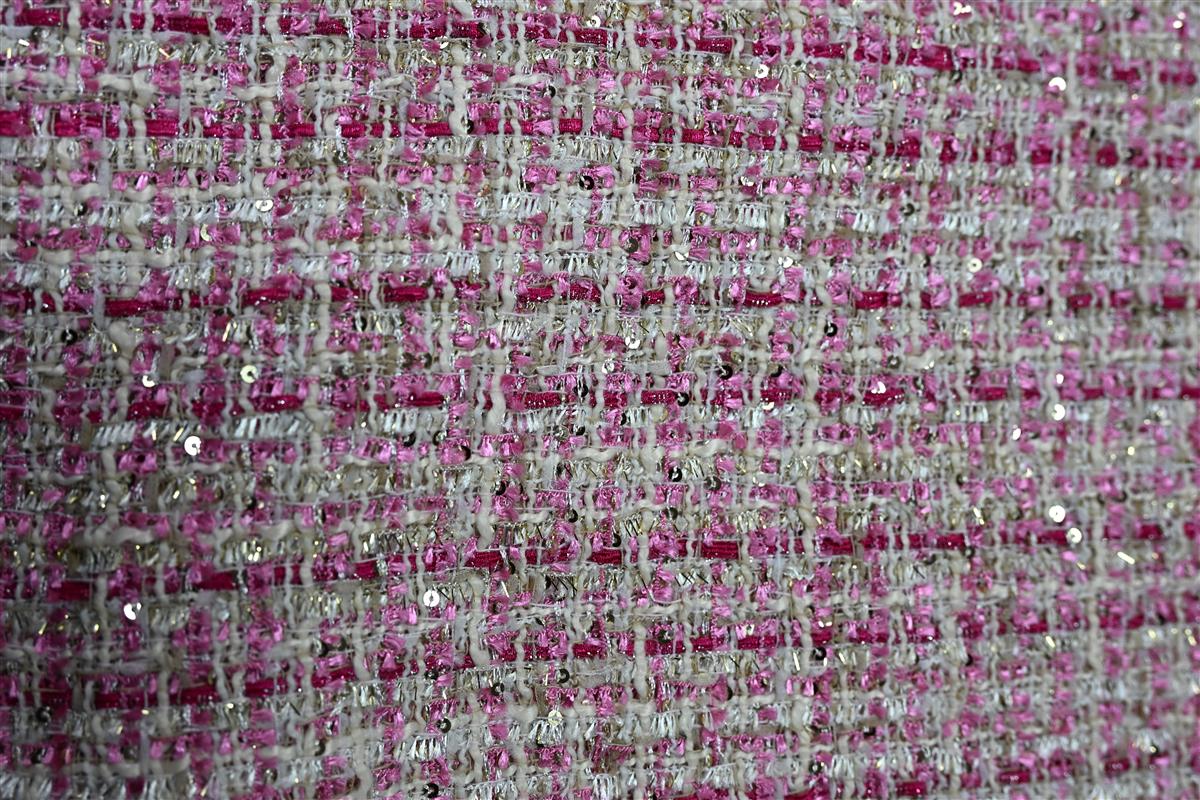
Both sides judged the colour honestly and both sides still got it wrong, because each approved the shade under a different lamp and neither ever placed the two greens side by side under daylight. The repair is procedural rather than mysterious. Before the looms run, both parties should compare one sealed physical standard against the strike-off and a loom-state sample, laid edge to edge on a neutral grey background, first under D65 simulated daylight, then under the customer’s actual shop lighting, TL84 and illuminant A, with spectrophotometer readings recorded at every lamp as a check on the eye. A shade that matches under a single named light is not an approved shade; it is a coincidence of lighting. Written down as named illuminants, shared physical standards and an agreed tolerance, that discipline would have exposed these two greens before a single metre was woven.
Two Greens, Two Lamps, and the Metamerism Nobody Named
Nothing in this story required carelessness. The buyer looked at the shade in the light they had and approved it. The mill reproduced that shade in a calibrated booth and matched it. Both approvals were honest, and the finished cloth still split into two different greens outdoors, because the two parties never once viewed the same pair of samples under the same lamp. Colour approval is a comparison, not an opinion, and this order contained no shared comparison at any stage.
The technical name for what happened is metamerism, and it is worth defining precisely, because it is not the only way a shade can betray you. Metamerism is a pair of samples that matches under one illuminant and separates under another: their spectral reflectance curves are built differently and happen to cross under that particular lamp. It is distinct from colour inconstancy, where one fabric on its own shifts as the light changes. A coat can suffer either or both, and the fixes differ. In yarn-dyed wool the risk is structural. A green can be assembled from different dye combinations across wool and blend fibres, and two recipes that converge under a narrow-band fluorescent tube can diverge badly under the broad, continuous spectrum of daylight. If the mill’s target was a reference built on a different recipe, a match in their own booth proved very little about the pavement outside the shop.
The deeper failure was procedural. The phrase “shop lights” was never translated into a defined light source. The mill never disclosed which lamp inside the booth it had matched under. Nobody wrote down that the pair had to pass under daylight before bulk. Every judgement was made alone, and each side assumed the other’s room was equivalent to their own. Rooms are not equivalent, lamps are not interchangeable, and the cloth paid for the gap.
Name the Illuminants Before Anyone Judges a Shade: D65, TL84 and the ASTM D1729 Light Booth List
An approval is only as good as its lamp list, so the list comes before the samples. Standard textile practice, described in procedures such as AATCC Evaluation Procedure 9 and ASTM D1729, is to assess a pair under several named illuminants inside a light booth rather than under whatever overhead fitting happens to be on. A sensible minimum list for woven outerwear runs like this. D65 simulated daylight leads, because the coats will live outdoors and the failure in this case appeared exactly there. Then the customer’s real shop lighting, once it has been standardised into something reproducible. Then TL84, also called F11, the narrow-band triphosphor fluorescent still common in European and Asian retail. Then CWF, or F2, the cool white fluorescent associated with North American stores. Finally illuminant A, the warm tungsten lamp that stands in for living rooms and hotel lobbies. Where optical brighteners or fluorescent dyes are anywhere in the recipe, a UV tube joins the cycle, because daylight carries ultraviolet energy that a shop floor lamp may not.
“Shop lights” deserves its own paragraph, because it is where this order went wrong first. It is not an illuminant; it is a room. The buyer should have pinned down what actually hangs over the merchandise: lamp type, colour temperature, colour rendering index, or better still the spectral power distribution recorded with a portable spectrometer, or one physical lamp posted to the mill together with the standard. Once that light has a name and a number, any booth in any country can reproduce it, and the words “approved under shop lights” stop being a memory and become a specification.
Order matters less than completeness, but daylight leads for a reason. A shade that passes D65, TL84, CWF and A has been tested against the four spectra a coat meets between the shop floor and the street, and a pair that separates under any one of them goes back to the dyehouse for reformulation before bulk rather than after it.
Compare the Same Objects for Visual Assessment, Prepared the Same Way
The lamps are half the protocol. The objects and their preparation are the other half, and they deserve the same precision. The comparison set should have held four items: the sealed master standard, made on production cloth and dated; duplicate sealed standards, so that both parties judge against physically identical references; the lab dip or strike-off, dyed on the same substrate, yarn and construction as bulk; and a loom-state sample or first piece, because dyeing, washing and finishing can each pull a shade a step in one direction. A screen image, a paper Pantone chip and a photograph in a chat window are none of these things, and none of them carry spectral information a booth can use.

Preparation sounds like housekeeping until it changes a verdict. Both samples lie flat on the same neutral grey backing, not one folded and one stretched. Raised or brushed tweeds are viewed in the same orientation and then rotated, because nap can shade a surface on its own. The pair touches, or nearly touches, and is judged simultaneously; comparison from memory is where matches go to die. The grey surround inside the booth stays clean and uncluttered, with no coloured folders or garment bags leaning against the walls. The observer stands so the lamp lights the samples rather than glaring into their eyes, and gives their vision a minute to settle after every lamp change. Assessors should have their colour vision tested, and the same trained person or panel should judge submissions from both sides wherever the schedule allows. None of this is exotic. All of it is the difference between a comparison and two private impressions.
Let the Spectrophotometer Cross-Examine the Match: Delta E, Metamerism and Colour Inconstancy
The eye decides, and the instrument cross-examines. Before the looms ran, both parties should have measured the standard and the candidate shade with a spectrophotometer at the same measurement geometry, D65 with the 10-degree standard observer being the textile convention, and compared three things rather than one. First, the full spectral reflectance curves. Curves that sit close together across the visible range describe a genuinely close pair; curves that cross describe a metameric pair, and a match that is an artefact of one lamp. Second, the colour difference under each named illuminant, not just one, because a delta E that flatters under TL84 can be roughly twice as large under D65. Third, a metamerism index for the pair, and for the fabric itself a colour inconstancy index such as CMCCON02, which scores how far a single sample drifts between lights.
The tolerance belongs in writing alongside the instrument settings: which formula, CMC or CIEDE2000, which limit, measured against which standard, over which backing, with which instrument. The exact number is a commercial decision for the buyer and the mill to settle. What matters is that it exists, that both sides measure the same way, and that everyone treats the reading as a check on the visual judgement rather than a replacement for it. A single flattering delta E under a single lamp, quoted in an approval email, is only the numerical version of the mistake that produced these coats.
Write the Approval So It Cannot Be Misread: D65 First, Tolerances in Writing
Everything above collapses into one short document, and it should have lived inside the approval itself rather than in anyone’s habits. The line items: the standard’s reference and date; the lamp list in order, with D65 first and the customer’s shop light named; the formula and the limit for instrumental readings; the direction of acceptable deviation, since a greener split and a yellower split are different problems with different dye fixes; and who holds which duplicate of the sealed standard. Two clauses do most of the preventive work. First, bulk is approved only against the sealed standard under the listed lamps, with a loom-state or first-piece check before full running. Second, any change of yarn lot, dyestuff or recipe suspends the approval until the shade is reconfirmed, because the next dye lot will not match the last one exactly, and assuming otherwise is how batch two quietly stops resembling batch one.
That second clause is where colour discipline meets production reality. Dye lots drift, recipes scale imperfectly, and a mill that matched beautifully on Tuesday can drift by Friday on the same recipe. Keeping batch two resembling batch one across a whole season is exactly what the approval protocol and the re-approval trigger are for, and they cost nothing but a paragraph in the purchase order.
The Coats Already Exist: Read the Two Greens Properly
For the cloth that is already cut, the same tools diagnose the damage. Measure both greens against the approved standard’s spectrum, and three explanations separate quickly. Spectral curves that diverge and cross point to metamerism between two different dye recipes. Curves that sit close together but both sit away from the standard point to a lot that drifted during production. A curve whose shape differs in ways the dye cannot explain points to surface and finish: a different raising, pressing or calendering changing how the cloth reflects light rather than how it absorbs dye. The lamp list then shows whose approval covered which condition, and that matters for the conversation between buyer and mill afterwards. Remedies run from re-dyeing and finishing adjustments through to accepting the split and planning the cutting lay so mismatched panels never meet in one coat. Which remedy fits depends on how far the pair separates and at which stage someone finally looked, and none of the options is cheap at the coat stage.
The lesson costs nothing on the next order. Daylight is the one referee a coat cannot avoid, so the daylight check cannot be optional. A shade approval is a comparison between identified physical standards under named lamps, not a mood confirmed in two different rooms. Run the same hour in the booth on the next strike-off, and the recipe goes back to the lab the day the sample arrives. The looms wait a week. The coats match.

Aperçus connexes
Tweed Collar Fray: Check Construction Before Changing Cloth
When a tweed jacket collar frays after a month, customers often blame the cloth first....
June Show, September Delivery: Three Mill Gates You Must Lock
A mill gate is a signed freeze on samples, yarn and dye, or loom start...
Whose Line Is It: The Invoice Fields No Trader Can Sign
A commercial invoice for a cloth shipment is a single declaration assembled from three record...