

A boucle jacket comes back from a fitting with two problems on the same sleeve: fuzzy little balls across the elbow, and one loop pulled into a hard knot near the cuff. The brand calls both “pilling” and blames the fabric. They are different defects with different causes, different test methods, and different fixes, and treating them as one thing leads to the wrong correction: re-knitting a fabric whose loops were fine, while the real culprit, a finishing or handling step, stays in the process.
This guide separates the two defects on boucle and loose-loop tweeds, shows how each one is measured, and lists what to ask a mill at sampling so neither shows up in bulk.
What Pilling Actually Is
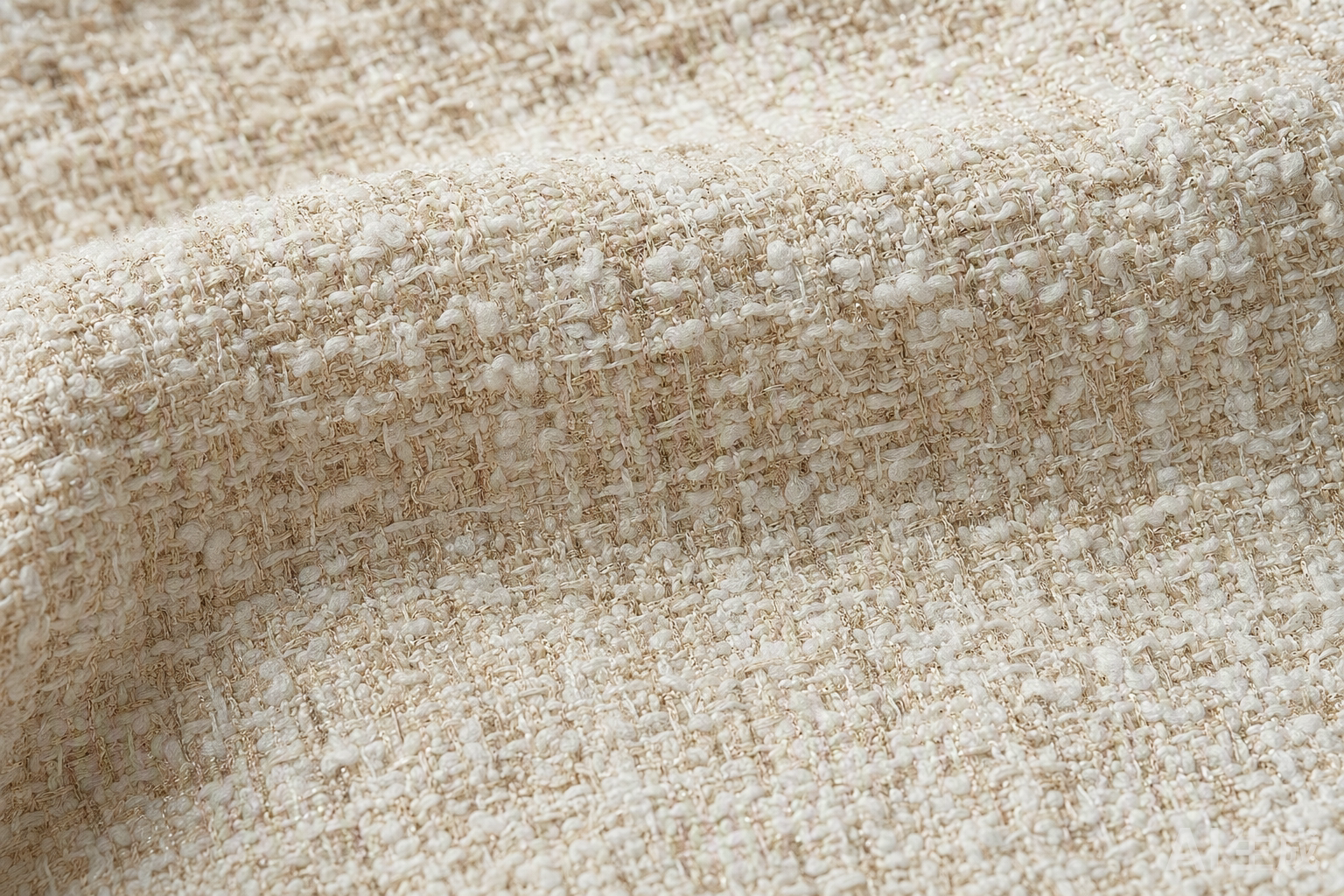
Pilling is a fiber-level problem. Short or loose fibers on the fabric surface work loose under abrasion, tangle into balls, and stay anchored to the cloth. On boucle it shows up on high-rub zones: elbows, sleeve cuffs, seat areas, the side where a bag strap crosses. The balls are made of the fabric’s own fiber, so a wool-rich boucle pills with wool-colored dots and a blend shows mixed shades.
The industry measures it with standardized rub tests. ASTM’s D3512 pilling resistance test method tumbles fabric specimens against themselves in a controlled chamber and grades the surface after fixed intervals, and the Martindale family of methods does the same with a rubbing motion. Mills and buyers then talk in grades: grade 3-4 after a fixed cycle count is a common acceptance line for jacket-weight fabrics. The number matters because it turns “it pilled” into a measured result the mill and the brand can act on.
What Snagging Actually Is
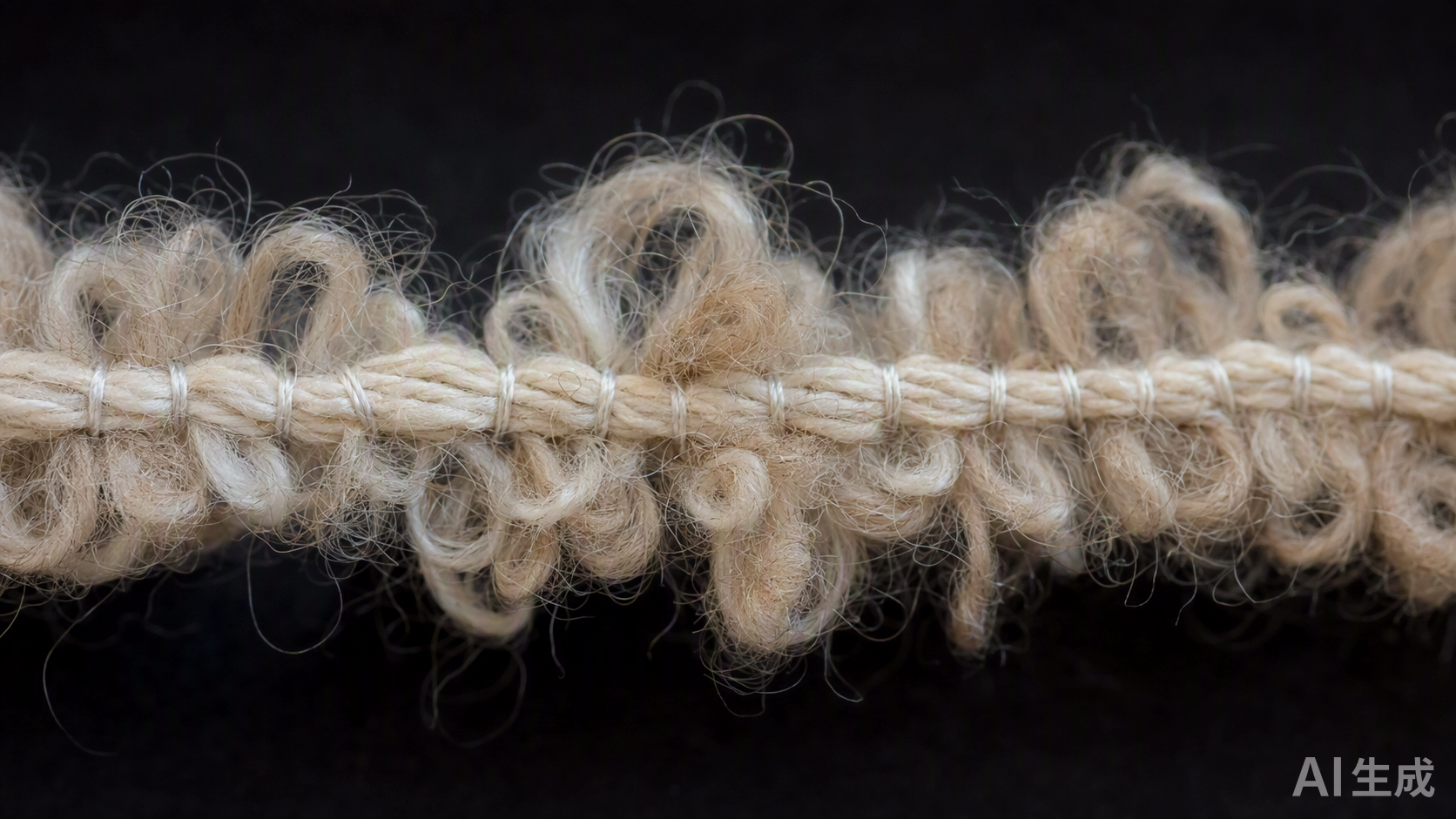
Snagging is a yarn-level problem. A boucle loop is a discrete structure, a fancy yarn with an effect strand looping out of a core, and a sharp object (a ring, a zipper tooth, a display hook, Velcro) catches one loop and pulls it. The result is a pulled loop standing proud of the surface, or a loop dragged through to the back, sometimes with a laddered line behind it. No new fiber balls appear; the surface geometry gets deformed.
Three facts distinguish it from pilling at inspection. First, snags are point events with a visible origin, not a field of dots. Second, they appear after a specific contact event, which wear logs or fitting notes usually confirm. Third, they can often be worked back to the surface with a fine needle from the reverse side, while pills must be removed by shearing or prevention.
Why Boucle Gets Both More Than Flat Weaves
The loop that gives boucle its look is also its exposure. Long effect strands mean more fiber length standing off the surface, which raises pilling risk if the yarn twist is soft and the fiber is short. The same loops catch on the physical world, which raises snag risk regardless of fiber quality. So boucle needs both defenses at once, and they come from different decisions: pilling resistance from fiber and twist choices, snag resistance from loop size control and finishing.
Yarn construction is where pilling is won. Our earlier note on twist and ply in tweed yarns covers the mechanics: higher twist and balanced ply lock short fibers down; soft-spun effect yarns feel loftier but shed pills sooner. On the snag side, what matters is the loop’s anchoring: a loop that emerges far from its core and sits proud of the surface is a lever waiting for a catch, while a tighter, shorter loop profile degrades the texture less in wear than buyers expect.
The Fixes, Separately
For pilling, the levers sit before knitting. Raise the twist on the effect yarn, raise wool fiber length or blend in a longer-staple fiber, and specify a pilling grade with a named method and cycle count in the contract. After the fact, a shearing pass can remove pills but it flattens loops and dulls the texture, which is why bulk lots are tested before shipment, not rescued after.
For snagging, the levers sit in finishing and handling. A light setting pass stabilizes loop geometry; a calendered or over-finished surface does the opposite and should be sampled carefully. In garment making, the fixes are procedural: protect boucle rolls and cut panels from Velcro and rough tables, deburr display hardware, and pack with the loops buffered rather than compressed under heavy stacking. A pulled loop in the field is repaired with a snag needle from the back; a snag-cluster across a roll is a claims conversation anchored to the inspection report.
What to Put in the Spec at Sampling
Four lines prevent most disputes. One: pilling grade target with the test method named, for example grade 3-4 minimum after the agreed cycles under a named standard. Two: snag performance described as loop anchoring, with the approval sample agreed as the reference for loop height and density. Three: finishing limits, whether the surface may be sheared or set, and how much. Four: a wear-test protocol on the approved sample: rub the cuff and elbow zones for a fixed count, then inspect for pills and snags under agreed light. The same loop-yarn logic continues after the loom, which is why we ask brands to review the running boucle yarn before bulk, and it explains why color-true batches depend on how melange yarns are blended as much as on dye lots.
Bring both defect names to the sample review and the conversation changes: the mill knows you will test for each one separately, and the spec sheet carries a number for one and a reference sample for the other. That is the whole game on boucle, and it is the reason our Chanel-style tweed line ships with pilling grades and loop-reference swatches as standard documents.
Ofte stilte spørsmål
Can a snagged boucle loop be fixed without a trace?
Usually yes. Worked from the reverse side with a fine needle, the loop returns to the surface and the shadow disappears. If a cut opened the loop or the yarn broke, a mender re-ties it, which leaves a small irregularity menders habitually place inside the texture.
Is pilling worse on wool boucle or blends?
Not by fiber alone. Long-staple wool with firm twist outperforms a sloppy blend. Short synthetic staples can pill worse than wool, and the pills hold statically to the surface, which reads as worse in wear.
What pilling grade should a boucle jacket hit?
Grade 3-4 after the agreed cycle count under a named method is the working acceptance line for jacket-weight boucle. Ask for the number and the method, not a “pilling-free” promise.
Does washing cause snags?
Washing machines cause snag events, not snag propensity: loops caught on zippers, drum edges or other garments. Bag the garment, close all fasteners, and the snag rate drops to the fabric’s own level.
Send your boucle spec, target grade and garment use case to info@fursone.com or WhatsApp +86 134 5607 1339, and our desk will return a sampling plan with pilling and snag acceptance lines built in.

Relaterte innsikter

Bouclé og tweed til kjoler: GSM- og draperingsvalg
Tweed and boucle on a dress form behave differently than on a jacket stand, and...
Melange and Heather Yarns: How Blended Colour Is Made and Specified
Melange is the fabric equivalent of a photograph printed on textured paper. The colour reads...
Blend Ratios and Batch Verification: Reading a Wool Blend Honestly
Two tweeds can share the same weave structure, the same weight and the same colour...