

Key Takeaway
How a regional fashion brand reordered 800 meters of stock boucle in 21 days: timeline compression, parallel processing, and the cost of speed in fabric production.
En regional motemerkevare i Sørøst-Asia kom til oss med et enkelt problem: deres bestselgende boucle-blazer hadde solgt ut sin første produksjonskjøring på 6 uker, og de trengte 800 meter mer innen 3 uker for å fylle på lageret til den kommende sesongen. De hadde allerede forpliktet seg til leveringsdatoer i varehandelen og hadde ikke råd til den vanlige tidslinjen på 4–6 uker for prøvetaking og produksjon. Slik oppfylte vi gjenbestillingen fra første henvendelse til levering på lageret på 21 dager.
Den første ordren: 200 meter fordelt på 4 fargevarianter
eksempelstudie av tweedputetrekk
Åtte måneder tidligere hadde merket bestilt 200 meter lagerboucle i fire fargevarianter: camel, koksgrå, elfenben og marineblå. Hver fargevariant var 50 meter av en 420 GSM ullblandet boucle fra vårt lagerprogram. Stoffet ble brukt til en ustrukturert blazer som merket solgte gjennom direkte-til-forbruker-kanaler og to boutique-forhandlere.

Den første ordren tok fem uker fra forespørsel til levering. Den første uken gikk med til prøveveving: vi sendte labfarginger og en prøve på 2 meter for godkjenning av håndfølelsen. Merket godkjente camel og kullgrå umiddelbart, men ba om en litt mykere hånd for elfenbensfargen. Vi justerte etterbehandlingsprosessen og sendte en revidert prøve, noe som la fire dager til tidslinjen.
Gjenbestillingen: hvorfor hastigheten var avgjørende
Da merkevaren kontaktet oss for gjenbestillingen, hadde situasjonen endret seg. Fargene kamel og kullgrå var helt utsolgt. Ivory hadde 30 meter igjen. Marineblå hadde solgt dårlig, og merkevaren bestemte seg for å droppe den. De trengte 800 meter totalt: 300 meter kamel, 300 meter kullgrå og 200 meter ivory.
Utfordringen var tidslinjen. Merket hadde forpliktet seg til levering til butikk innen 25 dager. Med 4–5 dager frakt sjøveien gjensto 20 dager til produksjon og kvalitetskontroll. Standard tidslinje for produksjon av 800 meter bouclé med spesialfarge er 25–30 dager.
Hvordan vi kortet ned tidslinjen
For priser og prøvetaking, utforsk bouclé-stoffer på lager from the Fursone team.
Tre faktorer gjorde 21-dagers levering mulig. For det første var camel og kullgrå lagerlignende fargevarianter. Vi hadde gråvare på lager som var ferdig vevd, men ennå ikke farget. Dette fjernet trinnet med garnfarging, som vanligvis tar 7–10 dager.
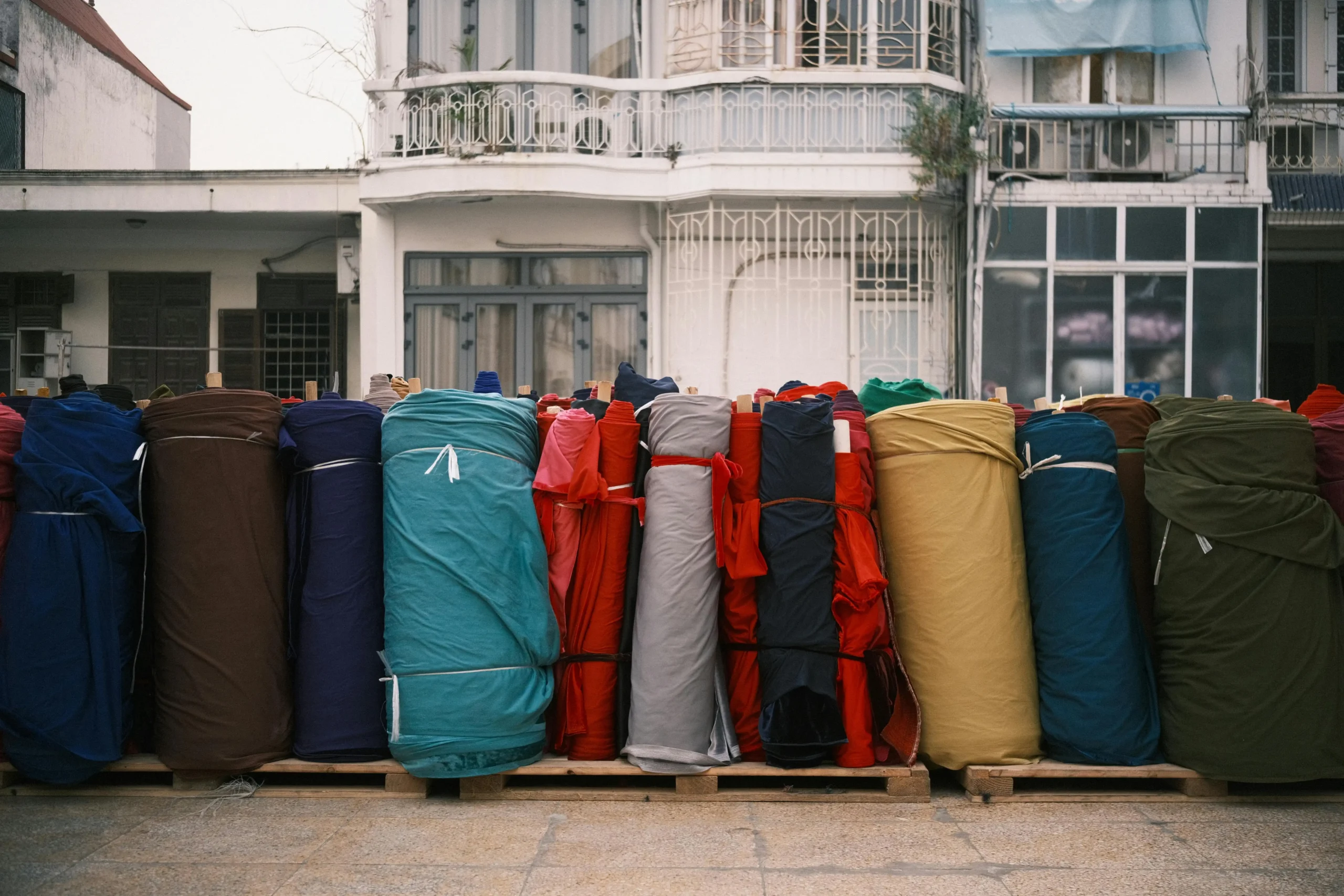
For det andre kjørte vi farging og finish i parallelle batcher. I stedet for å farge alle 800 meterne sekvensielt, delte vi ordren i tre batcher og kjørte dem på to fargelinjer på påfølgende dager. Dette komprimerte fargevinduet fra 8 dager til 4 dager.
For det tredje bestilte vi QC-inspeksjonsluken hos SGS før produksjonen var ferdig. Inspektøren kom den dagen siste parti forlot etterbehandlingslinjen, inspiserte alle 800 meterne etter 4-punktsystemet og utstedte rapporten innen 24 timer. Stoffet ble sendt neste morgen.
Tallene: kostnaden ved hastighet

Å komprimere tidslinjen fra 30 dager til 21 dager hadde en kostnadspremie. De parallelle fargebadene la til et tillegg på 12 % for de mindre partistørrelsene. Den forhåndsbestilte QC-inspeksjonen kostet $350 for samme-dags planlegging. Ekspressbehandling av dokumenter la til $80. Totalt var hastighetspremien cirka $620 på en ordreverdi på $9 600, eller omtrent 6,5 %.
Merket så på dette som akseptabelt, for alternativet var å misligholde leveringsdatoene til butikkene, noe som ville ha utløst kontraktsgebyr fra detaljistpartnerne deres verdt betydelig mer enn hastighetspåslaget.
Hva som gjorde denne etterbestillingen vellykket
Tre ting falt på plass for å gjøre denne raske fornyelsen mulig. Merket hadde allerede godkjent stoffkvaliteten og fargen i den opprinnelige ordren, så ny prøvetaking var ikke nødvendig. Vi hadde gråvare på lager for to av de tre fargevariantene, noe som fjernet det lengste leddet i ledetiden. Og merket varslet om fornyelsen tidlig nok til at vi kunne planlegge produksjonsluker på forhånd.
For merkevarer som forventer gjenbestillinger, er den beste strategien å opprettholde et forhold til et veveri som holder greige på lager i dine foretrukne stoffkonstruksjoner. På den måten er det lengste trinnet allerede gjort når gjenbestillingen kommer.
For ytterligere teknisk referanse, se den Nyheter om tekstilbransjen fra Just-Style.
Related Articles
- Engrosforhandler: tweedlinje med 12 SKU-er, 100 m på lager
- Casestudie: boucle fra flere veverier
- Casestudie om prøvetakingstid for strikkevarer
Ofte stilte spørsmål
Hva er den raskeste leveringstiden for en ombestilling av stoff?
For fargevarianter nær lagerbeholdningen, med greige-stoff på lager, er 14–21 dager oppnåelig. For helt nye farger må du regne med 25–35 dager, inkludert prøveproduksjon.
Påvirker en hastebestilling stoffkvaliteten?
Nei, hvis veveriet holder ordentlige kvalitetskontrollpunkter. Nøkkelen er parallell behandling av uavhengige trinn, ikke å hoppe over kvalitetskontroller. Hos Fursone går hvert parti gjennom de samme testene for GSM, nupping og fargeekthet, uansett tidsplan.
Hva er det vanlige pristillegget for hasteordrer?
Regn med et påslag på 5–15 % avhengig av de konkrete flaskehalsene. Farging av mindre partier, ekspressplanlegging av kvalitetskontroll og luftfrakt (ved behov) er de viktigste kostnadsdriverne.
Relatert lesing: Kasusstudie: 7-dagersprøven som sikret en kontrakt på 3 000 meter tweed.
Et gjennomarbeidet eksempel på leverandørkonsolidering på fabrikknivå, case-studien om konsolidering av seks leverandører går gjennom tallene.

Relaterte innsikter

Case Study: Startup Brand’s Two-Phase MOQ Strategy: Stock First, Custom Later
The most expensive mistake a startup fabric buyer makes is ordering custom fabric for a...
Case Study: Home Textile Brand Trials Tweed for Cushion Covers
When a home textile brand thinks about tweed, outdoor coats usually come to mind first....

Kasusstudie: En grossists første tilpassede farge, fra Pantone til produksjon
Hvordan en stoffgrossist gjør en Pantone-referanse om til en repeterbar tilpasset farge: lyskilde,...