
A stop-work notice freezes a beam, not a quantity. In a three-hundred-metre woollen run beamed once for a 2026 delivery, the last two hundred metres exist in four states when the notice leaves your desk: cloth already off the loom, cloth woven but not yet finished, cloth still on the beam, and a warp length no other order can use. A stop-work notice is the written instruction which suspends that run and reserves the buyer’s rights, and the instruction earns its effect only by first obtaining a dated loom-state report with five quantities the mill alone can supply. The second rule is harder. The notice must not ask for a new delivery date for the balance, because, according to Cornell’s text of § 2-612(3), a demand for performance as to future installments reinstates the contract the buyer means to stop. Only then does the money split three ways: undelivered metres, metres already woven, and yarn dyed to a shade nobody else can use.
What Does Stopping the Last 200 Metres Actually Stop?
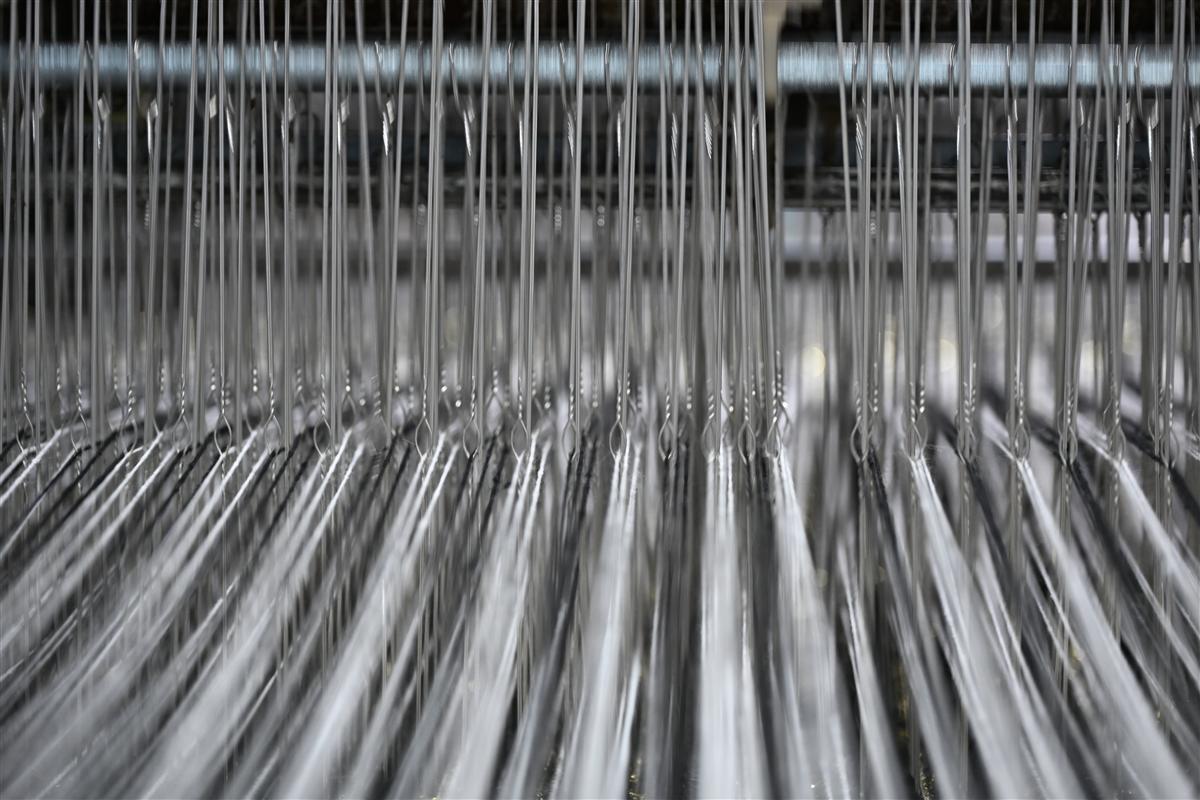
A woollen run is one warp beamed once and woven as a single continuous length, so a stop falls on a beam rather than on an order line. Three objects are affected at the same moment. The first is cloth on the cloth roll, which cannot be re-entered as a new warp. The second is the warp itself, still threaded on the loom and holding the machine for as long as the dispute runs. The third is the yarn store, where cones dyed to your shade for a 2026 delivery wait for an order which may never resume. Our inspection data for a stopped run starts at the loom, on one sheet. A planned staged release is a different event, as the twenty-metres piece sets out, because the loom keeps its place and the buyer takes the cloth in steps. A stop removes the loom’s place.
Is the Order One Lot or Installments, and Does It Change the Rule?
An installment contract is a contract which requires or authorizes the delivery of goods in separate lots to be separately accepted, per Cornell’s text of § 2-612(1). The classification decides which test a buyer applies, and the answer sits in the order rather than in the defect. First, an order for one delivery of one style is tested against substantial impairment of the whole contract, as § 2-612(2) sets out. Second, an order which authorizes separate lots with separate acceptance lets the buyer reject one installment and still take a conforming one. Third, where a 2026 order is silent, the shipping schedule decides and not the wording of the complaint. Whether a US sale-of-goods statute governs your order is a question for the contract’s own terms, so § 2-612 is cited as the shape of the test, not as the law of a contract with a Chinese mill. For example, a clause naming one lot or installments settles the question before anybody argues it.
Step 1: What Five Quantities Does the Loom-State Report Carry?
Which Five Quantities Belong in the Report?
A loom-state report is a dated sheet which states what exists on and around one loom at one moment, and every figure in the claim is computed from those five lines rather than from the invoice. The quantities are:
- Metres off the loom and inspected, by piece number.
- Metres woven but not yet finished.
- Metres on the beam, woven and uncut.
- Warp length remaining on that beam.
- Yarn dyed and allocated to the order but not yet woven.
Each line needs a unit and a location, because cloth in a finishing house and cloth on a roll are not in the same condition. First ask for the report before any figure is discussed. Second ask the mill to state the basis of each number. Third keep the report as the schedule to any settlement, so a later disagreement is an argument about a written line.
Why Must the Report Be Dated Before Any Money Is Discussed?
A dated report is the only version of the loom state which can be proved later. The reason is arithmetic rather than legal: metres woven, metres unfinished and metres on the beam all change every shift, so an undated sheet describes a loom state which no longer exists. The order should fix the period within which the report is due, and the notice should refer to that clause rather than invent a period of its own. First, the buyer gains a schedule with a date on it. Second, the mill gains a defence against a claim for inventory never made. Third, the settlement starts from a number both parties have accepted. In practice a report asked for after the money conversation begins is a negotiating document, and one asked for before it is a record.
Step 2: How Do You Write a Notice That Does Not Undo Itself?
What Wording Suspends Without Cancelling?
A stop-work notice is a written instruction which suspends performance on named metres while preserving every right the buyer holds, and cancellation is a different instrument with a different effect. Suspension keeps the route to cure open, keeps the inspected hundred metres in dispute, and leaves the balance available. Cancellation closes that route. Three sentences carry the notice. First, name the purchase order, the style and the count of metres suspended. Second, state that the inspected metres are not accepted and that no earlier message implies acceptance. Third, reserve all rights, including rejection, replacement and cancellation of the undelivered balance. In practice the sentence doing most of the work is the plain one: work on the balance is suspended, the specification is not accepted, and all rights are reserved.
Which Sentence Would Ask for Future Performance?
A demand for performance as to future installments is the one sentence which can restore a contract a buyer has just stopped. According to Cornell’s § 2-612(3), the aggrieved party reinstates the contract if he accepts a non-conforming installment without seasonably notifying of cancellation, brings an action with respect only to past installments, or demands performance as to future installments. A request for a new delivery date on the remaining metres is that demand in plain language, however politely it is written. The safe request asks for other things. First, the loom-state report. Second, a cure proposal with the inspection method named. Third, a written statement of what the mill intends to do with the yarn already dyed. For example, replace “when can you deliver the balance” with “what do you propose for the balance, and on which inspection basis”. The difference is one clause of the statute.
Step 3: How Do You Fix the Standard Before the Argument?
A tolerance is a written limit in the order, measured by a named method, and a mill’s own statement that a fault sits inside tolerance is not evidence of one. The order fixes three things or fixes nothing: the specification clause which describes the fault, the test method used to measure it, and the acceptance limit applied to the measured result. Where those three are absent, the absence is the finding, and the notice should say so. First, quote the specification line in the notice. Second, name the method and the instrument. Third, record the measured result beside the limit. A conflict between two reports is a separate question, and whose number decides covers the grading scale itself rather than the stop. In practice a notice citing the clause survives a challenge which a notice describing poor quality does not.
Step 4: Which Three Buckets Does the Money Split Into?
The money in a stopped run divides into three buckets, and folding them into one figure hides which part of the claim is being paid. The first bucket is metres not yet woven: cloth which never existed on this warp, and cloth no buyer can owe for. The second bucket is metres already woven: accepted, reworked, downgraded or rejected, with the price following whichever footing applies. The third bucket is yarn, and yarn is priced on what it can still become rather than on what it cost. Each bucket needs its own evidence and its own author. In practice the first is settled by the loom-state report, the second by the inspection report, and the third by the mill’s purchase records. A single lump sum hides which of the three is being paid for, and it usually hides the yarn.
Step 5: Which of the Three Yarn Shapes Has No Market?

Committed yarn has three shapes and only one of them has no market, so the clause should price three states rather than one. First, yarn dyed to your shade is saleable to nobody else, which makes the shade itself the loss. Second, yarn spun to your count from an existing lot is saleable, though a fresh lot would fetch more. Third, yarn merely reserved against the order is saleable at once, so a claim on that yarn is weaker than it looks. The proof follows the shape: the commitment must be dated before the notice, and the dye lot, count and quantity must be traceable to the order. A reserved lot moved to another frame is an identity question of its own, and yarn you supplied is a bailment question rather than a mill purchase, so the clause has to say which of the two it prices.
Step 6: Who Holds, Insures and Restarts the Stopped Loom?
Custody is the question a stop notice usually omits, and four objects need an owner and an insurer on the day the notice goes out: the woven hundred metres, the piece on the loom, the dyed yarn in the store and the beam itself. A stopped loom is not a paused loom, because the piece on it loses value every day the dispute runs and cannot be re-entered as a new warp. The restart carries its own cost, because a stopped warp needs a fresh tying-in and a first-section trial before the balance can be accepted, and the buyer should hold the right to inspect that first length before the run continues. The clause should name who pays for the tying-in and who signs the trial length off. In practice a run restarted without a trial section produces a second dispute on the same warp.
What Should the Order and the Notice Say in Writing?
Which Clause Rows Settle This Before the Next Stop?
A buyer’s standard terms already carry the shape of this, and Tessera’s purchase-order terms are one published model: stop work on notice, place no further orders, use best efforts to resell terminated material, claim only substantiated cost, and exclude lost profits. The rows below translate that shape into a wool run. That document is one buyer’s template rather than a statement of trade practice.
| Clause row | What to write | What it protects |
|---|---|---|
| Lot declaration | One delivery, or separate lots with separate acceptance | The test the buyer applies |
| Loom-state report | Five quantities by piece, and the period for delivery | The arithmetic of every claim |
| Suspension wording | Work suspended, specification not accepted, rights reserved | The route to cure |
| No future date | Ask for a cure proposal, never a new delivery date | Keeps the contract stopped |
| Tolerance basis | Specification clause, method and limit, cited by reference | The standard before the argument |
| Three buckets | Undelivered, woven and yarn as separate lines | Which part is being paid for |
| Yarn proofs | Dated commitment, shade, count and lot before the notice | The yarn with no market |
| Custody and restart | Holder, insurer, tying-in and who signs the trial length | The piece on the loom |
| Deemed agreement | Silence past the period is agreement to the stop | A stop that is not a request |
What Should You Send First, and What Does Silence Mean?
The notice and the report request travel together, because a stop without a report is a request with a date on it. Send the suspension first, with the purchase order named, the metres named and the specification line quoted. Then ask for the loom-state report and a cure proposal, and set your own outside date for the answer. Finally state what silence means: no answer by that date is treated as agreement to the stop, and that sentence is what converts a request into an instruction. The mill’s answer arrives as a document or not at all. Whether a US sale-of-goods statute governs the order stays a contract question, so the notice should name the law the buyer relies on rather than assume one. In practice the two documents sent together are the ones that come back.

Relaterte innsikter
Old Report, New Dyehouse: Does It Still Cover the Cloth?
An old report does not cover cloth that ran through a different dyehouse, and the...
A One-Way Lay Costs Metres: Who Books Them?
A one-way lay is a marker in which every pattern piece faces the same direction,...
Yellowed at the Fold Lines: What Settles It, Step by Step?
A yellow fold line on an ecru wool coating is a contact symptom before it...