
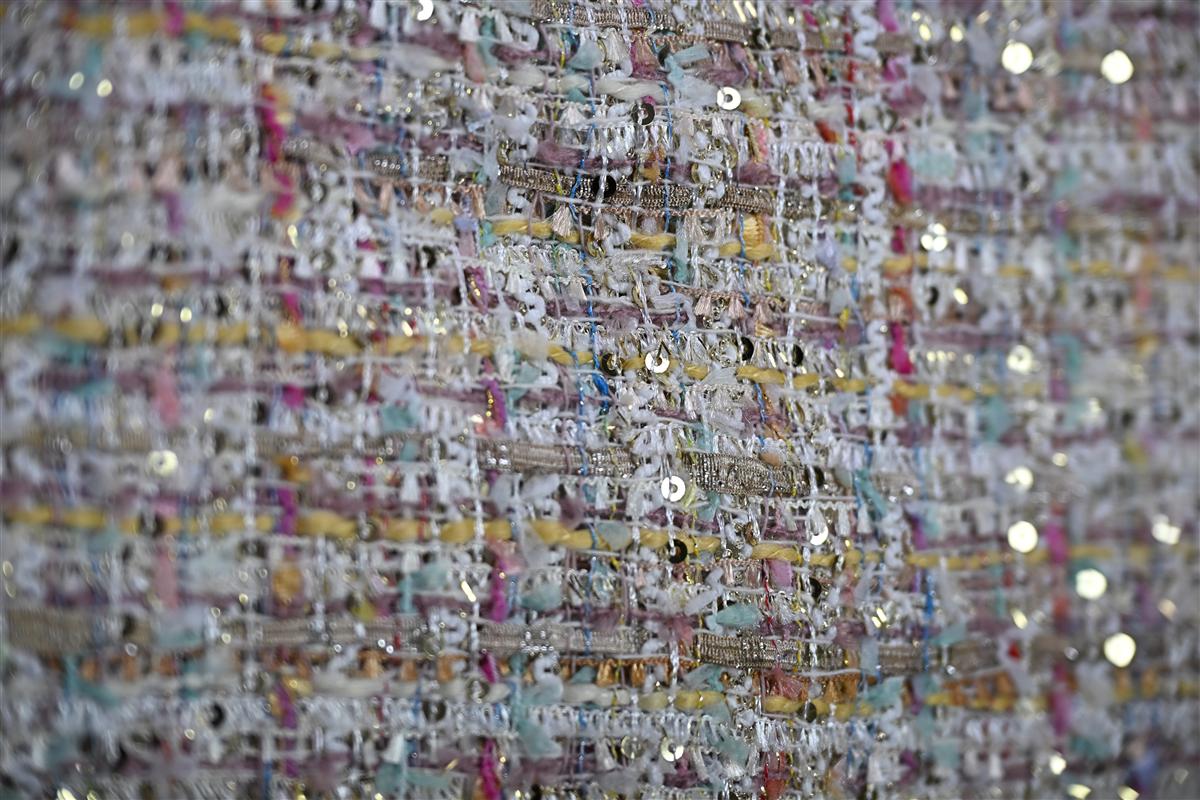
A three-mill trial is one cloth specification woven three ways in a single week, then compared on identical evidence rather than on three separate sales conversations. Three sixty-metre runs give a designer cloth to cut, cloth to wash, and a sealed roll to keep as the reference. According to ISO 139, mass and width are measured after conditioning at 20 °C and 65% relative humidity, so every roll is weighed on the same basis. Total commitment: three small deposits and one week of attention. What follows is the lock, the split, four evidence classes, a four-dimension score, and the re-check before bulk.
What Is a Three-Mill Trial and Why Run One Specification Three Ways?
The three-mill format is a sourcing test that holds yarn count, colour reference, weave and finish constant while the weaving mill changes. The trial separates mill skill from specification noise, which is why three runs beat three quotations.
First, fix the specification sheet. Second, nominate one yarn lot, or accept that yarn sourcing joins the test. Third, book all three runs into the same calendar week in 2026.
According to ASTM D3775, fabric count is read as ends and picks per unit length, so loom sett becomes a number rather than an adjective. A sixty-metre run per mill leaves roughly 10% of each roll free for wash, press and abrasion work. The single-mill version of this test is covered in what a trial order should actually ask.
For example, a designer comparing three quotes for a 400 g/m² herringbone learns nothing about loom behaviour. Three finished cloths in hand answer the question in one afternoon.
What Has to Be Fixed in Writing Before the Three Mills Start?
A locked specification is a one-page document that every mill receives word for word, with no room left for a verbal side agreement. Eight lines carry the trial: yarn count and fibre, colour reference, weave and sett, finished width, mass per unit area, finish route, roll length and packing.
Fibre content needs a line of its own, because the care label claim follows the mill’s declaration. According to 16 CFR Part 300, wool products must state fibre content by percentage on the label, so an ambiguous blend line becomes the buyer’s legal problem later.
Two tolerances settle most arguments before they start. The trial sets a 3% window on mass per unit area and a fixed usable width, both measured on conditioned cloth. Width deserves a written definition rather than a hope, and usable width from selvedge to selvedge explains what to demand.
Finally, name the test method beside every target. A target without a method is only an opinion, and 2026 buyers cannot afford opinions dressed as data.
How Do You Split the Metres Without Telling Each Mill Who It Is Competing Against?
A blind split is a labelling decision: each mill receives the same document under a neutral code, Mill A, Mill B, Mill C, and never learns the identity of the other two. Sales teams that know a rival is in the room quote differently, schedule differently, and sometimes subcontract the run without saying so.
Ship all three rolls to one address before opening any of them. Verdicts formed in three cities on three days drift toward the most recent visit, and the first impression wins by default.
Reserve 20% of every roll as a sealed archive length, wrapped, dated and stored away from daylight. The reserve settles later disputes about shade, hand and finished width.
Volgens het IWTO Core Test Regulations, a wool lot is sampled and tested as a lot rather than bale by bale. A designer applies the same logic to three trial rolls and treats each roll as one sample of one mill.
Why Does the Same Week Matter More Than the Same Price?
The same-week rule is a control, not a convenience. Cloth woven in March and cloth woven in June leave the loom under different humidity, from different yarn lots, and often through a different finishing batch.
Loom state drifts too. A mill that has just finished a heavy coating runs a tighter, hotter loom than a mill coming off a light jacketing, and the difference shows up in width rather than in words.
First, book the three runs inside a seven-day window. Second, accept a 5% premium on one quote when the premium buys that slot. Third, treat a slip beyond two weeks as a new trial rather than a late one.
According to ISO 139, testing happens under fixed temperature and humidity, and a weaving floor deserves the same suspicion. Weather is not a variable a designer can argue with after delivery.
What Four Kinds of Evidence Do You Compare on Arrival?
Arrival evidence is the physical record a buyer builds in the first hour, before any mill representative explains anything. Four classes cover the comparison: mass and width, construction and count, colour, and faults.
Open all three rolls in the same room, under the same light, on the same table. Daylight through a north window is the honest lamp for shade work, and a phone torch is not.
Numbers come before opinion, always. Weigh a conditioned square metre per ASTM D3776, measure usable width at three points, count ends and picks on the same sample, then grade faults against the sealed reference.
For example, a roll that measures 148 cm edge to edge and 146 cm usable already loses on cutting economics in 2026, whatever the hand feels like in the showroom.
Write the four readings on one sheet per roll, so all three mills sit in the same columns when the buyer finally compares them.
The Four Evidence Classes Side by Side
| Evidence class | What is recorded | Methode | Pass line used in the trial |
|---|---|---|---|
| Massa per oppervlakte-eenheid | grams per square metre, conditioned cloth | ISO 3801, ASTM D3776 | inside 3% of the locked figure |
| Usable width | selvedge to selvedge, then minus fents | ISO 3932 | agreed usable width, no shortfalls |
| Construction | ends and picks per centimetre | ASTM D3775 | matches the approved sett |
| Colour | shade against the physical standard | ISO 105-A02 grey scale | no visible step in daylight |
| Faults | points per roll, per 100 square metres | four-point inspection | under AQL 2.5 per lot |
Which Evidence Class Decides the Ranking?
The ranking evidence class is the one that stops production fastest, and for outerwear that class is mass and width. A cloth 3% light cannot be cut at the costing the buyer quoted, and a 146 cm usable width breaks the marker before anyone touches the hand.
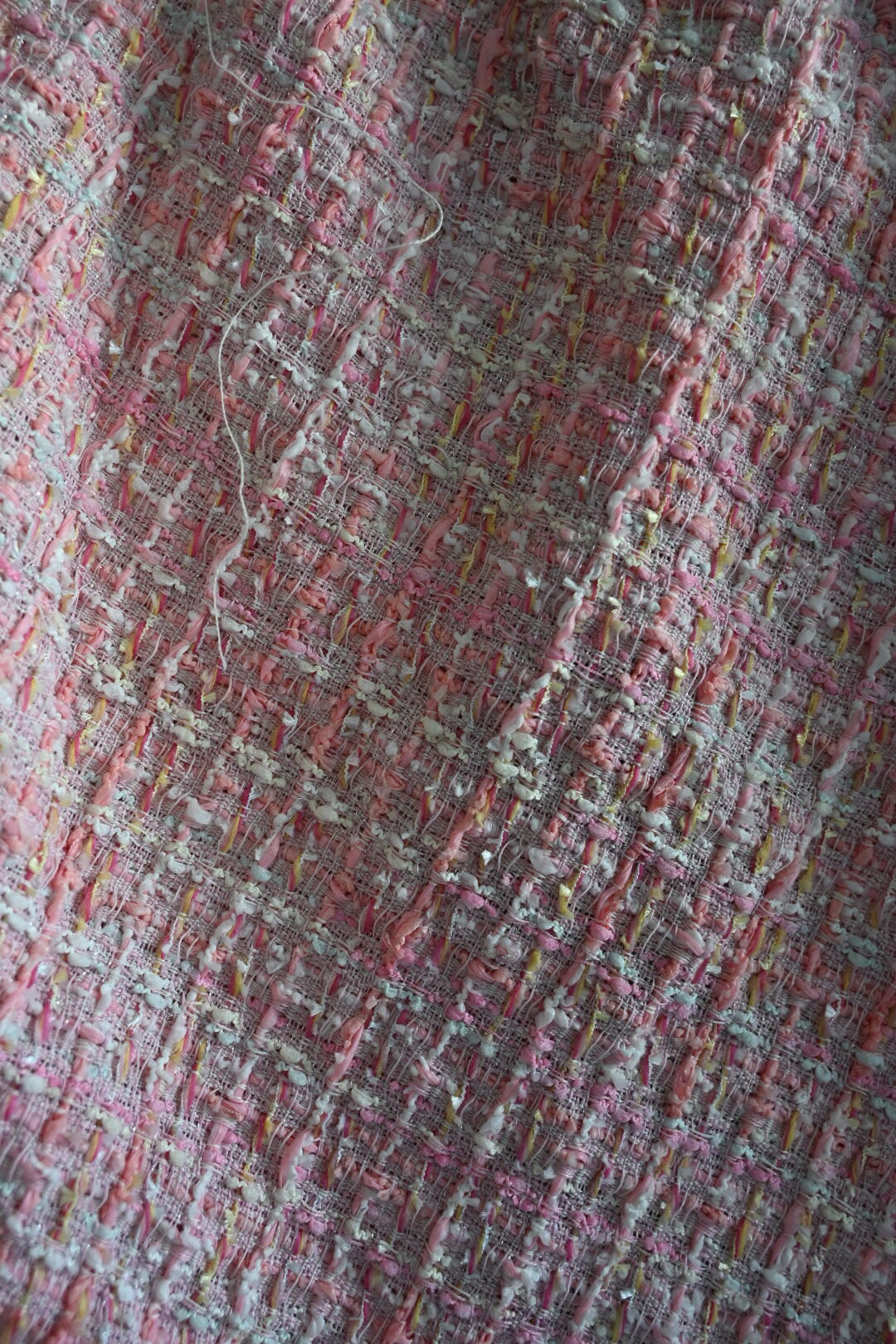
According to ISO 3801, mass per unit area is determined on conditioned specimens, which turns a light roll into a measurement rather than an impression. Width is measured three times, at both ends and the middle.
First, eliminate any mill outside the 3% mass window. Second, eliminate any roll below the usable width. Third, score hand on the survivors only, with the archived length as the control. Faults sit outside that order, because a fault report can be re-graded in 2026 while a wrong width cannot be re-cut, and what a per-roll report must show decides how much cloth the fault report actually saves.
Cut a garment before trusting any of the order. Shoulders and armholes expose what a flat table hides.
How Do You Score Three Mills on Four Dimensions?
A four-dimension score is a weighted total that converts three rolls of evidence into one decision. The dimensions are spec compliance, hand and finish, fault consistency, and commercial reliability.
Weights matter more than the scale. Spec compliance carries 40 percent of the total, because a beautiful cloth outside width cannot be cut. Hand and finish carry 30 percent, fault consistency 20 percent, and paperwork and communication the last 10 percent.
Score each dimension from one to five against written anchors, never against a feeling. A five means the mill hit the locked figure and documented the method. A three means the cloth is usable with an adjustment. Any dimension scored one is a veto, whatever the total says.
First, fix the weights before the rolls arrive, so 2026 cannot be awarded on charm. Second, write the anchors. Third, send the veto rule to all three mills at quotation stage. Step 1 is the weight column, step 2 the anchor column, step 3 the veto.
How Is Each Dimension Scored Out of Five?
An anchor is a sentence that describes what a one, a three and a five look like, written before the rolls arrive. Anchors stop the score drifting toward the mill with the best sales manner.
For spec compliance, a five means mass, width and sett inside the locked window with a test report attached. For hand and finish, a five means the cloth still matches the sealed reference after pressing, not only before.
Fault consistency is scored per roll, because one clean roll and one poor roll is a worse result than three average rolls. According to ISO 2859-1, acceptance sampling judges a lot from a sample, and a single roll is not a lot. That is why an AQL of 2.5 percent applies to the run rather than to the roll a salesman chose.
Commercial reliability covers replies, documents and dates. A five answers inside a day in 2026 and sends paperwork with the cloth, and sample against bulk approval is where that habit gets tested.
The Scoring Sheet
| Dimensie | Gewicht | What a five looks like | Veto condition |
|---|---|---|---|
| Spec compliance | 40 percent | mass, width, sett inside window, report attached | outside the 3% mass window |
| Hand and finish | 30 percent | matches sealed reference after pressing | finish not the locked route |
| Fault consistency | 20 percent | all rolls under AQL 2.5, points evenly spread | one roll above the AQL |
| Commercial reliability | 10 percent | reply in one day, documents with the cloth | unnamed subcontract |
What Breaks the Comparison When the Week Slips?
A slipped week turns a comparison into three separate purchases. The usual causes are a subcontract to a partner shed, a yarn substitution made without a message, a finishing queue that swallows the cloth, and a short delivery explained after the fact.
Ask for the yarn lot number on the delivery note rather than in a later email. A mill that mixes lots mid-run has changed the cloth without changing the document.
First, record the date each roll was woven. Second, record the finishing date separately. Third, confirm that all three rolls went through the same finishing route, because a different route is a different cloth.
A 15% shortfall on one roll is a scheduling problem. A 15% shortfall found after cutting is a costing problem, and a join inside the roll quietly eats another metre each time.
When Should You Drop a Mill Instead of Re-running?
Dropping a mill is a decision about repeatability, not about one bad roll. A mill that discloses a bad roll, names the cause and offers a re-run at its own cost is still a candidate. A mill that calls a fault normal for the quality is not.
Three failures justify an exit. The first is an unnamed subcontract, because the trial measured a shed that will not weave the bulk. The second is a missing yarn lot record, which makes every future shade argument unwinnable. The third is a refused test method, which removes the only shared language between buyer and mill.
Re-running costs another week and another sixty metres, which is 33% of the whole trial length. A season built on an untraceable mill costs the launch itself.
In practice, one re-run is reasonable. A second re-run is a warning about the buyer’s own process, not only about the mill.
What Does the Re-Check Before Scaling Look Like?
A pre-scale re-check is a short second test on the winning mill before the bulk order is signed. The re-check covers four things: a cut garment, a wash or dry-clean cycle, a shade match against the sealed reference, and a written yarn lot reservation.
The garment matters because cloth that passes on a table can still collapse at a shoulder seam. Wear the sample for a week in 2026, and hold 10% of the bulk deposit until the re-check passes.
According to ASTM D5034, breaking strength is measured on a grab specimen, and a seam that fails at the armhole usually fails because nobody tested the cloth in that load direction.
Finally, compare the winner against the losing rolls in daylight one more time, since two greens can split in daylight long after a swatch matched under an office lamp.
Reserve the yarn lot in writing. A second bulk run from a new lot is a new colour argument, and the trial did not pay for that argument twice.

Gerelateerde inzichten
Shrink vs Stretch Returns: Separating Cloth From Care
A shrink-versus-stretch attribution is a controlled comparison that separates cloth change from care change on...
Lab Dip Close to Pantone: What to Sign Before Bulk Dye
A lab dip approval is a signed colour standard that freezes dye recipe, substrate, illuminant,...
Whose Line Is It: The Invoice Fields No Trader Can Sign
A commercial invoice for a cloth shipment is a single declaration assembled from three record...