
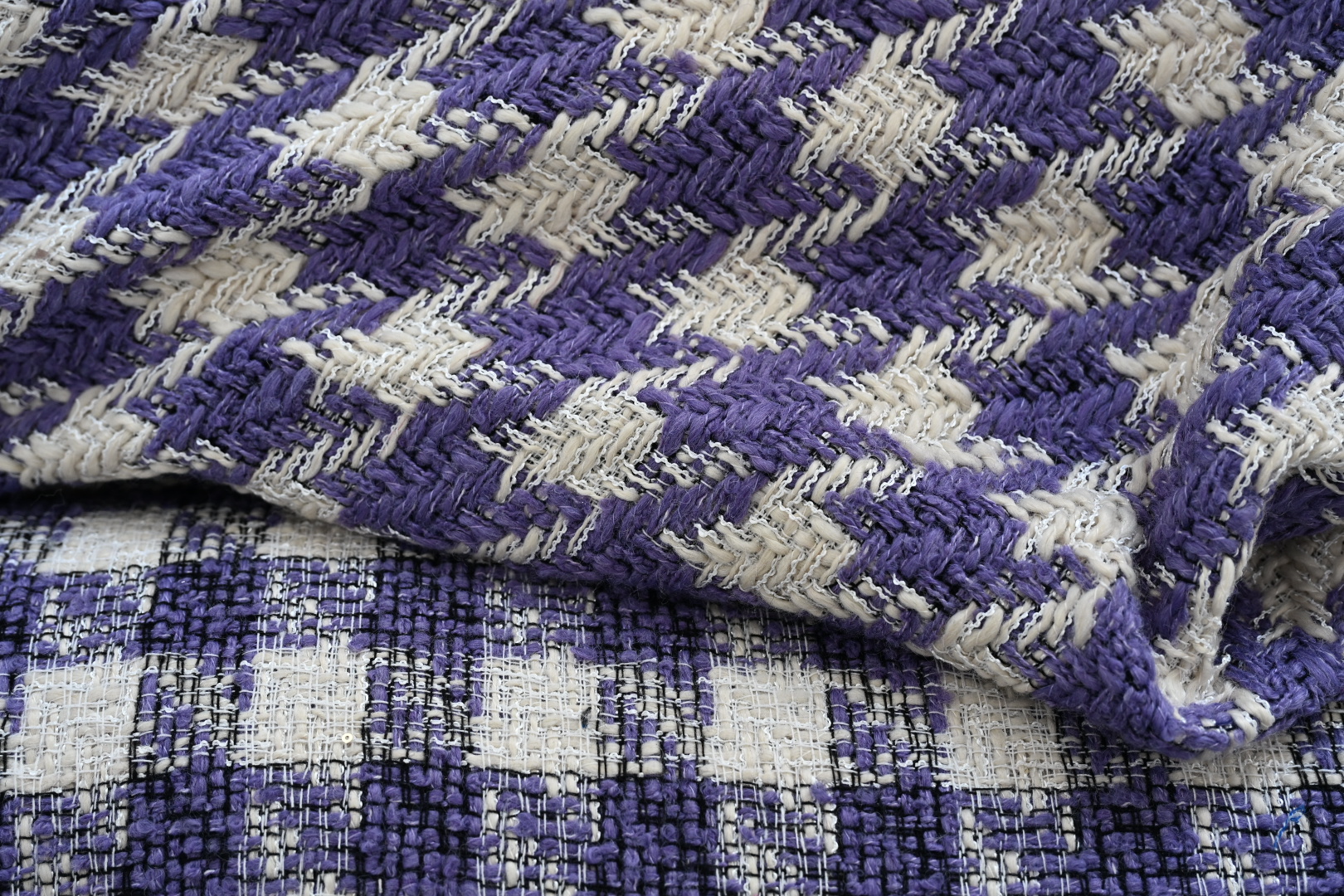
Two quotes can both say 2/28 and still describe yarns that differ by more than a tenth of their mass. A yarn equivalence annex is the one page that closes that gap: seven fields, a tolerance on each field, and the test method that produces the number. ISO 2060 fixes linear density on a reeled skein, 100 m at this count. ISO 2061 fixes twist, including the gauge length and the direction. Sign the annex before you discuss the 12 percent, then use thread density and bending length to see what the extra money actually buys.
What Does 2/28 Fix, and What Does It Leave Open?
A yarn count is an indirect number: it states how many lengths of yarn make one unit of mass, not the mass of a fixed length. In the metric system, Nm 28 means 28,000 metres per kilogram. A 2/28 ply carries a resultant count of 14 Nm, which is about 71 tex. The same notation also exists in the worsted system, where 2/28 NeK resolves to 14 NeK and about 63 tex; ISO 2060 Annex E gives 885.8 as the conversion factor. Those two yarns sit 12.9% apart in linear density before twist, fibre or finishing is compared. That arithmetic is the first place a 12% price gap can hide. The notation also hides whether the 28 refers to the single yarn or to the plied result, which is a question the supplier should answer in writing. It is also why a serious annex asks for the count system before it asks for anything else.
Why Can Two 2/28 Cloths Feel Different at the Same Weight?
Firmness enters a coating at three places, and only one of them is the yarn. The first is the yarn itself: single twist, ply twist and fibre diameter change how much the yarn resists bending. The second is the sett: ends and picks per centimetre decide how much yarn sits in a square centimetre. The third is finishing: milling, pressing and decating change thickness, density and surface. A 480 g wool coating can reach its weight through a denser sett of finer yarn or a looser sett of coarser yarn, and those two cloths will not handle alike. Weight alone cannot tell you which route a mill took, which is why the same 480 g number appears on cloths that drape differently. That is why the annex fixes the yarn first and the attribution tests fix the cloth second.
Which Tests Turn a Yarn Claim Into a Number?
Testing is the step that converts a signed schedule into comparable numbers. Four methods cover the annex: ISO 2060:1994 for linear density, ISO 2061:2015 for twist, ISO 7211-2:2024 for thread density, and ASTM D1388-23 for stiffness. The first two describe the yarn. The last two describe the cloth that yarn becomes, which is why they belong to the attribution step rather than to the yarn certificate. Order matters: test the yarn before the loom, because a count or twist fault found after weaving is already a cloth fault. A lab report that omits the method, the specimen length and the number of specimens is not evidence. Ask for the report page, not the certificate cover. Ask the laboratory to write the method number on that page, not only in the covering email.
How Does ISO 2060 Weigh a 100 m Skein?
Linear density is mass per unit length, and ISO 2060:1994 measures it on a reeled skein. The standard sets the skein length by count: 200 m below 12.5 tex, 100 m from 12.5 to 100 tex, and 10 m above 100 tex. A 2/28 Nm yarn resolves to 14 Nm, about 71 tex, so the 100 m skein applies. Skein length must hold within plus or minus 0.2 percent, and the yarn is conditioned to ISO 139 at 20 degrees Celsius and 65 percent relative humidity. The reported value is the mean in tex, with the skein length, the number of specimens and the coefficient of variation. The skein is weighed after conditioning, so a report that gives only an oven-dry mass has used a different option and cannot be compared directly. According to ISO 2060:1994, a result without those items cannot be reproduced by a second laboratory.
How Does ISO 2061 Report Twist Without Hiding the Gauge Length?
Twist is the number of turns about a yarn axis, counted over a nominal gauge length before untwisting. ISO 2061:2015 fixes that length by yarn type: worsted single yarns are clamped at 25 mm or 50 mm, while plied and cabled yarns use 250 mm above 1,250 turns per metre and 500 mm below it. Twist direction follows ISO 2 and is reported as S or Z. The same standard reports change in length on untwisting as a percentage. For example, a 2% contraction marks a livelier yarn than 0.5%. A 25 mm clamp and a 500 mm clamp on the same yarn return different turns per metre, so the gauge length belongs in the report rather than in the lab notebook. A report that gives turns per metre without gauge length, direction and specimen count cannot be compared with a second report, as required by ISO 2061:2015. In practice, two mills can both write 620 turns per metre and mean different yarns.
What Belongs in the Seven-Field Yarn Equivalence Annex?
A yarn equivalence annex is a one-page schedule that fixes every property the count leaves open. The annex carries seven fields: count system and resultant count, fibre composition and mean diameter, single twist, ply twist and balance, linear density variation, package treatment, and lot identity. Each field carries a unit, a tolerance, a test method and the party who signs the result. ISO 2060 supplies the count and ISO 2061 supplies the twist; a mill that cannot name either method is describing a yarn, not specifying one. Write tolerances as numbers: plus or minus 2.5 percent on resultant count, plus or minus 5 percent on twist, and a declared maximum for linear density variation. Two suppliers sign the same annex only when the units match. A blank cell is a refusal, not a detail.
The Seven Fields That Make 2/28 Comparable
Fill one column per supplier. The table is the annex, and the tolerance column is the part most buyers leave blank.
| Veld | What the annex states | Method or evidence | Tolerance to fix |
|---|---|---|---|
| Count and system | Nm 2/28, resultant 14 Nm, about 71 tex | ISO 2060, 100 m skein | plus or minus 2.5 percent |
| Fibre and diameter | wool share and mean fibre diameter in micron | composition statement plus diameter report | 0.5 micron on the mean |
| Single twist | turns per metre and S or Z direction | ISO 2061, 25 mm or 50 mm specimen | plus or minus 5 percent |
| Ply twist and balance | ply turns per metre, direction, contraction on untwisting | ISO 2061, 250 mm or 500 mm specimen | 2 percent contraction ceiling |
| Evenness | coefficient of variation of linear density | ISO 2060, at least 20 specimens | declared maximum |
| Package treatment | anti-shrink, wax or lubricant, cone mass | mill declaration and retained cone | present or absent |
| Lot identity | lot code, spinning date, retained 100 m skein | sealed sample and lot ticket | one lot per shipment |
Which Numbers Separate a Yarn Upgrade From a Sett or Finish Change?
Attribution is the order in which a price gap is tested, not an opinion about hand feel. Work in four steps. First, confirm weight and resultant count against the annex; if both sit inside tolerance, the yarn mass is equivalent and the gap sits elsewhere. Second, count ends and picks per centimetre to ISO 7211-2; a firmer cloth with more threads at the same count is a denser sett, not a better yarn. For example, a denser sett can raise firmness without changing the yarn at all. Third, measure bending length to ASTM D1388; a longer bending length at equal weight and sett points to finishing or fibre diameter. Fourth, compare twist only after the first three are equal. A 12% premium survives that sequence only when twist and micron differ beyond the signed tolerance. Write the sequence into the annex, so the mill knows which evidence you will ask for first.
What Does a Sample Prove, and What If the Mill Will Not Declare Twist?
A sample answers a narrower question than most buyers expect, and a missing twist record is the most common hole in that answer. The 100 m skein is the ISO 2060 unit for linear density, not a universal specimen. Twist uses short specimens, and the cloth uses different tests again. Treat each result as evidence for one field of the annex, no more. When a mill cannot supply twist, the fallback is not a promise; it is a retained cone, a fabric record and a signed declaration. A report that covers the yarn but not the cloth answers half the question, and a report that covers the cloth but not the yarn cannot tell you which lever to pull. The two sections below set the limit of each.
What Does a 100 m Skein Prove?
A 100 m skein proves linear density for the lot it was reeled from. It does not prove twist, because twist is measured on specimens from 25 mm to 500 mm, and it does not prove the cloth, because sett and finishing sit downstream of the yarn. The sample is only as good as its lot link. Reel it from production cones, seal it, and write the lot code on the skein ticket. One skein per laboratory sample package is the ISO 2060 basis; a single skein from one cone describes that cone. Keep the skein until the bulk ships. If a later claim needs a re-test, the retained skein is the only sample that still matches the delivery. For example, a 1% moisture difference moves the measured mass by about 1%, which is why conditioning comes before weighing.

What Can Replace a Missing Twist Record?
Refusal is common, and it is not always concealment. Some mills buy finished yarn and never see the spinning data, so the twist record belongs to a spinner they will not name. When twist is unavailable, ask for three substitutes. First, a retained cone from the same lot, sealed and labelled, so a third party can test it later. Second, a fabric-level record: ends and picks per centimetre, weight, and bending length on the finished cloth. Third, a written declaration of the spinning route, the count system, and whether the ply twist is balanced. A declaration is weaker than a test, but it is still a document the mill can sign and you can file. If none of the three arrives, the twist and ply guide explains what the omission usually means, and you can price the risk instead of the yarn.
What Goes on the Purchase Order Once the Annex Is Signed?
The annex only works if the order repeats it, because a specification that lives in an email is not a term of sale. Three lines carry the weight. The first names the annex revision and its date, so a later revision cannot be substituted silently. The second names the test report: method, laboratory, report number and issue date. The third states the remedy: a re-test on the retained skein, who pays for it, and how many days the mill has to answer. Attach the annex and make the order subject to it. A mill that accepts the annex but not the order line has accepted nothing. The twelve-field RFQ template covers the quote; the annex covers the evidence behind it. For a 480 g coating in the woolen overcoat range, that evidence is the only part of the price a buyer can audit.

Gerelateerde inzichten
Pilling After the Bulk Lands: Re-Test, Settlement Tiers and the Refused Second Delivery
A refused second delivery is a claim case with a deadline, not a test request....
OEKO-TEX Covers the Cloth, Not Always Your Shade: The Coverage Check Before Bulk Dyeing
An OEKO-TEX STANDARD 100 certificate is a one-year certification of a company and a named...
Shrink vs Stretch Returns: Separating Cloth From Care
A shrink-versus-stretch attribution is a controlled comparison that separates cloth change from care change on...