
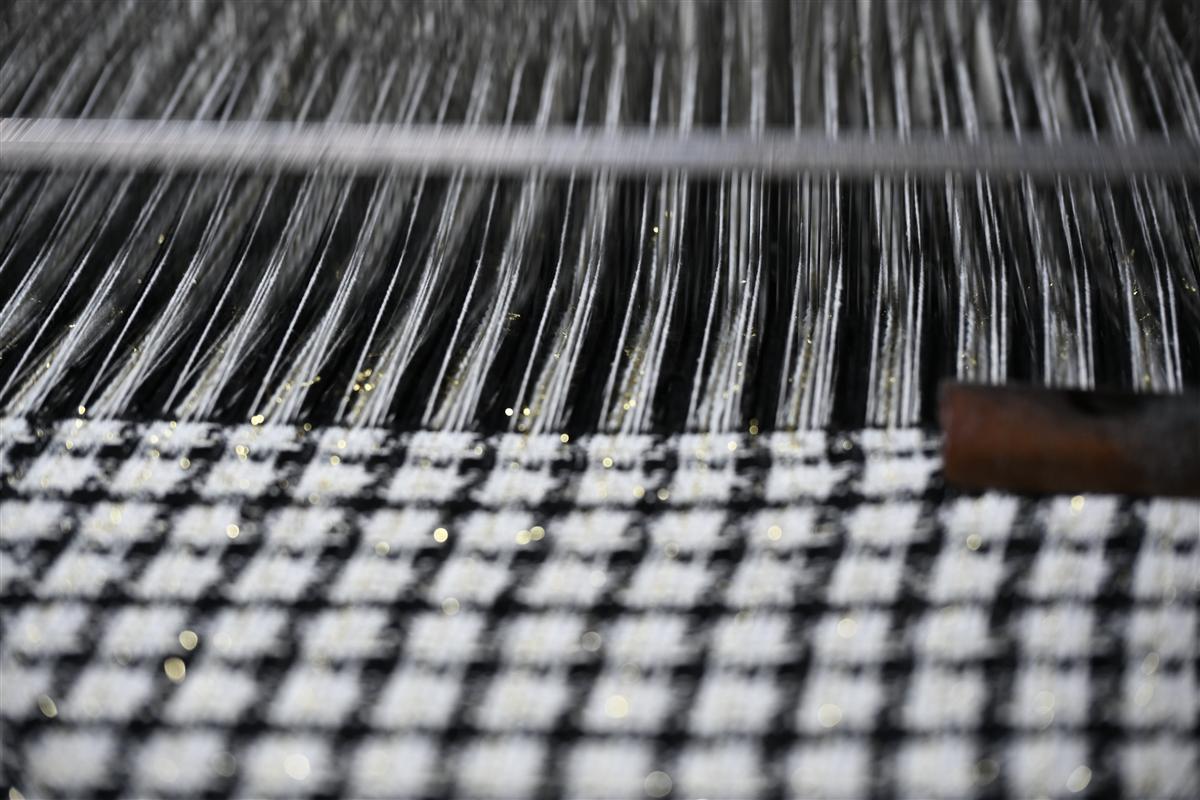
“Quality 6501” is not a specification. A specification is a document with four parts: an issuing body, a document number, a revision date, and requirements that each carry a method and an acceptance criterion. Quality 6501 is a designation, which points into one mill’s own records, and the quote in hand carries the code while reading like a specification. Nine steps rebuild the field list in writing before any two prices can be compared. First, what the number is and what the number resolves to when searched. Second, which coating the buyer is actually buying, because a wool mill sells a coating cloth and not a coating film. Third, the construction fields, the sealed sample, the revision check, and the grade and width basis hidden inside a price. Finally, the stopping rule for a field missing on one side. Each step leaves a dated page behind, and the page is what survives a change of salesperson at either end.
What Is ‘Quality 6501’: a Specification or a Mill Code?
Four parts separate a designation from a specification, and the list is short enough to check in one reading: 1. an issuing body; 2. a document number; 3. a revision or date; 4. requirements, each with a method and an acceptance criterion. A wool mill’s in-house quality number usually holds none of the four, and the absence is ordinary bookkeeping rather than evasion. No page found in this search defines a mill’s four-digit quality code, and nothing in those digits names a fibre, a weight or a finish. The honest reading of “quality 6501” is a label whose meaning lives in the mill’s own file, so the request is for the file and not for a definition. A supplier able to answer with a document number holds a specification. A supplier able to answer only with a file holds a code, and both replies are workable once the difference is written down.
What Does the Number Resolve To When You Search It?
A code resolves to whatever trade is doing the searching. The only sourced “6501” found in this search belongs to Honda HES 6501, a car-paint test specification covering appearance of the coating film, film thickness, gloss, colour rating to JIS Z 8722, pencil hardness, cross-hatch adhesion over 100 cut squares, recoat performance, and impact resistance on a DuPont tester. Honda builds cars. No clause in HES 6501 describes a woven cloth, and nothing in the digits pointed toward wool. The laboratory page lists each test in turn, and no cloth field appears in the sequence. The search supplied the meaning, not the number. Expect the same from any four-digit mill code typed into a browser: another industry, described in detail, with methods and tolerances attached. Two conclusions follow. 1. The number is not self-identifying. 2. The mill has to identify it in writing.
Which Coating Are You Buying: a Film or a Cloth?
A coating cloth is a woven wool fabric sold to garment makers, and no metal, no substrate and no cure schedule sits anywhere inside one. A coating in the industrial sense is a deposited film: a coater prepares a surface, applies a primer and a topcoat, and measures dry-film thickness after a cure. In a 2026 check, four AI assistants were asked this exact question and returned four industrial field lists. One asked for a base-metal grade, one for an oven or ambient cure at part-metal temperature, one for a blast-cleaning grade, and all four asked for salt spray. Those fields belong to a coater, not to a loom. One sentence in the enquiry removes the whole wrong list: “the coating we are quoting is a woven wool coating cloth, not an applied film.” Woven cloth carries its own methods, chosen by designation, per ASTM’s textile standards index.
Which Construction Fields Belong in the Sheet?
A construction field is a property of the cloth able to be stated by both mills, compared on both sheets and, where a method exists, tested. Eight fields carry the comparison: 1. fibre composition by percentage; 2. warp and weft yarn count with ply; 3. ends and picks per unit length; 4. weave and construction; 5. greige and finished width, each with its measuring basis; 6. greige and finished mass per unit area; 7. finish route; 8. colour standard with its light source. Composition needs its own evidence chain, because an invoice is not proof of composition. One field carries an acceptance statement inside the standard itself: end and pick count, per ASTM D3775-17(2023), whose Section 5.1 reads that the method “is considered satisfactory for acceptance testing of commercial shipments because it has been used extensively in the trade for that purpose”. Section 1.2.1 reports the result per 1 cm or per 1 in, so both sheets must name the unit.
Why Does a Sealed, Dated Sample Outrank the Sheet?
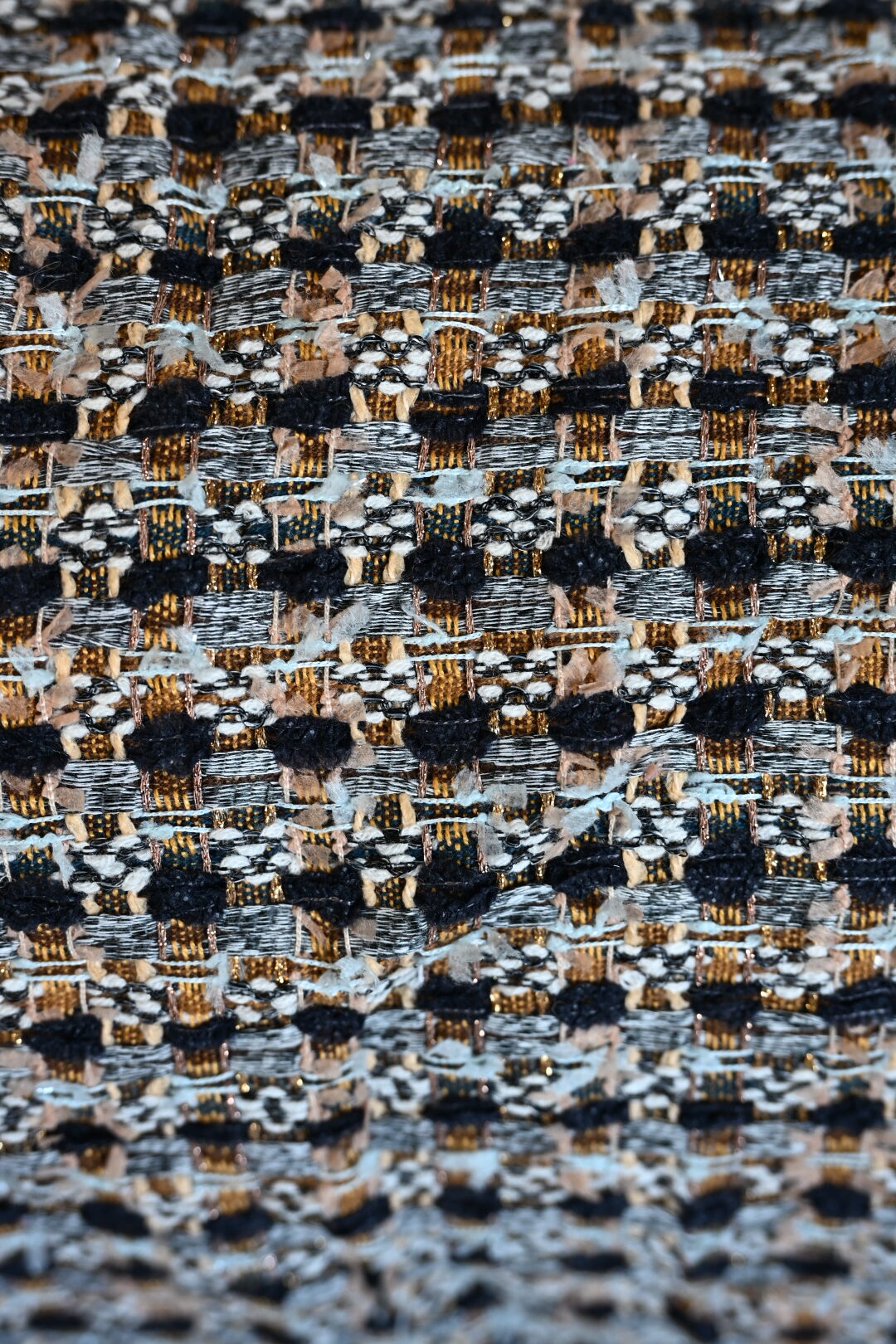
A retained sample is a physical standard: a piece of the actual cloth, sealed, dated, and signed across the seal, kept with the quote it belongs to. A sheet describes and a sample defines. Two mills can each hand over a correct sheet and still weave two different cloths, because a description leaves room at every field and a sealed piece leaves none. Ask for the sample at first-sample stage, write the date onto the sheet, and make the reorder clause point at the sealed piece rather than at the number. In our sample room the sealed bag carries a dated slip, and the construction sheet is filed behind it. A buyer holding only paper holds an argument. A buyer holding the sealed piece holds a reference. For example, a shade agreed in a photograph is a description, while the same shade in a sealed sample is a standard.
What Happens When Two Mills Use the Same Number?
A number is not a namespace, and nothing prevents two mills from quoting “quality 6501” for two different cloths. A single mill can also revise what its own number means as a construction changes, so one label covers two cloths across two seasons. Three controls close the gap: 1. ask for the revision number and the date; 2. ask which fields the revision changed; 3. file the revision with the quote. Counts behave the same way. Two yarns both written 2/28 can sit 12 percent apart, which is why a yarn equivalence annex has to exist before a substitution is agreed. In practice the revision date is the cheapest question in the file and the one most often skipped, because the number looks stable. A construction revised in 2026 and one revised in 2023 can carry an identical label and describe different cloth.
What Grade and Width Does the Price Hide?
A quoted price sits on one grade of a run and one width basis, and neither is stated unless the buyer asks. Two questions per quote do most of the work: 1. which grade of the run does this price cover; 2. is the price on the full woven width or on the cuttable width between the edges. Wool coating lots shade from edge to middle, so a grade band exists whether or not the sheet names one. The width basis can move a comparison further than a four percent price gap does, and a line-by-line bid comparison has to settle the basis before the arithmetic means anything. A trading company quoting fifteen percent below the weaving mill recovers the difference somewhere in the chain, which is why the question of who weaves the cloth belongs in the same file. A 2026 quote sheet naming neither grade nor basis remains an offer.
What Written Questions Identify the Number’s Nature?
A written question is one able to be answered by naming a document, and only questions of that shape are worth sending at first-sample stage. Five do the work: 1. “Please identify Quality 6501 as either an internal mill designation or an externally controlled specification.” 2. “If a specification, give the issuing body, the document number and the revision date.” 3. “If an internal designation, give the dated construction sheet behind it.” 4. “Please confirm the grade and the width basis the quoted price sits on.” 5. “Please seal and date one sample against this quote.” The first question carries the whole test. A mill answering with an issuing body holds a specification, and a mill answering with a file holds a code, and both replies are usable. In practice the reply that costs a buyer most is the friendly one, because a verbal assurance arrives without a date.
How Do Two Sheets Get Compared Without Guessing?
When Does a Missing Field Stop the Comparison?
A missing field makes a quote not comparable, and the correct entry in that row is “not comparable” rather than an estimate. Line the two sheets up field by field: composition, yarn count in both directions, ends and picks, weave, both widths, both masses, finish route, tolerances, colour standard, grade, width basis and price scope. Where both sheets state a field, compare the values. Where one states a field and the other stays silent, write “not comparable” and stop that row. Where neither states it, both quotes are unmeasured on that property, and the buyer learns something about both mills. The stopping rule matters because a guessed value hides the only fact the decision needed. A garment maker holding a completed table can say which quote is comparable and on how many rows. A garment maker holding two prices can say nothing.
What Should the Comparison Sheet Carry?
The comparison sheet is a row-per-field record, and every row needs a written entry before the two prices sit side by side. One empty cell is a reason to stop, not a gap to fill by assumption, per the rule in the previous section.
| Pole | What the mill must state in writing | Why it decides comparability |
|---|---|---|
| Fibre composition | Each fibre as a percentage, with the test basis behind the figure | A fibre list without percentages cannot be lined up with another list |
| Warp and weft yarn | Count and ply for each direction | Two yarns can share a count and differ in the yarn itself |
| Ends and picks | Count per 1 cm or per 1 in, and which unit is used | ASTM D3775 Section 5.1 backs acceptance testing of commercial shipments |
| Weave and construction | A named structure rather than a trade adjective | A trade name is not a construction and cannot be confirmed |
| Szerokość | Greige and finished, plus the basis each is measured on | Full woven width and cuttable width differ by the edge |
| Masa powierzchniowa | Greige and finished, in the stated unit | One figure cannot serve two states of the same cloth |
| Finish route | The sequence, not the effect claimed | A finish changes hand and mass, and the route decides both |
| Tolerances | The permitted range for each field above | A range is what a claim is settled against |
| Colour standard | The reference held, and the light source | A shade is a standard or an opinion, and the second cannot be measured |
| Grade and width basis | Which grade the price covers, and which width it is priced on | A price moves with both, and neither is visible in the figure |
| Sealed sample | Date, seal, signature, and the quote it attaches to | The sample outranks the sheet when the two disagree |
| Number’s nature | Internal designation or external specification, with revision | A label is not a definition, and the revision dates it |

Powiązane spostrzeżenia

Stiff Grey Band at the Front Edge: What the Marker Must Cut
A stiff grey band along the front edge of an unlined coat is the selvedge,...

Does Pilling Cover Snagging? What to Put on the Order
No. A pilling grade is a score for fibre entanglement on the surface, and the...
A Child’s Wool Coat Flammability Test: Cloth or Garment?
A flammability answer for a child’s wool coat is a component list, not a cloth...