
A flammability answer for a child’s wool coat is a component list, not a cloth test and not a garment test. Part 1610 puts the unit of compliance on the uncovered or exposed part, so a single report headed shell fabric answers a narrower question than the one in the email, per Section 1610.34. A coat with an exposed lining, an unlined hood and rolled cuffs presents three exposed surfaces before anyone reaches the trims, and each surface needs a basis recorded against a row. The certificate standing behind that list belongs to the importer under 16 CFR 1110.7(a), which leaves the mill supplying composition evidence it can defend in 2026. Nine steps take the request from the email to a file that holds up: the five questions to send back, the exposed-part rule, the component sweep, the fibre exemption and the polyester-lining error, the gap between exempt and passed, the sleepwear branch, the certificate signatory, the specimen stage and state, and the decision table.
What Is the Stockist Actually Asking You to Prove?
A flammability request from a stockist is a document demand, not a test order. Five answers are needed before anyone books a laboratory: 1. the destination market; 2. the product type, whether coat or nightwear; 3. the rule the stockist believes applies; 4. whether the request is a legal duty or the retailer’s own specification; 5. the components the stockist thinks are covered. Part 1610 reaches fabric in a form ready for use in wearing apparel, including garments finished for consumer use, per Section 1610.1(e), so a coat sits inside the rule while the question of which parts to test stays open. In practice the fifth answer exposes most of the confusion, because a stockist who names only the shell has not yet thought about the hood. Send the five questions back in writing and keep the reply with the file.
Does the Rule Test the Cloth or the Coat?
An uncovered or exposed part is the area of a garment that might, during normal wear, be open to flame or to other means of ignition, and 16 CFR part 1610 limits testing to those areas at section 1610.34. An exposed lining such as the lining of a full front zippered jacket, an unlined hood and a rolled cuff all count as exposed, per Section 1610.31. The same definition excludes the covered interior, which is why a hidden interlining sits outside the exercise. The cloth-or-garment question collapses at that point: a specimen may be cut from the shell or taken from a finished coat, yet either specimen answers only for the parts listed. Section 1610.1(c) adds an exclusion for interlining sold as a layer between an outer shell and an inner lining. For example, a mill can supply a shell result and still leave a coat untested, because the lining face never entered the specimen.
Which Parts of a Child’s Wool Coat Count as Exposed?
Which Shell, Lining and Hood Parts Are Exposed?
A component sweep is a walk over the coat that lists every surface able to meet a flame. Shell, lining and hood come first. A fully lined body with a closed lining counts as covered, while any lining with an exposed area counts as exposed. An unlined hood counts as exposed under the examples in section 1610.31, and a rolled cuff counts as exposed for the same reason. A reversible style doubles the list, because the inner face becomes a wearing surface. Patch pockets, a back yoke and an open front edge sit in the same category. In our fabric files, a coat described as fully lined usually carries three or four exposed components once hood and cuffs are recorded separately. Write each surface as its own row, with the component name and the place on the coat, because no report covers a part nobody listed.
Which Small Parts Get Left Off the List?
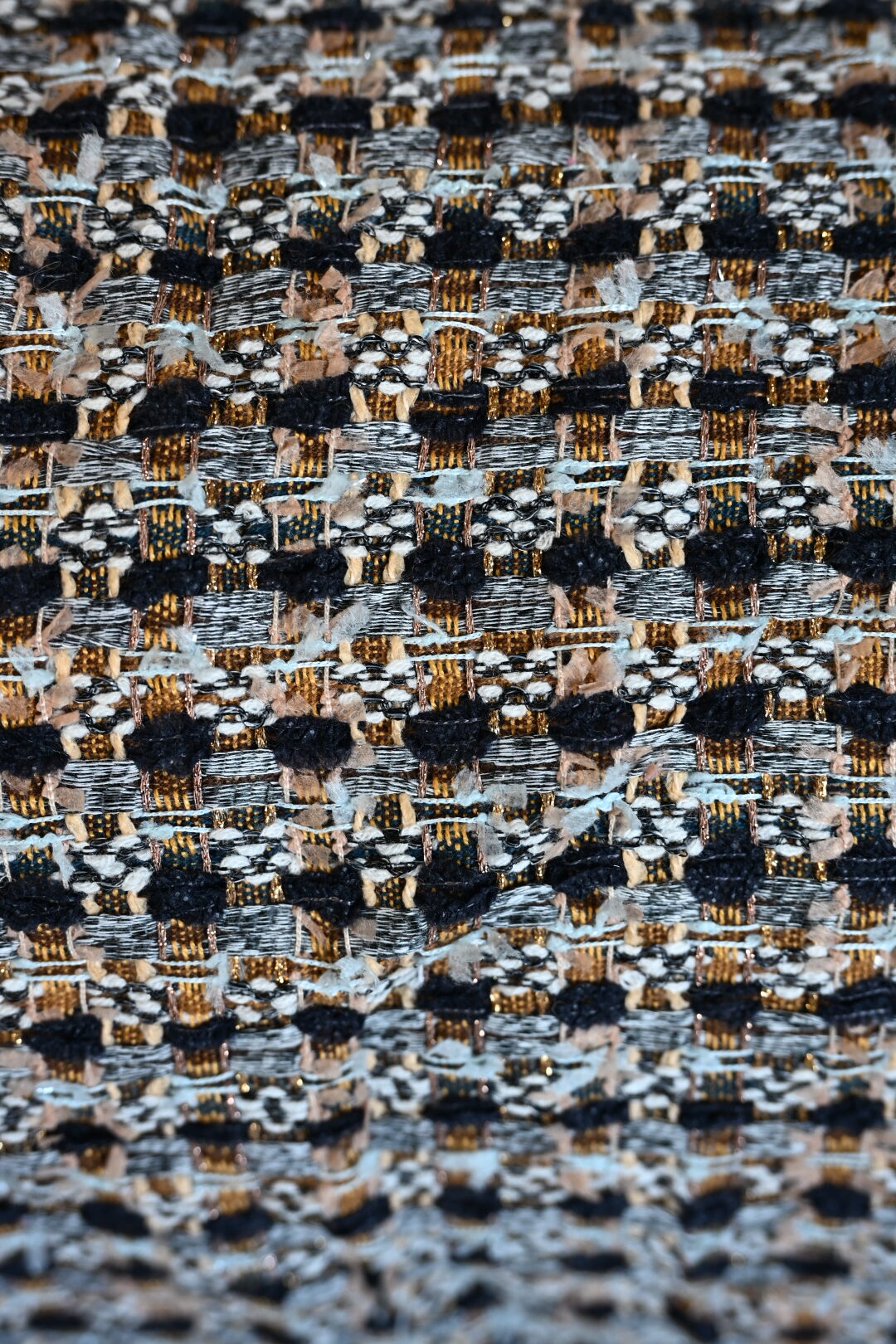
Sewing thread, zipper tape, a coated trim, a printed label, a metallic badge and a pile collar are the rows that decide a file. Each is a small exposed surface, and each may fail the composition test that the shell passes easily. A thread of mixed fibre, a woven label with a synthetic binder, or a metal badge stitched to a wool face is not made entirely from the listed fibres. Treat each as a component in its own right, and record the fibre content plus the supplier declaration behind the number. The exemption runs, per Section 1610.1(d), to fabric made entirely from acrylic, modacrylic, nylon, olefin, polyester or wool. A blend that misses the list by one fibre leaves the exemption. In practice the badge and the label are the two rows most often missing from a first draft, and both are visible on the finished coat.
Is the Exemption About the Fibre or the Whole Cloth?
A testing exemption is a statement about composition rather than about performance. Two exemption routes exist, per Section 1610.1(d). First, a plain surface fabric weighing 2.6 ounces per square yard or more, whatever the fibre. Second, all fabrics, plain or raised, at any weight, made entirely from acrylic, modacrylic, nylon, olefin, polyester or wool, or entirely from a combination of those fibres. Wool coating travels on the second route, and weight plays no part there. A common error claims that a polyester lining breaks the exemption. Polyester appears on the same list at any weight, so a polyester lining keeps the exemption intact. What breaks the exemption is a component made from viscose, cotton, silk, metallic fibre or elastane, or one not made entirely from listed fibres. An invoice is not proof of composition, so check each component against a declaration rather than against the reputation of the cloth.
Does an Exemption Mean the Fabric Passed?
An exemption is not a pass, and that difference decides which paper you can send. A test result records behaviour under a stated method, while an exemption records a composition fact. The exemption removes the requirement to test in support of a guaranty, per Section 1610.1(d), so no burn result exists to quote for a fabric made entirely from listed fibres. The support that replaces a result is a traceable composition claim: fibre content by component, the supplier declaration behind each number, and the mill’s own statement for the cloth the mill wove. Adding chemistry to fill the gap weakens a file rather than strengthening one, because a treatment brings a chemical and a labelling question without settling the exemption. A care label declaration and a test report answer two different questions here. For example, a stockist satisfied by a certificate citing an exemption basis holds the right document, while a stockist demanding a burn time for exempt wool has made an impossible request.
Is a Child’s Coat Sleepwear Under the Rules?
Sleepwear is a separate standard with its own size ranges, and a coat leaves those ranges by product type rather than by size. Part 1615 governs children’s sleepwear in sizes 0 through 6X, part 1616 governs sizes 7 through 14, and 16 CFR 1616.1(c) provides that an item meeting part 1615 complies with part 1616. A coat is not sleepwear, so the general apparel rule in part 1610 governs instead. The United Kingdom splits differently. The Nightwear (Safety) Regulations 1985 define nightwear as nightdresses, pyjamas, dressing gowns, bath robes and garments of a like nature and use, and require children’s nightwear fabric to meet the performance requirements of BS 5722 after washing to BS 5651, with BS 5438 as the vertical flame method. A coat sits outside that definition, so the UK answer to a coat question is that no statutory coat rule applies.
Who Signs the Certificate of Compliance?
A certificate of compliance is the importer’s document, and 16 CFR 1110.7(a) settles the point: for a product manufactured outside the United States, only the importer must certify. Section 1110.11 lists what the certificate carries, per Part 1110: 1. identification of the product; 2. a citation to each rule certified to; 3. the certifying importer’s name, full mailing address and telephone; 4. contact details for the record custodian; 5. date and place of manufacture; 6. date and place of testing; 7. identification of any third-party laboratory on which the certificate depends. Section 1110.9 requires the information in English, and 16 CFR 1112.15(b) lists part 1610 among the rules with published accreditation scope. A mill offering to issue the certificate offers a signature the mill has no standing to give, and a stockist demanding one from the mill is writing to the wrong desk.
What Does the Mill Hand Over, and What Does the Importer Build?
Which Stage Should the Test Specimen Come From?
A valid specimen is production cloth of the same construction, finish and colourway as the bulk order, not a trial piece from a development loom. Four conditions decide validity. First, composition must match the order, because the exemption turns on fibre content, per Section 1610.1(d). Second, surface must match, because a raised finish and a plain finish take different routes in part 1610. Third, colourway and dye lot belong in the record, since a stockist comparing two reports will ask. Fourth, the specimen must be retained, so a later question can be answered without a new run. A result taken from a cloth the mill no longer weaves describes a different product, and a result from a development piece describes a fabric the buyer will never receive. In practice the specimen question is settled at sample stage, before the bulk warp is beamed.
Which Specimen State Must the Report Name?
A report without a specimen state cannot be compared with another report. Part 1610 procedures contemplate conditioned specimens and cleaning, and the UK nightwear route assesses fabric after washing to BS 5651, so a washed state and an unwashed state are two different claims. Ask three questions of any report. First, was the specimen tested as received, after one wash, or after a stated number of cycles. Second, was the specimen conditioned before testing, and at what condition. Third, was the specimen fabric or a finished garment. A stockist holding two reports in different states may be holding answers to two different questions. For example, a shell result tested as received and a lining result tested after washing cannot be read side by side without that detail. Write the state in the file, next to the component row, and treat a wool claim the mill cannot witness as a separate file.
What Goes in the File Before You Answer the Stockist?
Which Paper Applies to Which Market?
The file is a decision table that runs on market and product type before any test method. Check each row against the rule the row names. A row with no rule is a contractual request, and the answer is a written reply, not a laboratory order. Keep fibre naming on a separate sheet, since merino is not a fibre name and a coat labelled by breed invites a second question at the border. The table reflects the rules as they stand in 2026.
| Market | Product type | Rule consulted | What is tested | Paper and signatory |
|---|---|---|---|---|
| United States | Child’s wool coat | 16 CFR part 1610 | Exposed parts, section 1610.34 | Certificate citing the part; importer signs |
| United States | Sleepwear, sizes 0 through 6X | 16 CFR part 1615 | Sleepwear standard, not part 1610 | Certificate citing part 1615; importer signs |
| United States | Sleepwear, sizes 7 through 14 | 16 CFR part 1616 | Sleepwear standard, not part 1610 | Certificate citing part 1616; importer signs |
| Wielka Brytania | Child’s wool coat | Nightwear (Safety) Regulations 1985 | No statutory coat requirement | Composition declaration; importer signs |
| Wielka Brytania | Children’s nightwear | SI 1985/2043, BS 5722, BS 5651, BS 5438 | Nightwear fabric after washing | Declaration of conformity; supplier signs |

Powiązane spostrzeżenia
If You Own the Yarn, Who Carries the Weaving Loss?
When the yarn is yours, the mill’s invoice no longer carries the loss. Nothing is...
A Darker Shade Three Weeks Out: What Can the Mill Absorb?
A darker shade three weeks before the yarn order is not one decision, because a...
Azo and SVHC on One Sheet: Letter or Lab Report?
The stockist’s compliance sheet came back marked “declaration only, not acceptable”, and the line that...