
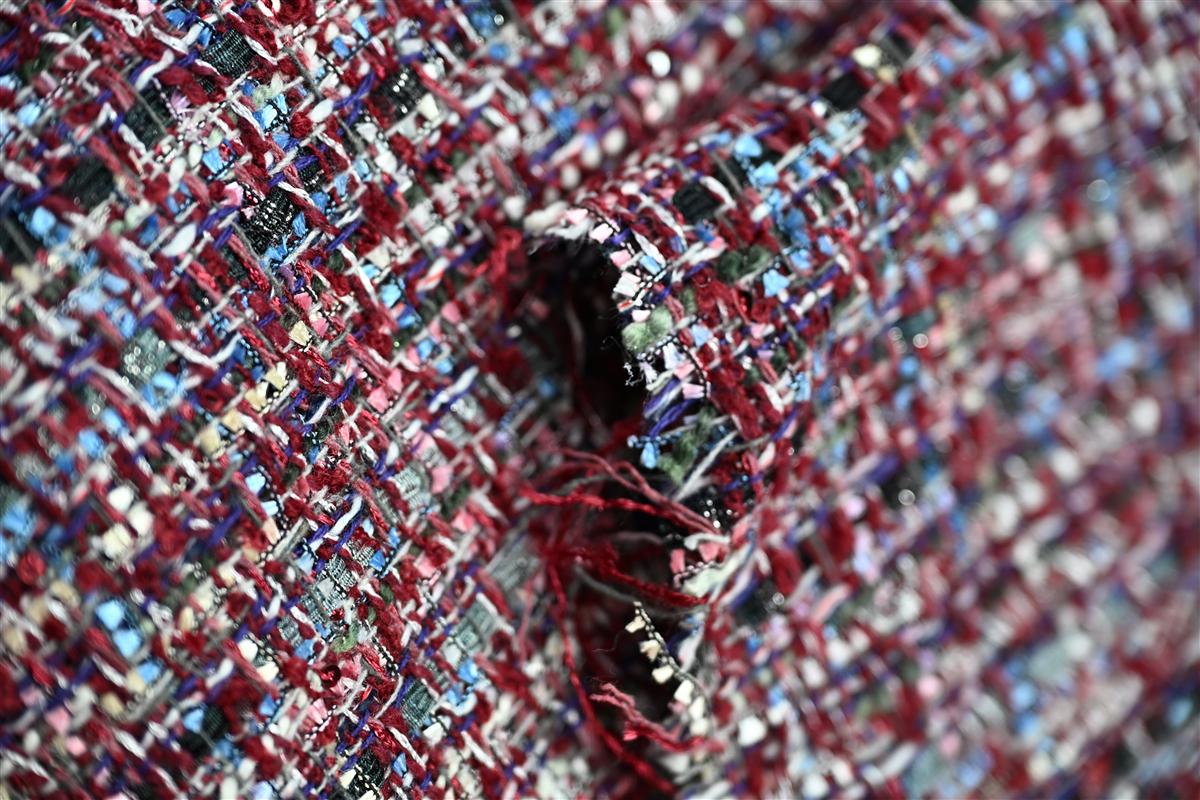
A joined roll is not an ordinary roll, and the specification should say so before the next order is woven. The mill owes you three pieces of information about each join: that it exists, where it is on the roll, and how much cloth lies on either side of it. The join should be flagged on the roll itself, declared on the roll ticket, and limited by a rule you set, because a join that lands inside a garment length forces the cutting room to re-lay the marker around it, and on a faced or plaid cloth that piece can never be matched again. Then count what the joins actually cost you in metres and present that number, not the annoyance.
What a join costs in the cutting room
A join is usually a sewn or overlapped joint where one length of cloth was run out and another was pieced on, and in the trade a bolt has always been a length made up of what the loom produced. That is why the honest answer is not “no joins ever” but “joins declared, placed and limited”, as the older description of a bolt of cloth implies: the roll is a unit of trade, and the number of pieces inside it is part of the deal.
The cost appears in three places. First, the marker: a join inside a garment length means that panel cannot be cut across it, so the lay has to be re-planned and the piece between the join and the end of the roll usually becomes waste or a smaller part. Second, the matching: on a check, a plaid or a one-way nap, no join can be matched, so any panel cut across it is a visible defect in the finished garment. Third, the arithmetic: each join effectively removes a garment length or more from the run, and the loss is multiplied by the number of rolls and the number of garments per length. On a faced cloth, one join per roll can be a half-garment per roll; across two hundred rolls that is the difference between meeting the order and coming up short.
How other roll trades write the rule
The paper and film industries have argued about joins for decades, and their roll specifications are worth borrowing because they use plain language. A specification typically states the maximum number of splices allowed per roll, a minimum length of material between two splices, a minimum splice-free length at the start of the roll so that the first metres run cleanly, and a flag or marker at each splice so the operator knows it is coming. None of those ideas is exotic, and all of them transfer to cloth: a maximum number of joins per roll, a minimum piece length between joins, a minimum unjoined length at the head for the cutting room, and a flag.
What does not transfer is the tolerance for the join itself. A taped splice in a film roll is invisible in the finished product; a join in a woollen tweed is a visible break in the surface. So the cloth specification has to be stricter than the paper one on one point: which joins are acceptable at all. On a plain, solid-coloured cloth, a well-made join is a hidden inconvenience. On a face-finished, checked or one-way cloth, it is a defect.
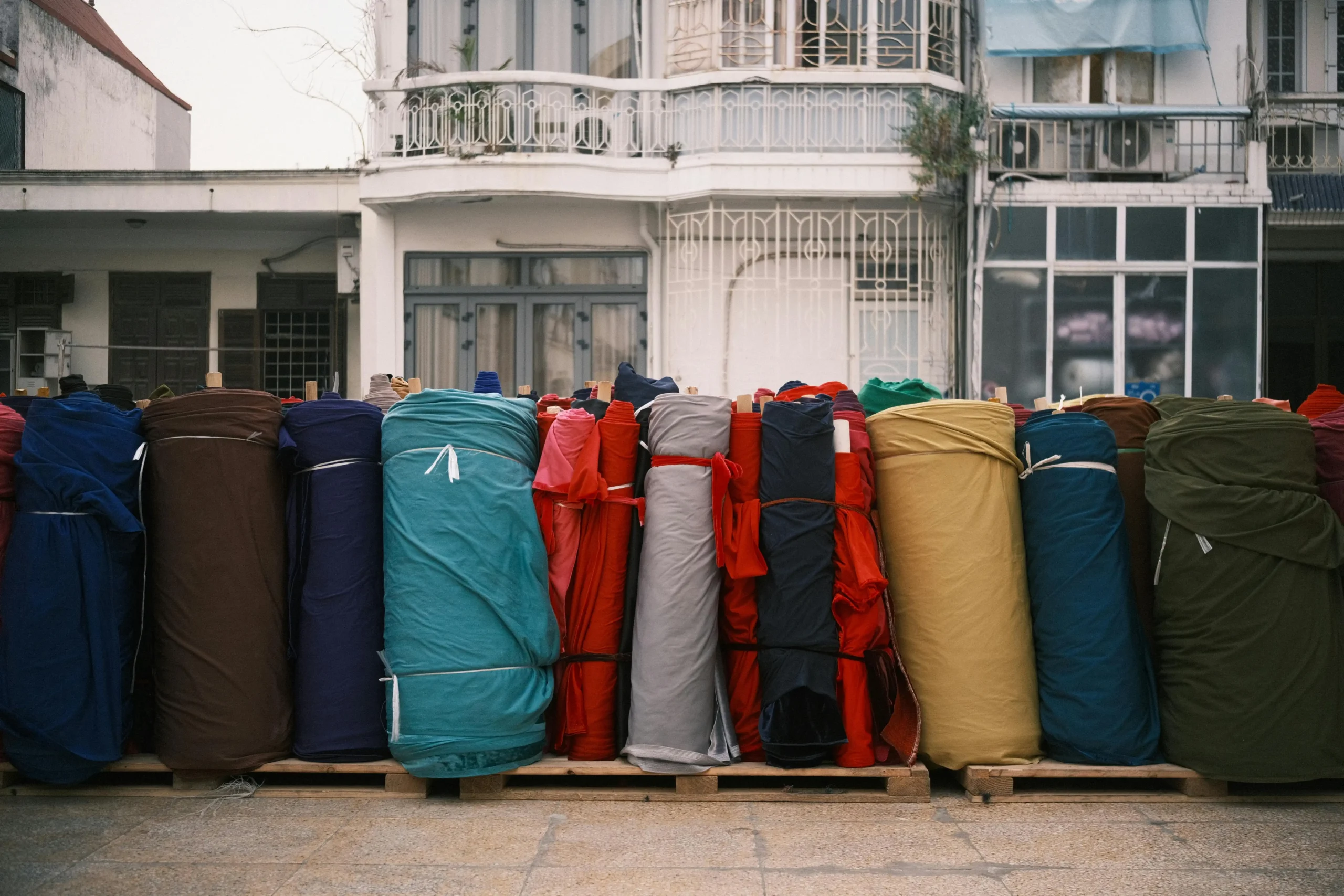
What the roll ticket should say
Ask for four fields on the ticket, and ask for them in the same place on every roll so the receiving clerk can find them without a search. The number of joins on the roll. The length of cloth before the first join and after the last one, since those are the pieces the cutting room can actually use at full length. The length between joins where there is more than one. And the type of join, because a sewn join and an overlapped or taped join behave differently under a needle and a press.
Separately, ask for the physical flag: a coloured thread, a tag, a chalk mark or a paper flag at the join, so that the person pulling cloth off the roll sees the join before the knife does. A join that is declared only on paper is found by the cutter at the moment the marker is already laid, which is the most expensive moment to find anything. Where the mill has its own convention for flagging, adopt it rather than inventing one, and write the convention into the order so both sides mean the same mark.
Counting the loss, and the claim
At goods received, the count is quick: check the ticket against the roll, verify the flag by feeling for the join, and measure the piece lengths at the two ends with a tape. Record the result per roll, not as an average, because the cost of a join sits in particular rolls rather than in the shipment as a whole. Where the order set a limit and the roll breaks it, the roll is a claim: a credit for the lost metres, a replacement roll in the next shipment, or the metres accepted at a price that reflects the loss, with the joined piece kept as evidence until the claim is settled.
The arithmetic that makes the claim credible is the same as the arithmetic that makes it fair: the unusable length at the join, plus the marker loss caused by re-laying around it, expressed in metres, multiplied by the number of garments that length would have produced. If that calculation produces a small number, say so, and accept the roll; the point of counting is to know which joined rolls matter rather than to treat every join as a catastrophe. The definition of a short measure belongs in the same paragraph, because a roll with two joins and a roll that measures short are the same complaint from the cutting room’s point of view, and one definition should cover both.
Why the sample never showed a join
The sample you approved could not have warned you about joins, because a three-metre sample is cut from the middle of a piece and a join inside it would have disqualified the sample at the mill. Joins appear in the bulk because the bulk is made of many loom lengths, and the moment they are pieced into the roll lengths the mill’s own joining practice becomes your problem. That is why the question is worth asking at the sampling stage even though the sample gives you no evidence: it forces the mill to describe its practice before it has any reason to be evasive.
Ask two questions in writing. How many joins does a typical roll of this construction carry, expressed as joins per roll rather than as a reassuring adjective. And what happened on the last production run of this cloth: the number of rolls delivered, the number of joins, and where they fell. A mill that can answer both is tracking its joins, and a mill that tracks them can place them where they cost least. A mill that cannot answer either should be asked to start, because the information costs nothing to collect at the winding stage and cannot be reconstructed at your end once the rolls are open.
There is a related case worth separating out, which is cloth that is pieced on purpose. Roll ends and remnant stock are made of short lengths by definition, so a buyer who chooses them has already accepted joins in exchange for a lower price, and the rule there is a different one: the lengths should be declared so that the cutting room can plan around them, rather than discovered roll by roll, which is the trade-off described in buying roll ends without buying problems. Knowing which of the two you are buying is half of the join conversation.
The rule for the next order
Write the join clause in the order in four sentences. No joins in the first and last length of the roll, expressed in metres. A maximum of one join per roll, or whatever limit your cutting room can absorb. A minimum length between joins, set so that the shortest usable piece still cuts your largest panel. And every join flagged physically and declared on the roll ticket, with the type of join named. Where the cloth is checked, faced or one-way, the first sentence becomes “no joins at all”, and it should be written before the weaving starts rather than discovered at delivery, because the mill can plan around a rule and cannot plan around a complaint.
Then connect the rule to the grading: a roll that carries more joins than the order allows is not a lower grade of cloth, it is a roll with a declared defect, and the two should not be confused when the shipment is being accepted or rejected, which is the sorting logic behind reading rolls by grade. A mill that knows the join rule in advance will place its joins where they cost least; a mill that hears about it afterwards will place them wherever the loom ran out, which is rarely where the cutting room wants them.

Powiązane spostrzeżenia
June Show, September Delivery: Three Mill Gates You Must Lock
A mill gate is a signed freeze on samples, yarn and dye, or loom start...
Whose Line Is It: The Invoice Fields No Trader Can Sign
A commercial invoice for a cloth shipment is a single declaration assembled from three record...
When the Yarn Is Gone: Buying the Balance, Holding the Lot, Timing the Trigger
“The yarn is gone” means one stage in the chain has stopped holding stock, not...