Ratiné is a textured wool fabric whose surface is covered in tight, curled loops of yarn, part of the loop-yarn family that also includes boucle. Where boucle loops hang loose and open, ratiné curls are compressed into a dense, nubby coil, and the name comes from the French word for curled.
The construction does what the name promises: effect yarns are looped and locked into a ground weave, so the face reads as a dimensional, curly texture instead of a flat cloth. This guide covers how ratiné is structured, how it differs from boucle, where it gets used, and what buyers should check before ordering. We weave textured constructions at our Wenzhou mill, running 300+ looms since 1995, and the loop-yarn questions below are the ones that come up most often in sourcing conversations.
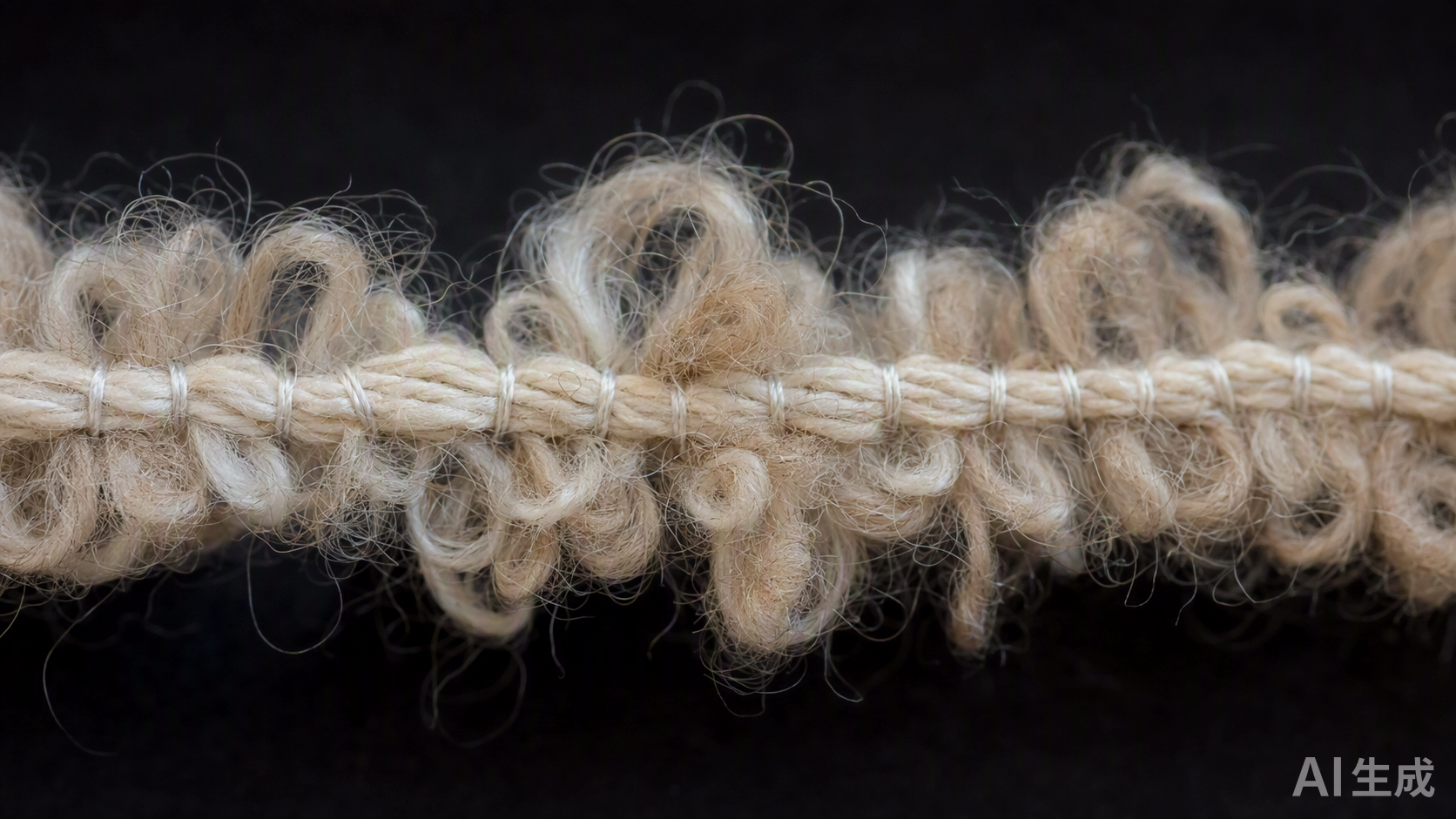
The loop-yarn structure behind ratiné
A ratiné yarn is built from at least two components. The core, usually a fine wool or wool-synthetic twist, carries the strength of the yarn and determines how the fabric hangs. The effect yarn, fed at a slower or faster rate than the core, forms the loops and curls that sit on the surface. A third component, the binder, locks the effect loops in place so they do not pull out under wear. The tighter the loop is drawn, the more the fabric leans toward ratiné; the looser and larger the loop, the more it reads as boucle.
Textile glossaries describe ratiné as a fabric with a curly, looped or knotted surface, and the vintage fashion reference from the Vintage Fashion Guild records it as a tweed-type cloth that was widely worn in the late 19th century, when the curled effect was achieved on woolen yarns with a deliberately irregular twist. The terminology entry in the Textile Glossary places it in the same textured family, distinguished from boucle by the tightness of the curl. For buyers, the practical point is that ratiné is not a separate fiber or a special weave structure, it is a yarn construction family, which means it can be made in wool, wool blends, or synthetics, and the performance follows the fiber and the finishing, not the name.
Ratiné vs boucle: reading the surface
The quickest field test is visual and tactile. Boucle shows open, sometimes irregular loops that cast visible shadows and feel springy; ratiné shows a tighter, more uniform curl, almost like a corkscrew nap, and feels firmer to the touch. Both are loop-yarn fabrics, and the line between them is continuous rather than absolute, mills shade from one into the other depending on loop length, twist, and finishing. When a specification calls for ratiné, what is usually being asked for is a controlled, even curl at a repeatable density across the roll.
That repeatability is the real sourcing issue. Loop-yarn fabrics can drift between batches because the effect yarn feed rate and the finishing route both change the final curl. A mill that documents its loop setting and runs a lab-dip and finish approval before bulk is holding the texture; a mill that quotes from memory is not. Our Chanel-style tweed program in the Chanel-style tweed collection runs the same looped, multi-yarn construction at production scale, which is why we treat curl consistency as a QC parameter rather than a styling accident.
What ratiné is used for
The curled surface gives ratiné three properties that designers buy it for. First, it adds three-dimensional texture to plain silhouettes, which is why it appears in tailored jackets, coats, and skirt suits where the fabric does the decorating. Second, the looped face scatters light, which softens color and gives a heathered, expensive-looking depth. Third, the construction is forgiving of fit, the surface pattern hides small imperfections in tailoring, a practical reason it has been a staple of women’s suiting since the 1890s. Outside apparel, ratiné shows up in upholstery and decorative cushions, where the durability question shifts to the fiber blend and the abrasion rating rather than the texture.
The trade-offs are worth naming. The looped surface catches and snags more easily than a flat weave, so high-abrasion zones need a durable blend and a sensible finish. The fabric is bulkier per gram than a plain weave of the same weight, which affects how much a garment costs to cut and how it packs. And because the effect yarn does not carry load, the ground weave and core yarns decide the strength; a ratiné with a weak core will fail at the seam long before the surface shows wear. Seam integrity testing, the kind covered by our Chanel-style tweed construction guide, matters more for loop-yarn fabrics than for flat cloths.
What to check when sourcing ratiné
Four checks cover most of the risk. One, request a composition declaration per roll, because loop yarns are frequently blended and the ratio decides pilling and strength behavior. Two, ask for the loop density specification and a pre-production sample cut from the actual bulk yarn lot, not from a different batch. Three, confirm the finishing route, because steaming and milling change curl height, and the sample must match the bulk finish. Four, test seam slippage on the delivered fabric, since the loose surface structure can disguise a weak ground. If the order is time-sensitive, our program gotowych zapasów ships from 100M meters of inventory within days with no minimum, and custom ratiné development starts at a 1,000-meter MOQ with a 7-day sampling cycle, so texture can be locked before bulk commitment. For pricing and lead-time questions on textured programs, the stronę zapytania ofertowego connects you to a mill-side answer rather than a trading desk.
One closing note on expectations. Ratiné is a texture, not a quality grade, the same name can cover a 400-gram wool-rich suiting or a lightweight synthetic dress cloth. Buyers who specify the fiber, the weight band, the curl density, and the test requirements get a repeatable product; buyers who order by name alone leave the definition to the mill. The name starts the conversation, but the specification sheet is what ships.
Często zadawane pytania
What is ratiné fabric?
Ratiné is a textured fabric with a tightly curled, looped surface, made from loop yarns locked into a ground weave. It is most common in wool and wool-blend suiting and outerwear.
What is the difference between ratiné and boucle?
Both are loop-yarn fabrics, but boucle loops are looser and more open while ratiné curls are tighter and more uniform. The line between them is continuous and depends on loop length, twist, and finishing.
Is ratiné a weave structure or a yarn?
It is primarily a yarn construction. The effect yarn forms the curls, and the ground weave holds them, so ratiné can be produced across different fiber blends and weave setups.
Does ratiné fabric snag easily?
The looped surface catches more than a flat weave, so high-wear applications need durable blends and appropriate finishing. The ground weave and core yarns, not the surface, decide seam strength.
For the construction differences behind metallic knits, from film ribbon to spun metal blends, see how metallic yarn families differ in knits.

Powiązane spostrzeżenia

Metallic Knit Fabrics: Lurex vs Mylar vs Spun Metal Yarns
Metallic yarns are not one material. They are three construction families that happen to glitter:...

Mieszanki tkanin tweedowych: co każdy z tych materiałów wnosi – wełna, poliamid i akryl
Mieszanka tweedowa łączy wełnę z poliamidem, akrylem lub obydwoma, aby zrównoważyć koszt, trwałość i...

Tweed stretch do nowoczesnego krawiectwa: zawartość elastanu i sprężystość
Tradycyjny tweed nie porusza się wraz z ciałem. Marynarka skrojona z 100% wełnianego tweedu...