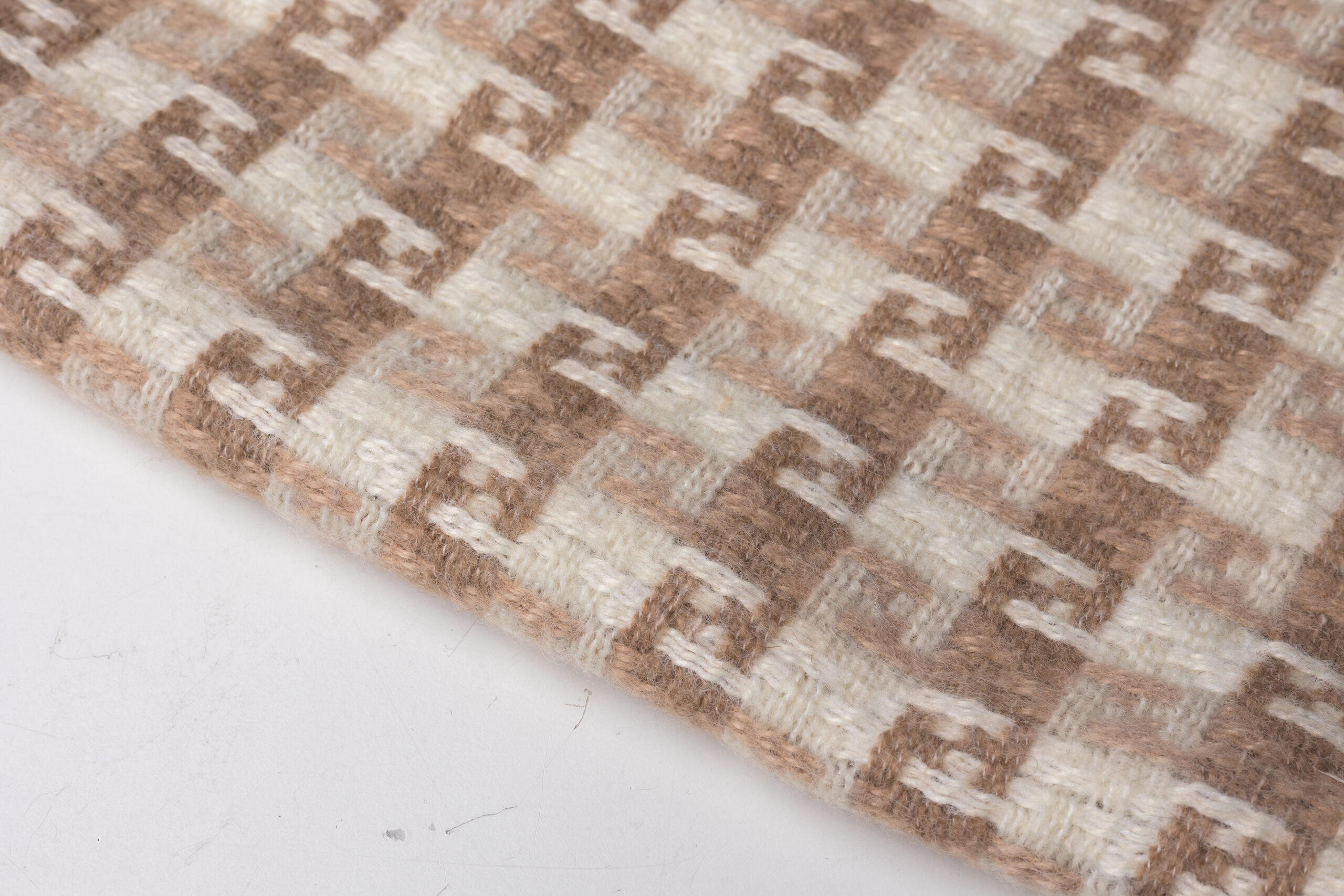
Two tweeds can look identical in a swatch box and behave completely differently in production, because the colour was introduced at a different stage. Dye the fibre and the colour is inside every yarn. Dye the yarn and the pattern is built on the loom. Dye the finished piece and the pattern has to be printed or over-dyed after weaving. Each route changes minimum quantity, lead time, colour continuity and what the cloth can actually look like.
This is a decision to settle before the first sample is woven, not after. A designer who asks for a woven-in check pattern on piece-dyed cloth is asking for something the route cannot deliver, and a buyer who orders a solid shade on yarn-dyed terms pays for complexity the product does not need.
What Each Route Actually Does
Stock dyeing, also called top or fibre dyeing, colours the wool before it is spun. The result is a fibre with colour through its full depth, and when several coloured fibres are blended before spinning, the yarn carries a melange or heather effect that cannot be washed out or worn away. This is the route behind most classic tweed character.
Yarn dyeing colours the spun yarn. It costs more than stock dyeing per kilogram because the material has already been through the spinning process, and it is the standard route when the pattern is built from coloured yarns rather than from blended fibre. Checks, stripes and windowpanes that depend on warp and weft being different colours belong here.
Piece dyeing colours the woven cloth. It is the cheapest route per metre and the fastest to change shade, which is why it dominates solid-colour production. Its limit is structural: any pattern has to exist in the weave before dyeing, and if the cloth is a blend of fibres with different dye affinity, piece dyeing produces a cross-dyed or mottled effect rather than a flat shade.
What Each Route Does to Pattern
The determining question is whether pattern comes from colour or from structure. A herringbone formed by weave direction can be piece dyed, because the pattern is geometric rather than chromatic. A houndstooth that relies on four coloured yarns cannot, because the colour is part of the pattern itself.
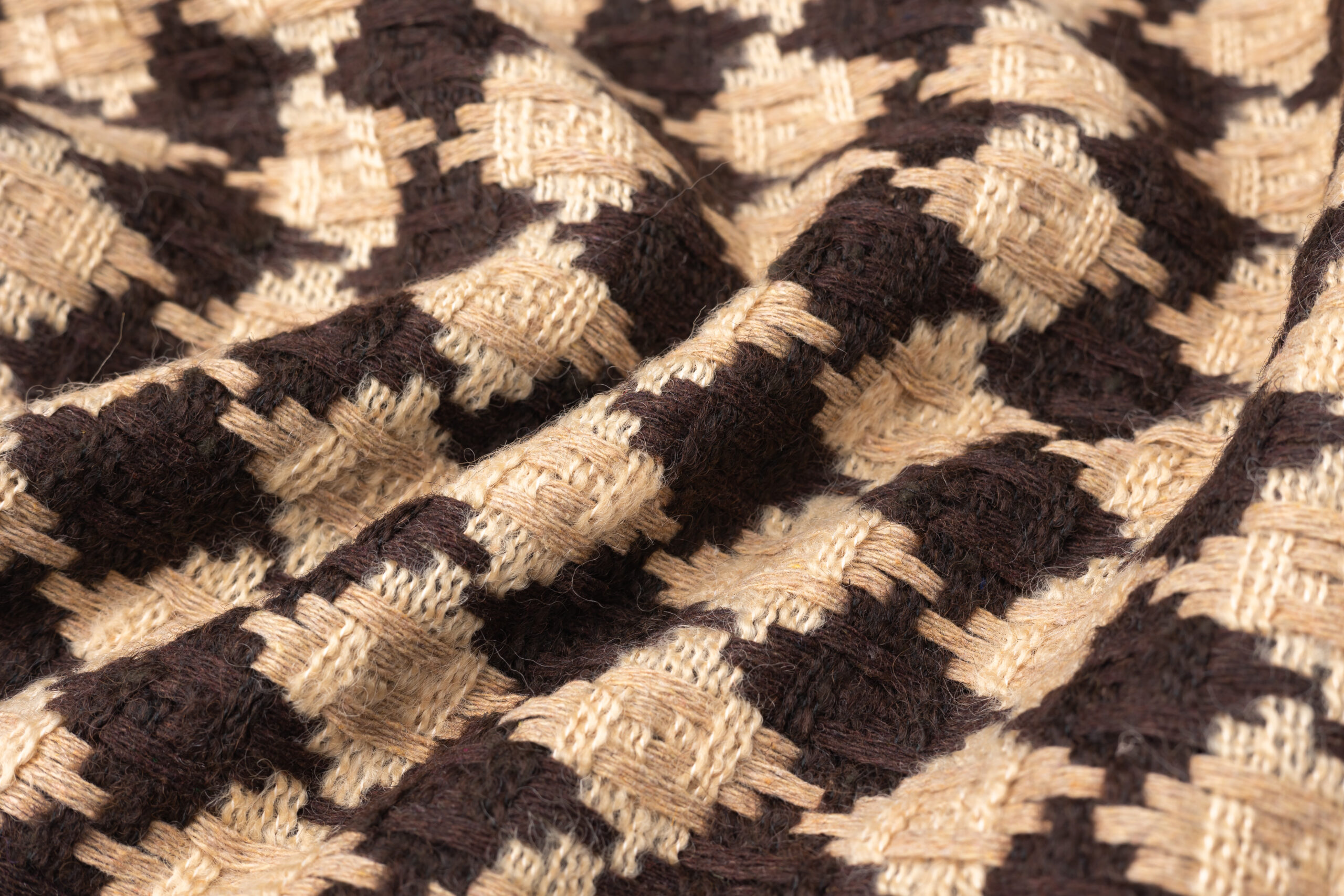
Yarn dyeing is the route for anything described as traditional tweed pattern: checks, gun clubs, district checks and multi-colour flecks. It also gives the sharpest colour boundaries, because the colour stops exactly at the yarn rather than spreading into the neighbouring thread during wet processing.
Piece dyeing gives the most uniform surface, which is an advantage for solid suiting and coating where the buyer wants no visible texture variation between rolls. The trade-off is that any decorative yarn effect, such as a slub or a neps fleck in a contrasting colour, will be swallowed by a single dye bath and come out as texture rather than colour contrast.
The fibre blend also decides what is possible. Wool blended with polyamide or acrylic behaves differently in the dye bath, and the role each fibre plays in the finished cloth is set out in our notes on what wool, polyamide and acrylic each add to a tweed blend. Where the fibres dye differently, piece dyeing produces a cross-dye, while stock dyeing lets the designer control the effect deliberately.
Minimum Quantity and Cost Behaviour
Yarn dyeing carries the highest minimum because the yarn has to be dyed in a batch and then woven. The minimum is set by the dye bath size and the loom setup, not by the fabric order. Stock dyeing has the lowest colour minimum, since fibre can be dyed in smaller lots, but the spinning run still sets a floor.
Piece dyeing has the most flexible minimum and the shortest lead time for a new shade, because cloth can be woven first and coloured afterwards. For small brands testing a solid shade, this is usually the pragmatic route. The trade-off is that the colour arrives at the end of the process, so any shading problem is discovered late.
Cost has three parts to compare rather than one: the dyeing charge, the minimum quantity spread over the order, and the risk cost of a shading failure. A cheap dyeing route with a high failure risk is expensive in practice. The structural comparison of weights and routes is laid out in our https://fursone.com/tweed-fabric-guide/, which shows which combinations a mill can run without inventing a process for them.
Colour Continuity Across Reorders
Each route drifts differently between orders. Stock-dyed shades move when the dyed top lot changes. Yarn-dyed shades move when the dye lot changes, and on a multi-colour pattern a shift in one of four yarns is enough to change the whole cloth. Piece-dyed shades are usually the most reproducible for a solid colour, because the dye bath can be matched to a retained standard at the point of processing.
The practical control is a retained reference: a physical swatch held by both parties and replaced on a defined cycle, plus a standing instruction that every new lot is matched against the reference and not against the previous shipment. Chained comparison walks colour away from the original approval one tolerable step at a time. We wrote about this failure mode in colour continuity across tweed runs.
For yarn-dyed patterns, the reference needs to cover each yarn in the pattern rather than the finished cloth alone, because a mismatch in a single component yarn is invisible in isolation and obvious in the repeat.
Choosing the Route in Practice
Work from the pattern backwards. If the design depends on colour appearing inside the yarn, the route is stock or yarn dyeing. If the design is solid or relies on weave structure, piece dyeing is available. If the design mixes a woven structure with a colour change, expect two processes and price accordingly.
Then check the commercial frame. Small initial quantities with a solid colour point to piece dyeing; a multi-colour traditional pattern points to yarn dyeing with a higher minimum and a longer lead time; a melange or heather effect points to stock dyeing. Trying to reach a yarn-dyed look through a piece-dyed process is the single most common source of disappointment in small collections.
Finally, agree the verification method before bulk. Composition and colour performance can be specified with standard test methods, and the textile standards that mills and buyers both reference are developed by bodies such as Międzynarodowa Organizacja Włókiennicza oraz ASTM Committee D13. Naming the method in the specification turns a subjective argument about shade into a pass or fail result.
Najczęściej zadawane pytania
What is the difference between stock dyeing and yarn dyeing?
Stock dyeing colours the fibre or top before spinning, giving melange effects with colour through the fibre. Yarn dyeing colours spun yarn, which is the route for woven-in checks and multi-colour patterns.
Can a check pattern be piece dyed?
Only if the pattern is created by weave structure in a single colour. A pattern built from differently coloured yarns cannot be reproduced by dyeing the finished cloth.
Which route has the lowest minimum quantity?
Piece dyeing is the most flexible for small solid-colour orders, because the cloth can be woven before it is coloured.
How does colour continuity differ between routes?
Stock dyeing follows dyed top lots, yarn dyeing follows individual yarn dye lots, and piece dyeing can be matched to a retained standard at the dye bath, which usually makes solid shades the most reproducible.
Why does a melange effect need stock dyeing?
Because the effect comes from blending coloured fibres before spinning, which yarn or piece dyeing cannot reproduce.
Video: Hidden Craftsmanship in Tweed Fabric: What You Need to Know
If you are not sure which dyeing route your design needs, send the pattern and the quantity you plan to start with. Our tweed fabric guide sets out the routes and weights we run, and the sampling team will confirm the minimum, the lead time and the colour reference that will apply to each reorder.

Powiązane spostrzeżenia
Tweed Collar Fray: Check Construction Before Changing Cloth
When a tweed jacket collar frays after a month, customers often blame the cloth first....
Merino Is Not a Fibre Name: Labelling a Wool Coat for Two Markets
A wool coat sold in both markets needs two different fibre lines, and the words...
It Feels Thin: Turning a Complaint into Five Specification Rows
A hand-feel gap is the distance between a measured property and a customer’s report. The...