
Every buyer of wool fabric meets the same surprise once: the second shipment of a shade they approved does not look exactly like the first. Nothing is wrong with either lot. Dyeing is a chemical process run in batches, and batches vary.
What separates a well-run programme from a difficult one is not the absence of variation. It is whether the variation is measured, bounded and agreed before dyeing begins. This guide covers how colour is matched in a mill, how it is measured, and the four lines a buyer should settle at the sample stage.
Why One Shade Is Many Lots
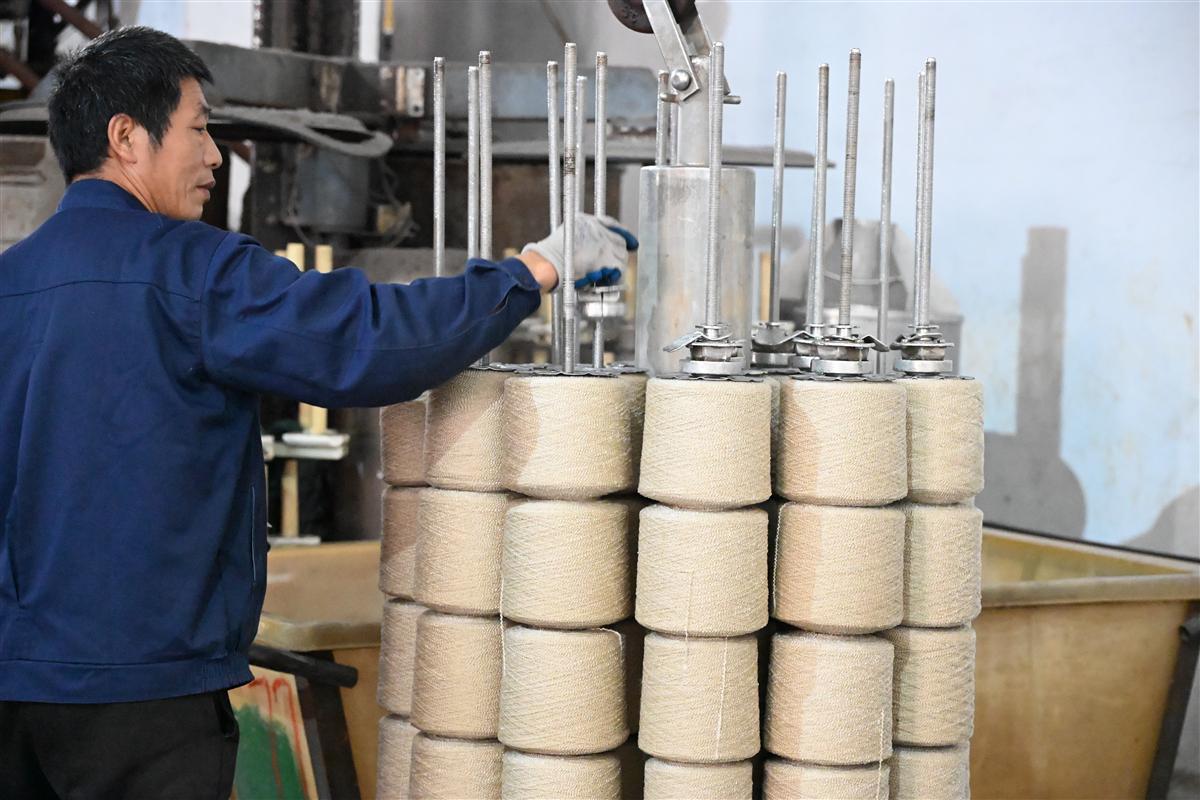
Fabric is dyed in batches sized by the dyeing machine, not by the customer order. A 300 kg dyeing machine running a 250 kg order still dyes one lot; a 900 kg order may run in three. Each run has its own fibre blend composition, its own dye bath prepared to a recipe, and its own temperature curve on the day.
Small differences accumulate. The wool itself varies from bale to bale in how it takes dye. The water chemistry shifts. The machine’s heating behaviour drifts between runs. None of these is a defect, and together they move the final shade by a visible step.
The consequence for a programme is simple to state and easy to forget: colour is matched to a standard, not to the previous lot. A buyer who asks the mill to “match the last shipment” is asking for something the mill cannot do reliably, because the last shipment is not the reference.
How a Mill Matches Colour
The process starts with a lab dip. The mill dyes a small sample to the buyer’s target and submits it for approval. Once approved, that sample becomes the colour standard, and the laboratory keeps a record of the recipe that produced it.
Bulk dyeing then aims at the standard, with the laboratory checking the first metres of each lot against it. Where the match is outside tolerance, the mill can add dye and re-run a correction before the fabric is finished. This is the cheapest moment to fix colour, because after finishing the options narrow quickly.
Instrumental measurement supports the eye rather than replacing it. A spectrophotometer reports colour coordinates, and the difference between a lot and the standard can be expressed as a single number using a practice such as ASTM D2244, published in the ASTM textile standards catalogue. That number is what makes a tolerance arguable in a meeting instead of a matter of opinion.
The Light Source Problem
Two pieces of fabric can match under one light and differ under another. Daylight through a north-facing window, warm store lighting and a phone flash are three different tests, and a shade that passes one can fail the next.
The industry handles this by naming the viewing conditions. Daylight D65 and store light TL84 are the usual pair for textile colour assessment, and a colour report that does not state its light source is only half a report.
For buyers, the practical rule is to approve colour under the light the product will sell in. A tweed destined for evening wear should not be signed off only under bright daylight, and a fabric for a store window should be checked under retail lighting before the order is confirmed.
Agreeing a Tolerance Before Dyeing
A tolerance turns colour from a dispute into a measurement. The four fields worth writing into the specification are: the colour standard reference, the instrument and light source used, the maximum colour difference accepted, and what happens to a lot outside it.
The fourth field is the one buyers most often leave blank. In practice the options are re-dyeing, accepting with a price adjustment, or rejecting. All three are workable, but only if the contract says which applies at which level of difference.
Where a programme uses several fabrics in one shade family, the tolerance should be set per fabric rather than globally, because a boucle surface and a flat woven will not measure identically even when they read the same to the eye. Our tweed range notes in the tweed fabric programme treat colour approval as part of the specification rather than a step after it.
Practical Rules for Multi-Lot Programmes
Four habits keep multi-lot orders boring. Order all lots of one colourway in one booking, so the mill can plan them sequentially on the same machine. Keep the approved standard physically at the mill and at the buyer, not only as a photograph. Ask for the colour report with each shipment and check it against the agreed tolerance.
And plan panel cutting around lots. When a garment uses several panels in one colourway, cutting all panels of one size from a single lot avoids the visible boundary where two lots meet. Cutting rooms that mix lots on one garment create a defect that cannot be fixed later.
Finally, remember that finishing changes colour perception. Raising and brushing lift fibres and scatter light, which shifts how a shade reads even when the dye bath did not change. The effect of those finishing steps is described in our notes on raising and brushing, and it is another reason to approve colour on finished fabric rather than greige.
When the Difference Is Real
Not every colour variation is normal. A visible shift combined with a change in handle, a different smell, or a test report that no longer matches the approved fibre content points to something other than lot variation. In that case the right move is a fibre content test on the delivered sample rather than a discussion about light, which is the approach we set out in testing a wool content report.
Distinguishing normal variation from a genuine change protects both sides. Mills accept lot tolerances because they are measurable; they resist vague complaints because those cannot be verified.
Najczęściej zadawane pytania
Why do two dye lots of the same shade differ?
Each dyeing run has its own fibre blend, dye bath and machine conditions. Lots are matched to an approved standard rather than to each other, so small differences are normal.
What is a lab dip?
A small sample dyed by the mill to the buyer target. Once approved it becomes the colour standard for the bulk order.
How is colour difference measured?
A spectrophotometer reports colour coordinates, and the difference from the standard is calculated as a single number under a practice such as ASTM D2244.
Which light source should colour be approved under?
The conditions the product will sell in. Daylight D65 and store light TL84 are the usual pair, and the report should state which was used.
Can lots be mixed on one garment?
It is risky. Where several panels share a colourway, cut panels of one size from a single lot to avoid a visible boundary between lots.
Video: Tweed Fabric Trends: Innovations from a Leading Manufacturer
If you are planning a multi-lot tweed programme, send the colourways and quantities. The team behind our tweed fabric range will come back with a dyeing plan and the tolerance wording that fits it.

Powiązane spostrzeżenia
Tweed Collar Fray: Check Construction Before Changing Cloth
When a tweed jacket collar frays after a month, customers often blame the cloth first....
Merino Is Not a Fibre Name: Labelling a Wool Coat for Two Markets
A wool coat sold in both markets needs two different fibre lines, and the words...
It Feels Thin: Turning a Complaint into Five Specification Rows
A hand-feel gap is the distance between a measured property and a customer’s report. The...