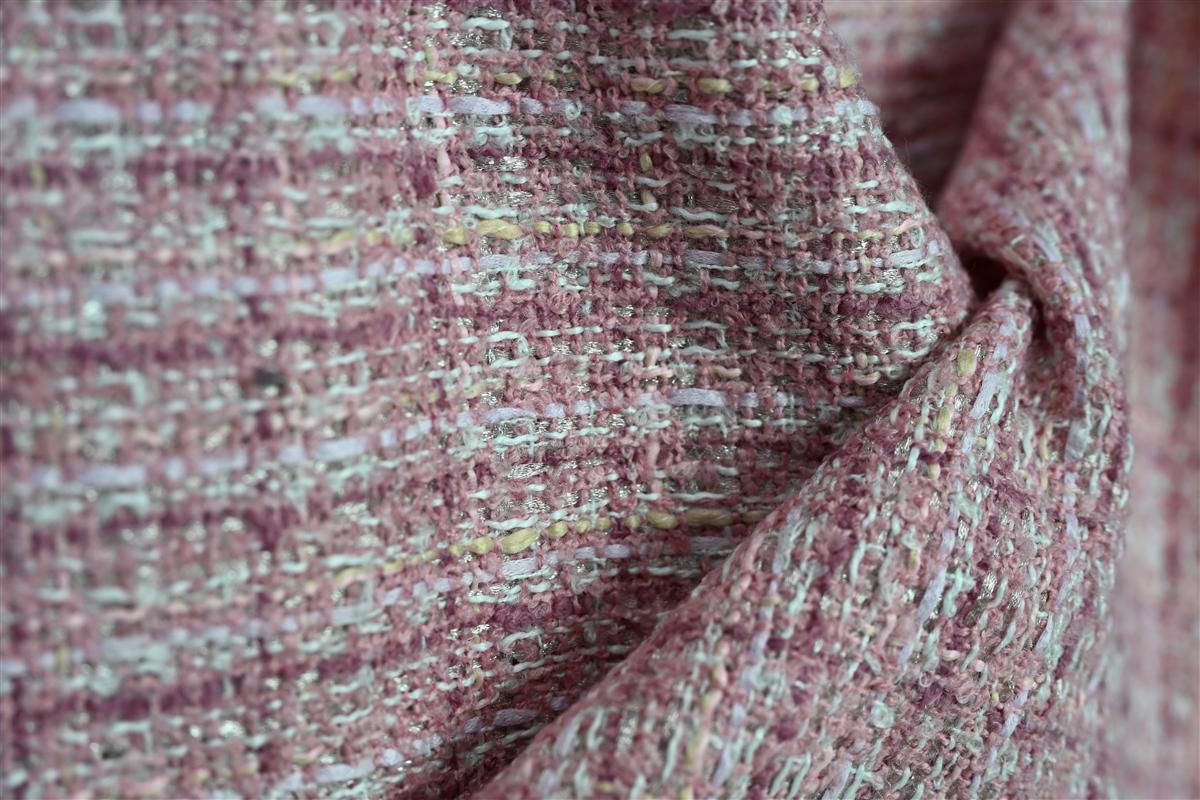
A definição de tweed estilo Chanel é o primeiro ponto de verificação que os compradores devem fixar antes de aprovarem um fornecedor, orçamento ou slot de produção. Eu já vi um gerente de sourcing de uma marca contemporânea ter que rejeitar um contêiner de “tweed” que estava em um armazém em Los Angeles. A amostra de pré-produção que ele havia aprovado um mês antes era perfeita—volumosa, multitonificada, com um toque macio. O pedido em massa? Era plano, rígido e parecia poliéster barato. A fábrica havia trocado a composição do fio após a aprovação da amostra. É exatamente por isso que uma definição concreta de tweed estilo Chanel não é apenas um ponto de discussão da equipe de design; é um controle crítico de compras para evitar surpresas caras no cais de recebimento.
The term gets thrown around by mills from Italy to Wenzhou, but the aesthetic you’re chasing relies on
The Origin Story: From Scottish Moors to Paris Runways
The fabric’s journey from functional workwear to a symbol of luxury was a masterclass in material re-engineering.
Let’s be clear: Coco Chanel didn’t just ‘discover’ tweed in the 1920s. She appropriated a rugged, functional menswear fabric from the Scottish countryside and completely re-engineered its purpose. Original tweeds were built for durability against the elements, not for the salons of Paris. The genius was in seeing the potential to transform its core properties for a new market.
This transformation was fundamentally about weight. Heritage tweeds, like those from the Scottish Isles, were often brutally heavy at 500+ grams per square meter (GSM). For modern womenswear, that’s unworkable. The goal became achieving that textured look in a lighter, more fluid construction, landing in the 280–450 GSM range. For structured jackets, the sweet spot we target in production is around 320 GSM.
This evolution created two distinct categories that sourcing managers must differentiate. One is a historical artifact; the other is a modern commercial product.
- Heritage Tweed: Heavyweight (500+ GSM), dense twill weave, typically 100% wool. Designed for warmth and abrasion resistance. Stiff drape.
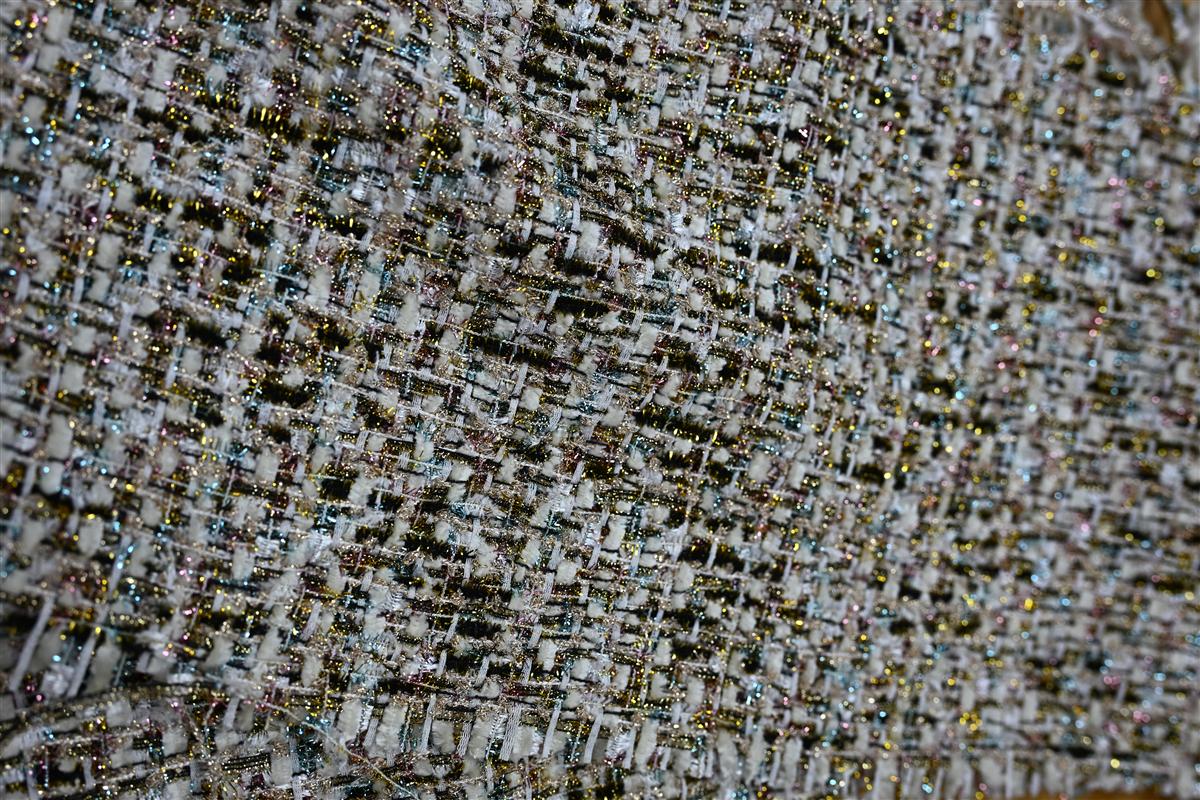
- Tweed Estilo Chanel: Lightweight (280-450 GSM), often a looser plain weave to showcase fancy yarns. Uses multi-fiber blends (wool, acrylic, lurex) to create visual depth and a soft hand-feel.
Finally, a critical point that trips up even experienced buyers: ‘tweed’ is the weave structure, while ‘bouclé’ is the looped yarn that creates the nubby texture. They are not interchangeable. Ordering ‘bouclé fabric’ when you need the structure of a ‘tweed boucle jacket’ is a common sourcing error that leads to failed sample approvals and production delays. You’re sourcing a specific weave that incorporates a specific yarn type.
Yarn-Level Anatomy: Beyond “Just Wool”
The texture you’re buying is engineered in the yarn, not just the weave—get this wrong and your collection is dead on arrival.
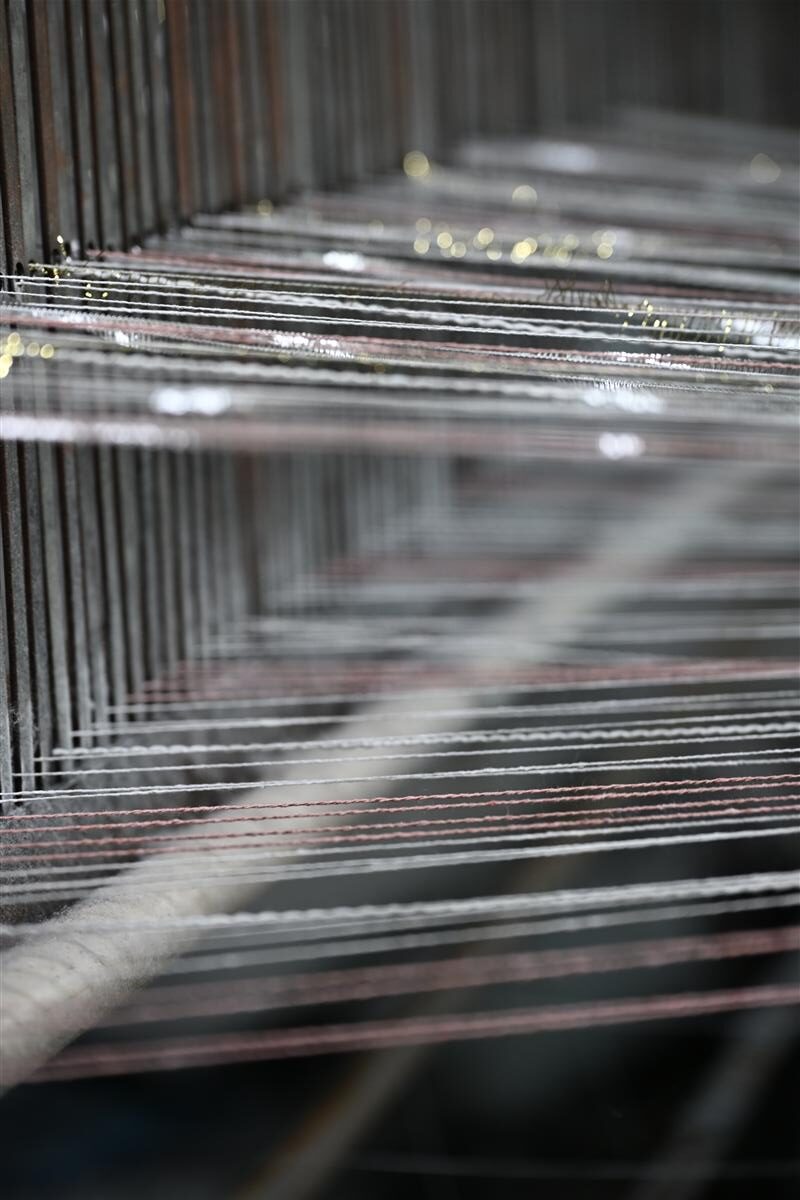
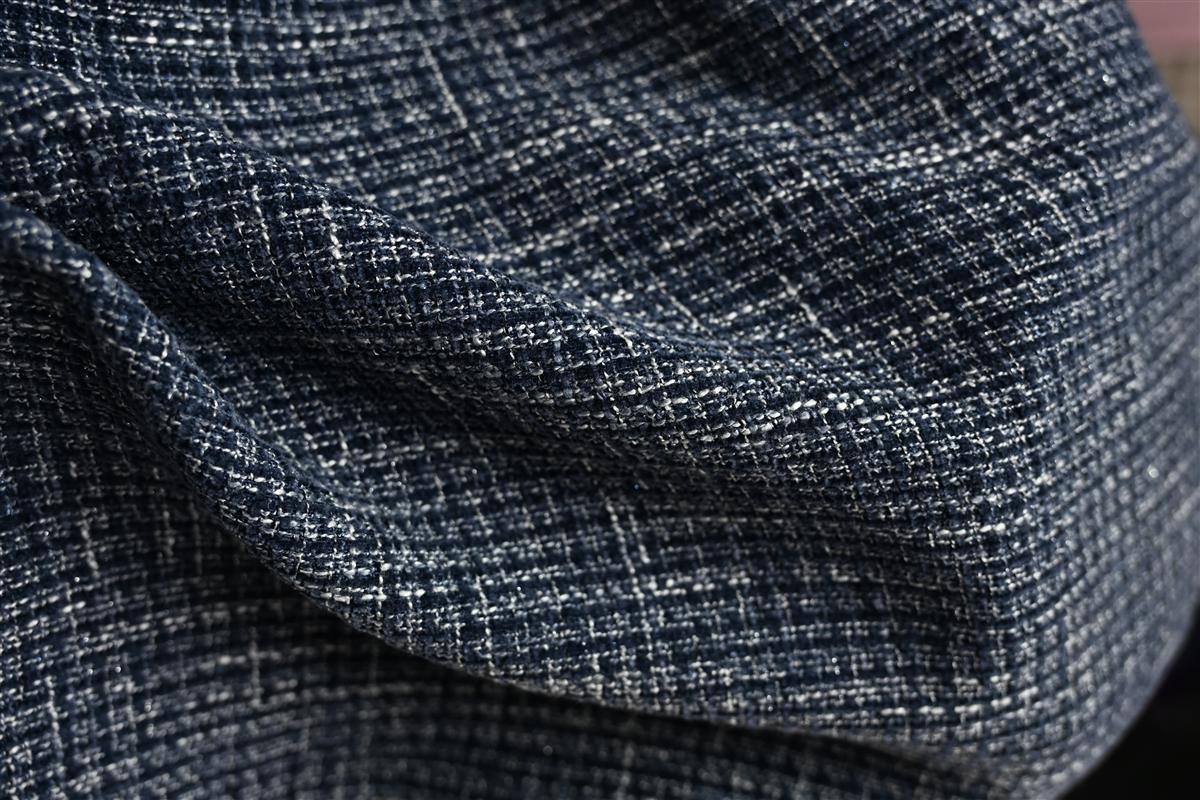
Anyone can weave a fabric. The real artistry in a Chanel-style tweed is created before the loom is even threaded. It’s about the interplay of completely different yarns. We don’t just use wool; we custom-spin proprietary bouclé yarns for the signature loops, slub yarns for irregular thickness, and integrate high-grade metallic lurex for depth. This multi-ply construction is what gives the fabric its three-dimensional, living character.
The market is flooded with fakes that get this fundamentally wrong. A low-cost supplier will show you a ‘tweed’ that is just 100% polyester with a texture printed or heat-stamped on the surface. It might look okay in a photo, but in person, it has a flat, plastic drape and zero breathability. After a few wears, it pills and loses all structure. It’s a cheap imitation that cheapens your brand.
- Authentic Multi-Ply Blend: Typically a complex blend like 40% Australian Wool, 35% Acrylic, 15% Japanese Lurex, and 10% Silk. The key is the custom-spun bouclé and slub yarns that create real, physical texture.
- Common Imitation: 100% polyester or a high-poly blend (>80%). The texture is superficial, not structural. The cost per meter is lower, but the resulting garment has a poor hand-feel and short lifespan.
Para um gerente de sourcing, o benchmark de custo é simples: uma verdadeira mistura rica em lã de várias camadas de uma fábrica chinesa direta custará mais do que um tecido 100% poliéster. No entanto, ainda chegará a uma fração do custo de a comparable quality from a European mill. You are paying for the yarn engineering, which is the only way to achieve the authentic luxury aesthetic your designers want without the couture price tag.
Quality Red Flags Every Sourcing Manager Must Spot
The sample looked perfect.
Isso pode acontecer mesmo em um pedido grande: a amostra de pré-produção é uma obra de arte, mas a execução em massa conta uma história diferente.
Primeiro, puxe os fios. Se eles engancharem ou saírem facilmente, o fornecedor pulou o revestimento traseiro. Isso não é um detalhe menor—é uma falha crítica. Um tweed estilo Chanel adequado tem um leve revestimento traseiro à base de poliuretano que trava a trama. Sem ele, suas peças desfiarão durante a produção, custando caro em tempo e material desperdiçado.
Next, demand a certified fabric weight (GSM) report for the entire production lot, not just the sample. The ideal chanel tweed fabric weight gsm for jackets with structure and drape is between 280–450 g/m². If a supplier can’t guarantee this quality tolerance across the whole order, you’ll end up with inconsistent garment weights—some jackets will feel substantial, others flimsy.
- Pilling Test Reports: Don’t accept vague promises of ‘good quality.’ Demand a Martindale abrasion test report according to the ISO 12945-2 standard. This is the industry benchmark for how to identify high quality tweed that lasts.
- The Abrasion Score: Qualquer tecido tweed Chanel anti-pilling legítimo deve ter uma classificação Martindale de pilling (ISO 12945-2) de grau 3–4 ou melhor. Uma classificação ruim significa que a peça parecerá felpuda e desgastada após apenas alguns usos, destruindo a reputação da sua marca pela qualidade.
Custom Development: From Swatch to Collection in 7 Days
A rapid sample is a test of the mill’s entire operation, not just the fabric.
Vamos ser claros sobre o desenvolvimento personalizado. A verdadeira inovação não é apenas uma textura única; é levar essa textura ao mercado sem apostar todo o orçamento da temporada. As fábricas europeias geralmente exigem MOQs muito grandes para fios personalizados. Descobrimos que fábricas selecionadas em Wenzhou, ao fiar seus próprios fios bouclé e slub proprietários, podem oferecer um ponto de partida de 1.000 metros. Isso reduz seu risco inicial e permite testar designs mais ousados.
The processo de amostragem rápida de 7 dias is your first and best bullshit detector. It’s not about speed for speed’s sake. When you send a Pantone code and get a physical, hand-loomed swatch back in a week, it proves the mill has full control over their yarn dyeing and weaving. It’s a direct signal of their vertical integration and a stark contrast to the 4-6 week lead times that indicate a fragmented, outsourced supply chain.
Once that sample arrives, the real audit begins. A good sample approval process goes far beyond color matching. This is your chance to spot the shortcuts that cause failures in mass production.
- The Burn Test: Don’t just trust the spec sheet. Snip a few warp and weft threads and burn them. A hard, black bead means polyester. Ash that crumbles means wool or natural fibers. This simple test instantly exposes mills substituting cheaper materials into the blend.
- The Fray Check: Esfregue agressivamente uma borda cortada. Se ela se desfiar em uma bagunça, eles pularam o revestimento traseiro crucial de poliuretano. Este tecido causará caos na sala de corte e levará a falhas nas costuras. Sua tolerância de qualidade aqui deve ser zero.
- O Teste do Amassado: Ball the swatch tightly in your fist for 30 seconds. A high-quality tweed with good yarn memory will spring back with minimal creasing. If it stays crushed, the yarn is weak and the final garment will look tired and worn after a single day’s use.
Tweed vs. Boucle vs. Fancy: Nail the Terminology
Confusing these terms is the fastest way to derail a collection and waste your fabric budget.
Sourcing managers frequently get burned on this. They send a purchase order for’bouclé fabric’for a
- Bouclé: This is a YARN. It is characterized by its looped or curled ply. Think of it as a raw ingredient. You can have bouclé yarn in a woven fabric or a knit fabric, and they behave completely differently.
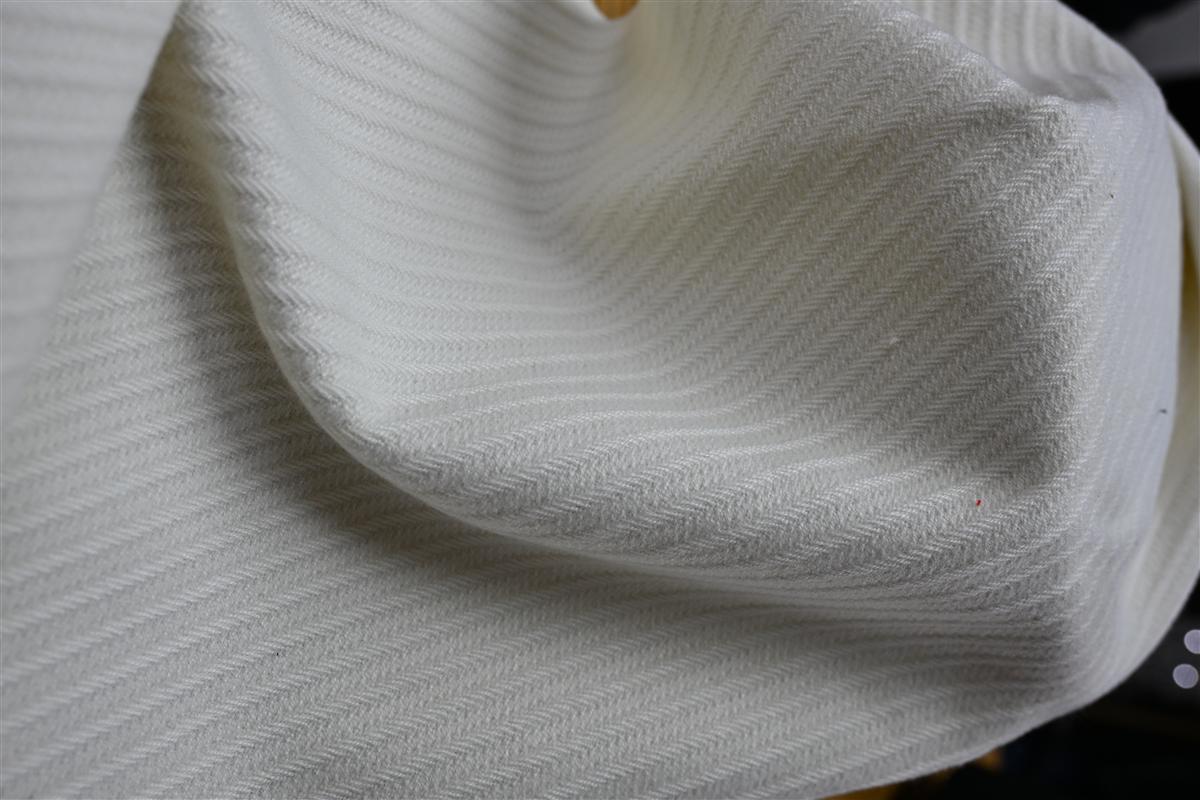
- Tweed: This is a WEAVE structure, traditionally a rugged plain or twill weave. It provides durability and a specific hand-feel. This is the construction method that gives a fabric its body and stability.
- ‘Chanel-Style’ Fabric: This is the finished AESTHETIC. It is a woven tweed fabric that strategically uses bouclé and other ‘fancy’ yarns (like slub, chenille, or lurex) to create a multi-dimensional, nubby surface. This is the final product you’re actually trying to source for jackets.
The critical mistake is ordering ‘bouclé’ when you need the structure of ‘tweed’. If your tech pack just says ‘bouclé fabric’, a supplier might deliver a knit bouclé—great for sweaters, a disaster for tailored blazers. Your PO must specify a with a target chanel tweed fabric weight gsm, typically 280-450 g/m², to get the right result.
Conclusão
Entender o DNA técnico de um tweed—desde sua composição de fio multicamadas até seu acabamento anti-pilling final—é a maior parte da batalha. O detalhe final que separa uma compra profissional de um erro caro é definir contratualmente sua tolerância de qualidade para a execução em massa. Uma amostra de pré-produção perfeita não significa nada se a produção em massa desviar na cor, peso ou toque.
The only way to validate a mill’s claims is to get fabric in your hands. A physical swatch allows you to perform your own burn tests, feel the drape, and see the texture before committing to a full sample approval process.
Perguntas Frequentes
What is Chanel tweed?
O tweed estilo Chanel é um têxtil tecido definido por sua superfície irregular e multifios, criada combinando fios fancy como bouclé, slub ou chenille. Diferente dos tweeds tradicionais, sua estrutura geralmente inclui fios metálicos ou lurex. A textura final é projetada no nível do fio antes de começar a tecelagem.
How to identify tweed fabric?
Identifique o tweed estilo Chanel por sua textura visível multitonificada e tridimensional de fios fancy misturados como bouclé e slub. Uma versão de qualidade terá uma estrutura estável sem fios soltos, muitas vezes apoiada por um leve revestimento estabilizador. Sempre solicite uma amostra física para verificar o toque e a integridade estrutural.
Quais são as desvantagens do tecido tweed?
As principais desvantagens são o potencial de desfiar e formar bolinhas se não for finalizado adequadamente com um revestimento traseiro. Além disso, versões de baixa qualidade feitas com fios de poliéster baratos não têm a fluidez e a respirabilidade das misturas ricas em lã. Especifique um acabamento pós-tecelagem e a composição do fio para mitigar esses riscos.
What is the Chanel fabric called?
Na indústria de fornecimento, o tecido é chamado de ‘tweed estilo Chanel’, ‘tweed bouclé’ ou ‘tweed fancy’. O termo ‘tweed Chanel’ é uma marca registrada, então os fornecedores usam ‘estilo Chanel’ para denotar a estética específica. Use ‘tweed estilo Chanel’ em sua ficha técnica para clareza com as fábricas.
Qual é o melhor tweed do mundo?
O ‘melhor’ tweed para uma coleção é aquele com fios exclusivos e de fiação proprietária que impedem a duplicação no mercado e garantem uma textura única. Também deve apresentar excelente solidez da cor devido à tingimento de qualidade. Avalie os fornecedores com base em suas capacidades de P&D de fios, não apenas em seu país de origem.
Referências autoritativas
Insights Relacionados
Por que as amostras de cores de tweed falham na produção
Razões de falha na correspondência de cores de tweed explicam por que dois tecidos quase idênticos podem apresentar um 30%...
Desbotamento da Cor do Tecido Tweed? 3 Testes Pré-Corte para Realizar
o teste de solidez de cor do tecido tweed é o primeiro ponto de verificação que os compradores devem fixar antes de aprovarem um...
Tweed Tartan de Tear Manual vs Tear Mecânico: Qual Ganha para Sua Linha?
Ainda me lembro do nó no estômago quando um comprador que eu aconselhei ligou depois...