

If a wool mill passes every line on your customer checklist and your receiving bench still finds shade drift, shrinkage, or fastness failures, the checklist is no longer the problem; the laboratory behind the certificates is. Before you release the next purchase order, ask to walk the mill’s own lab and verify five things in person: that every instrument on the floor matches a test your fabric actually needs, that the person who signed each report is qualified to run the machine that produced the data, that calibration labels are current and backed by comparison runs against an outside lab, that you know exactly which tests are subcontracted, and that retain samples for your dye lots are labelled, sealed, and retrievable.
Why the checklist passed while the fabric failed
A paper checklist confirms that documents exist. It does not confirm that the lab can detect the defect your bench found last week. Those are two different claims, and the gap between them is where most receiving disputes live. The certificates were issued, the boxes were ticked, and the cloth still arrived with the same shade variation or the same relaxation shrinkage you keep measuring on arrival.
Before you plan the visit, be aware that much of the audit advice circulating online was written for metal mills. It tells you to inspect tensile frames, spectrometers, hardness testers, and heat-number traceability on test certificates. A woven wool or tweed mill owns none of that, and if your auditor opens with questions about spectrometer drift, the lab will answer fluently about equipment that has nothing to do with your fabric while the real gaps stay untouched. A textile lab earns its keep on entirely different instruments: colour fastness machines, shrinkage templates and drying ovens, a light box for shade assessment, and balances for yarn count. The audit has to follow the fabric, not the steel.
There is also a quieter reason the checklist passes while the goods fail. Most checklists ask whether a test is performed, never how often, by whom, on which machine, and with what supporting evidence. A mill can answer yes to fastness testing while running it once per season, on an uncalibrated rubbing tester, assessed by whoever happens to be nearest. Your job during the visit is to convert each yes into a name, a date, and an instrument ID.
Match every instrument to a test you actually buy
Ask the lab manager for the equipment list, then ask for something more useful: the same list with each instrument written next to the test it supports. In a wool mill the mapping should read like this. Rubbing fastness, wet and dry, belongs to a crockmeter with standardized rubbing cloth. Wash fastness needs a laundering vessel with controlled temperature and time, plus grey scales for assessment. Shade evaluation needs a light box holding the agreed illuminants, enclosed with neutral grey surroundings so judgments are not polluted by daylight. Dimensional stability needs marked templates or a bench gauge, a controlled wash procedure, and a drying oven or tumble dryer whose temperature can be verified. Yarn count or grist needs a wrap reel and a balance with a current calibration sticker. Fibre content and restricted-substance checks usually leave this room entirely, which raises the outsourcing question covered below.
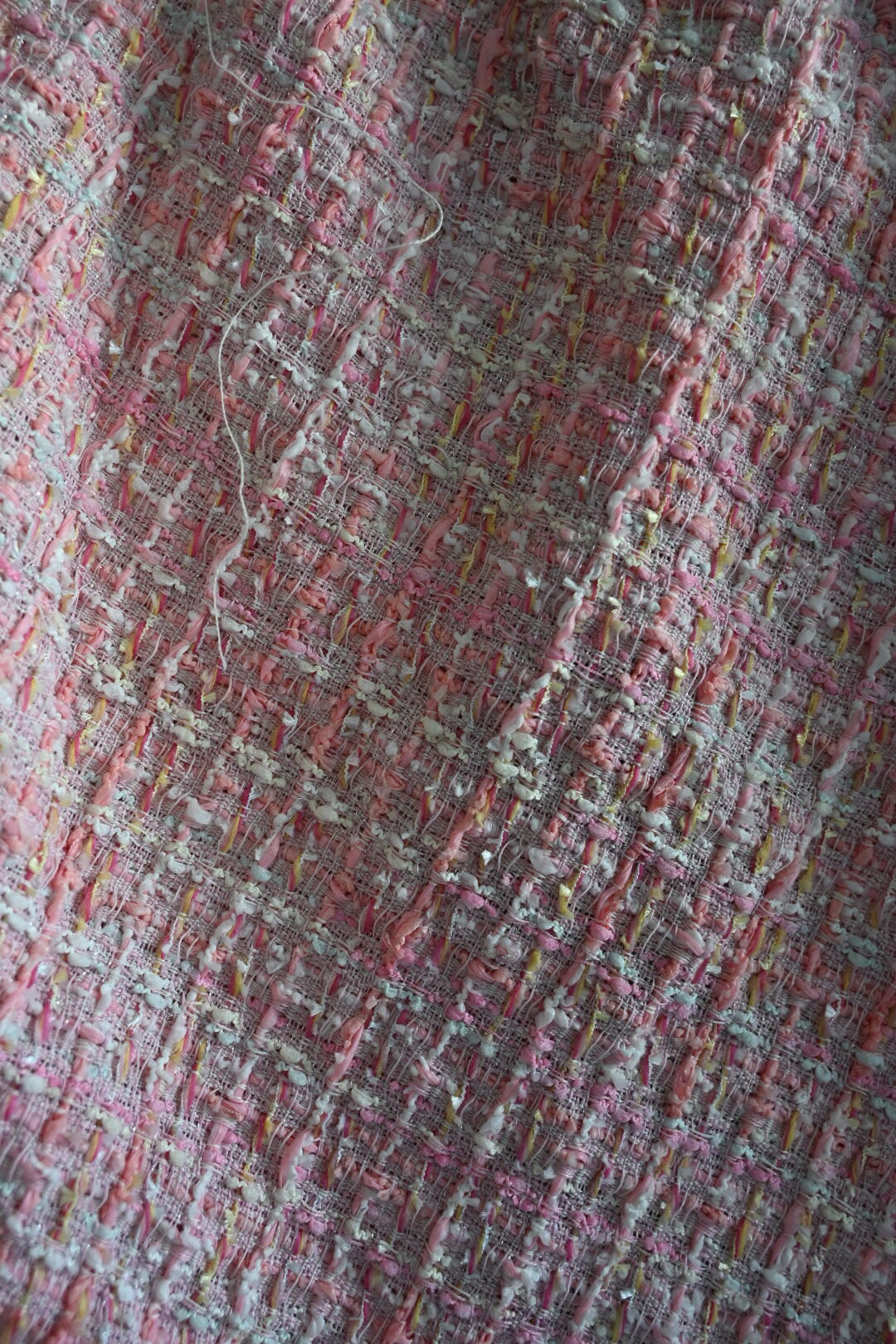
Walk the bench with that list in hand and watch one test from start to finish on cloth from a recent lot you received. Note how the sample was conditioned before testing, because wool takes up and gives off moisture readily, and a test run on cloth straight from a hot finishing room will not read the same as one run after proper conditioning. If the mill cannot demonstrate a test that it certifies on every document you hold, treat that certificate as a claim rather than evidence.
The light box deserves its own minute. Shade sign-off under the wrong lamp is one of the most common reasons a mill sees pass while your bench sees fail, and melange tweeds shift appearance between illuminants more than most cloths. Ask which lamp they sign off under, whether it matches your purchase specification, and how they handle metamerism before approving a shade. For a deeper treatment of this failure mode, see our guide to wool dye lot colour consistency in tweed.
Who ran the test and who signed the report
Every report carries a signature, and signatures are data. Ask for the reports covering your last several shipments, note the operator ID or initials on the raw worksheet, and compare them with the name signing the final report. Cross-check both against the lab’s training and authorization records. You are looking for three patterns. One name on everything suggests either a single point of failure or a manager signing results he never watched being produced. Constantly changing names with no training records behind them suggest whoever was free ran the test. A mismatch between operator and signatory is not automatically misconduct, but it should be explainable in one sentence.
Then ask who runs the tests at night and on weekends, because woven production rarely pauses for the lab to sleep. Many fastness and shade judgments are visual, made against grey scales or inside a light box by a person, and those judgments depend entirely on the trained eye of whoever is on shift. Ask to see the competence record of the person who assessed your most recent lots, and ask whether the same standard of assessment was applied during a rush order in the middle of the night. If visual judgments rotate through untrained hands, that alone explains results your bench keeps overturning.
For context on what a trustworthy document from a wool mill should contain, our article on the mill test report for tweed fabric walks through the paperwork line by line.
Calibration labels and outside comparison records
Every instrument should carry a calibration status label with an identity and a due date, and those dates should hold up when you cross-reference your last several certificates against the label on the machine that produced them. Labels alone are not enough, though. Between formal calibrations, a serious lab runs verification checks: standard weights on the balance, a retained reference fabric kept purely to confirm that the shrinkage oven and wash cycle behave consistently, and a fixed routine for checking the light box lamps. Ask when each verification last ran and who reviews the outcome when a check drifts.
The stronger question is whether the lab ever compares itself to anyone. Ask when the mill last sent split samples of the same cloth to an independent laboratory, and ask to see both sets of raw results rather than a summary of agreement. A lab that has never been measured against an outside reference can be perfectly calm and perfectly wrong at the same time. One comparison run on cloth like yours, covering shrinkage and rub fastness, tells you more than any certificate framed on the wall.
Be fair to the mill as well. The quality management standards in the ISO 9000 family certify that a company runs a controlled system, not that every bench test performed inside it is technically competent. A framed certificate in the corridor does not tell you whether the crockmeter was verified this quarter. That is exactly why this audit happens on the lab floor rather than in reception.
Outsourced tests and the retain sample cabinet
No mill lab runs everything. Ask directly for the list of tests that leave the building, and for each one record three facts: which external laboratory receives the samples, what that laboratory is accredited for, and whether the report that reaches your office is the external lab’s original or a summary retyped onto the mill’s letterhead. Outsourcing is normal and often sensible, but retyping results creates transcription risk and hides the testing lab behind the mill’s brand. If a test appears on your certificates that the in-house equipment list cannot support and the outsourcing list does not explain, stop and ask where that number came from.
The retain sample cabinet is the most honest room in the mill. Retains are the sealed swatches kept from each dye lot or beam, and they are what makes a dispute investigable months later. Ask to open the cabinet and pull the retain for a specific lot you received, chosen on the spot rather than announced in advance. Check that the label carries the lot or batch reference and a date, that the swatch is sealed, and that the retention period stated in their written procedure covers your complaint window. Then ask them to run one test on that retain while you watch. If the cabinet is orderly and the retest is routine, you have found a lab you can work with. If the cabinet is empty, sorted by month with no lot references, or the retain simply cannot be found, every past certificate loses its meaning, because nothing physical exists to re-examine.
Six questions to put in writing before the next purchase order
Close the visit by leaving six questions in writing, and make written answers a condition of releasing the order.
- Show me your equipment list with each instrument mapped to the test it supports, and run one full test on cloth from my last delivery while I watch.
- Who is authorized to operate each instrument, and how do the operator IDs on my recent worksheets match the signatures on my reports?
- When was each instrument last calibrated, when did its intermediate verification last run, and when did you last compare your results with an outside laboratory on cloth like mine?
- Which tests do you subcontract, to which laboratories, and will you attach their original reports to my certificates?
- Where are the retain samples for my dye lots, how are they labelled, and how long do you keep them?
- When your result disagrees with a customer’s receiving inspection, what is your written procedure, and may I see the file from the most recent case?
The pattern behind the six questions is simple. Paper says a lab exists. Equipment says the test is possible. Operators and calibration say the test is credible. Comparison records say the numbers mean the same thing in both factories. Outsourcing lists and retain samples say nothing important is hidden. When a mill answers all six without hesitation, you can release the next purchase order on a defensible basis. When a mill stalls on two or more of them, your receiving bench has been telling you the truth all along, and the order should wait until the lab changes, not the checklist.

Insights Relacionados

Same as Sample? Re-Approval When the Original Yarn Lot Is Gone
No mill can honestly promise that bulk will be the same as a sample whose...

Tight Weave or a Finish: Tweed Rain Tests and What the Mill Must Disclose
No single test separates a tightly woven tweed from a finished one, because a dense...
Mill Process Map: What to Ask Before the Order, Not After a Fault
Before the order, the useful question was not whether the mill subcontracts, since many mills...