
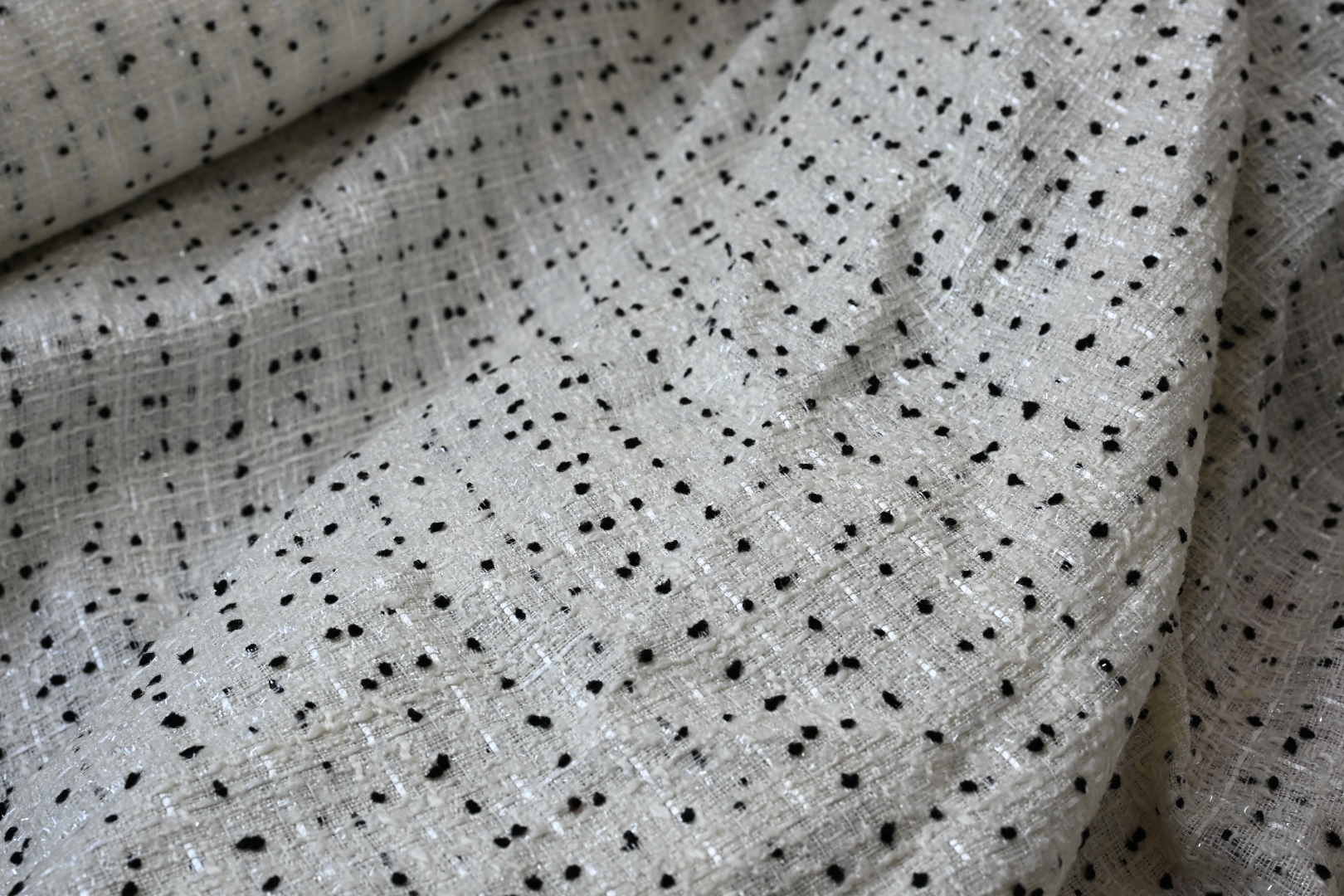
Locking a sixty ply height for the new tweed is a cutting room decision, and the lay trial is the only evidence that should move it. Run a full height test lay on the production table, with the production spreader settings and the same rolls you plan to use, then measure and cut before anyone writes the number down. The trial has to show four things before the supervisor locks that height: an exact ply count with no short or doubled plies, a settled and compressed stack height you have physically measured, edges and checks that stay aligned from the bottom ply to the top, and a trial cut whose bottom pieces match the top within your tolerance. If any one of the four fails, the height is not locked, it is reduced. Roll labels, mill assurances and a full spreader do not substitute for measurements taken off the stack itself.
What sixty plies of tweed do on the table
In fabric spreading, plies are the single layers of cloth laid one over another until the lay reaches its planned count, and every weakness in the spread multiplies by that count. Tweed carries its own list of potential issues spreading tweed fabric, and most of them trace back to how the cloth is woven. 4. Твид, a wool cloth traditionally built from coarse, slubby and multicoloured yarns, earns its character in exactly the place that troubles a spreader, because no two plies of it share the same thickness. A stack of smooth suiting behaves like a block. A stack of tweed behaves like sixty slightly different springs. The hairy surface grips the ply beneath it, which helps the lay hold together but punishes any drift in alignment, and the springy handle means the stack compresses under clamps and vacuum, then recovers the moment pressure lifts. Add static cling in dry cutting rooms, ridges where the cloth folds back on itself, and selvedges that curl inward along the table, and you have a fabric that reads one height on paper and another on the table. None of this makes tweed difficult in a bad sense. It makes tweed a cloth that asks for its own trial instead of inheriting a number proven on something smoother.
How to run the trial without gambling the line start
The purpose of a lay trial in textile production is to produce measurements under production conditions, not to perform a ceremony. Use the production table, the production spreader and the rolls you actually intend to lay, stacked in the order you intend to lay them, because a trial run on a spare table with borrowed settings proves nothing about the morning the order is due. Set the spreader to the lowest consistent tension the cloth allows. A wool tweed spread under stretch will relax after cutting, and every measurement you took will stretch away with it. Spread the first ten plies and stop. Check edge alignment, flatness, and the position of the marker start line while an abort still costs minutes instead of hours. If the edges are already stepping out of line or the check is wandering at ply ten, adding fifty more plies will not repair it. If the first ten look honest, complete the count, give the stack the relaxation time your specification calls for, and only then measure and cut.
Order the checks so they fail cheap. Alignment and flatness fail in the first minutes. Height measurement costs a few minutes more. The trial cut comes last because it consumes cloth, but it is also the only check that proves the height rather than describing it. If the trial passes, the trial plies simply become the first production lay, so a passing trial costs nothing but time, and a failing one costs a fraction of what a failed line start would.
Measure the stack three ways before anyone talks about capacity
Write down three heights. The loose height, read straight after spreading. The settled height, taken after the stack has rested and the cloth has stopped recovering. And the compressed height, read under the same vacuum or clamping pressure the cutter will apply. Measure each one at the centre of the lay and near both ends, and record the spread between the largest and smallest reading, because slubs guarantee some variance. The compressed figure is the number the machine cares about and the one the supervisor locks. It must sit inside the cutter’s rated capacity with margin to spare, and comfortably within the knife’s usable blade exposure, which is why experienced cutting rooms keep a tall compressed lay well below the blade height rather than level with it. On a new cloth, the maximum ply height for cutting tweed is a number your machine and this specific weave agree on through the trial, never a figure carried over from a smooth suiting programme.
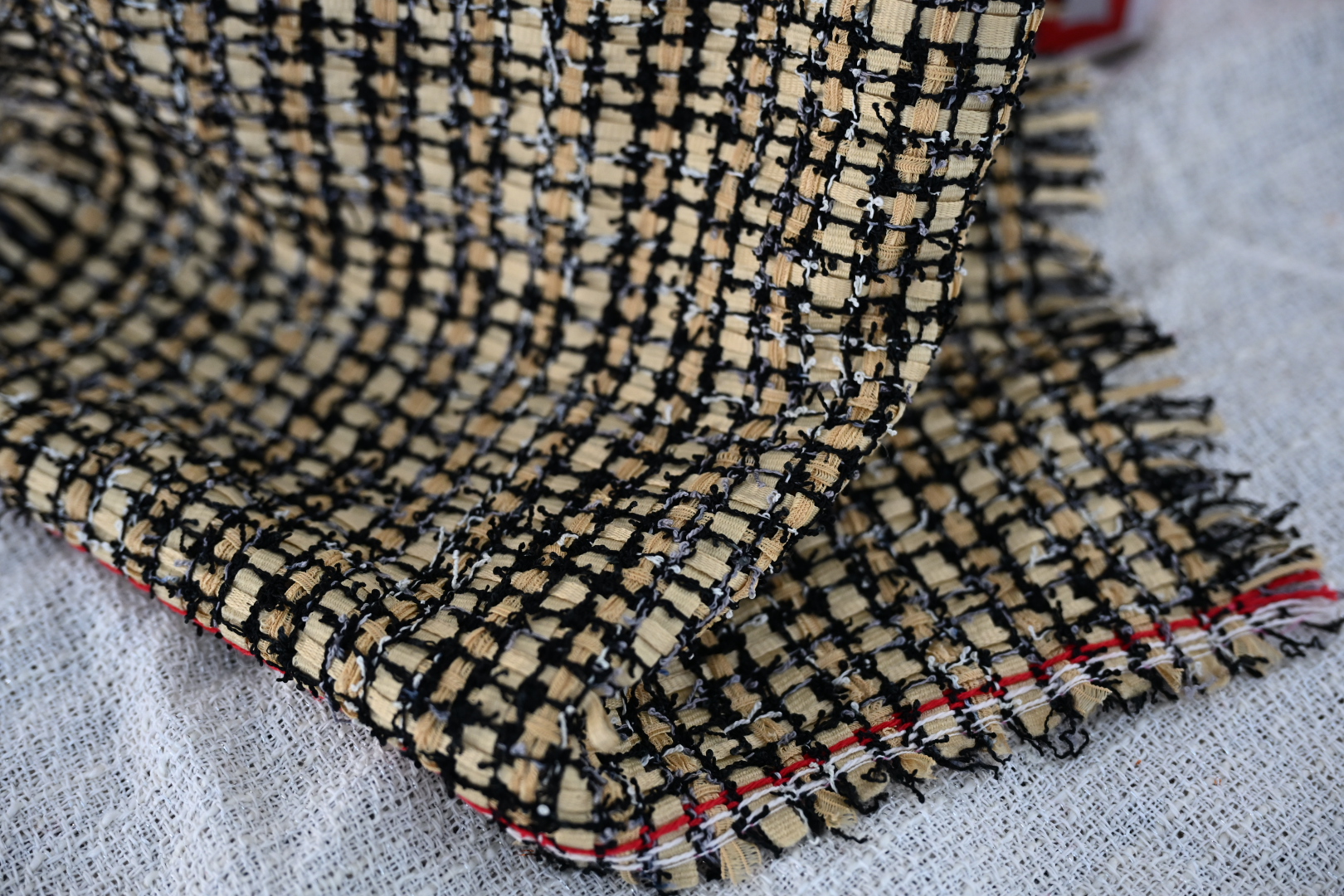
Around the knife itself, check the parts of the setup the height changes. Drill depth must reach the bottom ply without scoring the table or the bristle blanket, notches must still register at full depth, and the marker start line needs its end allowance so the first piece survives squaring. If any of these is marginal at sixty, the honest answer is a shorter lay, not a taller hope.
The trial cut: what the bottom plies confess
Any lay trial checklist for tweed fabric ends at the trial cut, because cutting is where a tall lay tells the truth. Choose a genuinely hard region of the marker: the smallest piece, tight curves, close notches, narrow sections. Cut it at full height, then break the stack down and measure the same piece from the top, middle and bottom plies. Knife deflection appears as bottom pieces running larger or smaller than the top. Heat glazing and fused edges appear on blends with synthetic content where the blade ran hot through sixty layers. Loose weaves show fraying first at the bottom, where the knife exits tired. Notch and drill marks must land clean and correctly placed on the bottom ply, because a marking the sewing floor cannot find at ply sixty does not functionally exist.
The pattern maker should read this section in person rather than by report. Seam allowances must survive at the narrow pieces, grain lines must still run true, and on a checked tweed the grid must meet the same way at the marker start on every ply, not merely on the top one. Edge straightness has its own discipline here. Skew and bow in the cloth are worth measuring before the lay goes down, because no spreading technique removes them, and a lay built on biased cloth will pass that bias into every piece it produces.
What goes into the height lock record
A locked height is a written thing, or it is not locked at all. The record that carries the supervisor’s signature should capture everything a second shift needs to reproduce the first shift’s stack without guessing: ply count and roll sequence, spread mode including face and nap direction, tension setting, spreader speed, the three measured heights with their variance, the blanket or anti fusion paper used, drill depth, end allowance, and the trial cut measurements set against the tolerance limits. Two signatures belong on that sheet. The supervisor signs that the machine can hold the height. The pattern maker signs that the pieces at the bottom of the stack still respect the pattern. Rest belongs in the record as well, because the relaxation time written next to the height is what protects piece dimensions after cutting, the same discipline as fixing shrinkage allowances before the rest of production runs. When the sheet is complete, the number on it is a fact the whole factory can build on. When it is missing, sixty plies is an opinion wearing a clipboard.
When sixty fails: fallbacks that still protect the line start
A failed trial is a scheduling input, not a disaster, and it is far cheaper discovered at ply sixty of a test than at piece four hundred of an order. The first fallback is splitting the lay. Two lays of thirty under the same marker keep the cutting plan alive at roughly double the table time, which is usually the smallest possible price for keeping the start date. Slowing the spreader, changing the hold down method, or squaring the ends more often each count as process changes, and each one deserves a short re-trial rather than optimism. The effects of fabric properties on spreading and cutting are exactly why a height proven on smooth suiting tells you nothing here; loopy yarns, thickness variance and a springy hand all push the safe height down, and they push it down differently for every weave. Nor do the quality control checks for fabric spreading stop once the height is locked. A first piece inspection at the head of each production lay, spot checks on edge and height through the shift, and the same top, middle and bottom measurement on the first production cut keep the proof current for the whole run. If width or shade wander between rolls while that monitoring continues, the trial sheet with its photographs and measurements is precisely the evidence that moves the conversation with the mill from opinion to fact.

Связанные статьи
Two Rolls Short, One Wrong Colour: Day-One Claim Sequence
A short shipment with two rolls missing and one wrong colour is a day-one evidence...
Dry Clean Only on Wool: When the Safe Label Costs You Customers
A “dry clean only” care label on a wool garment is a risk allocation choice,...
Mill Proximity for 100-Metre Seasons: When the Drive Still Pays
Mill proximity is a logistics and decision-speed question, not a quality guarantee. For a small...