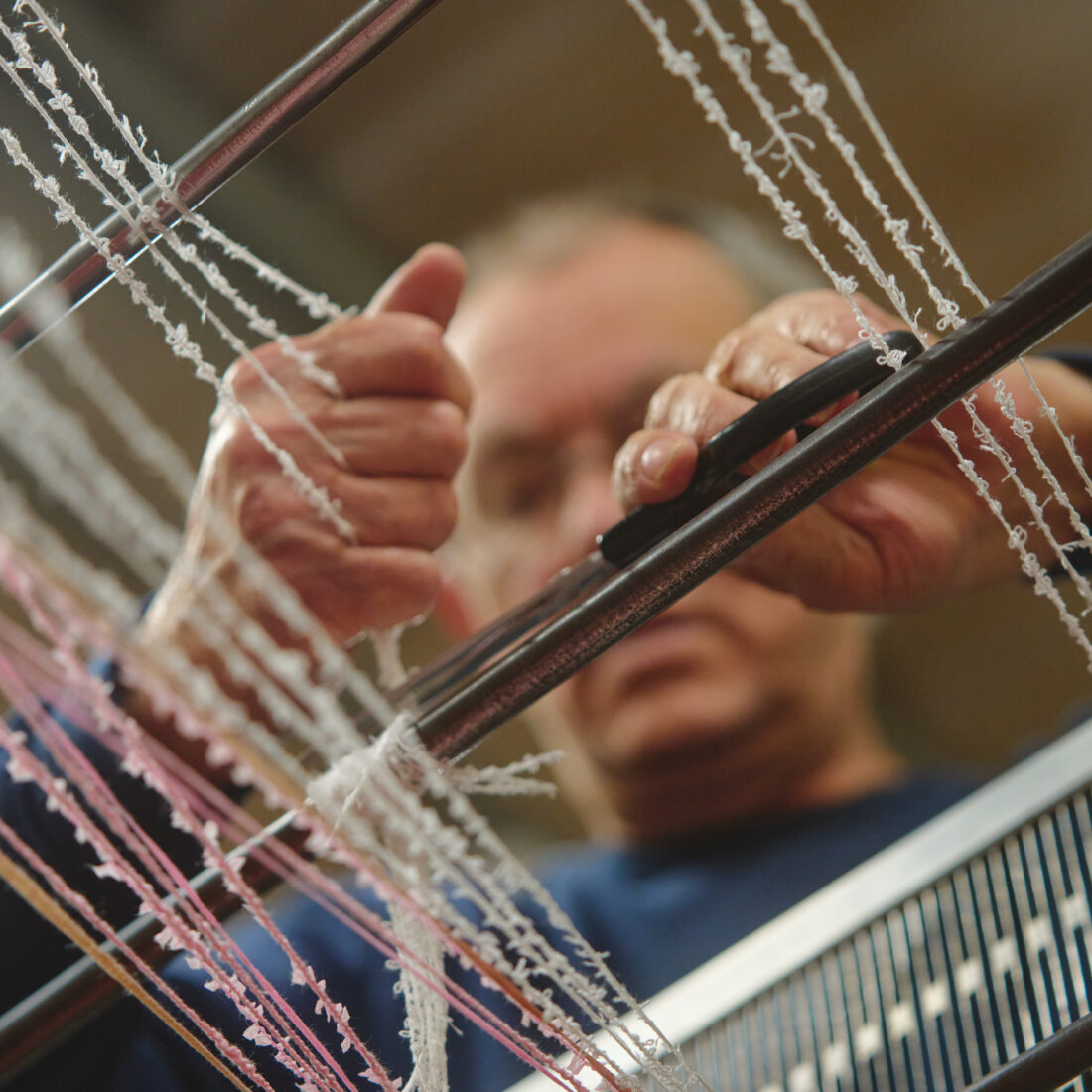
The Shift to Sustainable Textiles
Rising wool costs and scrutiny over unverified “eco” claims are pushing fabric buyers to demand data-backed transparency. Many mills struggle to match the softness of virgin fiber while proving recycled content and clean processing under a certified framework. Without traceability or certification, even high-quality tweed risks losing buyer confidence.
This article explains how standards like GRS and GOTS validate recycled wool integrity, how low-liquor eco-dyeing cuts water use from 100 L/kg to around 40 L/kg, and how Fursone’s Jiangxi-based system links fiber traceability with measurable environmental gains.
The Shift to Sustainable Textiles
Sustainable tweed textiles blend traditional craftsmanship with modern responsibility. They rely on natural, minimally processed wool and verified standards like GRS and GOTS to ensure low impact, traceable production.
This approach promotes longevity and biodegradability, offering a path for brands that want style without waste.
Tweed has long symbolized durability and character. Today, it’s being reimagined to fit into a world that values sustainability and transparency. The fabric still carries the warmth and texture of wool, yet is now guided by clear ecological responsibilities.
At Fursone, we see this evolution as a balance between heritage and innovation. Working from our Wenzhou design center and Jiangxi weaving base, we help brands source eco-friendly tweed that meets both creative and compliance expectations.
Core Concepts Behind Sustainable Tweed
Sustainability in tweed begins with unaltered natural fibers. Virgin wool provides strength, elasticity, and warmth without needing synthetics or energy-intensive treatments.
- Traditional tweeds such as Harris Tweed use 100% virgin wool, ensuring consistent performance and durability.
- Wool is biodegradable, flame-resistant, and naturally water-repellent, which helps limit waste across the product’s life cycle.
- The Harris Tweed Act 1993 protects the material’s origin and standards. Its Orb mark assures buyers of authentic fiber content and regional craftsmanship.
Similar to a protected designation in wine or cheese, this legal backing safeguards both traditional methods and environmental responsibility.
Standards and Innovations Driving Sustainable Textile Practices
The textile world has developed global systems to verify each fabric’s sustainability claims. These standards make sure recycled and organic fibers are tracked and processed safely.
- The Global Recycled Standard (GRS) certifies recycled wool or polyester content and issues Transaction Certificates at each stage of production.
- GOTS-certified organic fibers and OEKO-TEX dyes prevent toxic chemicals from entering fabrics, promoting safe handling for both workers and wearers.
- Forward-thinking mills use traceable batching systems and maintain strict compliance with restricted substances to meet global safety demands.
Imagine a fabric’s journey with a verified paper trail—each step logged and certified. That’s the assurance sustainable tweed production now offers.
Fursone supports these advancements by partnering with certified mills and developing fabrics that fuse eco-performance with aesthetic depth. For brands, it means access to materials that are both fashion-forward and environmentally sound.
What is GRS (Global Recycled Standard)?
The Global Recycled Standard (GRS) is an international certification created by Textile Exchange. It verifies recycled content in products and ensures responsible social, environmental, and chemical practices in the supply chain.
It aims to make sure recycled materials are not only genuine but also processed in a clean, safe, and fair way.
GRS acts as a trust mark for brands and suppliers working toward a sustainable and transparent textile industry. For shoppers, it helps answer the question, “Is this fabric truly recycled and responsibly made?”
At Fursone, our sustainable and eco-friendly tweeds are developed with GRS-certified materials wherever possible. This allows our partners to maintain both quality and environmental integrity across every fabric roll.
Overview and Core Principles of GRS
The Global Recycled Standard is a voluntary product certification managed by Textile Exchange. It’s designed to increase the use of recycled materials in products while ensuring accountability at every production stage.
- GRS is a voluntary full-product standard developed by Textile Exchange.
- It applies to products that contain at least 20% recycled material by weight, based on ISO 14021 and US FTC Green Guides definitions.
- It focuses on verifying recycled content and upholding social and environmental responsibility across the supply chain.
In simple terms, GRS ensures materials labeled as “recycled” are exactly that—from verified sources and processed under sustainable manufacturing principles. It functions like a quality passport, accompanying the material from the recycler to the final fabric roll.
Technical Requirements and Certification Process
To carry the GRS label, materials must pass through a strict auditing system that covers sourcing, handling, and processing. This chain-of-custody method confirms every kilogram of recycled fiber is properly accounted for.
- Chain-of-custody certification is required for all production stages handling GRS materials, with weight-based quantity balance tracking.
- Products must contain at least 50% recycled content to carry the official GRS label claim.
- Environmental protections, ethical working conditions, and chemical management must meet standards aligned with the UN GHS framework.
- Transaction Certificates (TCs) are issued by approved bodies, verifying both pre-consumer and post-consumer recycled content.
- Each certified facility undergoes on-site audits and must resolve any issues before approval.
Imagine this process as a continuous chain where each link must be solid and traceable. Any weak point—such as unverified material or poor chemical handling—breaks the chain and halts certification.
At Fursone, we integrate GRS compliance into our end-to-end production in Jiangxi, ensuring that our woven women’s fabrics, including tweeds, meet the expectations of brands seeking authentic, responsible textiles. This approach allows us to deliver not just fabrics, but confidence and traceability woven into every thread.
Recycled Wool vs. Virgin Wool: Quality Check
Recycled wool and virgin wool differ mainly in fiber length, texture, and environmental footprint. Virgin wool has a smoother, more elastic feel, while recycled wool carries a rustic character with a more matte surface and slightly reduced softness.
Both can achieve premium results when processed correctly — at Fursone, we fine-tune fiber blending to ensure consistent handfeel and durability.
Recycled wool gives discarded textiles a second life. The process involves sorting, cleaning, shredding, and spinning them into new yarns. Virgin wool, on the other hand, comes directly from freshly shorn sheep and goes through washing and carding before spinning.
For sustainable and eco-friendly tweed applications, both materials offer unique advantages. Recycled options reduce waste and energy use, while virgin fibers bring superior elasticity and surface refinement.
| Aspect | Recycled Wool | Virgin Wool |
|---|---|---|
| Fiber Quality | Slightly shorter fibers, less elasticity | Longer fibers, high resilience |
| Texture & Handfeel | Rustic and matte, ideal for tweed looks | Smooth, soft, and more refined |
| Environmental Impact | Lower carbon footprint, waste reduction | Higher energy and water consumption |
| Durability | Good for mid-weight coats and jackets | Excellent for tailored pieces and outerwear |
| Certifications | Often GRS-certified (Global Recycle Standard) | Can carry wool origin and animal welfare certifications |
In practice, Fursone’s textile engineers carefully match fiber blends to achieve the same density and visual appeal as virgin wool. This approach creates a sustainable, eco-friendly tweed that feels luxurious without compromising integrity.
Imagine the difference between recycled paper and premium notepaper — both writable, both useful, but each telling a different story. The same holds for recycled and virgin wool in your garments.
Fursone: Your Trusted Partner in Global Textile Supply
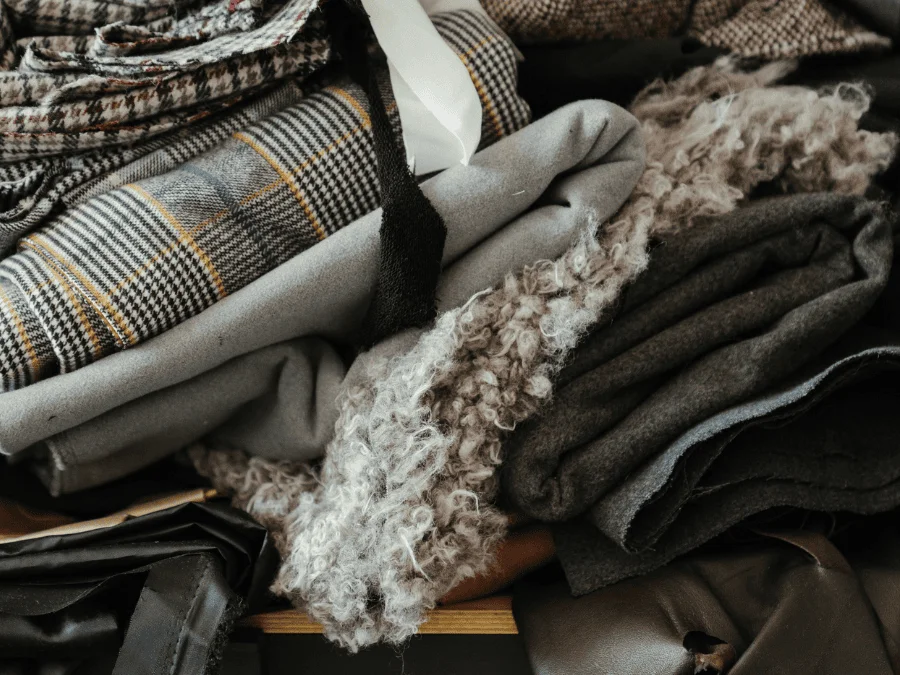
Eco-Dyeing Processes (Low Impact)
Eco-dyeing processes use low-liquor ratios, advanced dye fixation, and innovative technologies like supercritical CO₂ systems to drastically reduce water, energy, and chemical use.
By integrating bio-based methods and recyclable materials, these approaches minimize pollution while maintaining color quality and fabric performance.
Modern textile dyeing is shifting toward sustainability. Eco-dyeing does not just cut waste—it redefines how color meets fabric. These processes use science to create beauty with far less environmental burden.
Overview of Low-Impact Eco-Dyeing Methods
Eco-dyeing methods focus on efficient resource use and reduced chemical discharge. Each innovation aims to keep the dyeing process cleaner and more balanced, while still achieving vivid color results.
- Low-liquor-ratio exhaust dyeing reduces water use to about 20–40 L/kg, compared to 50–100 L/kg in traditional systems.
- High-fixation reactive dyeing reaches roughly 90% dye fixation, cutting dye residues and effluent loads significantly.
- Supercritical CO₂ dyeing for polyester uses no water and achieves dye uptake rates close to 98%, eliminating liquid dye effluent altogether.
- Bio-based and enzymatic pretreatments can reduce water demand by up to 95% and chemical use by 80% compared with conventional methods.
Imagine switching from a deep water bath to a light mist that achieves the same color richness—that’s how eco-dyeing changes the equation. At Fursone, we explore these methods to help brands meet sustainability goals without compromise on textile quality.
Technical Data and Applications of Eco-Dyeing Technologies
Low-impact dyeing technology combines chemistry, engineering, and environmental design to optimize every drop of water and unit of energy. Each process has benchmarks guiding real progress toward cleaner production.
- Low-liquor-ratio dyeing consumes 8–15 MJ/kg energy, saving energy compared to 10–20 MJ/kg in conventional dyeing.
- HeiQ Clean Tech™ polyester process shortens dyeing time by around 35%, saving over 30% in water, energy, and CO₂ emissions.
- Supercritical CO₂ dyeing runs at 5–10 MJ/kg energy needs with CO₂ recycling rates near 95%, minimizing its footprint.
- Salt-free and low-salt reactive dyes lower electrolyte and auxiliary chemical discharge, keeping effluent cleaner.
- Ultrasound-assisted “Sound Dye” techniques save about 30% water in denim indigo dyeing, making the process more efficient and even.
- Certifications like Eco Dye Standard (EDS) and OEKO-TEX help verify compliance with sustainable chemistry and traceable product standards.
These technologies are reshaping production lines into adaptive, eco-conscious systems. Fursone’s supply chain in Jiangxi supports this shift through precision manufacturing and smart material choices—ensuring every meter of fabric reflects both artistry and responsibility.
Traceability: From Fiber to Fabric
Traceability in tweed textiles means every stage—from raw wool sourced on local farms to the woven fabric on a designer’s table—is recorded, certified, and verifiable.
This system builds transparency and ensures each piece meets sustainability, chemical safety, and authenticity standards. It’s how brands and buyers can trust the story behind the fabric.
For both eco-conscious designers and experienced textile professionals, traceability offers proof that a fabric’s sustainability claims are genuine. It connects farmers, mills, and brands through a shared chain of trust.
At Fursone, we see traceability as more than compliance—it’s craftsmanship backed by clarity. Each roll of fabric carries the story of where it came from, who made it, and how it honors both people and the environment.
Fundamentals of Traceability in Tweed Production
Traceability systems in tweed rely on global standards and legal definitions that protect origin and quality. These frameworks act like a certificate of identity for each fabric, documenting its life from fleece to finished material.
- The Global Recycled Standard (GRS) requires verified recycled content and a secure chain-of-custody with transaction certificates for every stage.
- The Global Organic Textile Standard (GOTS) applies to organic fibers, ensuring full traceability and environmental performance during production.
- OEKO-TEX STANDARD 100 certifies fabrics that are free from harmful substances, commonly used by Harris Tweed Hebrides to maintain chemical safety.
- The Harris Tweed Act 1993 legally defines the craft, requiring spinning, dyeing, and weaving in the Outer Hebrides. This law protects its single-origin chain.
- The Harris Tweed Authority audits more than 100 home weavers each year and controls the Orb certification mark, symbolizing verified provenance.
These standards reinforce consumer trust. Similar to a product’s DNA record, they make each tweed traceable back to its roots. At Fursone’s production base in Jiangxi, the same philosophy guides our quality system—precision, auditability, and transparency.
Advances in Digital Traceability and Product Documentation
Digital tools are now adding a new layer of reliability to textile traceability. Embedded tags and digital passports store data about fiber origin, dyeing methods, and emissions, creating a living record for every fabric batch.
- Harris Tweed Hebrides works with FibreTrace to include digital tags that connect wool growers in Scotland to global textile buyers, ensuring clear visibility.
- Celtic Tweed plans to roll out product passports by 2025, recording material and processing details for each garment.
- Advanced systems track fiber origin along with REACH-compliant chemical processes, ensuring non-toxic and low-emission production.
- Natural wool’s properties—biodegradability, breathability, and flame resistance—add credibility to the entire sustainability narrative.
Imagine scanning a fabric roll and instantly knowing the farm where its wool was raised. That’s the direction traceability is heading. Fursone designs its supply chain with that same openness, linking design and weaving across our centers in Wenzhou and Jiangxi to guarantee a clear, verified path from idea to finished fabric.
Cost Implications of Going Green
Going green raises costs mainly through raw material premiums, energy use changes, and batch size inefficiencies. Yet, with well-planned operations and optimized production processes, these costs can be significantly reduced.
At Fursone, we build efficiency into every sustainable fabric line, proving that eco-friendly production can align with commercial goals.
Adopting sustainable and eco-friendly tweed production brings both opportunities and challenges. Many costs emerge early in the transition phase as operations shift from conventional methods to greener alternatives.
These investments often yield long-term savings and brand credibility, particularly when executed with careful batch planning and energy management. The goal is to strike the right balance between environmental integrity and financial sustainability.
Factors Driving Increased Costs in Sustainable Textile Production
Sustainable textile manufacturing can carry a noticeable cost premium when compared to traditional approaches. Understanding the sources of these higher costs helps identify where improvements can be made.
- Premiums on certified fibers such as organic wool or GRS recycled wool drive up raw material expenses.
- Energy costs often rise temporarily due to new renewable systems or capital amortization for upgraded equipment.
- Complying with strict environmental standards adds labor and chemical treatment overheads.
- Producing smaller batches to meet eco requirements can lead to more setup waste and idle machine time.
Each factor represents an investment toward sustainability, not just an expense. Over time, better material sourcing and technology adaptation can offset much of the cost increase.
Cost Mitigation through Process Optimization and Batch Planning
Strategic process optimization lets manufacturers close the cost gap between sustainable and conventional fabrics. When done right, efficiency improvements can make eco-friendly production genuinely competitive.
- Reducing waste and improving warp utilization can save around 27–64% of extra costs in small-batch production.
- A cost model of 20% fixed and 80% variable indicates that trimming variable elements like inputs or rework yields the biggest savings.
- As sustainable fabrics gain buyer acceptance, reasonable cost premiums are more easily absorbed, aligning price with perceived value.
- Shifting to renewable energy sources can cut the carbon footprint to roughly 4 kg CO₂e per kilogram of textile produced.
At Fursone’s production base in Jiangxi, process refinement and disciplined batch scheduling play a key role in stabilizing green production costs. The result is sustainable tweed that meets market expectations without compromising profitability.
Sustainable production is not a quick fix—it’s a continuous process of tuning material flow, energy balance, and design intent. With a clear operational strategy, going green becomes both a responsible and financially sound decision.
Marketing Sustainable Tweed to Your Customers
Marketing sustainable tweed involves showing customers the link between nature, craft, and traceable quality.
The goal is to connect environmental responsibility—like renewable wool and certified production—with the emotional appeal of handmade fabric.
Tweed carries a legacy of craftsmanship and responsibility. When paired with clear messages on material origin and verifiable standards, it becomes far more than a textile—it becomes a trusted story. At Fursone, we help brands translate that story into meaningful, market-ready narratives.
Key Sustainability Attributes to Highlight
Customers, both new and experienced, want proof that sustainable tweed isn’t just a promise—it’s built into the fiber itself. These points help show that tweed’s advantages come from nature and the way it’s made, not from added chemicals or complex coatings.
- Wool used in tweed is renewable, biodegradable, and recyclable without relying on chemical finishes.
- Its natural flame resistance and water repellence remove the need for synthetic coatings and reduce emissions.
- Low-impact processing methods include cleaning with soda or soapy water and VOC-absorbent finishing.
- Tweed’s non-allergenic nature and lack of microplastic shedding make it safer for wearers and waterways alike.
- Local weaving ecosystems, such as Harris Tweed’s Outer Hebrides production, support economic and cultural sustainability.
For Fursone, emphasizing these natural benefits is essential. It allows brands to speak both to fashion values and environmental awareness without resorting to exaggerated claims.
Using Certifications and Traceability to Build Trust
Certifications turn sustainability into something measurable and verifiable. They offer transparency that today’s conscious buyers demand, whether they’re casual shoppers or textile professionals comparing data.
- Fibre and dye certifications like GOTS and OEKO-TEX confirm organic content and chemical safety compliance.
- Traceability can follow each phase: shearing, carding, dyeing, spinning, weaving, finishing, and final inspection.
- Harris Tweed’s Orb mark shows how independent verification protects both origin and process reputation.
- Documentation such as GRS and Transaction Certificates adds confidence for recycled or preferred fibres.
- Mapping every production step to a recognizable standard makes sustainability claims clear and auditable.
At Fursone, we treat traceability as part of design precision. Our integrated chain—from weaving in Jiangxi to brand development in Wenzhou—gives partners transparent control over quality and certification at every stage.
Sustainable and eco-friendly tweed marketing works best when evidence meets story. Show the texture, back it with data, and let both the tactile and technical sides of your fabric speak for themselves.
Final Thoughts
Sustainable tweed isn’t just about cleaner production—it’s about future-proofing textile value chains. By linking recycling, traceability, and design integrity, brands can meet stricter global standards while keeping the warmth and heritage that define wool.
Investing in certified recycled or organic tweed positions your brand ahead of regulation curves and consumer demand. It turns sustainability from a compliance cost into long-term brand equity and material reliability that deliver ROI with every woven meter.
Frequently Asked Questions
What is eco tweed?
Eco tweed is a marketing term for tweed-like yarns or fabrics made with certified organic and/or recycled fibers. These are often verified through GOTS or GRS certifications and sold with clear fiber disclosures such as the percentage of organic wool or recycled synthetic used. A product labeled “organic” under GOTS must contain at least 95% certified organic fiber.
It functions like traditional tweed but with a lower environmental footprint and cleaner supply chain story.
Is recycled wool durable?
Yes. Mechanically recycled wool retains over 90% of the tensile strength of virgin wool and can be reused in new yarns up to six recycling cycles while still meeting standard performance requirements. This allows a total active life of 20–30 years across multiple uses.
Similar to a seasoned fabric that gets softer yet stays strong, recycled wool continues to perform over time without losing its structure.
How to get GRS certificate?
To obtain a GRS certificate, a company must ensure its products have at least 20% recycled material and that every site in its supply chain is GRS-certified. The company then applies to an approved certification body, undergoes document review and on-site audits covering traceability, chemical management, and compliance, and receives a Certificate of Conformity renewed through yearly audits.
Imagine it as earning a passport for your recycled materials—each checkpoint confirms authenticity and traceability.
Is sustainable fabric more expensive?
Yes. Sustainable fabrics often cost 2.5 to 4 times more than conventional fabrics. For example, organic cotton can cost 20–50% more than standard cotton, and sustainable garments are typically 2 to 3 times higher in unit price but last longer, lowering the cost per wear over time.
It’s like investing in a durable tool—higher upfront, but fewer replacements and better performance long-term.
Benefits of recycled wool?
Recycled wool drastically cuts the environmental footprint compared to virgin wool, offering CO2 reductions of 10 to 1000 times per kilogram of fiber. It can include up to 80% recycled content while maintaining quality and aligns with certification schemes like GRS for business-to-business transparency.
It works like a closed-loop system where waste turns into a fresh resource without losing fabric integrity.
Minimum order for eco fabric?
Minimum order quantities for eco fabrics vary widely based on the mill, fiber, and process. Typical ranges include 25–500 meters for small-batch woven fabrics, 200–1000 meters for custom-dyed wovens, and 50–200 pieces per style for cut-make-trim. Large-scale commodity eco-fabrics can require up to 5000 meters.
It’s similar to print runs—the more specialized or smaller the batch, the higher the required starting volume for efficiency.