
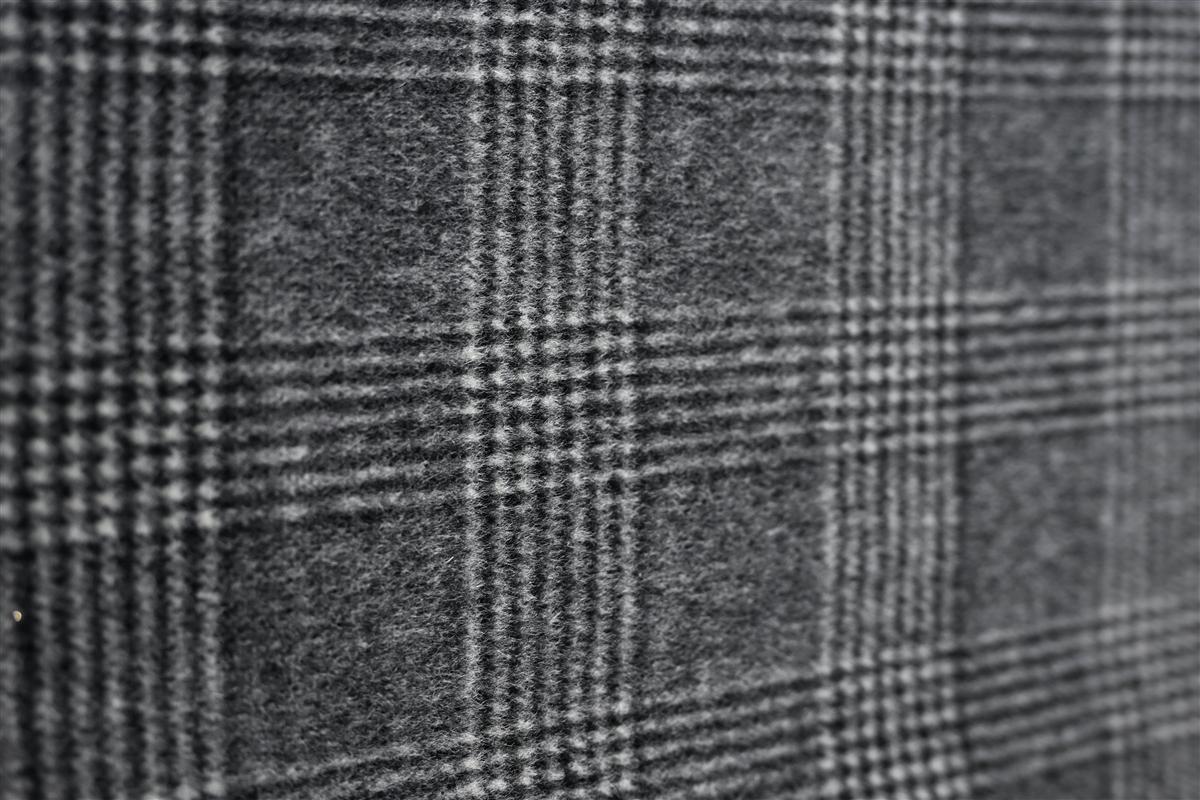
A backup mill is a second plant, not a second development. A buyer who already runs an approved woollen mill and has spent a season on sampling is not starting from zero. The specification, the construction, the colour standard, the sealed approved sample, the finishing route and the agreed test list all travel in one folder. The yarn lot, the loom and reed, the greaser, the dyer’s recipe and the finisher’s machine sequence stay at the first plant. Qualify the backup mill on one production-woven trial length from its own route, and settle the colour split before any order divides.
Which Parts of the File Does a Second Mill Inherit?
The sort comes before the paperwork, and the folder is where the sort becomes visible. A record written in measurable properties can be used at any plant. A record written in the habits of one plant cannot be used anywhere else. First, split the documentation into property statements and practice statements. Second, hand the property statements over unchanged, because an edited specification creates a third cloth nobody has seen. Finally, keep the practice statements where the work was done and replace them with a trial length. For example, a specification rewritten to suit a second loom has changed the cloth, not the mill, and the buyer now owns two cloths with one name. In practice, second-mill approvals fail on the sort rather than on the loom, because a mill can weave anything the file describes and nothing the file leaves out.
What Travels With the File?
A travelling document is a statement of properties, and a property is a thing two plants can measure on the same piece. First, the specification travels: fibre, yarn ticket, weave, sett and finished width, written as the buyer’s numbers. Second, the construction travels: ends and picks, the weave name, and a description of face and reverse. Third, the colour standard travels as a sealed approved sample with Pantone references and a stated light source. Fourth, the finishing route travels as a named sequence of operations, never as a finished hand. Finally, the agreed test list travels as a list of methods, not a list of results. For example, a specification sent without the sealed sample is a description, and a description cannot settle a shade argument. According to ISO 9001:2015, documented information has to be controlled and available where the work is done, which is why the folder is handed over as a controlled copy rather than retyped.
What Stays at the First Plant?
Everything the first plant did with its hands stays at the first plant, because no folder carries a loom setting, a dyebath or a mender’s eye. The sort below separates what travels from what has to be proved again, item by item, and no row in the sort is a criticism of either mill.
| Item in the file | Travels or stays | What the backup mill does with it |
|---|---|---|
| Specification and construction | Travels | Reads the numbers and quotes the weave back |
| Pantone reference and sealed sample | Travels | Matches shade against the sealed piece under the agreed light |
| Finishing route, named in sequence | Travels | Repeats the sequence on its own machines |
| Agreed test list and methods | Travels | Runs the same methods in its own lab or a third-party lab |
| Yarn lot and spinner | Stays | Re-proves shade and hand on its own yarn lot |
| Loom, reed, sett and warp tension | Stays | Proves sett and loom behaviour on one trial length |
| Dyehouse recipe and dyebath | Stays | Builds its own recipe and owns its own shade band |
| Finisher’s machines and operator hand | Stays | Proves hand and cover on a production-finished trial |
Which Attributes Must a Trial Re-Prove?
A trial length is the proof a backup plant can actually give, and the reason is competence rather than paperwork. According to ISO/IEC 17025, laboratory competence is assessed at the laboratory through personnel, equipment and validated methods, and the 2017 edition keeps the assessment at the site. An identical loom at a second plant therefore says nothing about the second plant. The borrowed doctrine is that a changed condition needs supplementary validation rather than a full re-validation. Three conditions make one trial length count as the supplementary validation: 1) production-woven on the backup loom, 2) production-finished through the backup route, 3) compared against the sealed standard under the agreed light and using Pantone references, on the attributes the process touches. For example, two mills can hold one sett and still deliver different cover, because cover is a finishing result.

What Three Things Must the Backup Mill Produce?
A qualified backup mill produces three documents, and none of the three is a swatch. First, the sealed standard: the buyer keeps the approved sample sealed, a second sealed piece travels, and both sides compare against the same physical reference instead of a photograph. Second, a trial length from the backup plant’s own loom and its own finisher, long enough to run the agreed methods and keep a retained piece. Third, a comparison sheet, attribute by attribute, with the method named and a pass or fail beside each row. Whoever ran the tests signs the sheet, and the signature names the plant, so a retest cannot be credited to the wrong site. For example, a mill that sends a beautiful swatch and no comparison sheet has sent an opinion, and an opinion is not a release.
Which Four Attributes Follow the Process?
A process-sensitive attribute is a cloth property that moves when the plant moves, and four of them carry most of the risk. First, shade: a different dyehouse reads one Pantone reference through different water, dye class and equipment, so the sealed sample is compared under the agreed light using Pantone chips rather than a screen. Second, hand: the same yarn finished on different machines gives a different surface. Third, width and relaxation: the loom and the finishing tension decide what happens after the first steam. Fourth, cover: nap, brushing and milling sit inside the finisher’s sequence. Fibre properties stay off the list, because a fibre-content test attaches to the yarn order. For instance, a shade that passes at one dyehouse can fail at the next under the same reference. A new yarn lot restarts the same proof inside one plant, as set out in re-approval after a yarn lot change, and loom behaviour separates mills even on one specification, as the three-loom trial comparison shows.
What Can You Skip Without Weakening the Approval?
A skipped step is safe only when the step tested an idea rather than a plant, and the season of sampling is mostly ideas. Design iteration does not repeat. In practice, colourway roll-out, weight trials, hand trials and garment prototypes were decisions about the cloth, and the cloth has not changed. Fibre properties do not repeat either, because a wool declaration, a yarn ticket and a fibre-content test attach to the yarn order rather than to the loom. Condition testing on the first plant’s cloth does not repeat, since the backup plant will be judged on its own trial length. What never skips is the finishing route, because hand, cover and surface are produced there, and no written sequence proves an execution. A backup approval that skips the finisher is an approval of a yarn. The three-season record in the same cloth across three seasons shows how much of a season is design and how little is plant.
Two Mills, Two Shade Bands: When Is Colour Allocated?
Two mills mean two shade bands, and the allocation is a commercial decision that has to be made before the order splits. Three architectures work, and each one needs writing down: 1) colourway ownership, 2) a shared colour under a written tolerance, 3) a named subset for the backup plant. In the first, each mill owns named colourways, so no colour runs at two plants and no tolerance argument can start. In the second, both mills dye to one sealed standard and the buyer accepts a stated band. In the third, the backup plant is limited to the colours and qualities the trial length proved. Whichever route is chosen, the sealed sample is signed per colourway and the buyer holds the master, because a shade argument between two dyehouses has no neutral reference unless the buyer keeps one. For instance, a split order with no allocation is two unsold colours waiting to happen, and the buyer pays for both.
What Does Conditionally Approved Actually Permit?
A conditional approval is a written scope, not a mood. The scope is the only thing separating a useful backup plant from an unapproved one. Four questions get written answers: what the backup plant may make, how much of an order the backup plant may carry, when the approval is reviewed, and who signs a certificate naming the second site. Without a scope, a buyer holds two unapproved mills instead of one approved mill and one backup. The scope also tells the primary mill and the certifier what has changed. Writing the scope happens before the first order splits, not after the first claim.
What Goes in the Scope Line?
The scope line is where a conditional approval stops being an opinion. Four items belong in the line: 1) the constructions and colourways the backup plant may run, 2) the share of an order the backup plant may carry, 3) the events that reopen the approval, 4) the person who signs for each plant. The share is a boundary, never a percentage guess. The backup plant carries the part of an order that the trial length proved. The backup plant never carries a colour the trial did not prove. The review is event-driven. A new yarn lot, a new colourway, a change of finisher or a change of subcontractor each reopen the scope. The buyer’s quality lead signs the scope. The mill’s quality manager signs the comparison sheet.
Who Has to Be Told?
Disclosure is the step buyers skip, and three parties have a reason to know. The primary mill holds the pattern, the construction and often an exclusivity clause. The supply agreement is read before the second plant runs a metre, and the contract is where a split is allowed, as set out in the process map on subcontracting. The customer or brand owner may hold a named-site approval that a second site does not inherit. A brand can require written notice before any change of plant. The certifier issues a certificate to a site and a scope, so a second plant needs its own entry. For example, a certificate that names one address does not cover cloth woven at another address, and no amount of paperwork makes the address travel.

Relaterade insikter

Oil and Mothball Smell in the Bale: What to Do First
An oil or mothball smell on opening a bale is a chemical question before it...
Heat-Set Pleats in Wool Tweed: What Must Be True?
Three conditions must hold before a pleater can set a pleat in wool tweed, and...
Open Three or All Ten? The Lot-Fail Line on Ten Rolls
The number of rolls to open is not a matter of opinion, and the answer...