
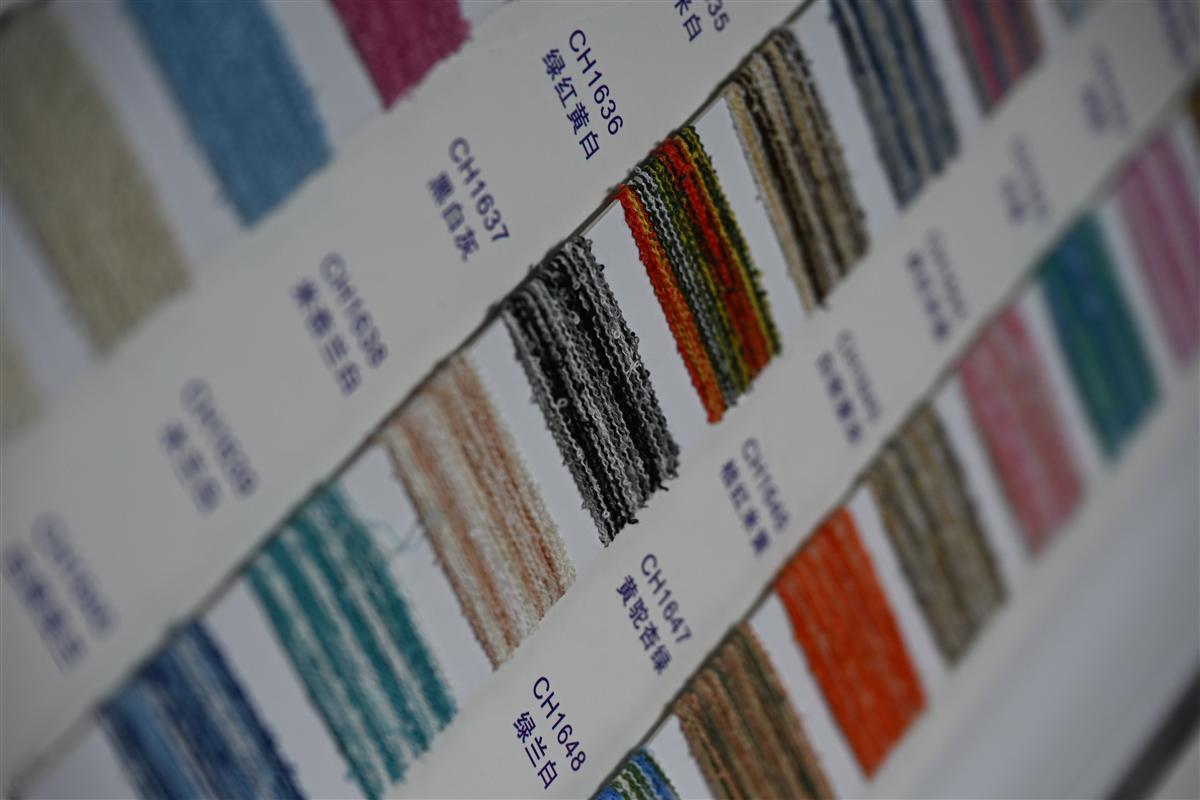
A dry-cleaning colourfastness test is the right request for a navy overcheck on a pale ground. The fault feared is dye moving in solvent, not dye moving in water. According to AATCC’s published summary, the method reports two readings on two different objects, and neither reading is a pass line. Three things have to be fixed before the first production metre is dyed: the test, the colour pair inside the assembly, and the object each reading describes. A buyer who separates those three can read a lab sheet. A buyer who does not will accept a staining grade as an answer about the pale ground.
Which Solvent Test Belongs on the Report?
Three Tests or One: Which Question Are You Buying?
| What you ask the lab for | The question it answers | What it cannot answer | The line it earns in the order |
|---|---|---|---|
| A dry-cleaning colourfastness test, run as a defined assembly | Does colour survive a full solvent clean, read on the specimen and on what touches the specimen | The garment as a whole, the cleaner’s spotting agents, the next lot | Colourfastness to dry-cleaning, solvent named, both readings reported, colour pair named |
| A solvent-spotting test on a local area | Does a spot-removal solvent move colour at one small patch | A full immersion clean, shrinkage, pressing effects | Solvent spotting on the finished shade, reported as its own line |
| A rubbing test, dry and wet | Does colour transfer by abrasion onto whatever presses against the cloth | Anything about solvent, anything about a full clean | Rubbing, dry and wet, on the ground and on the overcheck |
Why Do Three Different Tests All Get Called Bleeding?
Bleeding names a result, not a mechanism, and three separate mechanisms leave a mark the eye reads the same way. First, dye leaves the cloth during a full solvent clean and settles on the cloth pressed against it. Second, a cleaner’s spotting agent lifts colour from one area and leaves a tide mark at the rim, which is a solvent fault the dry-cleaning method excludes. Third, dry abrasion transfers pigment onto the cloth underneath, and a rubbing test is the only method that sees abrasion at all. Each mechanism has a method of its own. Per SATRA’s published scope, solvent-water mixes, water spotting and steam pressing sit outside the dry-cleaning method. For example, a “no bleeding” clause buys a symptom; a named mechanism buys evidence on a page.
Is the Pale Ground the Specimen or the Adjacent Cloth?
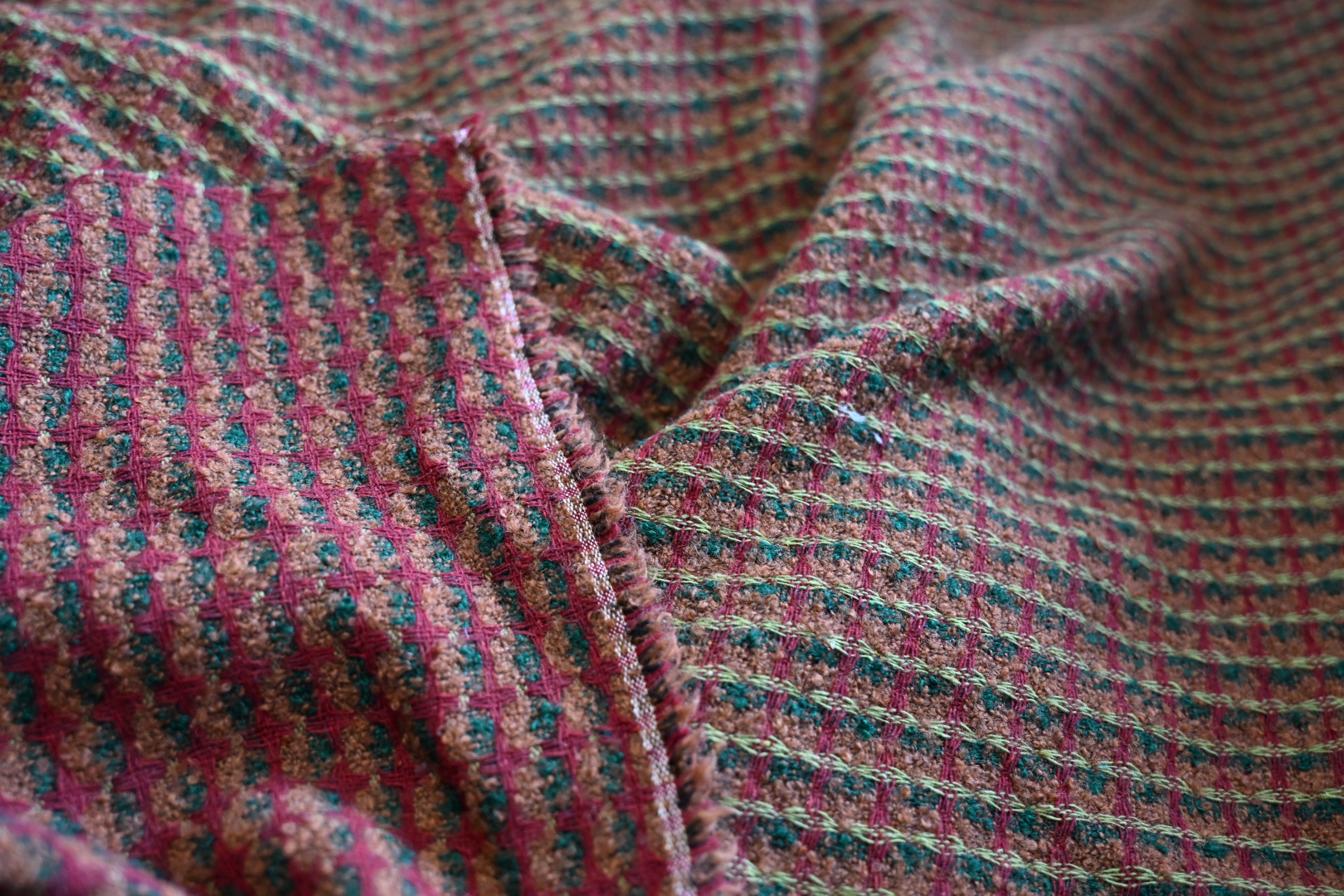
On a woven check the pale ground is not an adjacent cloth. The pale ground is part of the specimen, and that fact decides which reading catches a navy-to-pale transfer. According to AATCC’s published summary of TM132, a specimen of the textile sits in contact with cotton fabric, a multifibre swatch and noncorrodible steel discs. The assembly is agitated in perchloroethylene and then dried in air. Any change in colour of the specimen is assessed on the Standard Gray Scale for Color Change. A navy overcheck that dulls the pale ground has changed the specimen, so the dulling lands on the change scale. A staining grade describes the multifibre swatch or the filtered solvent, a different object and a different question. Ask the lab three things: 1. which shades sat on the specimen; 2. whether the pale ground was graded as specimen or as adjacent cloth; 3. where the ground’s own change appears. A report for another colourway does not transfer: a certificate covers the shade it was run on.
What Does Each Reading Describe?
Is the Change Reading the Ground’s Own Dulling?
A change reading is the grade given to the tested specimen after a solvent clean. Assessment runs against a grey scale, and the tested piece is compared with an untreated original. The grade describes the specimen and nothing else. On a pale-ground check the decisive reading is often the ground’s own loss of brightness, because a ground two shades duller reads as a tired garment while every adjacent-cloth number looks respectable. According to AATCC’s summary, change is assessed on the Standard Gray Scale for Color Change, and no acceptance level is printed beside the scale. The reading is also where a mill’s scouring shows. Residual spinning oil and unfixed surface dye that survived scouring move in solvent, and the movement appears as dulling rather than as a defined mark. In practice, a sheet with a strong staining figure and a weak change figure describes cloth that stained its neighbours less than it faded itself.
Whose Cloth Does the Staining Grade Describe?
A staining reading is a grade given to the cloth that touched the specimen, or to the filtered solvent. The grade never describes the tested piece. According to AATCC’s summary, staining is assessed with the Gray Scale for Staining or the 9-Step Chromatic Transference Scale, while the assembly carries a cotton fabric and a multifibre swatch in contact with the specimen. SATRA’s principle for its own dry-cleaning method names the second object more fully. A specimen of filtered test solvent is compared with unused solvent by transmitted light and assessed against an appropriate grey scale. Two routes, one shared structure, and the buyer holds a number about something other than the cloth in the bag. A sheet reporting staining with no object named invites the wrong conclusion on a check. First, ask which object was graded. Second, ask which scale was used. The two staining scales do not interchange.
Where Does the Pass Line Come From?
Does the Method Set a Pass Line for the Cloth?
The method reports readings on named scales and stops there, and a pass line is a requirement written into the order rather than a value the method supplies. According to AATCC’s own summary of TM132, the summary page publishes the assembly, the two scales and an indication of results from three commercial cleanings. No acceptance level appears in that summary. The number that binds a lot sits in the order, and the sentence carrying the number has to name the object, the scale and the colour pair beside it. Without those three, the figure means nothing when the report lands. A UK fabric shop’s colour-fastness guide, published in 2026, writes that grade 4.0 is treated as the standard for high-quality use; read plainly, that sentence states a buyer’s requirement rather than a limit drawn by ISO or AATCC. Trade benchmarks circulate and bind nobody. Where a stockist holds a house standard, the stockist’s figure governs.
How Should One Level Be Written for Each Colour Pair?
One line per colour pair is the rule, and the pair itself belongs inside the line. First, name the method and the solvent, because an unnamed solvent tests the method’s default rather than the cleaner a garment will meet. Second, require both readings and name the object of each. Third, set the acceptance level for each pair, against the named scale, on the cloth sent to the cutter. According to AATCC’s summary, the two staining scales are the Gray Scale for Staining and the 9-Step Chromatic Transference Scale, so the order should name the scale a level refers to. Where a stockist publishes a house standard, the stockist’s figure governs and belongs in the specification. Where no figure exists, the order sets one deliberately and says so, because a report cannot invent a requirement after the cloth is woven. Colour approval before bulk is a separate sign-off: the lab dip is signed against a reference.
Who Owns a Bleed, and What Goes on the Order?
Who Can Put Colour Where You Did Not Want It?
Four parties can put colour in the wrong place, and the order is the only document separating those parties before a claim opens. First, scouring and clearing sit with the mill. Spinning oil and surface dye that survive scouring can still move in solvent. Second, the colourway and the dye load behind the colourway belong to the mill as well, because the load is fixed when the colourway enters bulk. Third, the cleaner’s process sits outside the dry-cleaning method by design. According to AATCC’s scope, spot and stain removal procedures used by the drycleaner fall outside the method. Fourth, pale parts of the garment, a lining, a binding or a contrast tape, each act as a separate source of the same stain. A well-behaved shell can still be spoiled by one unstable trim. Naming four owners costs a sentence in the order and settles a dispute while the dispute is still cheap.
How Many Lines Does the Order Need?
An order block is the three lines that turn a test into a requirement. 1. Method and solvent. 2. Both readings, reported separately. 3. The acceptance level for each colour pair, with the scale named. Line one names the method and the solvent in a form a lab can execute: colourfastness to dry-cleaning, solvent named, on the named colour pair. Line two requires change on the specimen and staining on the adjacent cloth or the filtered solvent, and says plainly that the figures are never averaged. Line three sets the level per pair and says which shade pair inside the check the levels apply to. Add the sampling sentence while the order is open: first production roll, same lot, same finishing route, one marked piece kept uncleaned as a control. The method yields an indication from three commercial cleanings, according to AATCC’s summary, so the control piece is the only baseline the buyer owns. A report from the sample-room length describes the sample room.
What Must the Order Not Claim?
Three claims do not belong in a test requirement. The first is a warranty that the cloth will not bleed, because one method on one specimen supports no such promise. The second is a lifetime figure, because AATCC’s summary offers an indication of results from three commercial cleanings and nothing further. The third is a compliance statement for a market, a brand or a cleaner, because the method evaluates colour movement and never fitness for a care route, per AATCC’s own scope. For example, a note saying the cloth “meets dry-cleaning requirements” states a conclusion nobody on the file is entitled to draw. The care-route half of this subject is already written up here, and the label question is handed over rather than re-argued: what a dry-clean-only label costs a brand. A pre-test before a different care route has its own protocol at a wash pre-test for bouclé coats.

Relaterade insikter
The Finishing Line Is Booked: Can You Approve Greige?
Greige is cloth exactly as it leaves the loom, and a greige approval is a...

Brown Specks on a Pale Coating: Which Defect Is It?
A brown speck on a pale wool coating is a fault with 4 possible owners,...
Old Report, New Dyehouse: Does It Still Cover the Cloth?
An old report does not cover cloth that ran through a different dyehouse, and the...