

Fabric development is usually budgeted as an afterthought and then paid for line by line. A lab dip here, a handloom there, a garment sample sewn and photographed, then a second colour because the first read too warm. By the fifth round nobody is comparing the cost of the samples against the value of the information they produced.
Treated as a planned sequence, sampling is cheaper and faster. Each round has a question it is supposed to answer, a cost that is predictable and a decision that follows. This guide sets out four rounds, what each should prove, and how to know when to stop.
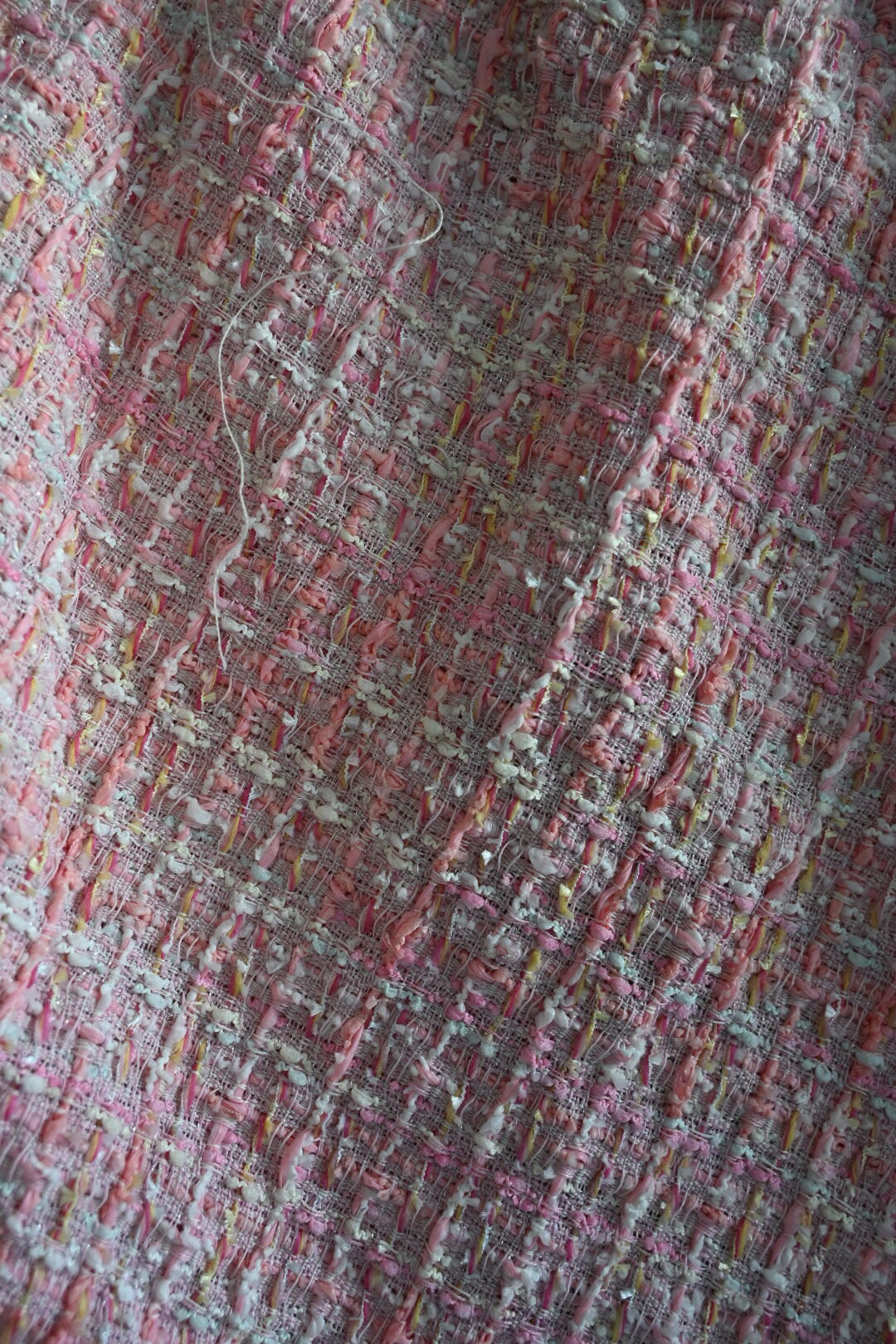
Round One: Feasibility and Hand Feel
The first round answers whether the cloth can exist at all. A mill works from the brief: fibre content, weight, structure, finish and colour direction. The output is usually a small sample piece, sometimes a handloom weave, that shows hand feel, surface and approximate colour.
What this round should not be asked to do is prove the final colour or the exact weight, because the finishing route is not fixed yet. Buyers who judge a development sample against a final colour target set themselves up for an unnecessary second round.
Cost here is usually the lowest of the four rounds and is often absorbed when the mill keeps the yarn and structure in its development range. The deliverable to insist on is a written note of what was made, so the next round starts from a defined base rather than from memory.
Round Two: Colour and Finish
The second round answers what the cloth looks like when it is finished properly. This is where lab dips and finish trials belong, and where the colour reference is agreed. The output should include a dip or sample submitted under a stated light source and a note of the finishing route used to produce it.
A common waste in this round is approving colour on an unfinished sample. Finishing changes both shade and surface, sometimes by enough to send the project back a round. Where a mill proposes to approve on greige or loom-state cloth, the approval should be treated as provisional and confirmed on finished cloth before bulk.
If the design uses certified fibres or a recycled content claim, the verification route should be settled here rather than at the end. Supply chain standards from bodies such as Textile Exchange standards for the textile supply chain define what documentation a claim requires, and the time to discover a missing transaction certificate is before the yarn is ordered, not after the cloth is woven.

Round Three: Garment or Application Trial
The third round answers how the cloth behaves when it becomes a product. Cutting, sewing, pressing and washing all reveal things a flat sample cannot: whether the cloth frays on the cutting table, how it takes a seam, how much it relaxes after pressing and how the shape holds in wear.
This round is frequently skipped by small brands to save money, and it is the round where skipping costs the most. A fabric that is perfect in swatch form and difficult in make-up produces either a compromised garment or a re-order of something else, which is a far larger cost than one trial garment.
The output should be a garment or application piece plus measurements taken before and after washing, and a note of anything the garment factory had to change to make it work. That note is what turns the sampling budget into production knowledge rather than a collection of photos.
Round Four: Bulk Reference and Sign-Off
The fourth round is not development but confirmation: a bulk reference piece, taken from the production yarn and the production finishing route, that becomes the retained standard for the order and for later reorders. It should be large enough to cut test pieces from and to keep.
The value of this round is entirely in what happens later. A retained bulk reference is the artefact that settles a shade or hand-feel disagreement in month nine, and it is the reason a reorder can be matched without restarting development. Without it, every reorder becomes a fresh negotiation about what the original looked like.
The reference should be stored away from light, labelled with the order number, and duplicated so both sides hold one. Buyers who keep swatches pinned to a board in daylight are keeping a sample, not a standard.
Where a programme runs several qualities, one reference per quality is enough, and the sequencing described in our notes on custom fabric sampling timelines shows how the four rounds fit inside a compressed calendar when the mill holds the yarn.
Budgeting the Rounds and Knowing When to Stop
Budget in categories rather than per invoice: colour development, structural samples, application trials and references. Each category has a natural number of iterations, and a project that exceeds it is usually missing information rather than unlucky.
Set a stop rule in advance. Two colour rounds and one structure revision is a common ceiling; beyond that, the correct answer is usually to change the base quality rather than to keep adjusting the finish, because the remaining gap is structural rather than a matter of tuning.
Finally, keep the swatches that were rejected and note why. A rejected sample with a written reason prevents a future round from re-proposing the same thing, and it turns the development history into a usable record. The fields worth checking on any incoming swatch, before it is graded in or out, are listed in our notes on what to check on a fabric swatch before ordering, and the https://fursone.com/fabric-sourcing-guide/ covers the qualities we can put through these rounds without a new yarn development each time.
Vanliga frågor
How many sampling rounds does fabric development need?
Four stages cover most projects: feasibility, colour and finish, an application or garment trial, and a bulk reference. Projects that go further are usually missing information rather than unlucky.
Can a development sample be used to approve colour?
Only provisionally. Finishing changes both shade and surface, so colour should be confirmed on finished cloth before bulk.
Is a garment trial necessary for a small collection?
It is the round that most often saves money. It reveals cutting, seam and pressing behaviour that a flat swatch cannot show.
What is a bulk reference for?
It is the retained standard taken from production yarn and finishing, used to settle later shade or handle questions and to match reorders.
When should sampling stop?
When a pre-agreed ceiling is reached, usually two colour rounds and one structure revision. Beyond that, changing the base quality is more effective than more tuning.
Video: Fabric-to-garment effect display for two cost-effectiveness
If sampling costs keep appearing without a decision attached, we can help structure the rounds against a calendar and a budget. The fabric sourcing guide sets out how we run development for small brands, including what the mill can sample from stock yarn rather than developing from scratch.

Relaterade insikter
Three Seasons Same Cloth: Yarn Shade Finish Locks
Running the same cloth for three seasons like a larger brand means locking yarn, shade,...
Free Swatches, Paid Yardage: What Sampling Should Cost
A free A4 swatch is the mill’s marketing. Paid sample yardage is a small production...
A 40 Metre Sample From the Same Beamed Warp: What to Ask the Mill
The 40 m is not something you take out of the lot; it is a...