
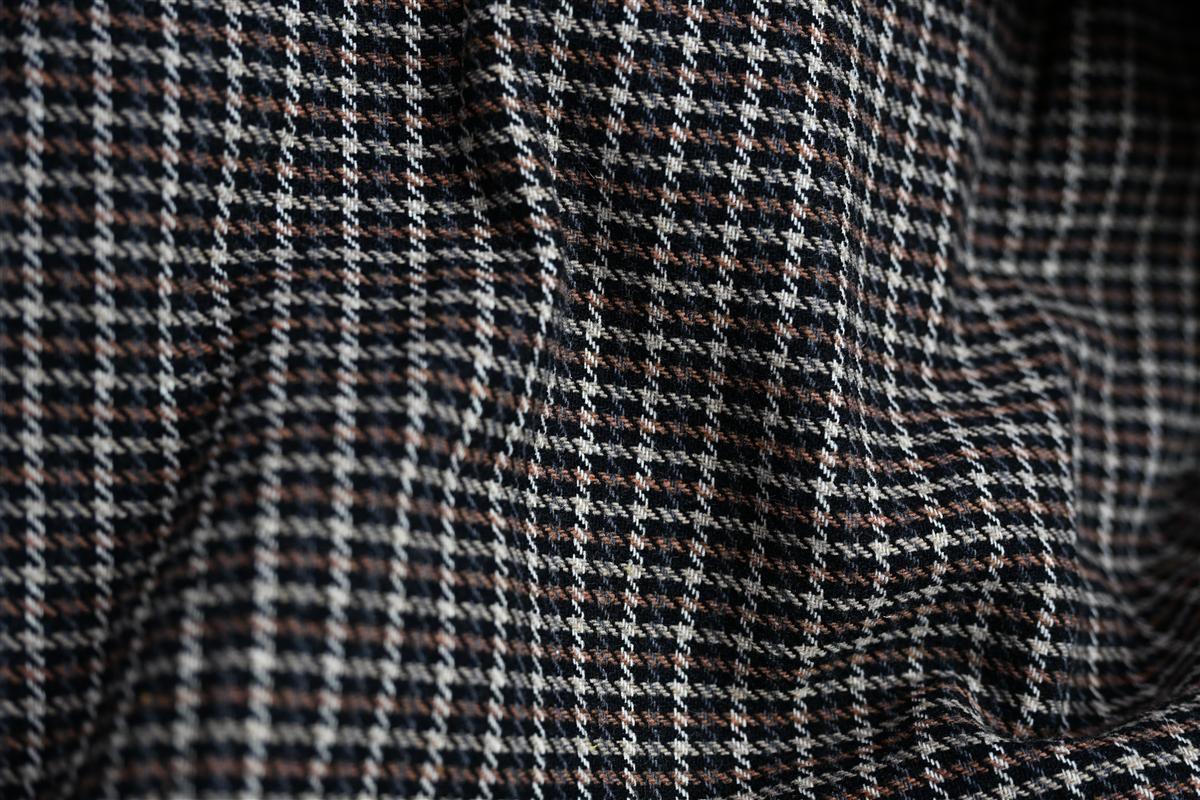
Ett herrklädesvarumärke flyttade ett program för fiskbensmönstrade tweedrockar från ett 7-dagarsprov till en bulkorder på 5 000 meter på omkring sex veckors produktion, till ungefär en tredjedel av priset som deras europeiska väveri hade angett. Denna anonymiserade fallstudie visar hur programmet byggdes upp: en RFQ med 12 fält, ett förtestat prov, ett godkännande av färgparti vid 0,5 delta E och kvalitetsgrindar som höll AQL för allvarliga defekter nära 1,0 %. Siffrorna kommer från ett verkligt produktionsflöde i Wenzhou, och varje steg kan upprepas av en köpare vid nästa order.
The brand’s starting position is common. They had a proven overcoat silhouette, a herringbone cloth in mind, and a European mill relationship that delivered quality but not speed or price. Fursone kom in i diskussionen som ett direkt väveri med över 300 vävstolar i Wenzhou, ISO-certifiering och ISO-klass 3–4 i noppningsbeständighet som stående kvalitetsreferens.
Briefen: Ett överrocksprogram i fiskben
The program needed 5,000 meters of herringbone tweed across five colors, 300 meters per color, at a jacket-weight of 400 GSM within the 280-450 GSM range Fursone runs for Chanel-style and coating tweeds. The fabric had to hold a clean herringbone line, resist pilling at ISO grade 3-4, and pass the brand’s three fastness tests. The garment factory planned roughly 1.7 linear meters of fabric per overcoat at 150 cm width, which put the 5,000-meter order at about 2,900 coats.
Two constraints shaped the RFQ. The brand’s season calendar required production proof within 8 weeks of order confirmation, and their previous European mill quoted 12-week lead times with a price the brand could not pass through to retail. The RFQ they sent specified width, GSM, composition, weave construction, dyeing route, color references, fastness targets, and the inspection standard, using the same 12-field structure our RFQ-mall för väv ger. Den detaljnivån gjorde att väveriet kunde lämna ett fast schema i stället för ett intervall.

Provtagningsfasen: Sju dagar, tre förtester
The first sample left the mill 7 days after the tech pack arrived. Two meters of cloth came with three pre-test wash cycles already run: shrinkage, pilling, and colorfastness. The brand did not have to send the sample to a third-party lab to learn whether it would pill or fade, because the mill’s sampling protocol includes those results on every 7-day sample. That pre-test data is the difference between a sample you can design around and a sample you must spend another 2-3 weeks testing yourself.
Two lab dips were approved during the same window. The mill’s yarn bank holds 200+ pre-dyed colors, which removed the 4-5 step third-party yarn procurement loop from the schedule entirely. The brand compared the lab dips against their Pantone references under D65 light, approved one shade per colorway, and locked the dye recipe before bulk. This is where most programs drift: approving a hand-loomed swatch instead of a strike-off at bulk weave density. Here the strike-off matched the bulk construction, so the color approval meant something.
Från prov till bulk: vägen på 6 veckor
The production schedule ran on the standard custom-order path: 7-day sampling, dye lot approval in weeks 2-3 at 0.5 delta E, and bulk production in weeks 4-6. Each of the five colors followed the same gates, staggered by one week so the looms stayed loaded. At 300 meters per color, the program fit Fursone’s custom MOQ without negotiation, and the beställning av bulktyg och MOQ strukturen förblev enkel: ingen prisstege, inga dolda minimum per nyans.
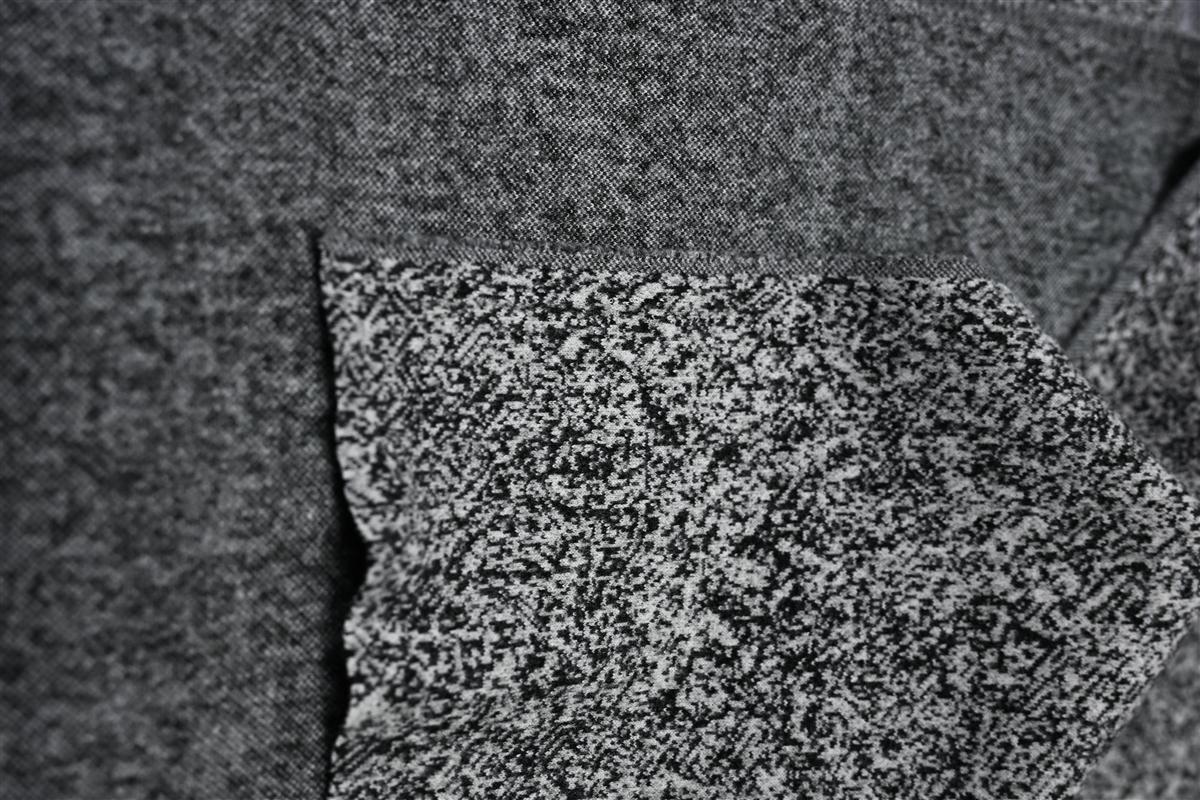
Godkännandet av färgpartiet var den kritiska grinden. Varumärket fick en produktions-strike-off per färg, mätt i spektrofotometer, och bekräftade att varje rulle skulle hålla inom 0,5 delta E från den godkända standarden. Den toleransen är snävare än de 1,0 delta E som många väverier anger, och den är möjlig eftersom spinning, färgning och vävning sker under samma tak. När färgning och vävning ligger i separata anläggningar driver färgen mellan garnleverantören och vävstolen.
Kvalitetsgrindar i produktionen
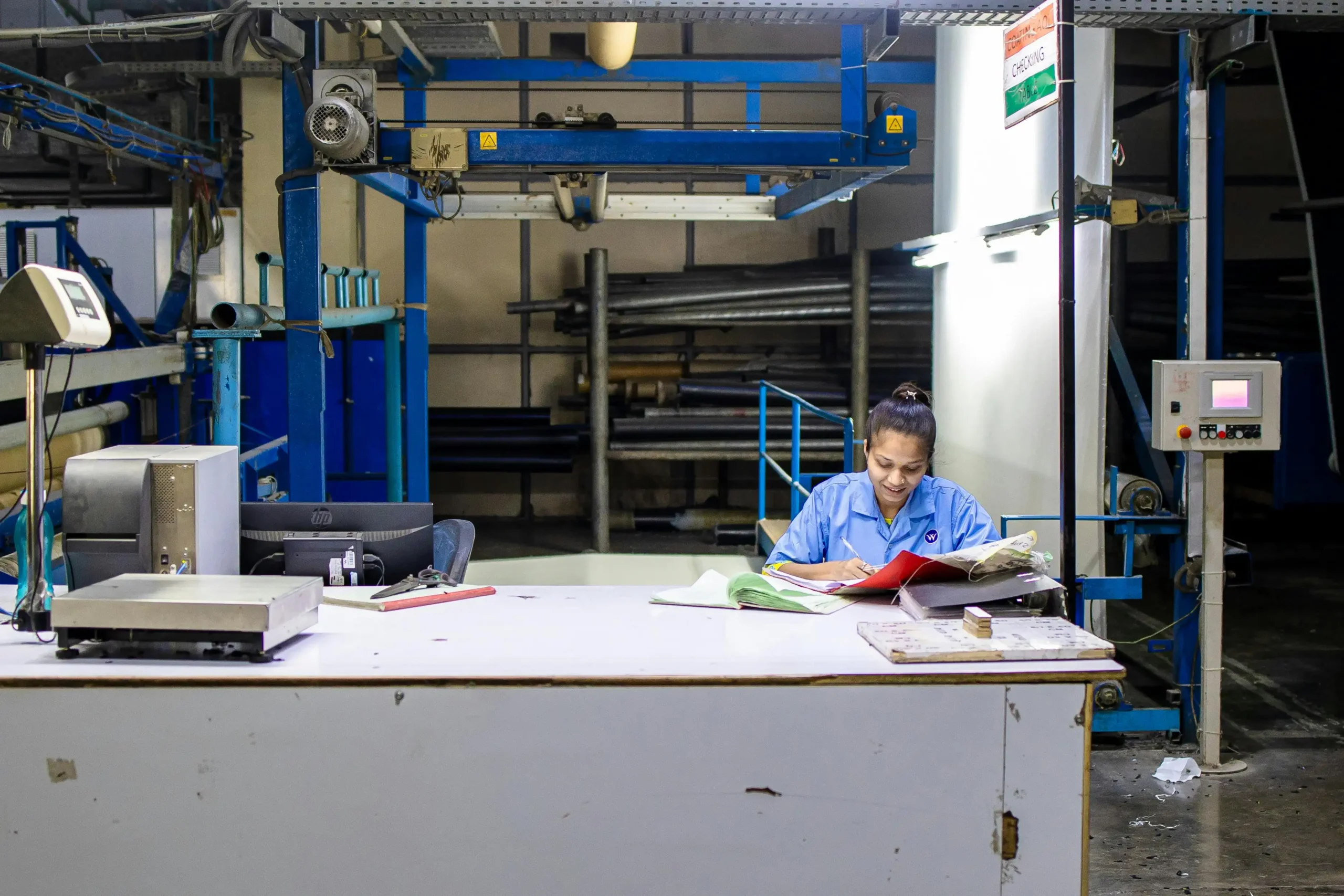
Tre kontroller skyddade ordern under bulkproduktionen. För det första gjordes inspektionen enligt AQL-standard, med allvarliga fel hållna nära 1,0 %. För det andra levererade väveriet med samma data för noppbildning och färghärdighet som provet hade, så bulkleveransen matchade värdena från förtestet. För det tredje innehöll avtalet en gratisersättningsbuffert på 3 %, som täckte den lilla andel tyg som tillskärningen alltid kasserar för kantskador och mönstermisspassning.
The fabric itself was woven, finished, and inspected in Wenzhou, then shipped to the brand’s garment factory. For a UK-based brand, the Brittiska importregler för varor lämnas in vid gränsen, och fakturan, packlistan och HS-klassningen hanterades som en del av de fraktvillkor som avtalats i kontraktet. Importefterlevnaden avgjordes vid orderbekräftelsen, inte i hamnen, och därför klarade sig containern igenom utan försening.
The Result
The 5,000 meters shipped on schedule, roughly 6 weeks after order confirmation and 8 weeks after the first tech pack, against the 12-week European quote. The landed price came in near one-third of the European mill’s figure, consistent with the 30-50% factory-direct advantage that direct Wenzhou sourcing carries. The brand’s garment factory cut 2,900 overcoats, and the first retail sell-through confirmed what the pre-test data predicted: no pilling complaints in the first 90 days, and no shade complaints across the five colors.
Two numbers mattered most to the brand’s buying team. The 7-day sample collapsed their development cycle from 4-6 weeks to one week, and the 0.5 delta E dye lot approval eliminated the color correction round that had burned two weeks on their previous program. The 3% replacement buffer covered cutting losses without a dispute, because it was written into the contract before production.
Lärdomar inför din nästa bulkorder
- Ange toleransen för färgparti i offertförfrågan. Delta E på 0,5 mellan godkänd strike-off och bulkrullar är möjligt vid ett integrerat väveri och förhindrar det vanligaste felet i bulkproduktionen.
- Kräv förtestdata på provet. Resultaten för krympning, pilling och färghärdighet som skickas med provet gör att du kan designa utan en andra testomgång.
- Godkänn ett produktionsprov, inte ett handvävt tygprov. Färgen skiftar när trådtätheten ändras mellan prov och bulkvävning.
- Skriv in 3 % ersättningsmarginal i avtalet. Spill vid tillskärning är ett faktum; frågan är bara vem som betalar.
- Anpassa MOQ efter antalet färger. Ett program med 5 färger på 300 m per färg håller tidplanen enkel och vävstolarna igång.
- Bestäm importvillkoren före produktion. Incoterms, HS-klassificering och dokument som fastställs vid bekräftelsen håller containern i rörelse vid gränsen.
Varje grind i programmet motsvarar ett dokument eller ett test som en köpare kan begära från vilket väveri som helst. För hela sammanhanget kring hur fabriksgolvet är organiserat och varför dessa ledtider håller, vår inuti en tweedproduktion i Wenzhou med 300 vävstolar rapporten beskriver samma produktionsflöde.
Schemat vecka för vecka
The program ran on a fixed calendar that the buyer could plan around. Week 1: tech pack received, yarn bank searched for the five base colors, and two meters of herringbone sample cut and pre-tested. Week 2: sample shipped, lab dips prepared against the Pantone references, and the buyer confirmed the cloth hand and drape. Week 3: lab dips approved per colorway, production strike-off woven at bulk density, and the dye lot tolerance of 0.5 delta E written into the order. Weeks 4-6: bulk production, staggered one color per week so the finishing frames stayed loaded, with AQL inspection at the end of each color’s run. Week 7: inspection reports issued, 3% replacement buffer confirmed against the roll counts, and shipping documents prepared.
The discipline that made the schedule hold was the staggered color start. Running five colors simultaneously would have overloaded the dye house and the finishing line, and the single-color-per-week pattern kept every gate identical across the program. The buyer’s team knew each week which document would arrive next, which is how a 5,000-meter program feels smaller than a 1,000-meter one: the process repeats, nothing is improvised.
Kostnadsstruktur för programmet
Three cost lines made up the program: the fabric itself, the sampling and development, and the freight and duty. The fabric price, quoted FOB Wenzhou, sat at roughly one-third of the European mill’s quote for the same construction. Sampling cost was fixed at the development stage: the two-meter sample, five lab dips, and five production strike-offs were all included in the order confirmation, so there were no surprise development invoices later. Freight and duty were separate and visible, handled under the agreed shipping terms and confirmed against the current rates at booking.
Köparen skyddade priset på två sätt. För det första prissattes ersättningsbufferten på 3 % in i avtalet, så att kassation inte blev en tvist efter leverans. För det andra låstes kvalitetstoleransen skriftligt: tygvikt inom det avtalade g/m²-intervallet, bredd på 148–150 cm och färg inom 0,5 delta E. I ett program av den här storleken är varje 1 % spill eller nyansavvikelse värd ungefär 50 meter tyg, så toleransraderna var värda mer än varje rabattförhandling.
Vanliga frågor
Hur snabbt kan ett tweedprov levereras?
Fursone levererar prov inom 7 dagar med förtestdata som täcker krympning, noppbildning och färghärdighet, så att köpare omedelbart kan designa utifrån resultaten.
Vad är MOQ för kundanpassat fiskbenstweed?
Specialproduktion startar vid 300 meter per färg. Ett program på 5 000 meter över fem färger körs som 300 meter per färg enligt ett förskjutet schema.
Hur lång tid tar en tweedorder på 5 000 meter?
I den standardmässiga 6-veckorsprocessen för kundorder: 7 dagars provning, godkännande av färgparti i vecka 2–3 och bulkproduktion i vecka 4–6, före AQL-kontroll och leverans.
Vilka kvalitetskontroller skyddar en bulkorder på tweed?
Tre grindar: AQL-inspektion med allvarliga fel nära 1,0 %, förtestdata som stämmer mellan prov och bulk, samt en buffert på 3 % för kostnadsfri ersättning i kontraktet.
Hur mycket billigare är tweed direkt från väveriet i Kina?
Direktinköp från Wenzhou landar vanligtvis 30–50 % under europeiska väveriers priser, ungefär en tredjedel av den europeiska nivån, före frakt och tull.
Slutsats
The program worked because the buyer turned every risk into a contract line: dye lot tolerance, pre-test data, strike-off approval, AQL gates, and a replacement buffer. The mill’s integrated production made the schedule possible, and the price gap did the rest. Any menswear program with a defined weight, pattern, and color count can run the same path.
Om du planerar ett program med fiskbensmönster eller mönstrad tweed och vill ha samma struktur, skicka din tech pack till Fursone. Vi återkommer med prover inom 7 dagar tillsammans med förtestdata, och vår ylletyg för överrockar utbudet omfattar beläggningsvikter från 380–450 GSM. Begär en offert med ditt antal färger och önskad vikt, så bekräftar vi tidsplanen och toleransen för färgpartiet innan du gör din beställning.
Relaterad läsning: Fallstudie: Det 7-dagarsprov som säkrade ett 3 000-meters tweedkontrakt.
För den här tyg-MOQ-lagervaror vs skräddarsydd fallstudien och 7-dagarsprovet som avgjorde det, se den här tyg-MOQ-lagervaror vs skräddarsydd fallstudien och 7-dagarsprovet som avgjorde det.

Relaterade insikter
Case Study: Startup Brand’s Two-Phase MOQ Strategy: Stock First, Custom Later
The most expensive mistake a startup fabric buyer makes is ordering custom fabric for a...
Case Study: Home Textile Brand Trials Tweed for Cushion Covers
When a home textile brand thinks about tweed, outdoor coats usually come to mind first....

Fallstudie: En grossists första specialfärg, från Pantone till produktion
Hur en tygrossist förvandlar en Pantone-referens till en återupprepningsbar anpassad färg: ljuskälla,...