
Two quotes for the same fabric design can differ by twenty percent and both be honest. One comes from the mill that weaves it; the other comes from a trading company that bought the greige, sent it for finishing and adds a margin for handling everything between you and the loom. Which one is right depends on what you actually need to control.
This is not an argument for or against intermediaries. It is a description of where each model wins, what changes in price, MOQ, documentation and problem-solving, and how to tell which kind of supplier you are really buying from.

What Each Model Does With Your Order
A weaving mill sells what it can weave. Its strength is that the loom, the warp preparation and the finishing route are under one roof, so a change in construction, a batch consistency question or a fault investigation can be answered by the people who caused it. Its weakness is narrowness: if your design needs a finishing house the mill does not use, or a yarn it does not buy, the mill either declines or introduces you to someone else.
A trading company sells access. It aggregates mills, splits MOQs, consolidates orders, arranges inspection and handles documentation, which is genuinely valuable for a brand that buys twelve qualities a season in modest quantities. Its weakness is distance from the machine: when a fault appears, the trader is a messenger between two parties who have never met your buyer.
Neither model is more ethical or more modern. The question is which of them holds the knowledge you need when something goes wrong.
Price: Where the Difference Comes From
The mill quote should be lower on a like-for-like fabric, because there is no intermediary margin. But like-for-like is doing a lot of work in that sentence. A trader may quote a cheaper greige from a different mill, a lighter finishing route or a broader tolerance on shade, and the buyer comparing only the number will conclude the mill is expensive.
Ask for the construction in writing: yarn count, density, width, weight in grams per square metre, finishing route and grade. Two quotes that agree on those seven lines are comparable. Two quotes that agree only on the design name are not. The fabric sourcing guide sets out the field list we use for exactly this comparison.
The commission layer is also not pure cost. A trader that consolidates three qualities into one shipment can save more in freight and customs handling than its margin adds. For a small brand buying a mixed basket, the trader is often the cheaper route to a warehouse, even when the mill is cheaper at the loom.
MOQ: The Real Dividing Line
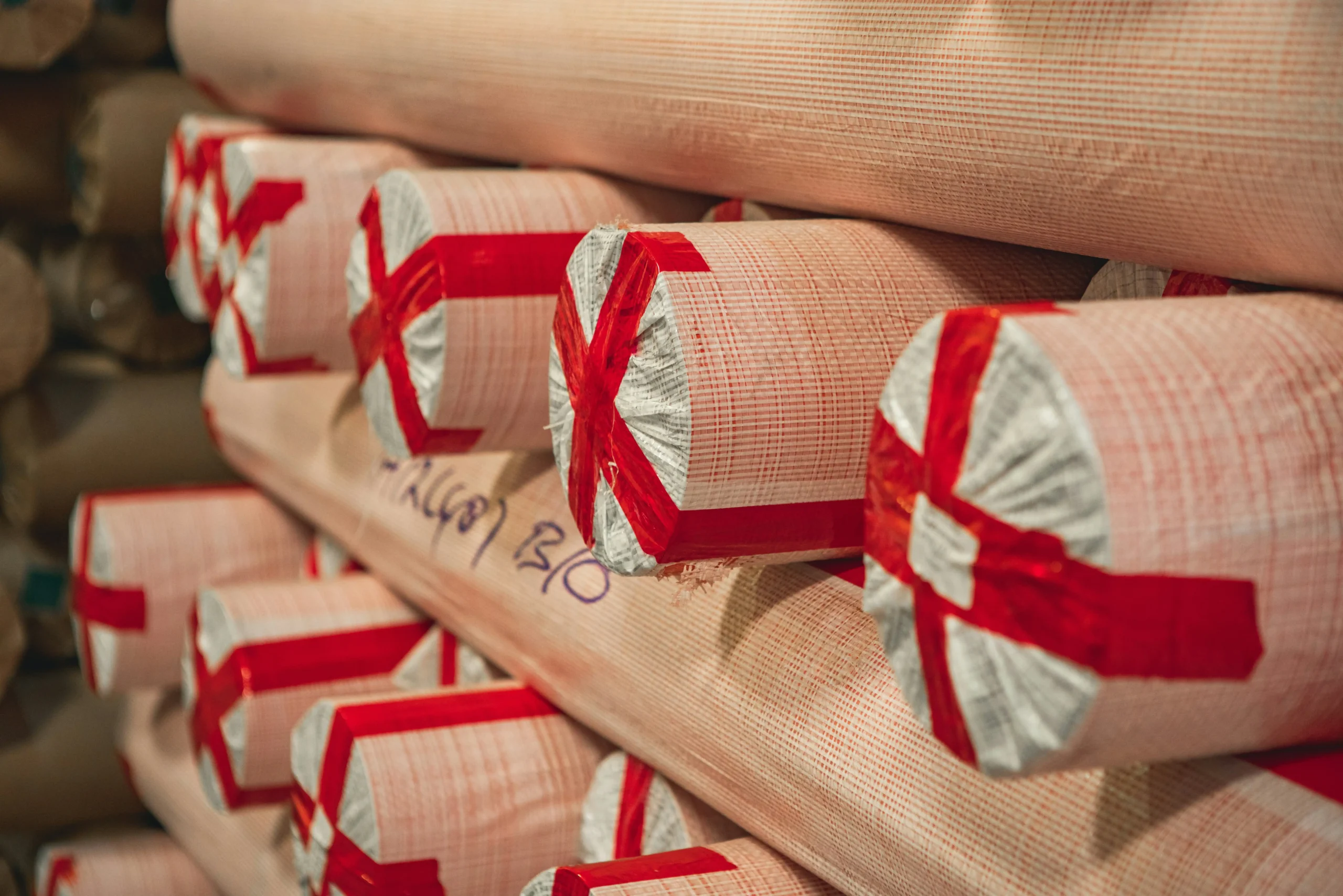
Minimum order quantity is usually the deciding factor, and it is set by physical constraints, not by sales policy. A mill cannot weave a short run without accepting waste at warp preparation and a dye lot that no other customer wants; that waste is what the MOQ prices in. A trader takes the MOQ risk and splits it, which is how a brand can order 300 metres of a design the mill would only run at 3,000.
The trade-off is control of the dye lot. When a trader splits a mill run, two buyers share a batch. That is usually fine, but it means colour continuity across your own reorders depends on someone else’s ordering rhythm. Buyers who need their own batch identity should ask who holds the lot, and the notes on buying remnant and roll-end stock explain how to assess that kind of stock honestly.
A workable pattern for growing brands is to start through a trader at low volume, then move to direct mill ordering once annual usage justifies a full run. Neither step is a step down; both are appropriate at their stage.
Documentation and Traceability
Traceability is where the two models diverge most in practice. A mill can produce a yarn purchase record, a dye recipe sheet and a finishing log for a specific batch. A trader can usually produce the same documents, but they originate one step further away, and the chain of custody has an extra link to verify.
For buyers facing certification requirements, that extra link matters. A recycled or organic claim needs the certificate to cover the exact article purchased, not the mill’s general capability. Where a trader is involved, ask for the transaction certificate naming the trader and the mill, and check the scope. The documents a buyer should expect are collected in our fabric traceability notes, and they apply to both models.
Country of origin and duty treatment also deserve a check, because the woven, dyed and finished operations may happen in different jurisdictions. US International Trade Administration country commercial guides remains a useful starting point for understanding how different markets treat origin and documentation.

How to Tell Which One You Are Really Buying From
A short set of questions separates the two. Ask which factory will weave the fabric, and whether the supplier owns it. Ask where dyeing and finishing happen and who operates those lines. Ask which loom the order is scheduled on and what the run length is. Ask who signs the inspection report.
A mill answers all four without hesitation and can invite you to see the machines. A trader answers the first two and refers the last two to its mill partners, which is a legitimate answer provided it is given clearly. The problem is only when the buyer believes they are dealing with a mill and is actually dealing with a trader, because expectations about response time and pricing then do not match reality.
One visit settles it. A mill visit shows the looms, the dye house relationship and the finishing route in an afternoon, and it changes the way every later quotation is read. If a visit is not feasible, ask for the greige purchase invoice and the finishing delivery note for the last production run: both name the parties who actually made the fabric.
Häufig gestellte Fragen
Is buying direct from a mill always cheaper?
On a like-for-like fabric, usually. But the comparison only holds when construction, width, weight, finishing route and grade match. A trader consolidating several qualities into one shipment can still land cheaper overall.
Why can a trading company accept a smaller order?
Because it absorbs the mill minimum and splits it across buyers. The mill MOQ is driven by warp preparation waste and dye lot size, not by sales policy.
What documents should I ask for either way?
Construction sheet, dyed batch record, finishing log, inspection report and, where a recycled or organic claim is made, a transaction certificate naming the exact article and the parties involved.
How do I know if my supplier is a mill or a trader?
Ask which factory weaves the order, who operates the dyeing and finishing lines, which loom the order runs on, and who signs the inspection report. A mill answers all four directly.
Can I start with a trader and move to a mill later?
Yes, and it is a common path. Begin at low volume through a trader, then order directly from the mill once annual usage justifies a full loom run.
Video: Fabric-to-garment effect display: cost-effectiveness explained
If you are comparing a mill quote against a trader quote and the numbers do not reconcile, send both. The sourcing team will put them side by side on construction, finishing route and terms so the difference is visible.
Weiterführende Lektüre: Approved Mill List: Qualifying a Second Fabric Supplier

Verwandte Einblicke
Three Seasons Same Cloth: Yarn Shade Finish Locks
Running the same cloth for three seasons like a larger brand means locking yarn, shade,...
Free Swatches, Paid Yardage: What Sampling Should Cost
A free A4 swatch is the mill’s marketing. Paid sample yardage is a small production...
A 40 Metre Sample From the Same Beamed Warp: What to Ask the Mill
The 40 m is not something you take out of the lot; it is a...