
A fabric wholesaler’s swatch book is not a catalog, it is a sourcing strategy printed on card. Every swatch position carries a decision about what runs from stock, what runs to order, and where the margin lives, and the wholesalers who build the most resilient tweed programs read their books that way: as a layered inventory system, not a list of pretty cloths. This article walks through how to structure a tweed swatch book in layers, from no-MOQ stock program anchors to custom exclusives, and how to keep the book honest as seasons turn.
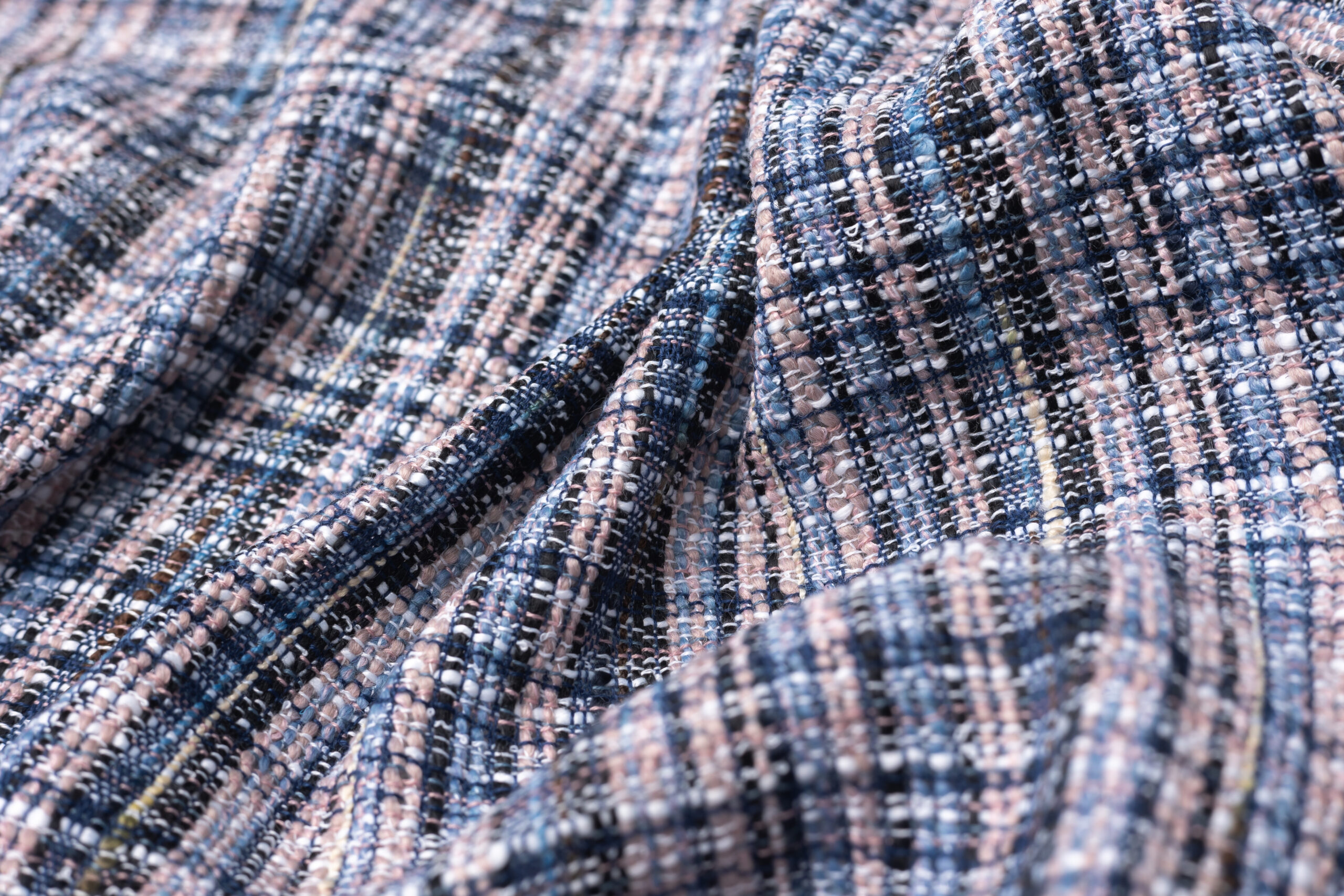
De tre lagene i en tweedbok som fungerer i praksis
Layer your book by how each cloth is supplied. The anchor layer is stock program fabric: qualities the mill weaves continuously, available with no minimum, shippable in days, the cloths you show to every customer because you can always deliver them. The program layer is running-but-made-to-order cloth: constructions the mill will weave on a 1,000-meter basis, in your choice of the mill’s existing colorways, where lead time is measured in weeks. The exclusive layer is custom development: your own composition, weight and colorway, built on the same looms but committed to your brand alone. A healthy book holds all three, roughly in a pyramid, wide at the stock layer and narrow at the top, because the stock layer is what keeps promises while the exclusive layer is what builds the brand’s reason to come to you. Our case study of a wholesaler who built a Tweed-linje med 12 SKU-er, helt og holdent fra 100 m lager shows the pyramid’s base doing all the early work.
Hva hvert lag koster deg og gir deg
The layers trade speed against margin in predictable ways. Stock anchors earn the least per meter but carry zero inventory risk beyond holding the swatch book itself, and they win you the customers who need cloth this month. Made-to-order program cloth earns more and binds customers to you across a season, at the cost of a 1,000-meter commitment per colorway and a development calendar. Exclusives earn the most and differentiate hardest, and they carry real risk: a development that misses the market is 1,000 meters of your brand’s capital learning a lesson. The practical rule is sequencing: prove demand on stock, promote proven colors into the program layer, and reserve exclusives for qualities with wholesale sell-through data behind them, which is exactly the two-phase logic in our casestudie: fra lagervare til tilpasset MOQ.

Slik leser du en stoffprøve som en innkjøper
Hver prøve i boken blir vurdert i hånden før den blir vurdert på papiret, så boken må bære de dataene hånden ikke kan. For hver kvalitet: registrer sammensetning med prosenter, vekt i gram per kvadratmeter, brukbar bredde og vevstrukturen i klart språk; fiberfakta og ullspesifikk terminologi er standardisert godt nok av bransjeorganisasjoner som Woolmark-selskapet that a book using their vocabulary travels across markets without translation. Note which layer each quality belongs to and what the reorder terms are, because your sales team needs to know instantly whether a customer’s quantity is deliverable. And keep the physical truth honest: swatches fade and oils from hands change hand feel, so set a refresh cycle, at minimum annually, and pull qualities that the mill has discontinued before they disappoint a customer. The difference between a swatch and a sample length matters here too; our guide to prøvemeter mot stoffprøve forklarer når et kort er nok, og når kunden trenger å legge et meter stoff mot kroppen.
Keeping the Book Aligned with the Mill’s Program
A swatch book is a promise that the mill’s program still contains what your book shows. Align it on a fixed cycle: quarterly, reconcile your book against the mill’s current stock list and running programs, mark additions and retirements, and update reorder terms where pricing or minimums have moved. When you visit or video-audit the mill, walk the book physically, confirm the anchors on shelves, and review which program qualities are closest to promotion into your exclusive layer. This is also the moment to negotiate: mills will often hold a running colorway for a wholesaler who commits to it across seasons, and those commitments are what turn a generic stock cloth into your program’s signature. The underlying supply logic, why a mill’s stock service exists and how it prices, sits inside the wider economics we covered in why tweed prices move.
Ofte stilte spørsmål
Hvilke lag består en tweed-prøvebok av?
Tre: lagerstoff tilgjengelig uten minimum, bestillingsprodusert programstoff ved forpliktelser på rundt 300 meter, og kundetilpassede eksklusive stoffer som er unike for merket ditt. En sunn ordrebok er en pyramide, bredest på lagernivået.
Hvilket ledd bør en ny grossist starte med?
Lager. Det leveres umiddelbart, innebærer ingen utviklingsrisiko og genererer utsalgsdataene som senere rettferdiggjør program- og eksklusive kampanjer.
Hvor ofte bør en prøvebok oppdateres?
At minimum annually for physical condition, and quarterly for program alignment: reconcile against the mill’s current stock list, retire discontinued qualities, and update reorder terms.
Hvilke data bør hver stoffprøve inneholde?
Sammensetningsprosenter, vekt i gram per kvadratmeter, brukbar bredde, vevstruktur, hvilket forsyningslag den hører til, og gjeldende vilkår for gjenbestilling.
Når er en stoffprøve ikke nok for en kunde?
Når avgjørelsen avhenger av fall, grep i stor skala eller farge over full bredde. Send prøve i meter; et kort viser overflaten, en meter viser stoffet.
Video: Stoffvalg fra designersiden
Bygger eller gjenoppbygger du et tweed-vareprøveprogram? Vår wholesaler program sender fargeprøvesett fra lageret med sjiktdataene utfylt, og kjører skreddersydd utvikling når avsetningen din forsvarer toppen av pyramiden.
Relatert lesing: Roll Ends and Remnant Stock: Buying Mill Leftovers Safely

Relaterte innsikter
Three Seasons Same Cloth: Yarn Shade Finish Locks
Running the same cloth for three seasons like a larger brand means locking yarn, shade,...
Free Swatches, Paid Yardage: What Sampling Should Cost
A free A4 swatch is the mill’s marketing. Paid sample yardage is a small production...
A 40 Metre Sample From the Same Beamed Warp: What to Ask the Mill
The 40 m is not something you take out of the lot; it is a...