

GOTS, GRS and RCS sit side by side on supplier letterheads and inside buyer checklists, and they get confused constantly because all three certify “something sustainable.” They certify different things: GOTS certifies organic fiber through processing into fabric, GRS certifies recycled content with strict chain-of-custody, RCS certifies recycled content with lighter tracking. Picking the wrong one wastes audit fees at best and puts an unsupported claim on the hangtag at worst. This guide is a decision tool: three schemes, one page, with the differences that change buying decisions, and the program-level view on our pagina duurzame en gecertificeerde stoffen.
The cleanest mental model: start from the claim your garment needs. “Organic” points to GOTS, whose production criteria from farm to fabric are described on de officiële website van Global Organic Textile Standard. “Recycled” points to GRS or RCS, both owned by Textile Exchange, whose chain-of-custody mechanics we covered when explaining how GRS-gecertificeerde garenspinnerijen.
De versie in één regel van elk schema
GOTS: the fiber is certified organic, and at least 70 percent organic content is required for label-grade certification, with environmental and social criteria through processing. GRS: the product contains verified recycled content, with a 50 percent threshold for the full GRS label, plus chemical and social requirements. RCS: recycled content verified from 5 percent upward with content tracking only, no processing criteria. The practical consequence: GRS is the claim-grade standard for a “made with recycled” hangtag; RCS proves content for B2B communication where a consumer-facing label is not needed.
| Dimensie | GOTS | GRS | RCS |
|---|---|---|---|
| Fiber base | Certified organic | Recycled | Recycled |
| Content threshold | 70 %+ biologisch voor labelkwaliteit | 50%+ for GRS label | 5%+ recycled content |
| Processing criteria | Environmental + social | Chemische + sociale eisen | None (content only) |
| Consumer label | Yes, grade-based | Yes | No (B2B use) |
| Typical use | Organic cotton programs | Recycled hangtag claims | Bewijs van inhoud over de toeleveringsketen |
Hoe u in vier vragen beslist
Vraag één: is de claim biologisch of gerecycled? Het zijn verschillende vezels en verschillende regelingen; een stof kan niet beide zijn, en gemengde verhalen vragen twee certificaten voor de twee componenten. Vraag twee: ziet de consument de claim? Een hangtag of claim op de verpakking duwt je naar GOTS of GRS; een interne inkoopdoelstelling kan met RCS leven. Vraag drie: welke drempel haalt jouw samenstelling? Onder 50 procent gerecyclede inhoud is GRS niet beschikbaar en is RCS het eerlijke plafond. Vraag vier: noemt je retailklant een regeling? Veel leveranciershandleidingen doen dat, en hun keuze gaat boven jouw voorkeur. Deze vier vragen beslechten ongeveer negen van de tien regelingbeslissingen die wij in de bemonsteringsfase zien.
Certificaatdocumentatie: wat gaat er mee met de order
Welke regeling ook van toepassing is, het bewijs is documentair: een scope-certificaat voor de faciliteit en transactiecertificaten voor de verkochte volumes, vermeld op je orderdocumenten. De verificatiegewoonten zijn dezelfde als beschreven in onze Gids voor de geldigheidsduur van het GRS-certificaat: check dates, check that the certified entity name matches your supplier, and match the certificate’s article scope to the fabric you are buying. For programs maintaining a certified line season over season, our gids voor onderhoud van een duurzame lijn behandelt de hernieuwingskalender en het ritme van claimbeoordelingen waarmee hangtags accuraat blijven.
Veelgemaakte mengfouten aan de inkooptafel
Three recurring errors. First, treating RCS as a consumer label: it is not designed for hangtag claims, and brands that print it as one walk into retailer audits unarmed. Second, assuming GOTS covers any “natural” fiber: it covers certified organic fiber, so conventional wool or linen cannot ride an organic claim. Third, stacking schemes on one garment in contradictory ways, such as a GOTS label plus a recycled claim on the same panel, which double-counts the same grams of fiber. Our gids voor duurzame stoffenlijn loopt de structuur op programmaniveau langs die deze botsingen voorkomt.
Video: onze reis naar een duurzaam programma
De video volgt gecertificeerde vezel van bron tot afgewerkte stof, de fysieke keten die de drie schema's op papier vastleggen.
Veelgestelde vragen
Kan een stof zowel GOTS als GRS hebben?
In principe wel, als onderdelen afzonderlijk gecertificeerd zijn en de inhoudsclaim precies is, maar de meeste programma's kiezen één hoofdclaim. Eén kledingstuk dubbel certificeren roept bij audits vragen op over dubbeltelling.
Is RCS voldoende voor een hangtag?
Nee. RCS is een norm voor het volgen van de materiaalinhoud bij zakelijke communicatie; claims over gerecycled materiaal richting de consument horen op een GRS-gecertificeerd product te staan.
Welk certificeringsschema vragen Europese retailers?
It depends on the claim: organic cotton programs name GOTS; recycled polyester and wool programs name GRS. Follow the customer’s vendor manual when it names one.
Wat kost certificering een koper?
Weverijen dragen de certificeringskosten en rekenen die door in de stof; kopers betalen in levertijd voor gecertificeerde input en in discipline bij de formulering van claims, meestal niet in aparte kosten.

Gerelateerde inzichten

Etiketten met vezelinhoud voor tweed en breigoed: samenstellingspercentages correct lezen
A composition label is a legal document, a marketing claim and a care instruction all...
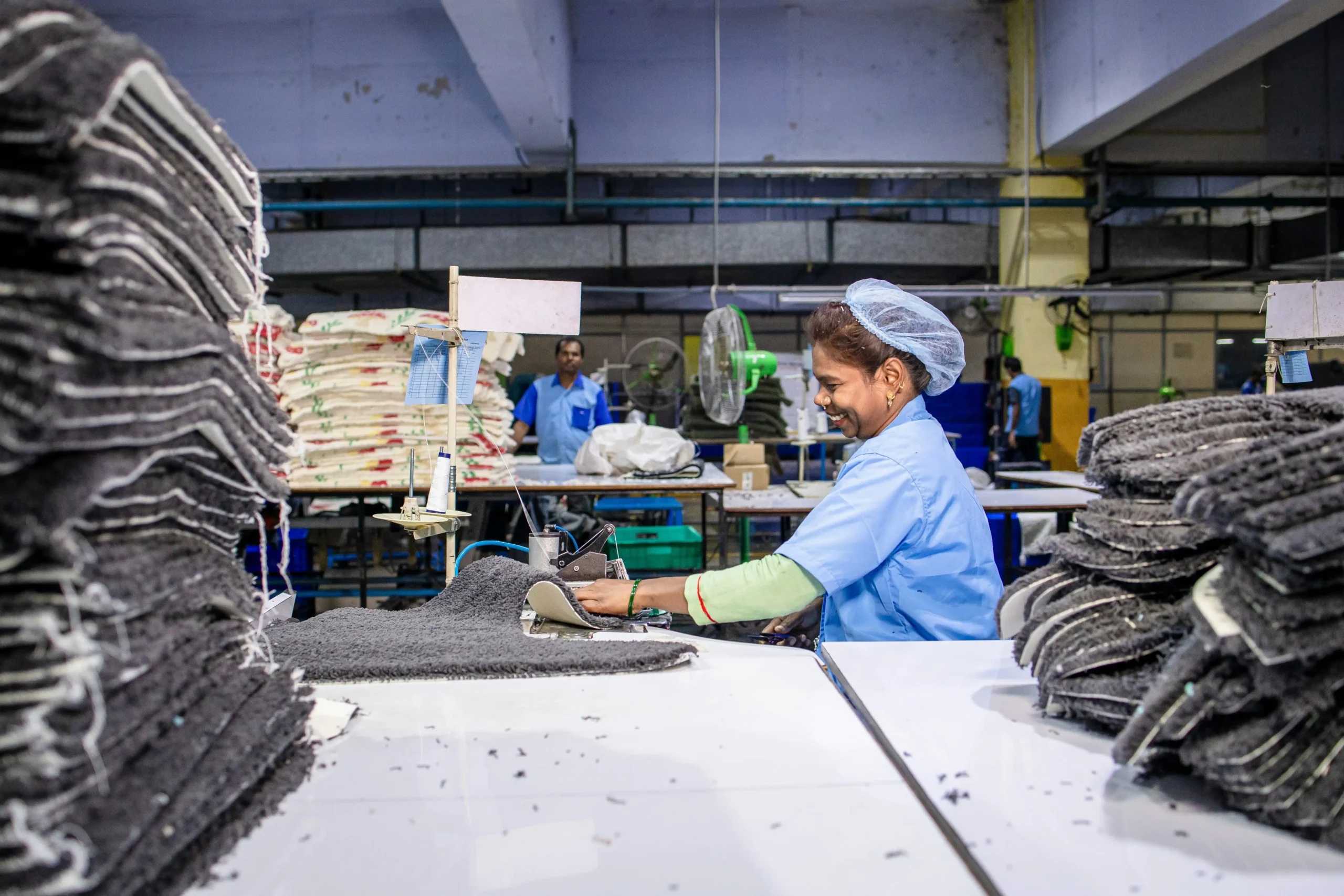
Fabric Waste in Cutting: How Much Your Collection Throws Away
Every collection throws away fabric twice: once in the cutting room, where markers never fit...

Lyocell Knit Blends: Sourcing, Blend Ratios and Verification for Buyers
Lyocell has moved from a niche fiber to a standard line item on knit buyers’...