

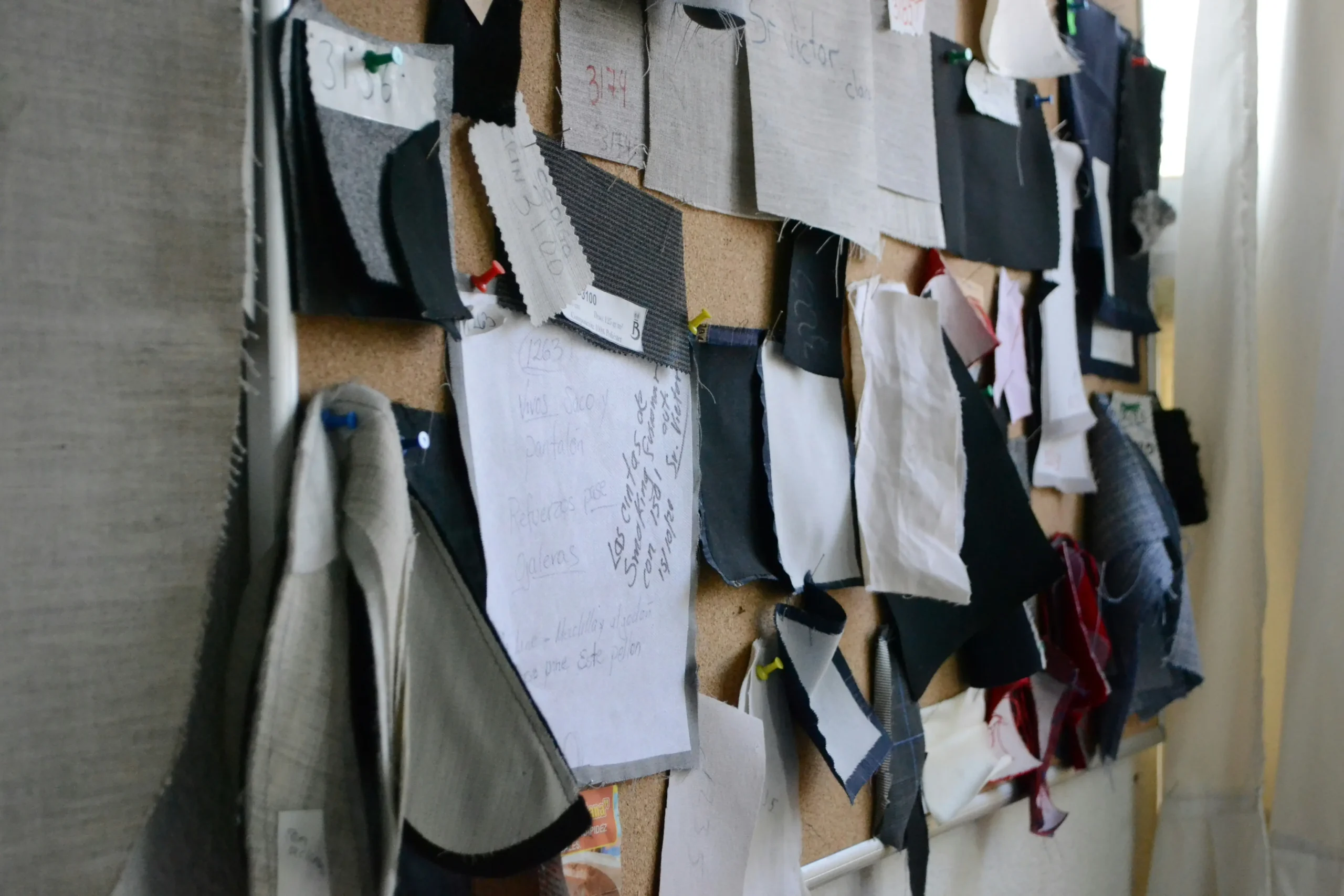
Het testen van tweedstalen is het eerste controlepunt dat inkopers moeten vastleggen voordat ze een leverancier, budget of productieslot goedkeuren. Je hebt elk vakje op je inkooplijst afgevinkt: FOB-prijzen vastgelegd, levertijden bevestigd, het monster goedgekeurd met een handfeel die luxe uitstraalt. Dan komt de bulkzending binnen en binnen drie dagen na het knippen ontdek je dat het pre-productiemonster niet overeenkwam met de massaproductie. Die order van $ 50K in Chanel-stijl tweed heeft nu pandelen die ongelijk krimpen, randen die rafelen onder het mes van de machine, en een bouclé-oppervlak dat pilt na één draagtest. Het ene punt dat niemand controleert - de structurele garenintegriteit - veroorzaakt de meeste klachten na levering.
Na het aansturen van leveranciersaudits in twaalf landen is duidelijk dat handfeel en kleurgoedkeuring alleen een merk niet beschermen. Het verschil tussen een staal dat presteert en een staal dat faalt, komt neer op vijf specifieke labtests die de meeste weverijen overslaan of vervalsen. Het gaat om dimensionale stabiliteit volgens ISO 6330, Martindale-pillingcijfers van minimaal klasse 3-4, lichtechtheid op de Blue Wool-schaal, treksterkte (grab) boven 200 N, en het rafelgedrag langs de rand op echte industriële snijmachines - niet met de handschaar.
Onze partnermolens in Wenzhou pakken deze zwakke punten aan door maatwerk gesponnen slub- en bouclégarens binnen onze keten bij de partnerweverij gesponnen, met tien procent meer twist per inch dan kant-en-klare mengsels. Dat houdt de vezels zo vast dat schoon snijden routine wordt in plaats van een gok. Het artikel hierna loopt elke faalvorm langs met de exacte pass/fail-drempels die een ervaren sourcingmanager zou moeten eisen voordat hij een tweedstaaltje voor productie goedkeurt.
De krimpval: waarom de grootte van het staal ertoe doet
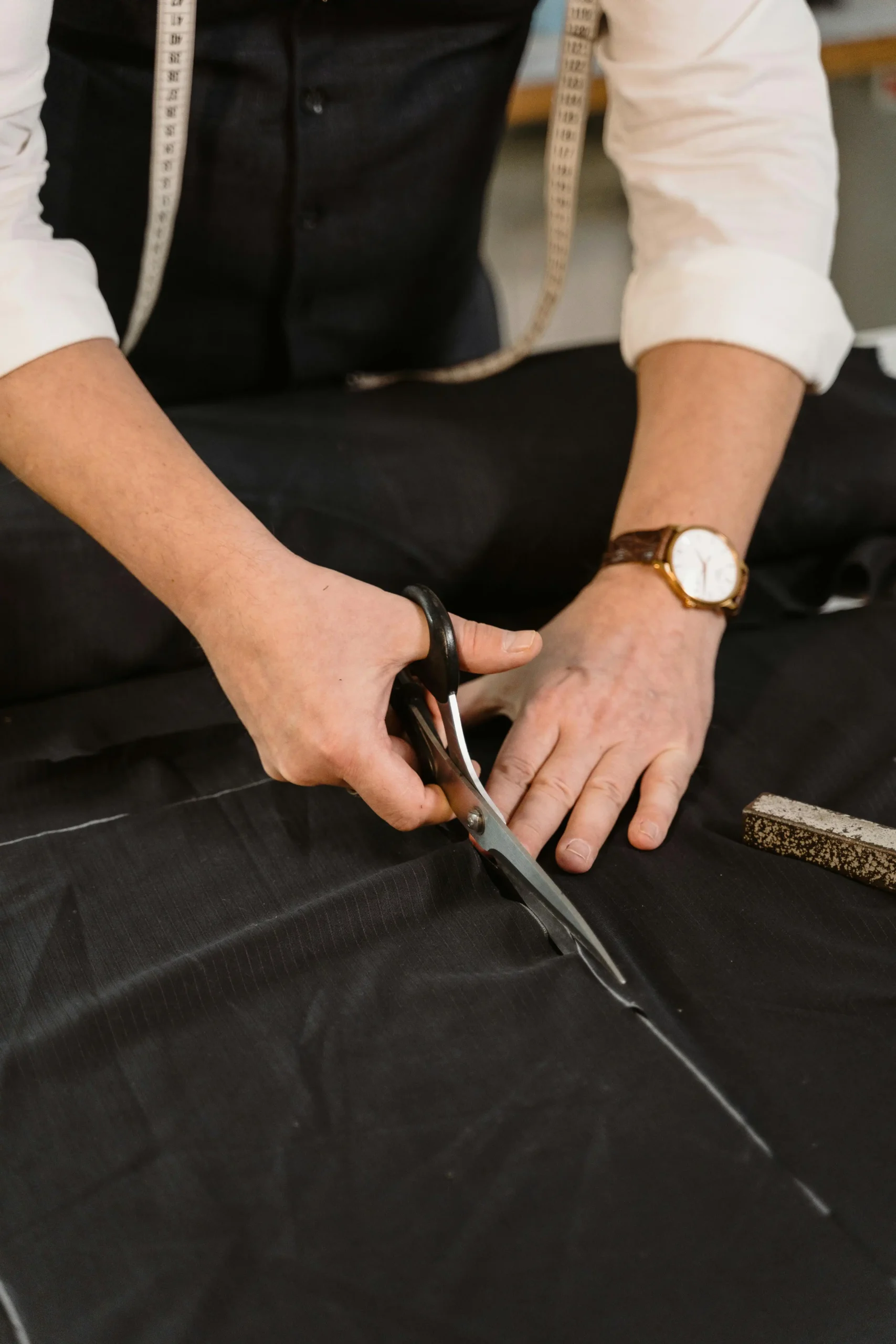
A 10x10cm swatch can hide up to 5% shrinkage — you won’t see it until your garment panels don’t match.
Here’s a scenario seen repeat across three continents: a designer approves a 15x15cm swatch, the bulk fabric arrives, the first garment is cut, and the sleeves come up 3cm short after the first wash. The mill blames ‘laundry variance.’ The brand eats the cost. The root cause? The swatch was pre-washed and pre-tenterframed to look stable, while the production roll relaxed differently after dyeing.
ISO 6330-protocol vs. sluiproutes bij Chinese weverijen
De internationale norm ISO 6330 schrijft drie volledige wascycli voor bij 40°C met mechanische beweging en trommeldroging. Dat simuleert wat een consument in zes maanden doet. Veel goedkope weverijen slaan dit volledig over – ze dopen een monster vijf minuten in water op kamertemperatuur en laten het plat aan de lucht drogen. Die test vangt misschien 1 % van de werkelijke krimp. We run three cycles at 40°C with mechanical action per ISO 6330, measuring warp and weft deviation after each cycle. Our threshold: under 3% total shrinkage in both directions. Anything higher means you’ll be redrafting patterns after production.
Demand the full wash report showing <2% warp and weft deviation from your supplier before approving any custom tweed program. If they can’t produce one, that’s your red flag.
Misleiding met productierollen versus voorgewassen stalen
A common trick: mills over-tenterframe or compact the yarns before cutting your approval sample, so the swatch appears dimensionally stable but relaxes post-bulk dyeing. You approve a perfect square; six weeks later, production panels shrink unevenly because the fabric wasn’t allowed to settle in its natural state.
Onze aanpak: we snijden stalen rechtstreeks uit niet-nabehandelde grijsgoedrollen, met dezelfde breedte- en spanningsinstellingen als je uiteindelijke order. Niet voorwassen, geen kunstmatige stabilisatie – wat je test, is precies wat er wordt verzonden. Vraag een foto naast elkaar aan waarop het rollnummer op de zelfkant naast je swatch-ID staat, zodat je de traceerbaarheid tot de productievoorraad kunt verifiëren.
| Monstergrootte | Het probleem | De grondoorzaak | De oplossing | Onze garantie |
|---|---|---|---|---|
| 10 cm x 10 cm | Verbergt de werkelijke krimping; patroondelen komen niet overeen na het wassen | Voorgewassen mini-monsters maskeren ontspanning na productie | Eis een productierolmonster (min. 30 cm x 30 cm) | Monsters gesneden uit echte grijze rollen; <3% krimp volgens ISO 6330 |
| Voorgewassen monster | Vervalst de maatvastheid; stof krimpt in bulk | Fabrieken rekken garens te veel op het spanraam voordat ze goedkeuringsmonsters snijden | Vraag om rolnummer op de zelfkant dat overeenkomt met monster-ID | Monsters van grijze rollen zonder nabehandeling met volledig wasrapport |
| Knip met handschaar | Verbergt rafelen aan de rand; rafelt uit op industriële snijmachines | Standaardgarens missen de twiststructuur voor zuiver snijden | Eis videobewijs van het monster op een industriële snijmachine (3000 tpm) | Eigen garens met 10% meer TPI; getest op echte productiesnijmachines |
| Enkelwas-test | Mist cumulatieve krimp na 3 cycli; kledingpanelen vervormen | Kamertemperatuur-dompeltest negeert de agitatie van de droogtrommel | Sta op een 3-cycli ISO 6330 wastest bij 40°C met mechanische werking | Volledig 3-cycli rapport met <2% afwijking in ketting en inslag |

De pilling-leugen: hoe u nep-bouclé-duurzaamheid herkent
25.000 Martindale-cycli is het minimum voor bouclé-duurzaamheid van kledingkwaliteit.
Boucléstoffen zien er duur uit aan de hanger. Maar na vijftig draagbeurten worden die kraag en die manchetten pluizig. De oorzaak is bijna altijd een lage Martindale-waarde — een cijfer dat de meeste weverijen niet delen tenzij u ernaar vraagt.
Martindale-waarden ontcijferd: waarom 25.000 cycli niet onderhandelbaar is
Het verschil tussen een bouclé van kwaliteit 2 die na twee stomerijbeurten pillt en een stof van kwaliteit 3-4 die seizoenen lang meegaat, ligt in de garenconstructie. Specifiek: twist per inch en vezellengte. Onze weverij bereikt consistente kwaliteit 3-4 door bouclé-effectgarens te spinnen van wolmengsels met lange stapelvezels van meer dan 85 mm, en ze vervolgens te vergrendelen met een extra 80 slagen per meter kerntwist. Die extra twist voorkomt dat oppervlaktelussen loskomen door wrijving.
Wanneer u een Martindale-rapport (ISO 12945-2) aanvraagt, let dan op zowel de kwaliteitsgraad als het aantal cycli. Een spinnerij dat ‘Graad 3’ rapporteert zonder het aantal cycli te specificeren, is mogelijk gestopt bij 5.000 cycli — niet de volledige 25.000 die vereist zijn voor kledingcertificering. Eis de volledige curve die de pluisvorming van 5.000 tot 25.000 cycli laat zien.
De Borsteltest: Het Simuleren van Slijtage door Passen in de Winkel
Standaard Martindale-testen wrijven vlak vilt tegen de stoffenkant — dit reproduceert niet wat er gebeurt wanneer de stoppels of ketting van een klant over een kraag of manchet schrapen. Daarom voeren wij naast de ISO-methode een eigen borsteltest uit. We gebruiken een rond nylon borstelkop onder constante druk gedurende exact vijf minuten en beoordelen vervolgens visueel de pluisvorming volgens dezelfde ISO-referentieschaal.
Randrafeling: De Stille Productiedoder
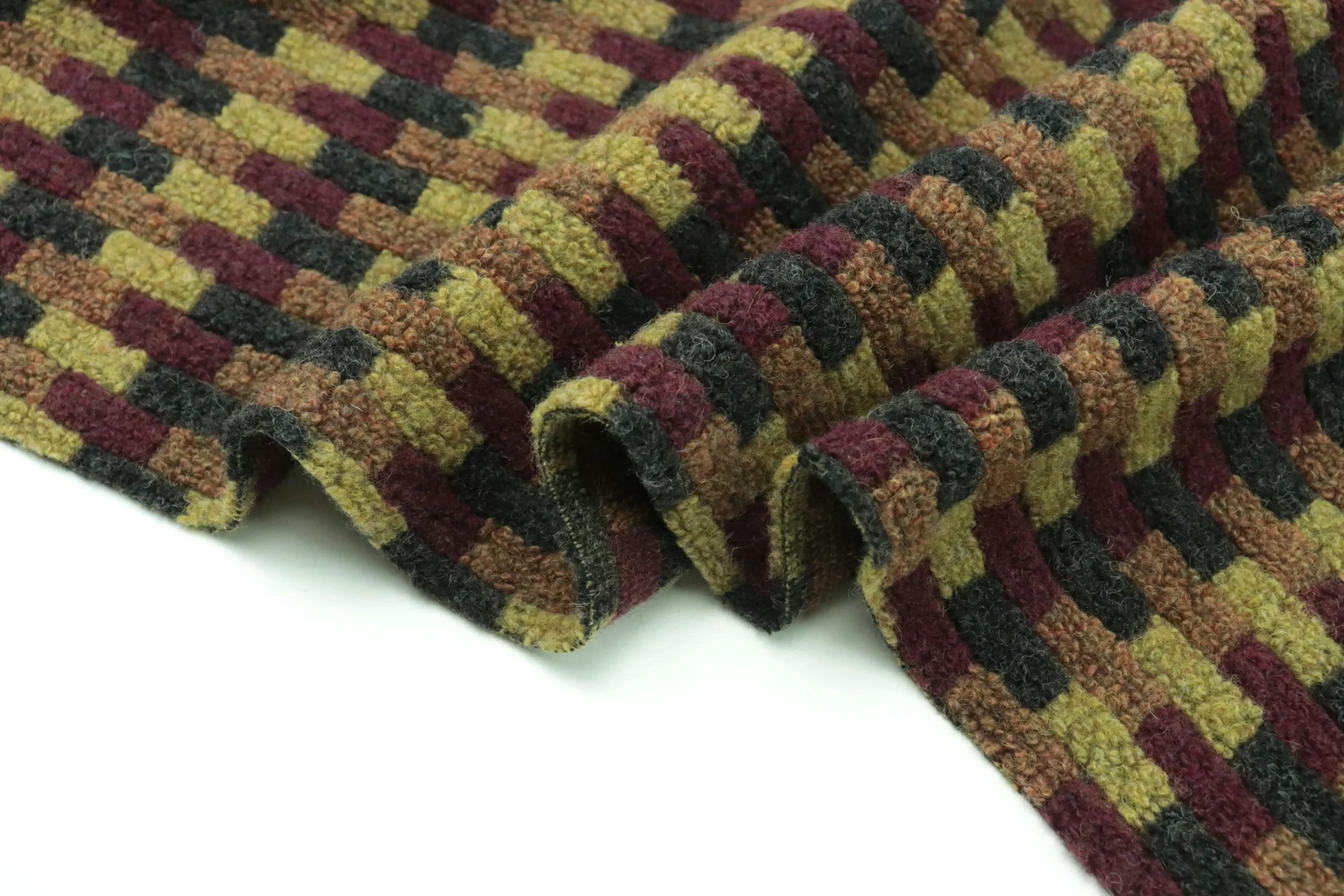
Standaard slubgarens zien er goed uit, maar rafelen bij productiesnijsnelheden.
Je draait een $50K tweedorder door de snijafdeling. Het Eastman-rechte mes raakt een bouclélus bij 3.000 toeren per minuut. Binnen enkele seconden schieten kettingdraden los langs de snijrand — een rafellijn die elk paneel in die stapel vernielt. Dat is geen snijprobleem. Dat is een garentwistprobleem.
Garentwisttechniek versus kant-en-klare slubmengsels
De meeste weverijen kopen hun slub- en bouclé-effectgarens bij handelsbedrijven. Die garens worden gesponnen voor visuele textuur — dik-dun-profielen, lushoogte, kleurcontrast — met bijna geen aandacht voor structurele samenhang tijdens hogesnelheidssnijden. Het geheim van de industrie: die garens hebben doorgaans 10-15% minder draaiingen per inch (TPI) dan een productieklare tweed vereist.
We custom-spin those same effect yarns inside our partner mills in Wenzhou. Our bouclé and slub yarns get exactly ten percent more TPI compared to regional averages. That microscopic increase locks the fibers together so the loop doesn’t snag and pull free when the blade passes through. The result: clean edges on stacks up to forty plies high.
Videobewijs van industriële snijmachine
Handschaartests vertellen je niets over echt productiegedrag. Een schaar snijdt één laag op lage snelheid zonder trillingen. Een industrieel verticaal heen-en-weer bewegend mes raakt meerdere kruisende weefpunten tegelijkertijd onder hitte en mechanische schok.
Dat is waarom we elk staal op een echte productiesnijmachine testen — dezelfde messnelheid, dezelfde stapelhoogte, dezelfde spanningsinstellingen die uw fabriek zal gebruiken. We documenteren de volledige snijsequentie op video en voegen deze toe aan uw staalrapport. Als er binnen tien seconden beeldmateriaal een kettingdraad meer dan 2 mm loskomt van de schone rand, keuren we die partij af voordat deze wordt verzonden.
Kleurechtheid tegen licht: waarom uw op maat gemaakte tweed vervaagt
Een Blue Wool-classificatie lager dan 4 betekent dat uw tweed binnen één verkoopseizoen zichtbaar zal vervagen.
Ik heb een $50,000 custom bouclé-programma zien worden afgevoerd omdat de donkerblauwe panelen op een etalagepop na drie maanden Florida-zonlicht paars werden. De koper keurde het staal alleen goed op basis van handgevoel en kleurovereenkomst. Ze hebben nooit om het ISO 105-B02-rapport gevraagd. Dat is een dure manier om te leren dat niet alle donkere kleurstoffen geschikt zijn voor UV-blootstelling.
Xenonbooglamp vs valkuilen bij zonlichtsimulatie
Natuurlijk zonlicht verschilt per breedtegraad, seizoen en samenstelling van het vensterglas. Een tweedstaal testen achter een kantoorraam in Oslo zegt niets over hoe het zich houdt op een rek in Dubai. De industriestandaard - ISO 105-B02 - gebruikt een xenonbooglamp in een gecontroleerde kamer (vaak een Q-SUN- of Atlas-machine) die het volledige uv-spectrum van de zomerzon rond het midden van de dag in Florida nabootst. Wij draaien onze kleurvastheidstests volgens ISO 105 B02 voor tweed in cycli van 20 uur, wat overeenkomt met ongeveer drie maanden onafgebroken blootstelling in een winkeletalage.
The trap: some mills substitute a carbon-arc lamp or simply leave fabric on a windowsill for two weeks and call it “lightfastness tested.” Carbon-arc lamps emit a different UV distribution than sunlight — they over-emit in short wavelengths and miss the longer UV-A that causes fading in disperse-dyed shades. A windowsill test is seasonal gambling. If your supplier cannot produce a Xenon-arc report with a specific Blue Wool scale grade, assume the fabric will fade.
Geheimen van verfchemie met hoge echtheid voor donkere tinten
Deep blacks, navy blues, and burgundy reds are the worst offenders for light fading. Standard reactive or disperse black dyes absorb UV energy intensely at the fiber surface, which breaks the chromophore bonds over time. The result: that rich charcoal turns brownish-gray, and your “Chanel-style” navy becomes a washed-out periwinkle.
Conclusie
Een proeflapje dat alleen op handgevoel slaagt, is een gok. De vijf gebreken die we behandelden – krimp, pilling, uitrafelende randen, kleurverlies door licht en onvoldoende treksterkte – zijn de verborgen defecten die van een order van $50K een afgekeurde zending maken. Elk ervan is te voorkomen met de juiste labdata.
- Vraag wasrapporten volgens ISO 6330 die minder dan drie procent krimp laten zien.
- Accepteer alleen Martindale-klasse drie-vier of hoger na 25.000 cycli.
- Vraag testresultaten van de xenonboogtest op Blue Wool-schaal vier-vijf of hoger.
Veelgestelde vragen
Wat zijn de 5 veelvoorkomende fouten bij het testen van tweedstalen?
De vijf afkeurpunten zijn krimp van meer dan 3 % na wassen, pilling onder 25.000 Martindale-cycli, rafelen van de rand tijdens het snijden, slechte lichtechtheid op de Blue Wool-schaal en een lage treksterkte in grab-tests. Eis deze vijf labrapporten voordat je bulkproductie goedkeurt.
Hoe test u de krimp van tweedstof?
Gebruik de ISO 6330 wastest van 3 cycli om te bevestigen dat de krimp onder 3 % blijft. Veel weverijen slaan dit over door voorgewassen ministalen te sturen die het werkelijke gedrag na productie verbergen. Test altijd op een staal dat van een productierol is geknipt, niet op een voorgewassen monster.
Hoeveel Martindale-cycli zijn nodig voor tweed?
Bouclé tweed van kledingkwaliteit vereist minimaal 25.000 Martindale-cycli om de pillingweerstand te halen. Onder die drempel vertoont de stof na een paar keer dragen zichtbare pluis. Vraag het ISO 12945-2-rapport op voordat je je aan een custom programma vastlegt.
Waarom rafelt tweedstof tijdens het snijden?
Slubgarens uit voorraad rafelen onder de snijsnelheid van productie omdat ze de eigen twist missen die nodig is voor een stabiele rand. Garens die op maat zijn gesponnen bij onze partnermolens voorkomen dit falen door hun ontwerp. Controleer randrafeling op een proeflap van een productierol voordat u opschaalt naar 1.000 m.
Hoe test u de lichtechtheid van tweed?
Gebruik de Xenonlamp-test volgens ISO 105-B02 en controleer de Blauwe Wol-schaalwaarde. Een waarde lager dan 4 betekent dat de stof merkbaar zal verkleuren in een winkelpresentatie. Sta op een minimale Blauwe Wol-schaalwaarde van 4 voor elke collectiestof.
Gerelateerde inzichten

Stofbreedte en zelfkantlijnen: snij-efficiëntie plannen voordat u tweed bestelt
Buyers compare tweed by weight, color and price, and then discover at the cutting table...
Reading Fabric Selvedge: Markings, Width and Quality Signals
The selvedge, the finished edge running along both sides of a fabric roll, is the...

Garennummers in tweed: wat 2/8 NM betekent voor greep, gewicht en kosten
Ask three suppliers to quote “a 400 gsm tweed for overcoats” and you will often...