

A single line covering weaving and finishing is not a price. It is a bundle, and two bundles cannot be compared until they are opened into the same shape. Ask each mill to itemise, then do the part most buyers skip: convert both itemised quotes onto one basis. The basis that matters is cost per usable metre of the same physical cloth, at the same quantity, on the same delivery term. That means converting a price per kilogram into a price per metre, converting a quoted width into usable width, converting billed metres into metres you can actually cut, and adding whatever one quote includes that the other excludes. Until those four conversions are done, the cheaper number is only the cheaper number.
An Itemised Quote Is Still Not Comparable
You already know to demand lines rather than a lump sum, and the reasons are covered in the line-by-line breakdown of a small-lot surcharge, where the argument is about which lines to demand and how to negotiate each kind. The trap that survives itemisation is that two mills itemise differently. One prices yarn in and weaving out. One prices greige and finishing separately. One quotes per metre at a billed width. One quotes per kilogram at a nominal width with the finish not included. Each quote is honest and none of them can be lined up against another without conversion, so the comparison you run in a spreadsheet is really a comparison of two accounting conventions.
Fix that by sending both mills the same line template with your enquiry. The template does not have to be complicated: yarn, warp preparation, weaving, dyeing, finishing, inspection, packing, fixed charges, and the delivery basis. Ask each mill to fill the rows it charges and write not applicable in the others. Two quotes returning the same rows can be compared in minutes. Two quotes in their own formats will take an afternoon and still be wrong.
Convert the Unit First: Metre, Kilogram, Yard
Wool and wool blends are often quoted by weight in some markets and by length in others, and the choice is not neutral. A price per kilogram quietly depends on the cloth’s mass, so a lighter version of the same construction will look cheaper per kilogram and cost the same or more per metre. To put both on a length basis you need the mass per square metre and the width. The weight of one running metre is the mass per square metre multiplied by the width in metres, divided by a thousand, which gives kilograms per metre. Multiply by the price per kilogram and you have a price per metre at that width.
Do the arithmetic twice if the quoted mass is a nominal figure, once at the nominal value and once at the lower end of the tolerance. A cloth sold at a nominal mass with a tolerance below it can meet its own specification while delivering less material per metre than the quote implied. This is the same question as billed weight against shipped weight, which has its own paperwork: two weights, two documents sets out why the number on the invoice and the number on the test sheet can legitimately differ, and why the basis has to be named before the argument starts. In the wool trade that basis is not a matter of local habit: test certificates are issued under IWTO methods by laboratories licensed by the Międzynarodowa Organizacja Włókiennicza, which is why a test report names its method and its condition while an invoice often names neither. Yards convert the obvious way, but do the conversion on the same width and the same quantity, or the rounding will hide a real difference.
The Width Trap: Billed Width and Usable Width
A quote per metre usually attaches to a width, and the width that gets billed is not always the width you can cut. A cloth may be sold at a nominal width measured edge to edge, while the usable width is narrower once the selvedge, the milling shrinkage and the edge condition are accounted for. Two mills quoting the same length at the same nominal width can deliver different cutting widths and therefore different numbers of garment pieces per metre. The per metre price is identical and the cost per piece is not.
Ask both mills for the usable width in writing, and ask what it means in their plant: measured after finishing and relaxation, or before. Then convert the price to a cost per usable metre by dividing the per metre price by the usable width and multiplying by a common width of your choosing, so both quotes are expressed at the same cutting width. The mill that quotes a wider billed width at a slightly higher price may still be cheaper per usable metre, and the mill that quotes narrower may be cheaper only in the column it chose to show you.
The Quantity Trap: Billed Metres and Usable Metres
A quote is for a number of metres, and the number in the invoice is rarely the number you can cut. Setting lengths woven to establish the sett may sit inside your billed quantity. Splice allowances and the cloth consumed at a join may be billed to you. Short lengths at the end of a run may be delivered as part of the total. On a long order these are rounding. On a 40 to 120 metre order they are the difference between a metre rate that works and one that does not.
Ask two questions of each mill. What is billed: greige, finished, or the length delivered? And what is inside that figure: setting length, splice allowance, inspection samples, the piece retained for testing? Then compute your usable metres, subtract the expected defect allowance you will not cut around, and divide the total of the quote by that figure. The quote with more billed extras can be the cheaper cloth and the more expensive garment, and only the division tells you which.
Yarn Ownership Changes What You Are Comparing
If one mill supplies the yarn inside its metre rate and the other expects you to supply it, the two quotes are for different businesses. A mill-supplied yarn quote carries the mill’s buying, its stock risk and its waste. A customer-supplied quote carries your yarn cost, your freight to the mill, your exposure to the yarn price and your loss on the waste, which the mill will still account for because it comes off your material. Neither is better, but you cannot compare the two totals until you add your own yarn cost and waste loss to the customer-supplied column.
Ask directly whether the yarn is included, whose lot it is, and how waste is treated when the customer supplies. A mill that answers that question in a sentence has done this before with small brands. A mill that has never been asked will answer with the metre rate again, which is its own information about how the order will go.
What the Word Finishing Is Hiding
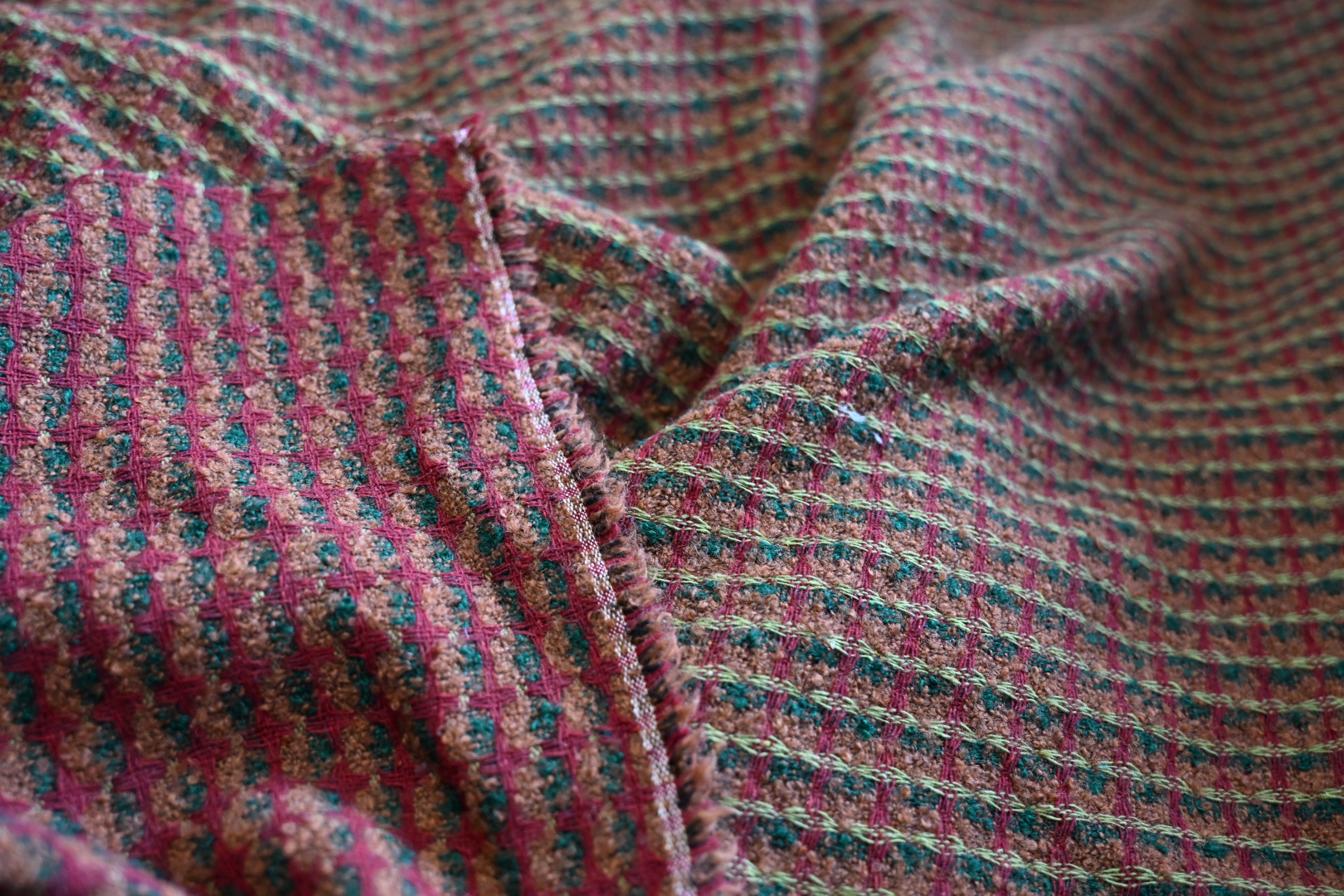
Two quotes can both say finishing and mean different amounts of work. One mill finishes in its own plant on a range it controls and can describe the recipe. Another sends the cloth to a partner plant, which is perfectly normal and adds a transfer, a second schedule and a second set of hands. The line item looks the same. The risk does not.
Ask where the finishing happens, whether the recipe has a revision number, and what the minimum run is on the finishing range. A small order can be finished on a range shared with other cloth, which is fine provided the batch is recorded so the sharing is visible if something goes wrong later. Ask as well who pays for a re-finish when the first pass is wrong: the mill, the finisher, or you. A quote that leaves that unanswered is not cheaper, it is merely incomplete.
Price Basis, Currency and Validity
Before the totals can be lined up, the basis has to match. A price ex works and a price free on board are not the same number, and a price valid for a fortnight and one valid for a quarter carry different risk even when they are equal. The comparison discipline for that layer already exists in fabric quote validity and wool price movement, which covers the four things that must match before two quotes are comparable and how to convert them to a landed figure. The short version here is that the comparison sheet needs a row for the delivery term, a row for the currency and the conversion date you used, and a row for the validity date written as a date rather than a duration.
The Sheet, in the Order You Fill It
Fix the physical specification first, because nothing else is comparable until both mills are quoting the same cloth: construction, mass per square metre with its tolerance, usable width, finish route and the colour count. Then fill the nine line rows from your own template, not from the mills’ formats. Then run the four conversions: unit to cost per metre, billed width to usable width, billed metres to usable metres, and included or excluded yarn and services. Then add the delivery basis and the validity date, and only then look at the totals.
The final column should read cost per usable metre of the agreed specification at your quantity and delivery term, and beside it the effective date of the comparison, because wool prices move and a quote is a position in time. When the column is built that way, the cheaper number is genuinely cheaper, and the conversation with the mill stops being about the headline rate and becomes about the one or two rows where the difference actually lives. That is a conversation a small brand can win, because it is specific, and it is the only version of the price argument that ends with a number you can put into a wholesale cost.

Powiązane spostrzeżenia
Shrink vs Stretch Returns: Separating Cloth From Care
A shrink-versus-stretch attribution is a controlled comparison that separates cloth change from care change on...

Lab Dip Close to Pantone: What to Sign Before Bulk Dye
A lab dip approval is a signed colour standard that freezes dye recipe, substrate, illuminant,...

June Show, September Delivery: Three Mill Gates You Must Lock
A mill gate is a signed freeze on samples, yarn and dye, or loom start...