
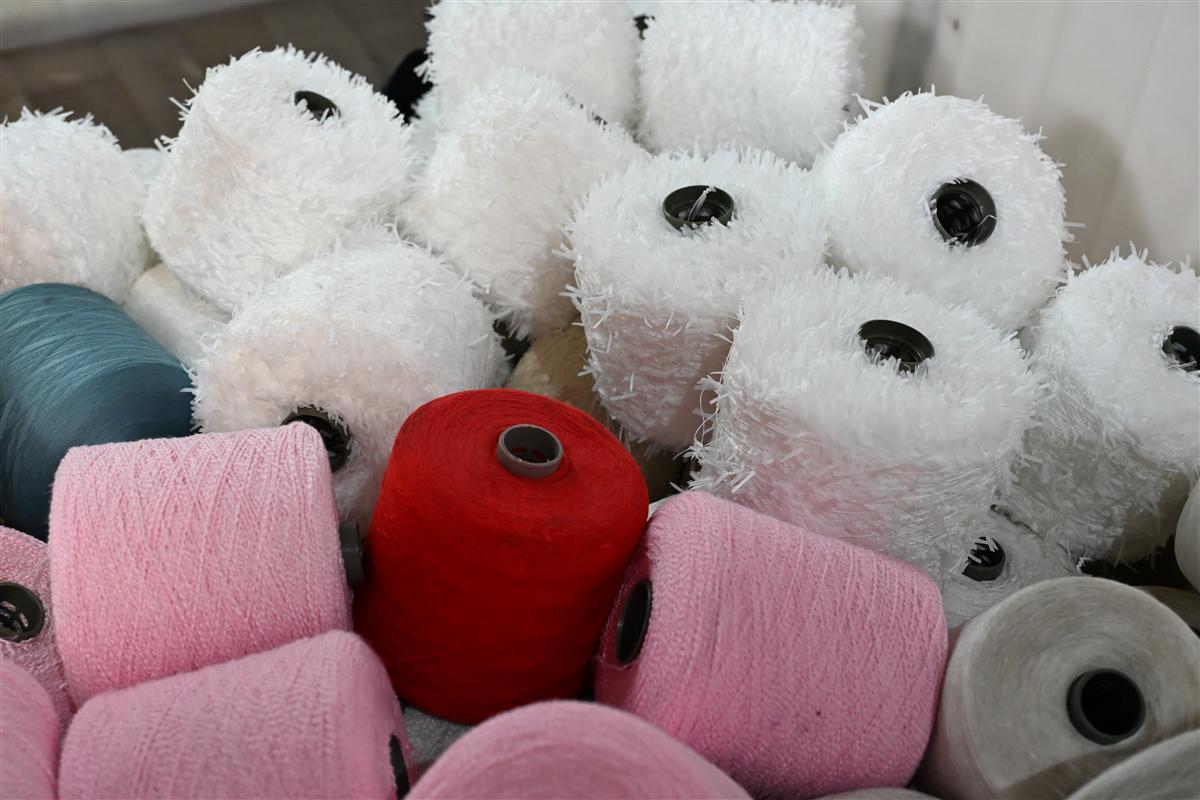
No. A pilling grade is a score for fibre entanglement on the surface, and the coat in your hand failed a different event. The report is evidence about another property, not a failed result on the snagging one. The harder problem sits in the snagging method a mill would write into the next order. According to ASTM D3939 (Mace), the method buyers name most often, the test is not satisfactory for acceptance testing of commercial shipments. ASTM D5362 (Bean Bag) says the opposite. The order needs a qualified test, a visual standard built from the returned coat, and a hardware test, not a copied grade floor.
Does Pilling Cover Snagging on a Boucle Coat?
What Separates a Pill From a Snag?
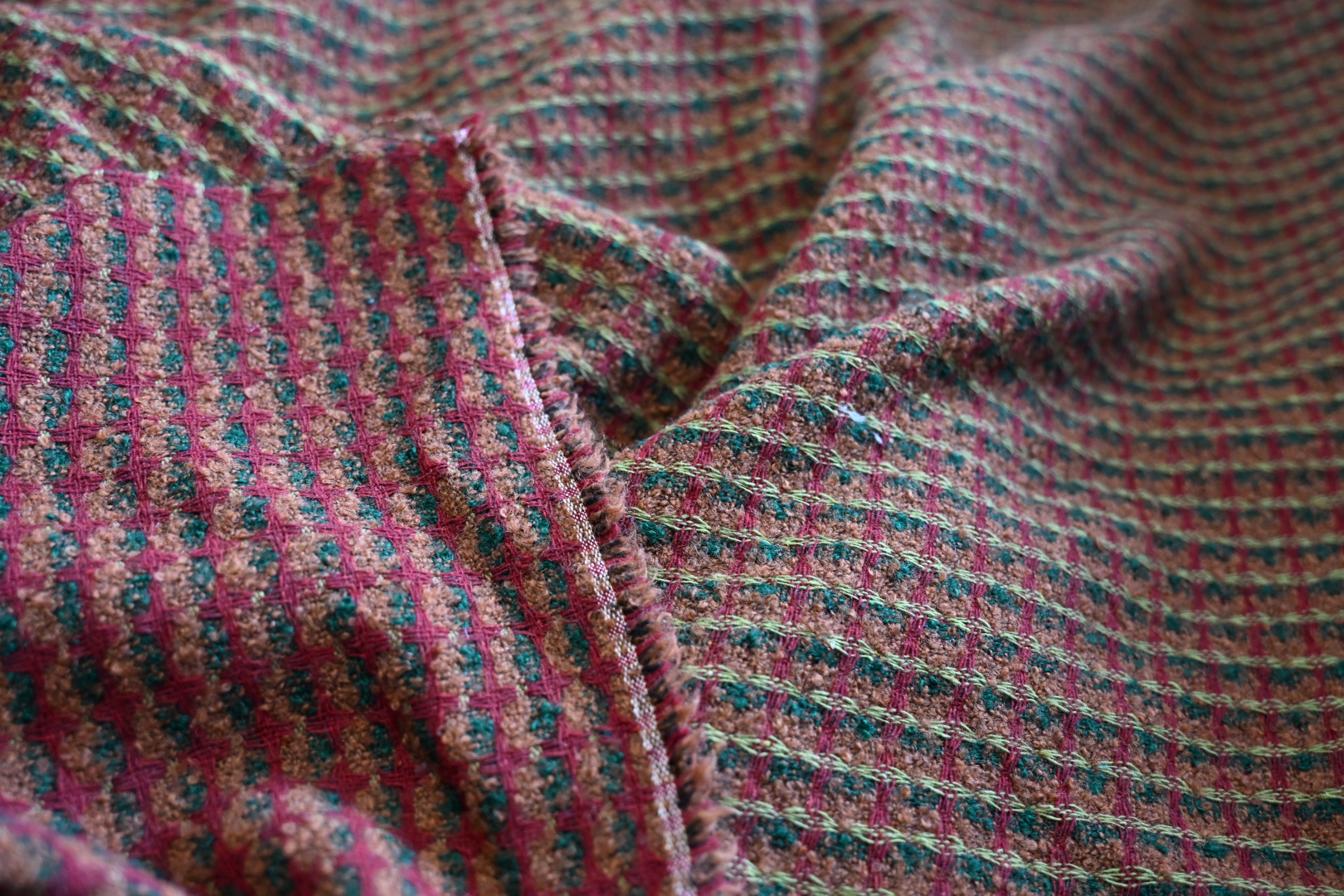
A pill is an entanglement of loose fibre sitting on the surface of the cloth, raised by abrasion and then rolled into a small ball. A snag is a yarn or a loop pulled out of the structure by a catch. According to James Heal, snagging differs from pilling by the inclusion of standard points fitted in the snag box or drum. A boucle is built from protruding loops, so the surface offers the exact feature a buckle or a webbing edge can hook. A failure inside one week is an acute catch, not a wear history. The pilling family, ISO 12945-1, ISO 12945-2 and ISO 12945-3, measures the abrasion route only, and none of the three introduces a point into the test chamber. In our data from the sample room, loop height is the figure recorded beside a boucle weave, because loop height decides what a buckle hooks, and the 2026 Mace revision cannot see the hook.
Which Report Do You Actually Hold?
A test report is a record of one property, and four questions decide whether the sheet in hand can carry a clause. The 2026 Mace revision and the 2018 Bean Bag edition rule opposite ways on acceptance.
| The question | Pilling, ISO 12945 | Snagging, ASTM D3939 (Mace) | Snagging, ASTM D5362 (Bean Bag) | What the order gains |
|---|---|---|---|---|
| What the instrument does | Tumbles cloth against cork | Holds cloth against steel points | Tumbles cloth with a spiked ball | Names the real event |
| What the report prints | A pilling grade | A snag count or a visual rating | A snag rating | Fixes the scale in use |
| Acceptance wording | Silent on acceptance | Not satisfactory for acceptance | May be used for acceptance | Decides the clause |
| Where the method stops | No points, so no catch | Poor between-laboratory precision | Bean bag excludes stiff cloth | Limits the claim |
Read the acceptance row first, because a method declared not satisfactory for acceptance cannot serve as the gate a shipment is rejected against.
What Does the Chosen Method Say About Its Own Use?
Why Is ASTM D3939 Not an Acceptance Test?
Acceptance testing is a decision to release or reject a shipment against a stated figure, and the Mace method declines that job in its own text. According to ASTM D3939/D3939M-26 (Mace), the 2026 revision, Section 5.1 states the method is not considered satisfactory for acceptance testing of commercial shipments of fabrics because the between-laboratory precision is poor. The precision statement comes from ASTM Section 15.1. Section 5.2 then names what the method serves: quality control and product comparisons between cloths. A clause written as a minimum grade converts a method with poor precision into a gate, and two laboratories running the same roll can report different results. In practice the figure becomes an argument rather than a decision. In our data the same cloth has come back with two counts from two runs on the same roll.
Why Does ASTM D5362 Say It May Be Used for Acceptance?
A precision statement is the part of a method which says what the method may be used for, and ASTM D5362-13(2018) answers the acceptance question in the opposite direction. Section 5.1 sits under the heading Acceptance Testing: this test method may be used for acceptance testing of commercial shipments of fabrics because the precision is acceptable. Two snagging methods, one scope word for word, two rulings on the same commercial job, and the difference comes from ASTM’s own precision work rather than from a buyer’s preference. The ASTM page records the 2018 edition as historical, with a later edition active, so the clause must name the edition as well as the designation. That contrast is the reason a buyer has to know which designation goes on the order; for example, a mill may quote the edition already in its file, and a clause citing a superseded text can be argued away.
What Does a Count-Only Snag Rating Leave Out?
Which Two Things Does Section 5.6 Set Aside?
A count-only rating is a score built from the number of snags the specimen shows, and Section 5.6 of ASTM D3939 (Mace) sets out what such a score cannot see. The section describes what the eye registers when a snag appears, and names two causes: the degree of colour contrast between the snag and the surrounding cloth, and the presence of long distortions or long protrusions. The limit follows in the standard’s own words: these conditions are not evaluated when snagging is rated solely on the number of snags. A dark boucle sits at the worst end of both causes. One pulled loop on a charcoal face reads as a pale speck against the ground, and the same loop stands up as a long protrusion. For example, a count records one unit, identical to a shallow catch on a pale cloth, and the 2026 text still leaves the choice of rating scale to the parties.
How Does the Returned Coat Become the Standard?
The same section tells the laboratory what to do instead: evaluate appearance visually, and set up a series of visual rating standards, which the standard notes are most advantageous when tested specimens correlate closely in appearance with fabrics from a wear test. Section 5.5 of the 2026 ASTM D3939 text (Mace) adds the commercial half. Garments of one fabric show a wider snagging spectrum after wear than replicate laboratory specimens, and the standard says the point should be considered when adopting levels of acceptability for any specification which includes snagging resistance. Read together, the two sections hand the level of acceptability to the buyer, measured against a worn garment. The coat which failed in a week is the garment to use, and for example a photograph, a signed reference and a written description convert the coat into the visual standard the next order can cite. Keep the settlement route separate: a re-test after the bulk lands answers a different question from which method the order should name.
Can Your Cloth Go on the Drum or Into the Bag?
Which Fabrics Do Both Methods Exclude?
A scope exclusion is a sentence inside a method which removes a class of cloth from the method entirely, and both snagging methods carry one. Section 1.2 of ASTM D3939 (Mace) excludes open construction fabrics, very heavy or very stiff fabrics which cannot be fitted tightly on the drum and felt pad, and tufted or nonwoven fabrics. Section 1.2 of ASTM D5362 excludes heavy or stiff fabrics which cannot be made into a cover for the bean bag. A dense wool coating boucle with a firm finish sits close to the line on both, and the 2026 text names no exemption for a looped surface. Section 1.3 of D3939 names the fallback: an alternative method such as BS 8479, the rotating chamber method. In practice the applicability statement belongs before the grade argument, and a laboratory should confirm the cloth fits the apparatus before quoting a figure. The collar edge check is the same question at a seam.
What Does the Cleaning State Do to the Grade?
A grade without a cleaning state is a number with no denominator. Section 5.4 of the 2026 ASTM D3939 text (Mace) notes that fabric snagging can be affected by laundering or drycleaning, and advises testing snagging resistance before and after the agreed cleaning cycle. Two consequences follow for the order. First, the clause must state the specimen state, or two figures cannot be compared across lots or across laboratories. Second, if the coat failed after a home wash, the post-cleaning figure carries the complaint, while the pre-cleaning figure may look acceptable on its own. In our data from goods-in, the state line is the row most often missing from a customer specification, and the row which decides which of two reports a buyer is holding. A wash protocol agreed before the bulk run is the cheapest way to fix the state in advance.
What Should the Order Carry Instead of a Grade Floor?
Which Six Lines Belong on the Order?
An order clause is a sentence the mill can price and a laboratory can run, and six lines cover the snagging question. First, the method and the edition, named by designation: ASTM D3939 (Mace) in its 2026 revision, or ASTM D5362 (Bean Bag) in the edition named. Second, the specimen state, before and after the agreed cleaning. Third, individual specimen ratings with photographs, not one average. Fourth, a visual standard agreed from the returned coat, signed, dated and held by both parties. Fifth, a hardware test on the intended construction, with the actual strap, buckle and seat-belt webbing edge, repeated rubbing and compression rather than a static rub. Sixth, the remedy attached to each failure mode, because a pill lifts off the surface while a pulled loop is a distorted yarn in a looped structure and needs a remade panel. For example, a strap test run on the bench answers a question the drum cannot.
What Do You Keep at Goods-In for the Next Claim?
Goods-in evidence is what makes a later claim arguable rather than a matter of memory, and the file is short. First, photograph the failed area with a scale in frame. Second, keep the coat, not a description of the coat. Third, record the roll or lot number, the shade and the date of wear. Fourth, keep the mill’s report and ask for the individual specimen ratings behind the average, with the laboratory photographs. Fifth, ask the mill to state in writing which method and which edition produced the figure, and whether ASTM D3939 (Mace) or D5362 (Bean Bag) is named. Then compare the returned coat against the retained visual standard on the same bench and in the same light, and write the difference down while both parties are present. For example, a claim without a dated photograph is a conversation; a release decision on three rolls out of ten is a separate question from the test basis, and the lot line covers that half.

Insights Relacionados
Is ‘Quality 6501’ a Specification? What to Get in Writing
“Quality 6501” is not a specification. A specification is a document with four parts: an...
A Child’s Wool Coat Flammability Test: Cloth or Garment?
A flammability answer for a child’s wool coat is a component list, not a cloth...
If You Own the Yarn, Who Carries the Weaving Loss?
When the yarn is yours, the mill’s invoice no longer carries the loss. Nothing is...