One ounce per square yard equals 33.906 grams per square meter, and that single number sits between most fabric orders and the supplier who quotes in the wrong unit. GSM (grams per square meter) is the international standard for fabric weight. Ounces per square yard (oz/yd²) still dominates US sourcing sheets, denim programs, and technical textile specs. Buyers who convert sloppily pay for it twice: once in the order quantity and once when the finished garment misses its weight target.
At Fursone, a woven tweed and knit fabric mill in Wenzhou running 300+ looms since 1995, every spec sheet carries GSM because our customers work in both systems. Our Chanel-style tweed line spans 280 to 550 GSM, and our woolen overcoat fabrics run to 800 GSM. This guide covers the conversion factor, the weight bands that matter for tweed and knit, and the conversion errors that inflate bulk orders.
The 33.906 Conversion Factor
The conversion works because both units measure the same thing: mass per unit area. One square yard is 0.83612736 square meters, and one avoirdupois ounce is 28.3495 grams. Divide the grams by the square meters and you get 33.906 grams per square meter for every ounce per square yard. Multiply an oz/yd² value by 33.906 to get GSM. Divide a GSM value by 33.906 to get oz/yd².
Use the table for the weights that actually appear in tweed and knit programs. The values are exact multiples of the factor, rounded to one decimal for spec-sheet use.
| oz/yd² | g/m² (GSM) | Common use |
|---|---|---|
| 4.0 | 135.6 | Lightweight blouse knit |
| 5.5 | 186.5 | T-shirt jersey |
| 7.0 | 237.3 | Midweight sweat knit |
| 10.0 | 339.1 | Light tweed jacket |
| 12.0 | 406.9 | Structured jacket tweed |
| 14.0 | 474.7 | Heavy bouclé coating |
| 18.0 | 610.3 | Overcoat fabric |
When a mill or lab measures fabric weight in the lab, the method follows a published standard. ASTM D3776, the standard test method for mass per unit area of fabric, defines how a full roll, a full-width sample, or a small swatch is weighed and converted. If your supplier cannot name the method behind the number, the number itself is worth less.
Weight Bands That Matter for Tweed and Knit
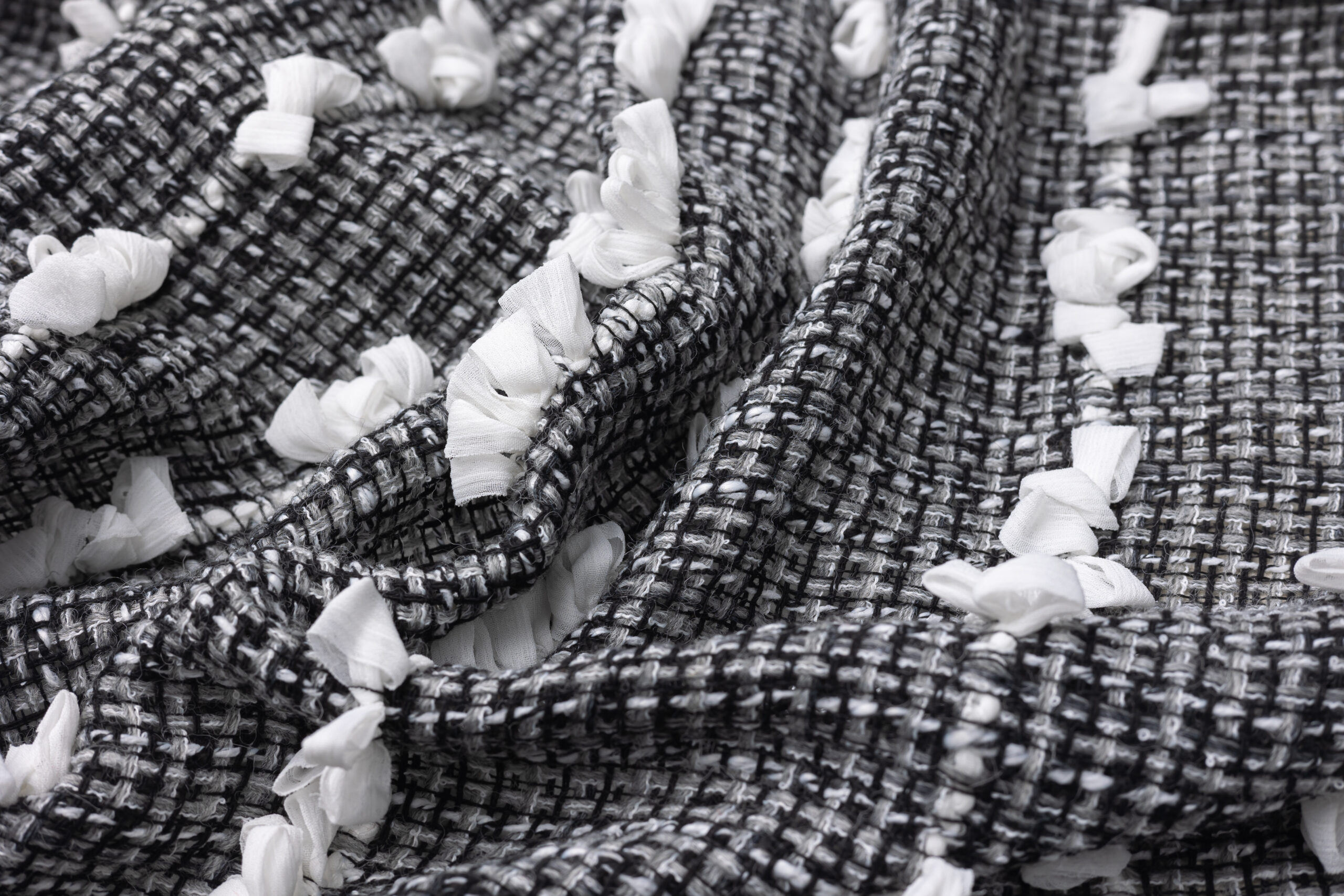
GSM only becomes useful when you map it to garment construction. Our production guidance splits tweed into four bands, and each band changes what the fabric can do on a garment. Lightweight runs 280-350 GSM for blazers and spring pieces. Midweight runs 350-450 GSM for structured jackets, which is where most Chanel-style programs sit. Heavyweight runs 450-550 GSM for winter coats. Overcoat grade runs 550-800 GSM for sustained cold, and at the top of that band the wool content needs to reach 60-80% to justify the weight. For the yarn specifications that determine fabric weight, see this yarn count guide covering Ne, Nm, and Tex.
The jacket band deserves the tightest specification. For blazers and suit jackets we target 280-450 GSM at 148-150 cm finished width, with pilling resistance held to ISO 12945-2 grade 3-4. If you source a jacket fabric by ounces instead of GSM, the equivalent span is 8.3 to 13.3 oz/yd². A 12 oz/yd² tweed, converted properly, is 406.9 g/m², squarely inside the structured jacket band. Our Коллекция твида в стиле Шанель covers the full 280-550 GSM span on the same production floor, so the conversion never forces a compromise between the spec and the loom.
The overcoat band needs the same discipline, and weight alone does not describe it. At 450-550 g/m², wool content of 30-50% produces a coat for mild winter climates. At 650-800 g/m², wool content of 60-80% or more produces a coat rated for sustained cold. A buyer who converts 18 oz/yd² (610 g/m²) into a spec without checking fiber content gets a coat that looks right on the spec sheet and performs wrong on the body. Weight and composition travel together on the spec sheet for a reason.
Why US Buyers Still Work in Ounces
Ounces per square yard persists in the US market for a practical reason: it is the unit printed on decades of denim, canvas, and upholstery spec sheets. A US garment factory that has cut 14 oz denim for ten years does not want to re-learn the number in GSM, and technical textile buyers in the US routinely spec performance knits in oz/yd². The metric system is standard almost everywhere else, so international mills quote GSM. A fabric buyer comparing a US warehouse quote with a Chinese mill quote is comparing two units for the same cloth, and the comparison only works if both sides convert correctly.
That is where the mistakes start. The two systems measure area weight, not linear weight. A common shortcut multiplies ounces by 28.35 and calls the result GSM, which ignores the square-yard-to-square-meter factor of 1.196. The shortcut understates true weight by about 16%, because 33.906 divided by 28.35 is 1.196. A mill quoting 12 oz/yd² fabric (406.9 g/m²) looks like 340 g/m² to a buyer using the shortcut, and the buyer orders a garment weight that the fabric cannot deliver.

Conversion Mistakes That Inflate Orders
- Multiplying ounces by 28.35. That gives grams per square yard, not grams per square meter. Use 33.906 and the number matches the mill’s spec sheet.
- Treating oz/yd as a weight. Some suppliers quote ounces per linear yard, which only makes sense with a stated width. Convert it to area weight before comparing with a GSM quote.
- Comparing prices without converting. A 10 oz/yd² fabric (339 g/m²) priced per yard is not comparable to a 350 g/m² fabric priced per meter until both are converted to cost per square meter.
- Ignoring finish shrinkage. Loose tweed weaves can lose 5-7% during pressing and finishing, which changes the delivered weight and the yardage your marker needs. Weight the finished cloth, not the greige.
- Planning on 100% utilization. Textured tweeds fray and ravel; cutting-floor losses can reach 10% on loose weaves, and we budget 80% material utilization on these fabrics. A weight error on top of that compounds quickly.
Each mistake shifts the delivered fabric weight by 5-20% in practice. On a 1,000-meter custom run at $6.00/m, a 16% weight error changes the value of the cloth by roughly $960, and the wrong garment weight does the real damage: a jacket that comes in 20% heavier than spec fails fit, hand, and possibly the buyer’s contract.
Running the Math on a 1,000-Meter Order
Work the conversion on a real program and the unit choice stops being abstract. Take a structured jacket tweed at 400 g/m² on a 150 cm roll. The roll area is 1,000 meters by 1.5 meters, or 1,500 square meters, and the fabric mass is 600 kilograms. The same cloth in ounces is 11.8 oz/yd². Every number a buyer, cutter, or freight forwarder touches derives from that mass, so a conversion error at the spec stage propagates through weight-based shipping quotes and customs declarations.
The reverse conversion is equally useful at the buying desk. A US supplier quotes 10 oz/yd² for a light jacket tweed. Divide 10 by 33.906 and the equivalent is 295 g/m², which sits at the bottom of the 280-350 g/m² lightweight band. That tells you immediately whether the cloth will hold a tailored shoulder or need a fusible interlining to give it body. Run the same check across the common bands and the picture is stable: 280 g/m² is 8.3 oz/yd², 350 g/m² is 10.3 oz/yd², 450 g/m² is 13.3 oz/yd², 550 g/m² is 16.2 oz/yd², and 800 g/m² is 23.6 oz/yd². Write both numbers on the spec sheet and the garment team stops guessing.
Now apply the shortcut error in reverse. A buyer sees 11.8 oz/yd² and multiplies by 28.35, concluding the fabric is 334 g/m². The mill produces 400 g/m² because that is what the loom and finishing program were set to. The delivered garments are 20% heavier than the buyer’s plan, the piece price breaks, and the 100-meter stock trial that was supposed to de-risk the program becomes the source of the problem. A гид по весу твида и GSM with the full band-to-garment mapping saves that round of grief, and our расчет метража для твидовой коллекции carries the consumption math including the 5-7% shrinkage allowance.
The arithmetic works the same on stock. Fursone holds 100-meter ready-stock rolls with the GSM already on the spec sheet, so a buyer can check the weight before cutting. Custom orders from 1,000 meters lock the GSM at sample stage, and the sample weight carries into bulk because the same looms and finishing program run the order.
What to Write in the RFQ
Put three numbers in the RFQ and the conversion ambiguity disappears. First, the target weight in GSM with a tolerance, typically ±5%. Second, the same weight in oz/yd² if your team works in ounces, so the mill can confirm both figures agree. Third, the measurement point: finished, post-finishing weight, measured per ASTM D3776, not greige weight off the loom.
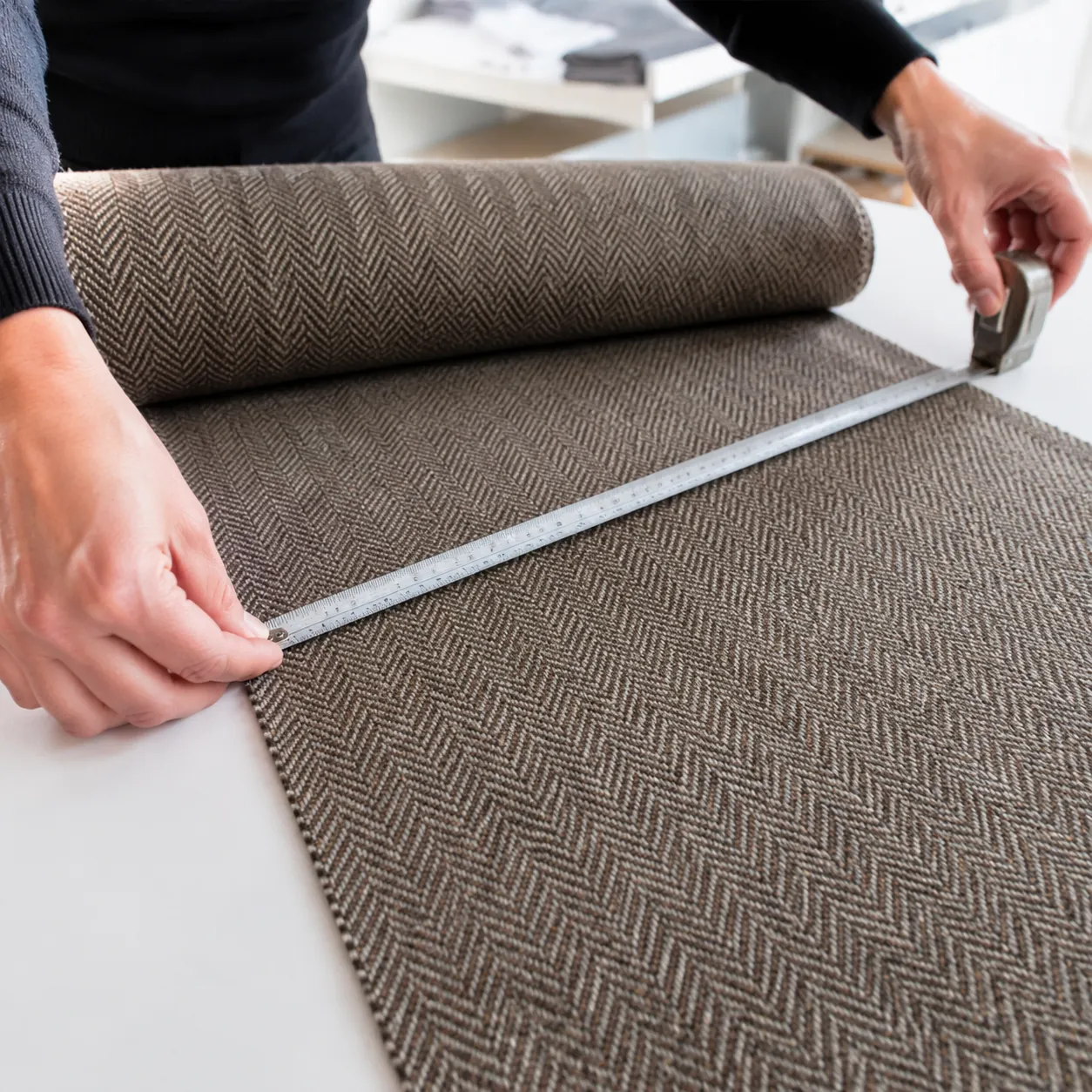
Add the width next to the weight, because GSM is meaningless without area. A 400 g/m² tweed on 148 cm and the same GSM on 152 cm cost differently per linear meter. State the finished width in centimeters and confirm it on the sample. When you evaluate the sample, cut a 1-meter piece at production width, weigh it on a gram scale, divide by the area, and compare with the spec. The check takes five minutes and catches most supplier-side rounding.
Two more lines on the spec sheet protect the weight claim. Ask for the tolerance the mill actually holds across a production lot, and ask which stage the number refers to. A mill that quotes greige weight will deliver a lighter finished roll after washing, decatizing, and pressing, and the 5-7% shrinkage on loose tweed weaves lands on your garment weight, not the mill’s. Weight verification at inspection is part of the standard gate we run on bulk deliveries, and the same check catches a supplier that shifts weight between sample and bulk.
For buyers testing a weight before committing to custom production, покупка твидовой ткани на ярды. from ready stock is the lower-risk route, because the delivered roll is measurable against the spec before any bulk commitment.
Часто задаваемые вопросы
How do you convert oz/yd² to GSM?
Multiply the ounce value by 33.906. For example, 12 oz/yd² equals 406.9 g/m². To convert GSM to oz/yd², divide by 33.906.
What is 5.5 oz in GSM?
5.5 oz/yd² converts to 186.5 g/m², a typical t-shirt jersey weight.
What GSM is 12 oz fabric?
12 oz/yd² is 406.9 g/m², which sits in the structured jacket band for tweed at 350-450 GSM.
Does higher GSM mean better fabric?
Higher GSM means more weight per area, not better quality. The right GSM depends on the garment: 280-350 for lightweight blazers, 350-450 for structured jackets, 450-800 for overcoats.
Why do mills quote GSM instead of ounces?
GSM is the international standard and works without a width assumption. Ounces per square yard is still common in the US, so a conversion factor of 33.906 is the bridge between the two systems.
Заключение
The gsm to oz conversion is one number, 33.906, and the discipline around it decides whether your order arrives at the weight you designed. Convert with the correct factor, specify finished weight with a tolerance, and verify the sample on a gram scale before bulk. The weight bands for tweed and knit give you the map: 280-350 for light blazers, 350-450 for structured jackets, 450-800 for coats.
If you are planning a tweed or knit program and want a spec sheet with GSM, width, composition, and pilling grade before you commit, send your tech pack to Fursone. Samples return within 7 days from our Wenzhou floor. Запросить расчёт стоимости with your target weight in either unit, and we will confirm the loom setup and finishing program against it.

Связанные статьи
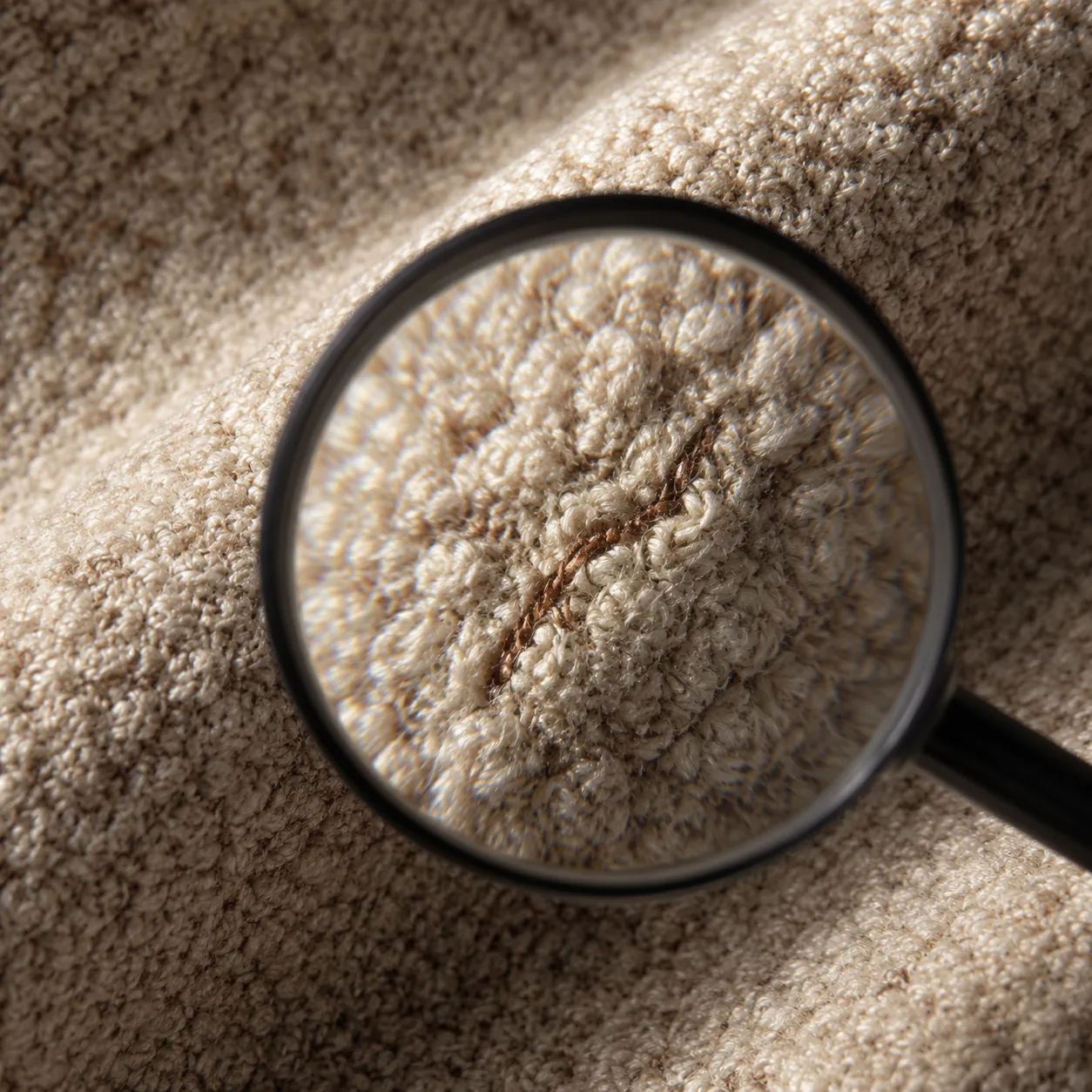
How to Identify Wool vs Polyester Tweed: Burn Test and Microscopy
How to tell wool from polyester tweed: burn test, microscopy, and dissolution methods for fabric...

Boucle for Coats vs Jackets: GSM and Loop Density Guide
Choosing boucle fabric for a coat versus a jacket is not just a matter of...
Stretch in Wool Tweed: How Much Give Does Tailoring Fabric Actually Have?
Buyers often ask how much stretch wool tweed has before they commit to a bulk...