

Betalningsvillkor med kinesiska tygväverier handlar i grunden om tre strukturer: T/T-banköverföring med uppdelad deposition, en oåterkallelig remburs enligt ICC-regler eller plattformsdeposition som Trade Assurance. Vilken som skyddar dig beror mindre på själva metoden än på när pengarna byter händer i förhållande till inspektion, leverans och dokument.
Den här guiden förklarar hur varje struktur faktiskt fungerar vid tygbeställningar, var pengarisken ligger i var och en, och vad du bör förhandla om skriftligt innan produktionen startar.
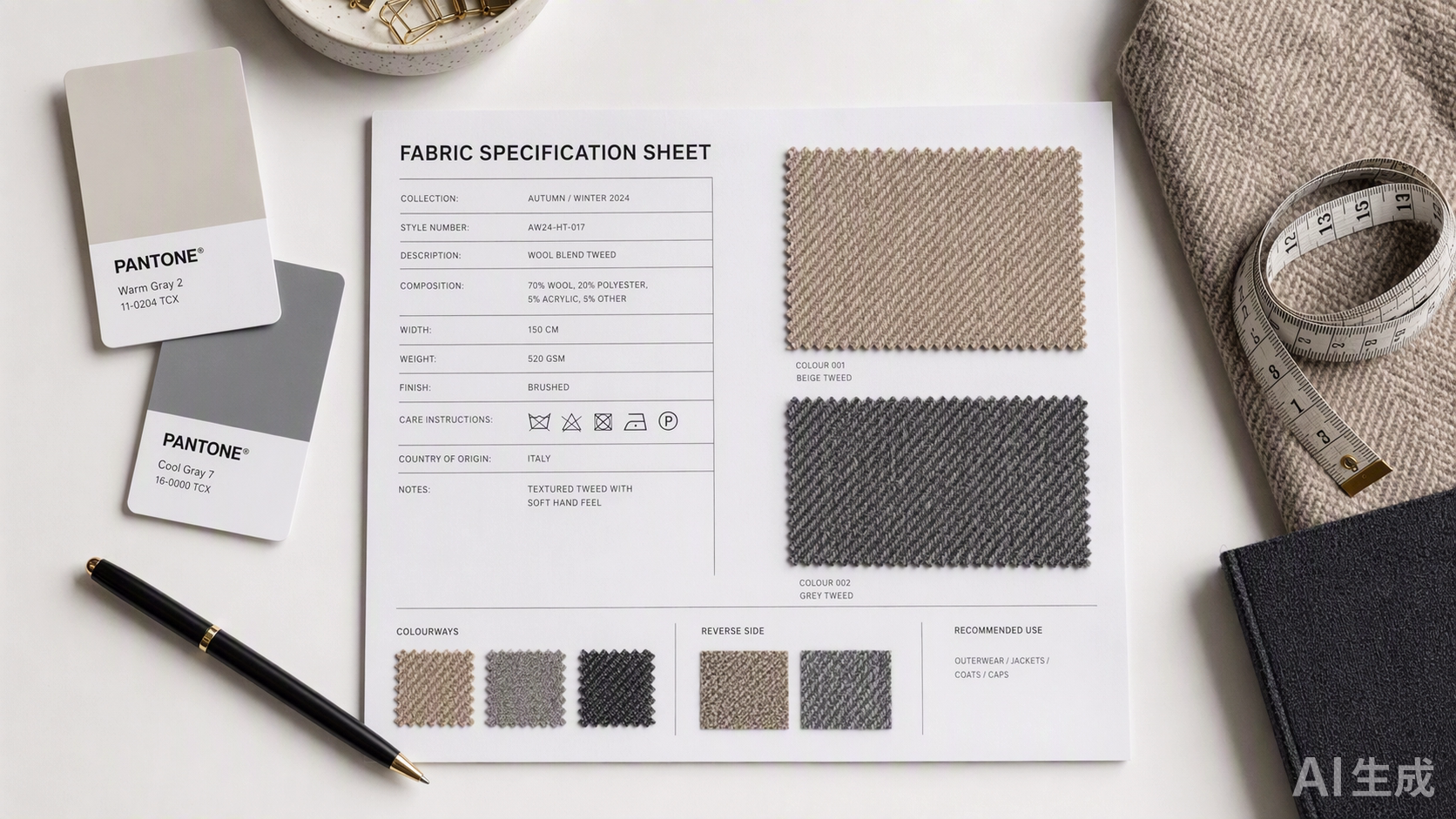
T/T med delad deposition: standard för de flesta tygordrar
betalningsstruktur och tidpunkt för valuta
Telegraphic transfer is the workhorse of fabric trade because it is fast and cheap on both sides. The typical structure is a deposit of around 30 percent against order confirmation, with the 70 percent balance paid before shipment, often against a copy of the bill of lading for established buyers. The deposit is not a trust exercise; it covers the mill’s committed yarn and loom position, which on custom constructions is real money the mill cannot recover if the order cancels. For buyers the balance timing is the actual control point: pay the balance only after the inspection outcome you agreed in the purchase order exists. If your PO references the 4-point method with an acceptance ceiling, the structure we describe in our 4-punkts inspektionsguide, then “balance due after inspection report” is a clause you can actually enforce. A mill that resists tying the balance to an inspection record is telling you something about the record.
Remitterat brev: när bankavgiften är värd sitt pris
An irrevocable letter of credit substitutes the issuing bank’s payment promise for the buyer’s, governed in nearly all cases by the ICC’s Uniform Customs and Practice, currently UCP 600, maintained by the Internationella handelskammarens avdelning för handelsfinansiering. The mill gets paid when it presents compliant documents, invoice, packing list, bill of lading, inspection certificate if required; the buyer gets the documents only after payment or acceptance. The protection is real but conditional: L/C terms punish imprecision, a one-day late shipment or a misspelled consignee can trigger a discrepancy that stalls payment and releases nobody’s risk. Bank charges on both sides plus the amendment cycle make L/Cs expensive for orders under roughly USD 20,000 to 30,000 in fabric value, which is why most repeat fabric programs above that threshold consider it and most below it do not. If you go the L/C route, insist the credit names the inspection certificate as a required document and matches your PO’s quality clauses word for word, because the bank checks documents, never fabric.

Plattformens escrow: vad Trade Assurance faktiskt täcker
Trade Assurance and similar escrow services hold payment on a platform until delivery conditions are met, then release it. The useful part is the dispute channel with defined evidence rules, shipping date and documented quality terms, which gives first-time buyers a structured path that bare T/T does not. The limits matter just as much. Coverage follows what you wrote into the platform order: if the quality clause says nothing about defect limits or shade tolerance, the dispute has nothing to measure against. Escrow also does not replace inspection; it only decides who keeps the money after a disagreement, and a disagreement with a mill you plan to reorder from is expensive in relationship terms even when you win it. Our practice with first-time customers mirrors this: small trial orders through the buyer’s preferred structure, sampling at our standard 7-day cycle, and the quality clauses written identically into the PO and whatever payment vehicle carries the order.
Hur termer bör kopplas till produktionsverkligheten
Betalningsstrukturer fallerar när de förhandlas separat från produktionen. Tre kopplingar är särskilt viktiga just för tyg. För det första provtagning: provavgifter och kurirkostnader görs oftast upp före bulkinsättningen, och en tydlig skriftlig överenskommelse om provavgifterna räknas av mot bulkordern tar bort en vanlig dispyt vid första ordern. För det andra risk för nyans och färgparti: om ditt program återbeställer över färgpartier bör inköpsordern ange nyansreferensen och hur avvikelser bedöms, mekaniken bakom konsekvens beskrivs i vår guide för färgpartiers konsistens, så har en saldotvist ett riktmärke istället för åsikter. För det tredje, partiacceptans: kombinera saldoklausulen med en provtagningsplan för leveransen, AQL-metoden i vår AQL-provtagningsguide, så prissätts delvisa godkännandeutfall som kredit eller ersättning innan tvisten uppstår.
Vilken struktur för vilken order
| Ordersituation | Typisk struktur | Varför |
|---|---|---|
| Första provorder under 3 000 meter | Plattformsdeposition eller 30/70 T/T | Små värden absorberar inte L/C-kostnader; deposition lägger till bevisregler för främlingar |
| Återkommande program, etablerad relation | 30 procents deposition, saldo mot B/L-kopia | Förtroendet är redan inprisat; dokumentöverlämningen bär risken |
| Ny relation över 30 000 USD | Oåterkallelig sightremburs, besiktningsintyg krävs | Bankförpliktelse ersätter motparts förtroende till en kostnad av cirka 1–3 procent |
| Kundanpassad konstruktion, utveckling med MOQ på 300 m | T/T med deposition mot bekräftat motprov | Åtagande om garnposition gör depositionen legitim; godkännande av motprov styr produktionen |
Siffrorna i tabellen är marknadskonventioner, inte fasta regler, och varje klausul är förhandlingsbar. Det som inte är förhandlingsbart är ordningen: provgodkännande före deposition, besiktningsrapport före slutfaktura, dokument före slutlig frisläppning. Väverier med verklig produktionskontroll, inklusive våra partnerverkstäder, accepterar den ordningen utan invändningar eftersom underlaget finns; vi har drivit beredskapslagerprogram på över 100 000 meter och kundanpassad utveckling från vår verksamhet i Wenzhou sedan 2020, och båda uppläggen står och faller med dokumenterade överlämningar. Om ert program är i förhandlingsfasen, vår sida för skräddarsydd tillverkningstjänst beskriver orderstrukturen från första tygprov till bulk, och en quote request kommer att återkomma med villkoren skriftligen mot era faktiska kvantiteter.
Vanliga frågor
Vilken depositionsfördelning är normal för tygorder från kinesiska fabriker?
Cirka 30 procent i deposition och 70 procent saldo före leverans är den vanliga konventionen, där saldot ofta frigörs mot en kopia av konossementet när en relation har etablerats.
När är en remburs värd det för tyg?
Generellt för förstagångsmotparter och ordervärden över cirka 20 000–30 000 USD, där bankavgifterna är små i förhållande till exponeringen och rembursen anger ett besiktningsintyg som obligatoriskt dokument.
Ersätter Trade Assurance kvalitetsbesiktning?
Nej. Escrow avgör vem som får behålla pengarna efter en tvist baserat på vad ordern säger; om defektgränser och nyanstolerans inte är inskrivna finns det inget att mäta mot.
När ska saldot betalas?
Efter att det överenskomna inspektionsresultatet föreligger, vanligtvis en 4-punkts- eller AQL-baserad rapport på det packade partiet, aldrig enbart på fabrikens ord.

Relaterade insikter
Payment Terms for Fabric Orders: Deposits, Balance and Letters of Credit
Payment terms are where a fabric order’s risk is actually allocated. A deposit protects the...
Insuring Fabric Shipments: What Cover Matches Which Risk
Fabric insurance is one of those line items that nobody reads until the day a...

Container Arrival Checks: The First 48 Hours After a Fabric Delivery
The most expensive hour in an import program is the one right after the container...