

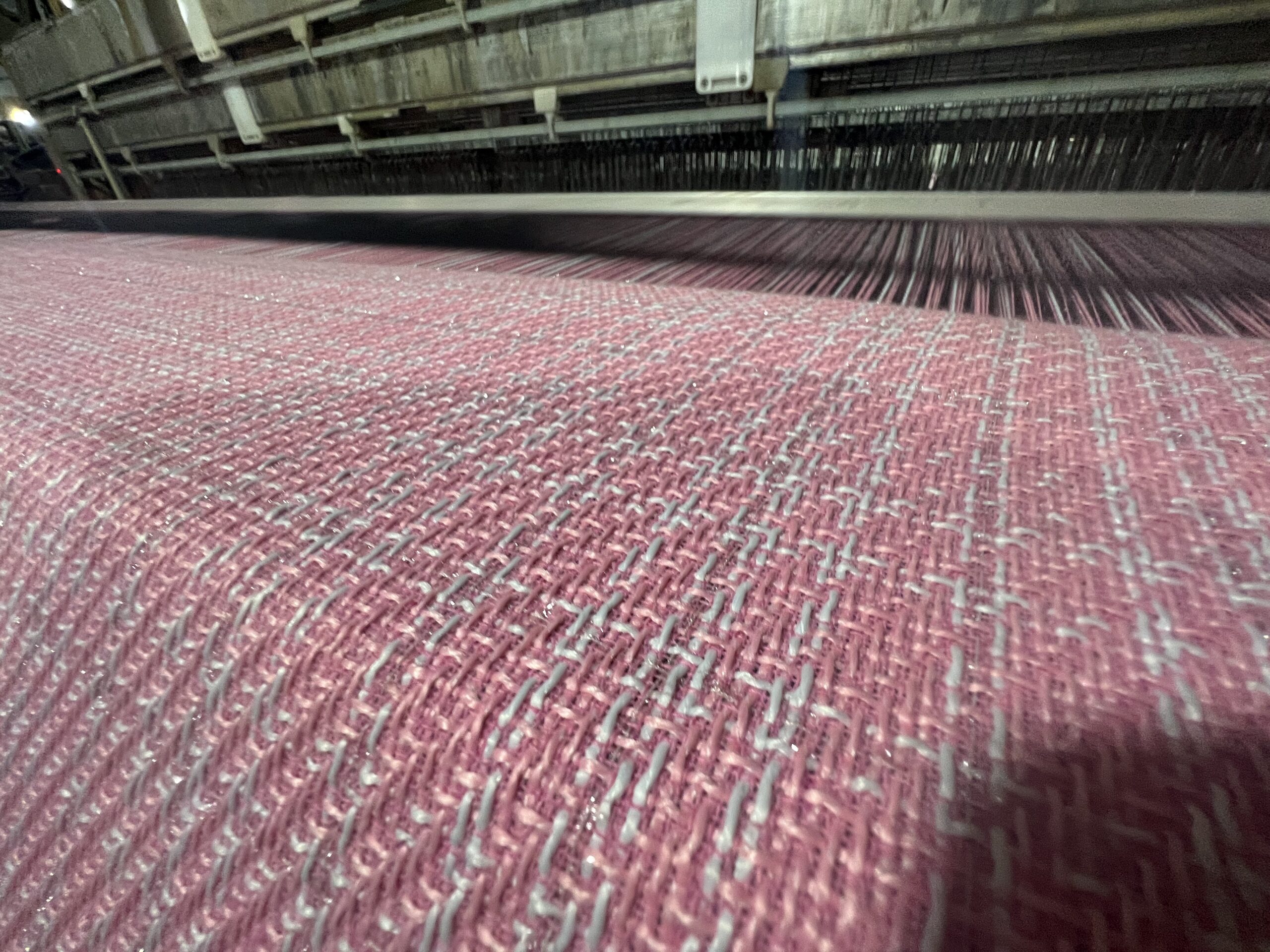
Every mill has a corner of short rolls: the last fifteen metres of a dye lot, a cancelled order, a customer’s overrun. Sold together as a remnant lot, they can fill a small collection at a fraction of full-run pricing, or they can quietly put four slightly different colours into one garment range. The difference is entirely in how the lot is bought.
This guide covers what remnant stock is good for, the four checks that separate a bargain from a liability, and how to price the risk so the saving is real.
What Remnant Lots Actually Are
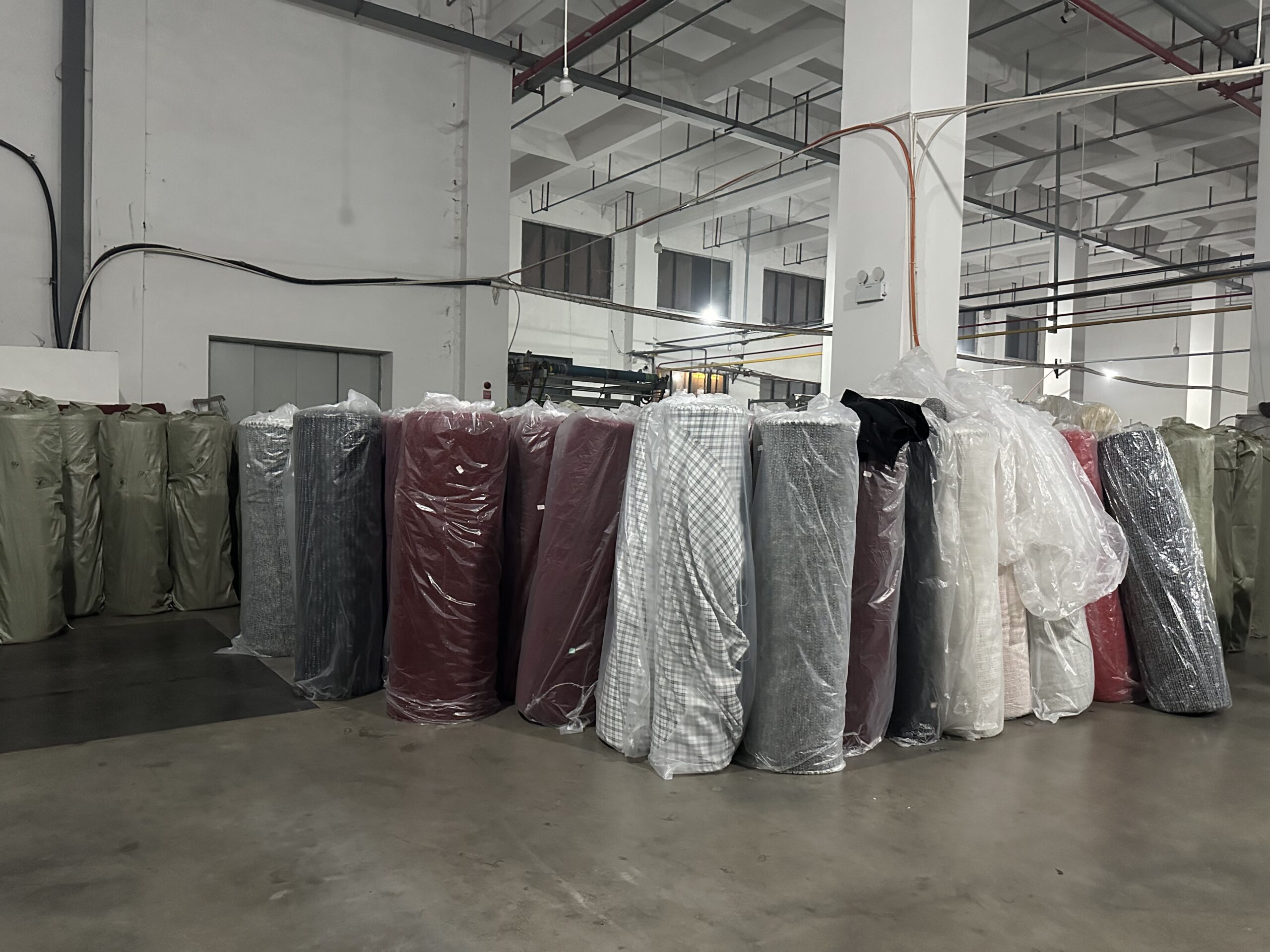
Remnant stock is production fabric outside the flow of a normal order. It includes roll ends from a completed run, overproduction held against defects, fabric from cancelled orders, and short lots left after a customer reduced a quantity. The common feature is that the fabric is real production cloth, made on the same looms and often from the same yarn as catalogue qualities.
What remnant lots do not have is continuity. Lengths are short and irregular, dye lots are mixed, and the fabric may span two or three production periods. A remnant list is therefore not a substitute for a stock line; it is a way to resource a specific problem, such as a small capsule, a sampling program, or a trim and accessory line.
Where a program needs a repeatable colour across a season, remnants are the wrong tool. Where a program needs thirty metres of a beautiful cloth at a workable price, they are often the best available answer.
The Four Checks Before You Buy
First, ask for the actual lengths, roll by roll, with a minimum usable piece declared. A lot advertised as three hundred metres can turn out to be twenty rolls averaging fifteen metres, which is a different product. Second, ask for the dye lot numbers and a shade photo of the rolls laid side by side in daylight, not one roll photographed alone.
Third, ask why the fabric is available. Overruns and cancelled orders are ordinary; fabric rejected for a defect that is not visible in a photograph is not. A seller who cannot explain the origin is asking you to buy a surprise.
Fourth, ask for the mill’s inspection record for the original run where it exists. Remnants are usually sold as seen, which makes the original inspection score the only objective quality signal available. Terms matter too: remnants are normally non-returnable, so the check has to happen before the order, not after arrival.
Pricing the Risk Honestly
The headline discount on a remnant lot is not the real saving. Three costs have to be netted out: waste from short lengths, colour management if the lot spans several shades, and the time spent working around both. A lot at half price with twenty percent unusable length and a three-shade spread is not a bargain for a colour-critical program.
A useful rule is to calculate the effective cost per usable metre, in the specific colours the program needs, and compare it against the stock price for a continuous line. That comparison, not the quoted discount, is the number to take to the design team.
There is also an administrative cost. Remnant purchases generate more correspondence, more photographs, and more decisions than a simple stock order, and a program that repeatedly buys remnants should budget the buyer’s time for it rather than treating it as free.
Where Remnants Work Best
Sampling and development are the classic use. A designer can test a construction, a finish or a trim on genuine mill cloth without committing to a minimum order. Small accessory lines, linings and pocketing are another: the pieces are short, so irregular lengths matter less, and several shades in one product are less visible.
Limited capsule collections also fit, provided the design treats the variation as part of the concept rather than fighting it. Capsules built on mixed remnants commonly use panel construction and colour blocking precisely because the fabric supply is not uniform, and the result can be more interesting than a single-shade run.
Where remnants do not fit is anything with a promised repeat: uniforms, branded basics, and any program where the consumer expects to buy the same item twice in the same colour. Where a program does buy remnants, the swatch book discipline described in reading a swatch book like a strategy keeps the stock and remnant layers from being confused, and the packing questions in hard creases in the bale apply to short rolls in particular.
The category conversation overlaps with stock programs and custom runs, which are compared in stock rolls versus custom runs. Tariff classification applies to remnant purchases exactly as it does to production fabric, so the duty assumptions should be checked against the Harmonized Tariff Schedule rather than assumed from the previous shipment.
Making the Purchase Cleanly
Write the purchase as a list, not a lump: roll references, lengths, dye lots, and an agreed minimum length below which a roll can be rejected on arrival. Photographs of the actual rolls, dated, belong in the same file as the invoice.
Agree the packing before shipping. Short rolls travel badly when packed casually, and a remnant lot that arrives creased and compressed has lost most of the advantage. Ask for rolls to be wrapped individually and packed upright where the lengths allow.
Finally, record the outcome. Over a few purchases a buyer learns which mills describe remnant lots accurately and which round the numbers up. That reputation, not the discount, is what makes remnant buying reliable, and it is built one clean purchase at a time. Our Lagervara page is the current list for programs that prefer a continuous line over a remnant gamble.
Vanliga frågor
Are remnant rolls cheaper in practice?
Often, but the real number is cost per usable metre in the shades you need, after waste and colour management, not the headline discount.
Can I get a repeat order from remnants?
No. Remnant lots are one-off by nature. Programs needing a repeatable colour should buy a stock line or a custom run.
What should I ask for before buying?
Roll-by-roll lengths, dye lot numbers, a daylight shade photo, the reason the fabric is available, and any original inspection record.
Do remnants carry the same import duty?
Classification applies to the goods, not the lot type. Check the tariff schedule rather than assuming from a previous shipment.
How should remnants be packed?
Rolls wrapped individually and packed upright where possible. Casual packing damages short rolls in transit.
Video: Tweed Fabric Trends: Innovations from China’s Leading Manufacturer
If a capsule or sampling program needs short lengths without a full order, our ready stock team can quote current roll ends with lengths, dye lots and daylight photographs before you commit.

Relaterade insikter
Stock Rolls Versus Custom Runs: Choosing Between 100 Metres and 1,000
The choice between buying from a mill’s stock range and commissioning a custom run is...

How to Compare Fabric Quotes from Three Mills: A Side-by-Side Method
Three mills return three quotes for the same fabric brief, and the spread between them...

Kapacitetsplanering kring kinesiskt nyår: så bokar du en tygfabrik
Every year, fabric buyers lose the same three weeks to the same event: Chinese New...