
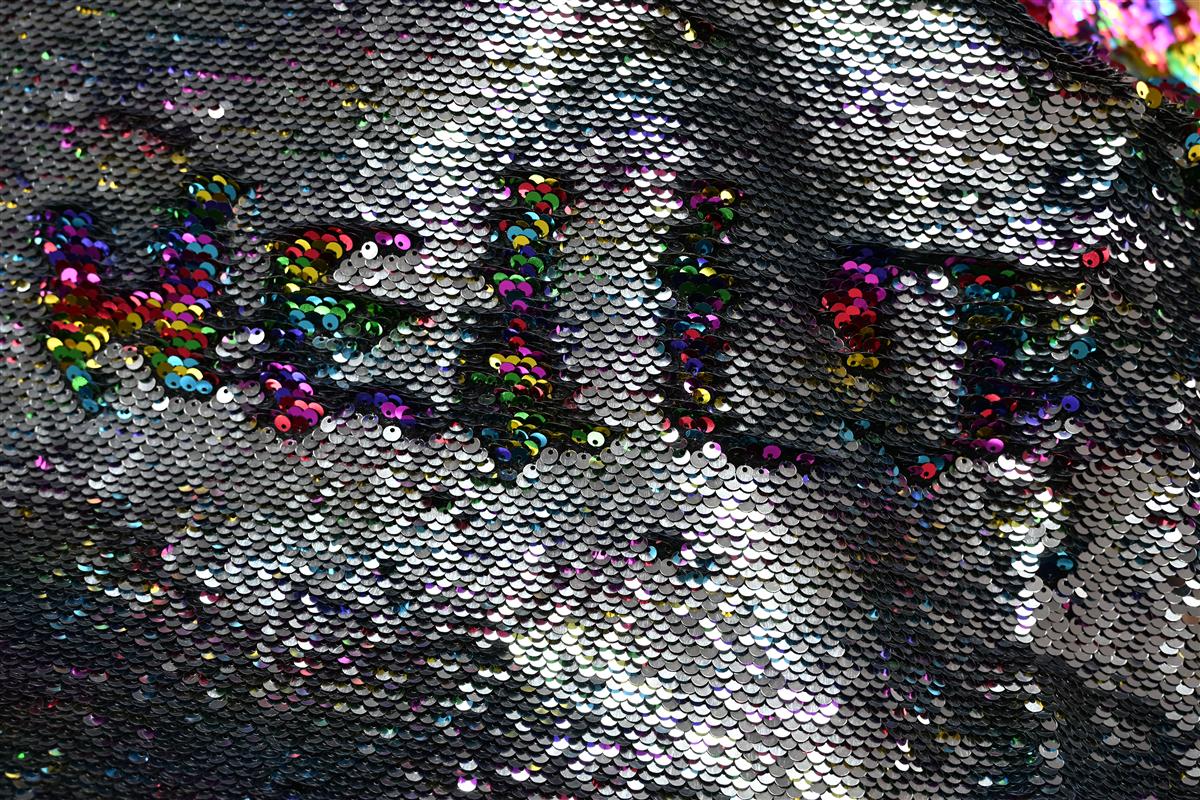
Dye that lifts onto collars and hands on damp days is a wet-rub fastness failure, and it is proven with a rubbing test on the actual bulk lot, not on the approved sample or the mill’s general assurances. Hold the balance until the mill provides three things: dry and wet crocking results on production cloth from the affected lot, tested on both faces and separately on the darkest, most raised areas; the dyeing route and after-treatment record for the lot; and a damp-contact simulation, cloth held warm and humid against a white cotton collar for a stated period, photographed. The records name which of the three usual suspects differs between the sample that passed and the bulk that stains. The cloth that is already cut becomes a claim priced against the test; the cloth that is not becomes a specification line that ends this failure for good.
Why Damp Days Move the Dye
Dye transfer by rubbing is called crocking, and moisture is what turns a well-behaved fabric into a staining one. Water swells the wool fibre and sits with unfixed or loosely held dye at the surface; pressure from a collar, a handbag strap or a wrist then lifts that dye onto whatever touches it. The garment did not change, the weather did, which is why the complaint arrives in clusters on rainy weeks and disappears in dry ones. The property and its test method, rubbing fabric with dry and wet standard cloth and grading the transfer, are set out under colour fastness, and wet crocking is the specific case your customers are living through.
Three factory-side causes cover most cases. The dye lot on the bulk differs from the sample’s lot, and the new lot carried more unfixed surface dye. The after-treatment, a fixation wash or a fixative finish, was shortened or skipped on the bulk to hold a schedule. Or the cloth was packed before it finished drying, and residual moisture in the bale spent the voyage migrating dye to the surface, which is why the staining sometimes eases after the cloth has hung in dry storage. Each cause has a different remedy, and the records distinguish them in an afternoon.
The customers’ reports carry clues worth collecting before you call the mill. Which garments stain, only the darkest colourways or every colour in the delivery. Which contact points, collars and cuffs where skin and moisture meet the cloth, or also seatbelts, bag straps, chair backs. And which weather, only damp days or every day. Dark colourways plus damp days plus collar contact is the signature of surface dye with poor wet fixation; if pale colourways stain too, or the staining is constant, suspect something in the finishing rather than the dye, an unremoved softener or a residual dye-assist chemical, which is a different conversation with a different remedy.
The Report That Answers It
Ask the mill for a lot-specific crocking report on the affected production cloth, and be precise about what it must contain. Dry and wet results, separately, because a cloth can pass dry and fail wet, and your failure is the wet one. Both faces tested, because a brushed face and a flat face hold surface dye differently, and collars meet the face the mill rarely thinks about. The dark and heavily saturated areas tested on their own, since a tweed’s navy or charcoal regions stain while its cream regions are silent. And the conditioning stated, because cloth tested bone-dry in a laboratory is not the cloth your customer wore in the rain. The routine of a proper mill test report, what it certifies and what it quietly omits, is described in what a mill test report actually certifies, and crocking lines deserve the same reading discipline as any other entry.
Alongside the report, ask for the dyeing record of the lot: which dyes, which route, and which after-treatment. Tweeds are commonly yarn-dyed or piece-dyed, and the route changes where the dye sits; the trade-offs between the routes are compared in stock dye, yarn dye and piece dye for tweed. If the sample lot and the bulk lot took different routes or different after-treatments, the comparison with your approved sample was never a comparison, and that sentence settles the responsibility question faster than any grade.
The Damp-Collar Simulation
The laboratory test is the evidence; the simulation is the demonstration that ends the argument. Ask the mill to lay a piece of the actual bulk cloth face-down on white cotton, dampen it, press it with a warm weight or roll it and seal it in a bag overnight, then photograph the cotton. It costs nothing, it reproduces your customer’s collar in miniature, and when the cotton comes out blue-grey it converts a grade on paper into a picture nobody can talk around. Run the same simulation on the approved sample in the same frame. If the sample stains too, your approval standard was always loose, and the fix is a specification change. If only the bulk stains, the lot differs, and the claim writes itself.
On your side, the receiving checks pick this up before customers do. Press a white handkerchief, barely dampened, firmly against the darkest raised area of cloth from three different rolls, ten seconds each, and look at it in daylight. Do it the day the container is unstuffed, photograph the three handkerchiefs with their roll tickets, and file them. The whole check takes ten minutes and it stands between your brand and the rainy-week complaint cluster that is otherwise the first thing that tells you there was a problem.
The handkerchief has a second life after the complaint arrives: it is the bridge between your customers’ reports and the mill’s laboratory. The mill tests small swatches under controlled pressure; your customer wore the cloth against a shirt for eight hours in the rain. When your damp handkerchief lifts the same grey as the collars in the complaint photographs, the laboratory result and the field failure are the same event, and the mill’s quality manager can treat your claim as a confirmed test result rather than as one customer’s story. Claims written in the language of tests get answered in the language of remedies.
The Goods Already Cut
Garments already sewn from the affected cloth are a triage, and the simulation result is what sorts them. Cloth that fails the damp test will stain collars, so the honest options are an after-treatment that can still be applied to finished garments if the dyer offers one, a recall-style replacement of the worst exposures, or a documented concession with the risk stated for stock sold into drier climates or lined collars. Put the choice in writing with the test photographs, exactly as any other disposition, and resist the temptation to ship quietly and handle complaints as they arrive, because the complaint is now predictable, and predictable failures are the ones customers forgive least.
Triaging the stock itself is straightforward if you sort by exposure rather than by size. Collar-contact is the complaint, so lined-collar garments or those the maker assembled with a collar interlining that keeps the tweed off the shirt can be sold with confidence, and they are your control group: if those do not stain while unlined ones do, the simulation has confirmed itself on real garments. Sort the rest by colour depth, because the darkest colourways carry the complaint and the pale ones rarely do. Photograph one garment from each group with its handkerchief result attached, and the file explains the disposition to anyone who was not in the room when it was decided.
For the cloth not yet cut, the decision is shorter. If the mill can re-wash or after-treat the balance and pass the crocking test on re-treated production cloth, that is the cheapest route and the mill should carry its cost, since the lot left the mill failing a test the sample had passed. If the lot cannot be rescued, replacement from a new dye lot with the specification line attached is the answer, and the old lot is credited against it. What should not happen is cutting, because every metre cut converts a factory problem into a garment problem, and garment problems cost multiples.
Lines for the Next Order
Four lines carry the whole fix. Wet and dry crocking results on production cloth per lot, both faces, dark areas separately, with the conditioning stated. The dyeing route and after-treatment recorded per lot, and any change from the approved sample’s route flagged before packing. The damp-contact simulation on the first rolls of every shipment, photographed with roll tickets. And the receiving check written into your own goods-in procedure, three handkerchiefs, ten seconds each, filed with the container photographs. With those four in place, a dye that lifts on damp days is caught in the mill’s laboratory, or at worst on your receiving bench, and never again on a customer’s collar in the rain.
One further word on the specification line itself. Write the requirement as a grade with the method named, and write what happens when it is missed, in the same sentence. A requirement without a consequence is a discussion point; a requirement with one is a specification. Mills that supply honest grades will price the after-treatment that achieves them into the cloth, and the price difference per metre is smaller than one week of complaint handling, which is the arithmetic worth doing before the next order rather than after.

Relaterade insikter

The ISPM 15 Mark on Your Crate: What to Check?
The forwarder’s message asks whether the crate holding 120 metres of wool tweed carries the...

Twenty Metres a Month From One Weaving Run?
A blanket order is one total commitment released in parts, and at twenty metres a...
Oil and Mothball Smell in the Bale: What to Do First
An oil or mothball smell on opening a bale is a chemical question before it...