

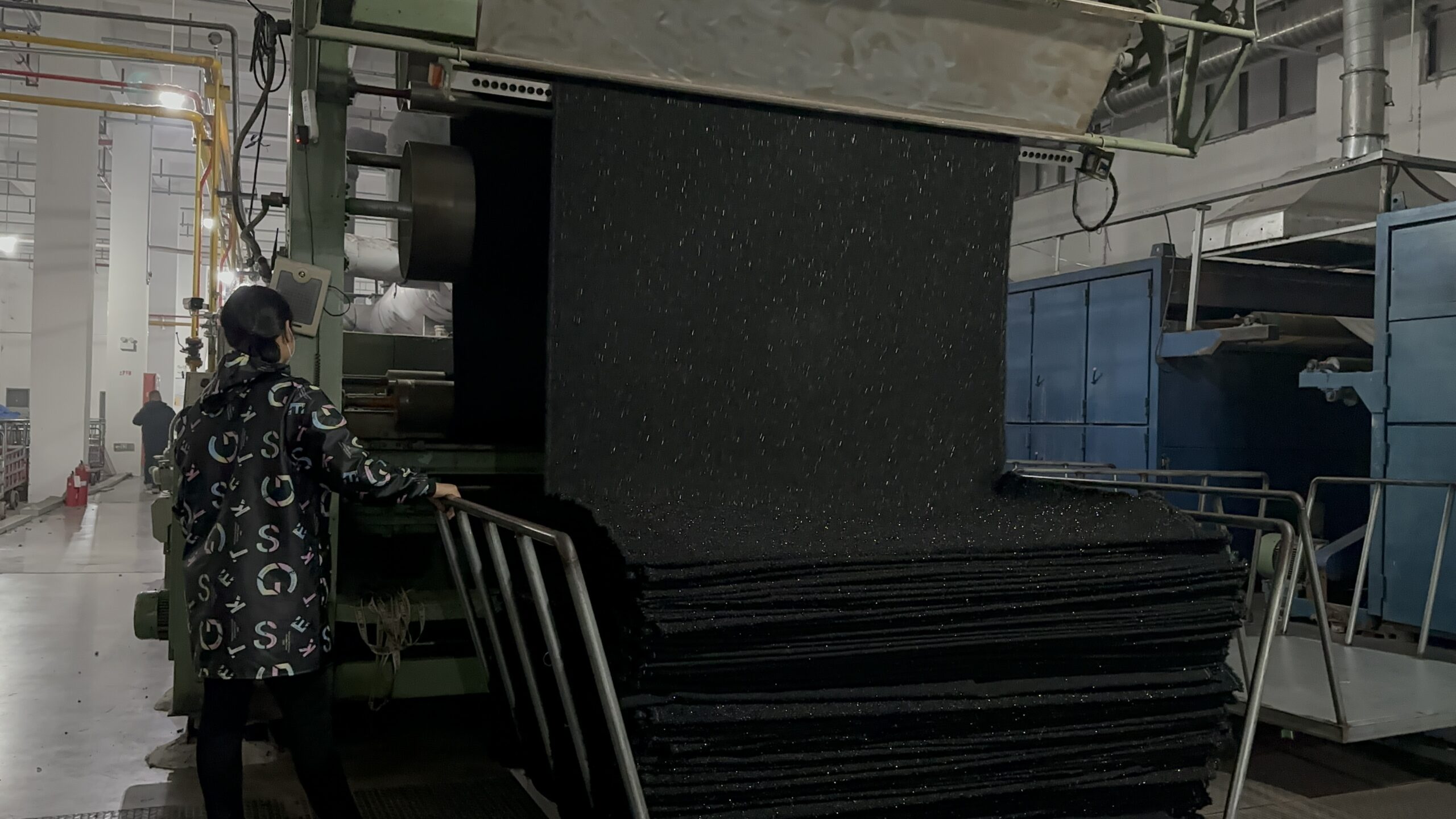
En køber har to ruller gråt strik i hånden. Den ene kom af en rundstrikkemaskine som et sømløst rør, der blev sprættet op og dampet til flad metervare. Den anden kom af en fladstrikkemaskine som et panel med færdige vævekanter, klar til at blive formet til et sweaterstykke. Begge er skudstrik, begge bærer ordet strik på fakturaen, og begge opfører sig forskelligt på klippebordet. Valget mellem fladstrik og rundstrik er et produktionsvalg: hvilken maskine, hvilken stofkarakter og hvilken omkostningsstruktur passer til det program, du planlægger.
This guide compares the two from the mill floor. Fursone’s Wenzhou operation runs 300+ looms and machines across woven and knit production, with knit programs from 150 to 650 GSM depending on the product tier. The numbers below come from product pages and mill test records, not from a textbook. For the buyer’s side of the comparison, our guide til designere: strik vs. tweed dækker, hvordan strikstoffer spiller sammen med vævet tweed i en kollektion.
Hvad de to maskiner faktisk bygger op
Fladstrikkemaskiner arbejder som håndstrikning i overstørrelse: rækker af nåle strikker frem og tilbage og bygger et panel, der vokser i bredde og længde. Fordi panelet strikkes som ét stykke, har det færdige skråningskanter i begge sider, og maskinen kan tilføje eller tabe masker for at forme stykket. Det er sådan, snoningspaneler, intarsiamønstre og sweatre i fuld facon laves uden klipning. Afvejningen er output: en flad maskine producerer ét panel ad gangen, og komplekse maskeforandringer sænker den yderligere.
Rundstrikkemaskiner placerer nåle rundt om en cylinder. Garnet føres kontinuerligt ind, og stoffet kommer ud som et rør, som derefter spaltes og dampes fladt til metervare. Single jersey, interlock og rib-stoffer til t-shirts, kjoler og athleisure kommer af rundstrikkemaskiner med høj produktionshastighed. Rørkonstruktionen er grunden til, at rundstrikket stof har en defineret for- og bagside, og grunden til, at single jersey ruller ved den klippede kant. Begge maskinfamilier er skudstrikning. Den praktiske reference til forskellene på maskinniveau er tekstilingeniørens gennemgang på fladstrik vs. rundstrik, som gennemgår nålelejer og stoffets nedtrækning i et klart og enkelt sprog.
Stoffets karakter: panel vs. slange
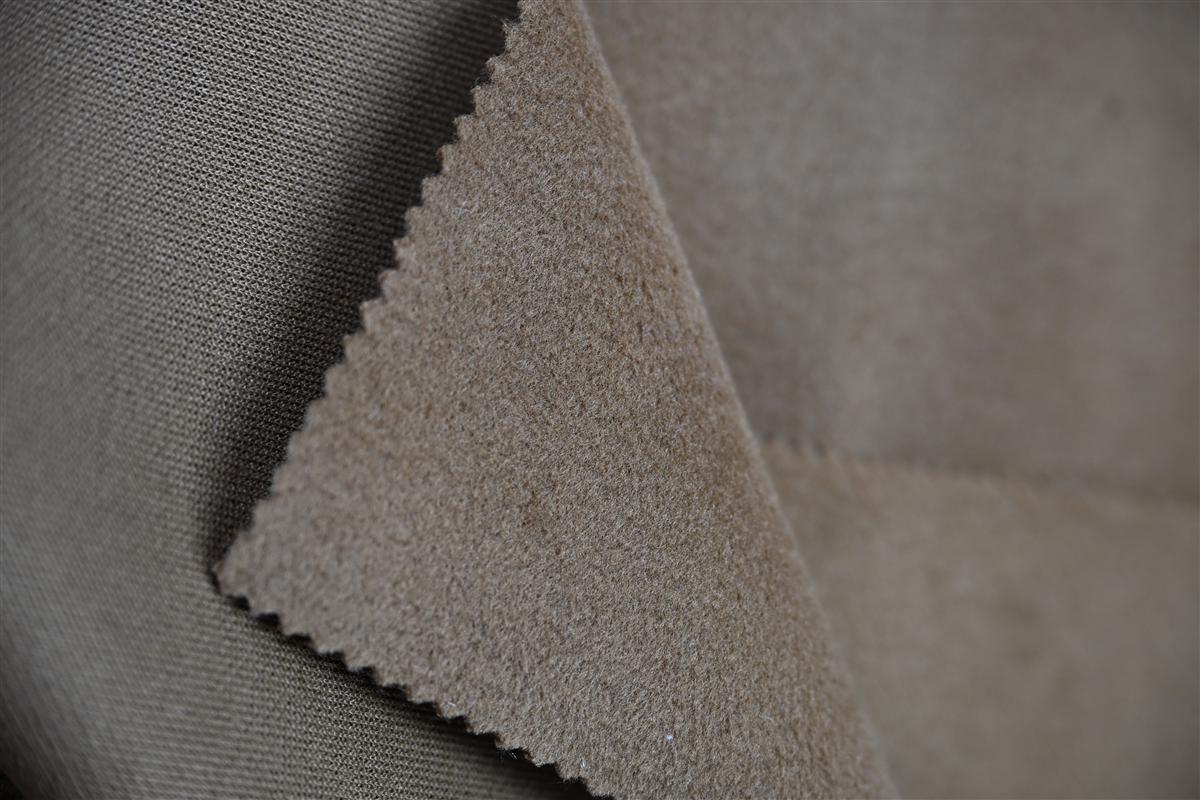
Maskinarkitekturen viser sig i selve stoffet. Et fladstrikket panel har afbalancerede kanter, holder formen og kan bære tunge teksturer som cable-, honeycomb- og bouclémasker, fordi nålene kan aktiveres selektivt. Et rundstrikket rør giver de fine, ensartede overflader, som jersey-programmer kræver, med elasticitet indbygget i løkkestrukturen frem for i mønsteret.
Curl is the most visible difference on the cutting table. Single jersey curls toward the face side on every roll from every mill, because the face loop is mechanically longer than the reverse loop and the imbalance creates internal torque. Garter stitch curls almost zero because both loop faces are balanced. Wool’s natural crimp stores elastic energy, which amplifies curl beyond acrylic, while GRS recycled polyester curls less than virgin because it absorbs less moisture and swells less during cutting. Our mill measured these differences across production runs and documented them in the løsning på krøllede kanter i strikstof guide. En køber, der ignorerer rulningsretningen, regner med stofspild, før den første marker er klippet.
Produktionsforskelle i overblik
| Egenskab | Flat knit | Circular knit |
|---|---|---|
| Fabric form | Formet panel med kanter | Kontinuerlig tube, opdelt i metervare |
| Output rate | Lower, panel by panel | Higher, continuous |
| Stitch range | Cable, intarsia, full-fashion, bouclé | Jersey, interlock, rib, fleece |
| Edge behavior | Balanced, minimal curl | Single jersey ruller ind mod retsiden |
| Shaping | Machine shapes the piece | Klip og sy efter dampbehandling |
| Typical garments | Sweatre, cardigans, strikkede frakker | T-shirts, kjoler, athleisure |
| Production economics | Højere pris pr. meter, mindre spild ved klipning | Lavere pris pr. meter, spildreduktion gælder |
Tabellen forenkler med vilje. Moderne væverier kører begge familier, og det egentlige spørgsmål er, hvilken stofform din markeringsplan kan bruge. Et sweaterprogram bygget på fladstrikkede paneler springer det meste skærespild over, men betaler en højere maskintimepris. Et jerseyprogram bygget på rundstrikket metervare får lav pris pr. meter og betaler i stedet for kontrol af rullekanter, dampning og spild i mønsterdele. For produktionskontekst i hele branchen, den Den internationale sammenslutning af tekstilproducenter overvåger globale leverancer af tekstilmaskiner og data om væveriernes produktion i medlemslandene.
Hvad ændrer sig på skærebordet
The flat knit vs circular knit difference shows up first on the cutting table. Circular yardage arrives flat after splitting and steaming, and cutters treat it like a wide goods roll, marking and cutting pattern pieces in bulk. The width is standard, 148-150 cm across Fursone’s knit ranges, so markers can be planned once and reused. The cost to watch is curl at the edges of cut pieces, which misaligns layers if the fabric is not allowed to relax.
Fladstrikkede paneler ændrer skæreprocessen fuldstændigt. Panelet er allerede beklædningsdelen, så skærerummet håndterer halsudskæringer, ærmegab og trim i stedet for hele mønsterdele. Udbyttet pr. rulle er højt, og stoffets karakter forbliver ensartet, fordi der ikke er nogen rørsplitsøm at håndtere. For tunge teksturer er dette forskellen mellem en strikfrakke, der bevæger sig som en frakke, og en der opfører sig som møbelpolstring. Vægtbånd knytter sig til programmer. Performance-strik kører 150-320 gsm, modesweaterstrik kører 220-450 gsm, og strikkede overfrakkestoffer kører 320-650 gsm. Alle ligger på 148-150 cm bredde med krympning holdt på højst 3 % under ISO 6330.
Økonomi: lagerspor og kundetilpassede programmer
Omkostningsstrukturen for fladstrik- og rundstrikprogrammer adskiller sig mere i spild end i maskintimepris. Lagerstof i strik sendes fra 100 meter med 72-timers afsendelse fra lageret i Wenzhou, hvilket passer til et brand, der vil teste en jersey-silhuet eller en sweaterform, før det forpligter sig. Specialprogrammer starter ved 300 meter pr. farve med mønsterprogrammering til fladstrikteksturer og garnvalg til rundstrikbund. Prøvetagning kører i 7-dages cyklus, masseproduktion tager 25-35 dage, og hasteordrer komprimeres til 15-20 dage.
Garntallet forankrer specifikationen på begge maskintyper. Sweaterstrik kører typisk med 30-80 Tex-garn afhængigt af finhed, og Tex er det ISO-standardiserede direkte tællesystem under ISO 2060. En fintrådet rundstrikket jersey og en grov fladstrikket kabel kan begge være 100 % bomuld eller uld, men Tex-værdierne, masketætheden og efterbehandlingsruten er forskellige specifikationer. Den yarn count guide på dette site omregner de systemer, et væveri oplyser tilbud i.
Prøveøkonomien taler for at starte med lageret. Prøvetagning af øko-strik begynder med 1-meters prøver til omkring USD 40 inkl. forsendelse, leveret på 7 dage. Konventionelle væverier kræver ofte minimum 10 meter, tre uger og cirka USD 300, før køberen ser faldet. Samme logik gælder for flat- og rundstrik: en lagertest på 100 meter dækker spørgsmålet om stoffets karakter, og det skræddersyede program på 300 meter tager over i stor skala. For købere, der planlægger et første strikprogram, er stof-RFQ-skabelon oplister de felter, der gør tilbud på fladstrik og rundstrik sammenlignelige.
Hvilken maskine passer til hvilket program
Vælg rundstrikproduktion, når programmet handler om volumen, silhuetten er cut-and-sew, og overfladen skal være ren og ensartet. Jersey, interlock og rib til t-shirts, kjoler, loungewear og athleisure er rundstrikprodukter som standard, og produktionshastigheden holder prisen per meter nede. Vælg fladstrikproduktion, når programmet er formet, teksturrigt eller traditionsbåret: cabletrøjer, cardigans, intarsiamønstre og strikkede frakker, der kræver en panélstruktur. Fladstrikmaskiner forvandler teksturerne til beklædningsdele, og den højere maskintimepris betaler sig i mindre klippespild og en stærkere strikkehistorie.
Most brands run both lanes in one collection. A performance knit capsule in circular jersey covers the volume, and a flat-knit sweater group carries the texture story. Fursone’s sortiment af funktionsstrik dækker den runde side fra 150-320 GSM, mens sweaterstrik- og overcoatprogrammerne dækker den flade side. Hvis du afvejer maskinvalg op mod din ordrestørrelse, så send den ønskede GSM, stoffets karakter og volumen til en quote request. Væveriet prissætter begge maskinveje på samme fibergrundlag.
Ofte stillede spørgsmål
Er fladstrik det samme som rundstrik?
Nej. Flatstrik opbygges som et formet panel med faste kanter på en flad maskine. Rundstrik opbygges som et kontinuerligt rør på en rundmaskine og klippes og dampes derefter op i metervare. Begge er skudstrik, men stoffets form og skæreadfærd er forskellig.
Hvad går hurtigst, flad- eller rundstrikning?
Rundstrikmaskiner producerer sammenhængende metervare ved højere produktionshastighed. Fladstrikmaskiner strikker ét panel ad gangen, hvilket er langsommere pr. kvadratmeter, men former plagets del direkte og reducerer spild ved klipning.
Ruller rundstrikket stof sammen?
Ja. Single jersey ruller ind mod retsiden på hver eneste rulle, fordi retmasken er længere end vrangmasken. Retstrik ruller næsten ikke, og uld forstærker indrulningen, mens genanvendt polyester mindsker den.
Kan fladstrikningsmaskiner lave jersey?
Teknisk set ja, men jersey produceres normalt på rundvæve af hensyn til output og omkostninger. Fladvæve bruges, hvor formgivning eller tekstur retfærdiggør den langsommere produktion.
Hvilke GSM-intervaller bruger strikkeprogrammer?
Fursones strikkeprogrammer spænder fra 150-320 GSM til performancestrik, 220-450 GSM til moderigtigt sweaterstrik og 320-650 GSM til strikkede overcoatsstoffer, alt i bredden 148-150 cm.
Konklusion
Fladstrik vs. rundstrik er en maskinbeslutning, der bliver en beslutning om stoffets karakter. Flade maskiner bygger formede paneler med afbalancerede kanter og evne til tung tekstur, til en højere pris pr. meter og mindre spild ved klipning. Rundmaskiner bygger kontinuerlig tubemetervare til jersey-, interlock- og rib-programmer med høj produktion og lav pris pr. meter, hvor rullekontrol er indbygget i skæreplanen.
Skriv maskinfamilie, GSM-bånd, garntal og testmetode ind i specifikationen, før du tager prøver. Test stoffets karakter ved 100 meter fra lager, og skalér derefter den dokumenterede konstruktion op til et skræddersyet program på 300 m. Fursone sender lagerstrik fra 100 meter inden for 72 timer og kører skræddersyede flade og runde konstruktioner på en 7-dages prøvecyklus. Anmod om et tilbud med din ønskede GSM og plagtype, og væveriet sender programmet videre til den maskine, der passer til det.
For hvordan almindelige strikkestofdefekter ser ud, og hvordan et strikkeri holder fejlraten nede, se hvordan strikkestofdefekter ser ud, og hvordan et strikkeri kontrollerer skævhed, nålelinjer og spændingsmærker.
Relateret læsning: valget mellem fladstrik og rundstrik som konstruktion.

Relaterede indsigter

Garment Filler and Stiffening: How Weight Changes a Tweed’s Hand
Two cloths can share a blend, a weight and a colour reference and still feel...
What a Mill Test Report Actually Certifies for Tweed Fabric
When a supplier says a tweed will not pill, that statement has no enforcement path....
Twist and Ply: The Yarn Choices That Decide Tweed Pilling
When a tweed jacket pills after three wears, the complaint usually lands on finishing or...