

La plupart des devis de tissu lents et confus remontent à la même cause : la demande omettait un élément dont l’usine a besoin pour chiffrer le travail. Un fabric RFQ template règle ce problème. Envoyez les douze champs ci-dessous et vous recevrez des chiffres comparables en quelques jours au lieu d’une semaine d’e-mails de relance, que vous chiffriez des programmes en tweed, en bouclé ou en maille.

The twelve fields
One: fabric type and construction, named precisely – boucle, cable knit, double-cloth tweed – with a reference photo attached. Two: composition, with percentages, because a wool-rich blend and a wool-look acrylic price a world apart. Three: weight in GSM, measured not estimated; if you are unsure, name the garment it is for. Four: usable width. Five: colour, as a Pantone reference or a physical lab dip you already hold. Six: finish requirements, from anti-pilling to water repellency.
Seven: quantity, split into sampling quantity and production quantity, because the two price differently. Eight: target price if you have one, and the basis – per metre FOB, CIF, or DDP. Nine: test requirements, citing the methods you need, since colourfastness and fibre analysis follow les méthodes de test AATCC dans la plupart des manuels acheteurs. Dix : les attentes de délai pour l'échantillon et la production. Onze : les exigences de conformité, par exemple un certificat de périmètre GRS ou une classe OEKO-TEX. Douze : la destination d'expédition et les incoterms, pour que le devis intègre la réalité du fret au lieu d'une estimation.
Pourquoi chaque champ mérite sa place
The fields that slow quotes down most are weight, colour and quantity. A mill cannot quote a knit without knowing whether you mean a 300 GSM cardigan fabric or a 550 GSM coat fabric, and the difference is not linear. Colour given as “camel-ish” invites a conservative price with a buffer. Quantities that move between the first email and the third restart the pricing exercise entirely. Twelve fields feel like homework until you compare the response times: a complete RFQ comes back priced in days, and our own processus de fabrication sur mesure transforme les demandes complètes en échantillons sous 7 jours, précisément pour cette raison.
A worked example
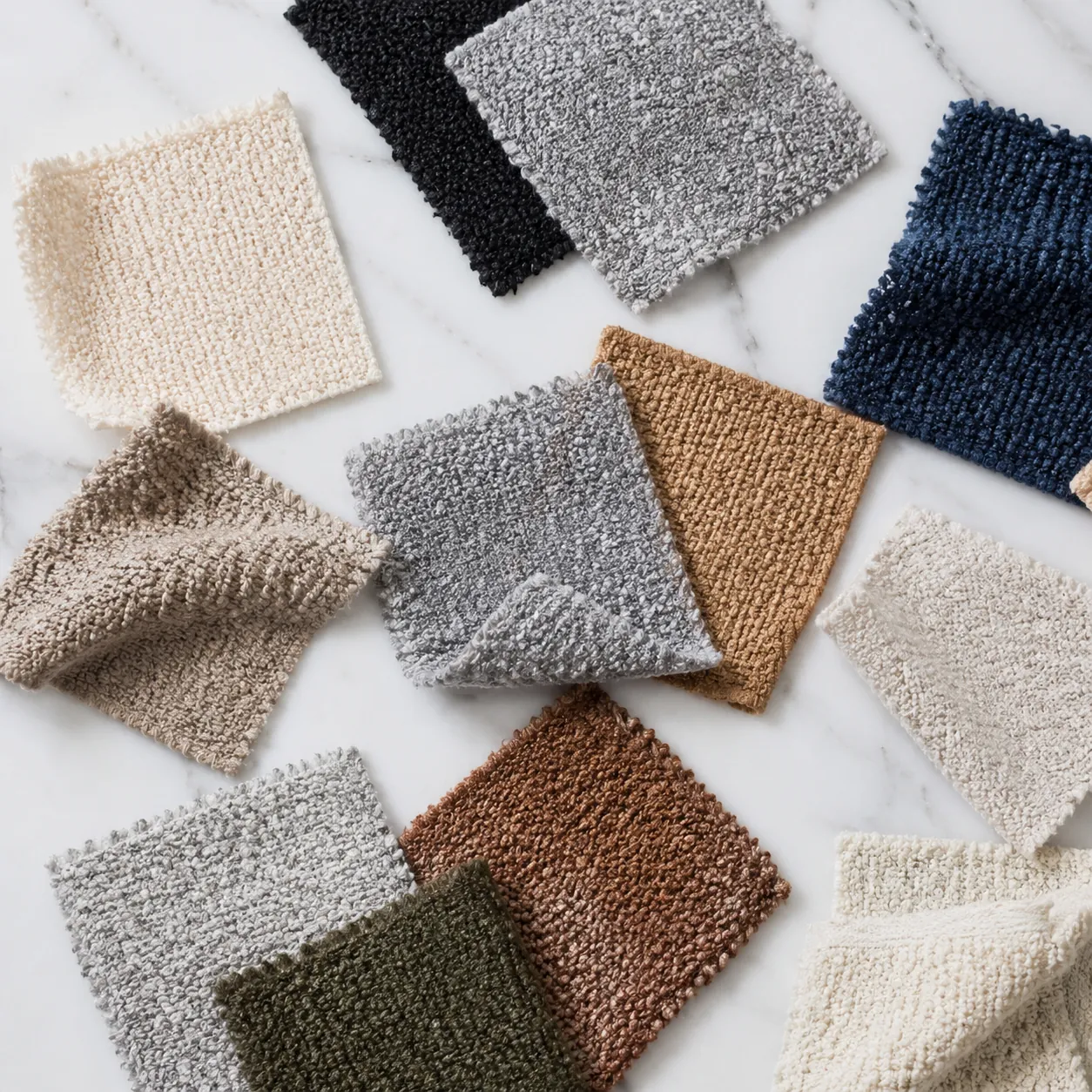
Take the same boucle asked for two ways. Version one: “Please quote your nice cream boucle, around 400 grams, for a jacket program.” The mill assumes a wool-nylon blend at a stock weight, quotes a safe number, and three emails later you are still agreeing on width. Version two: “Boucle, 62% wool / 36% nylon / 2% other, 420 GSM at 150 cm usable, Pantone 12-0605 TCX lab dip to match, anti-pilling finish, sample 20 metres then 800 metres production, FOB Ningbo, colourfastness to AATCC methods, sample in 15 days.” One email, one quotation, one sample round. The second version is not longer because the writer is thorough; it is longer because the twelve fields give every detail a slot.
Faire adopter le modèle
A template only works if it survives the reply-all chaos of a real sourcing inbox. Save it as a form with one field per line, attach it to every new enquiry, and refuse to forward quotes internally until the twelve lines are filled. Teams that enforce this report the same side effect: half the questions they used to ask suppliers get answered by their own form, because writing “weight: measured” forces someone to actually measure. The template also becomes your onboarding document – a new sourcing hire who can fill all twelve fields knows what matters in a fabric specification.
Les erreurs courantes que le modèle évite
The most expensive mistake is asking for “something like this photo” with no composition. The mill assumes a construction, quotes it, and the sample arrives heavy or limp. The second is skipping test requirements, which surfaces at the buyer’s third-party inspection as a surprise failure. The third is mixing incoterms across quotes, which makes a higher unit price look cheaper once freight lands on your account. Compare quotes on identical terms, and our checklist on comparer les devis fournisseurs au-delà du prix présente la grille de comparaison complète.
Si vous testez une nouvelle usine, gardez la première RFQ courte et vérifiable. Notre approche en trois étapes dans sample-first sourcing s'associe bien à ce modèle, et les points de contrôle des échantillons dans ce qu’il faut vérifier sur un échantillon de tissu vous indiquent quoi évaluer à la réception de l'échantillon.
Vidéo : modèle de RFQ pour le tissu
Enregistrez les douze champs sous forme de formulaire d'une page et joignez-le à chaque nouvelle demande : le délai de devis devient un processus au lieu d'une négociation. Fursone développe des tissus fantaisie depuis Wenzhou depuis 2020 sur plus de 300 métiers ; envoyez un RFQ complété à info@fursone.com et nous vous retournerons un devis chiffré et détaillé sous deux jours ouvrés.
Lecture connexe : Tissu maille athleisure : ce dont les marques ont besoin

Aperçus connexes

Lire un nuancier comme une stratégie : combiner stock et tweed sur mesure
A fabric wholesaler’s swatch book is not a catalog, it is a sourcing strategy printed...
How Long Does a Custom Fabric Order Take? The 5-Stage Timeline Buyers Can Negotiate
A custom fabric order takes 30 to 60 days from confirmed spec to ex-factory, and...

What Certifications to Ask a Fabric Supplier For
Asking a fabric supplier for certificates is not paperwork ritual; it is how a brand...