

Większość wolnych i niejasnych wycen tkanin ma tę samą przyczynę: w zapytaniu zabrakło czegoś, czego zakład potrzebuje, aby wycenić zlecenie. Zwięzła fabric RFQ template rozwiązuje to. Wyślij dwanaście pól poniżej, a porównywalne liczby dostaniesz w ciągu dni, a nie po tygodniu maili z ponagleniami — niezależnie od tego, czy wyceniasz programy tweedowe, bouclé czy dzianinowe.

The twelve fields
One: fabric type and construction, named precisely – boucle, cable knit, double-cloth tweed – with a reference photo attached. Two: composition, with percentages, because a wool-rich blend and a wool-look acrylic price a world apart. Three: weight in GSM, measured not estimated; if you are unsure, name the garment it is for. Four: usable width. Five: colour, as a Pantone reference or a physical lab dip you already hold. Six: finish requirements, from anti-pilling to water repellency.
Seven: quantity, split into sampling quantity and production quantity, because the two price differently. Eight: target price if you have one, and the basis – per metre FOB, CIF, or DDP. Nine: test requirements, citing the methods you need, since colourfastness and fibre analysis follow metodami testowymi AATCC w większości podręczników dla kupujących. Dziesięć: oczekiwane terminy realizacji prób i produkcji seryjnej. Jedenaście: wymagania zgodności, na przykład certyfikat zakresu GRS albo klasa OEKO-TEX. Dwanaście: miejsce dostawy i incoterms, aby oferta uwzględniała realia frachtu, a nie domysły.
Dlaczego każde pole zasługuje na swoje miejsce
The fields that slow quotes down most are weight, colour and quantity. A mill cannot quote a knit without knowing whether you mean a 300 GSM cardigan fabric or a 550 GSM coat fabric, and the difference is not linear. Colour given as “camel-ish” invites a conservative price with a buffer. Quantities that move between the first email and the third restart the pricing exercise entirely. Twelve fields feel like homework until you compare the response times: a complete RFQ comes back priced in days, and our own przebieg produkcji na zamówienie indywidualne zamienia kompletne zapytania w próbki w 7 dni właśnie z tego powodu.
A worked example
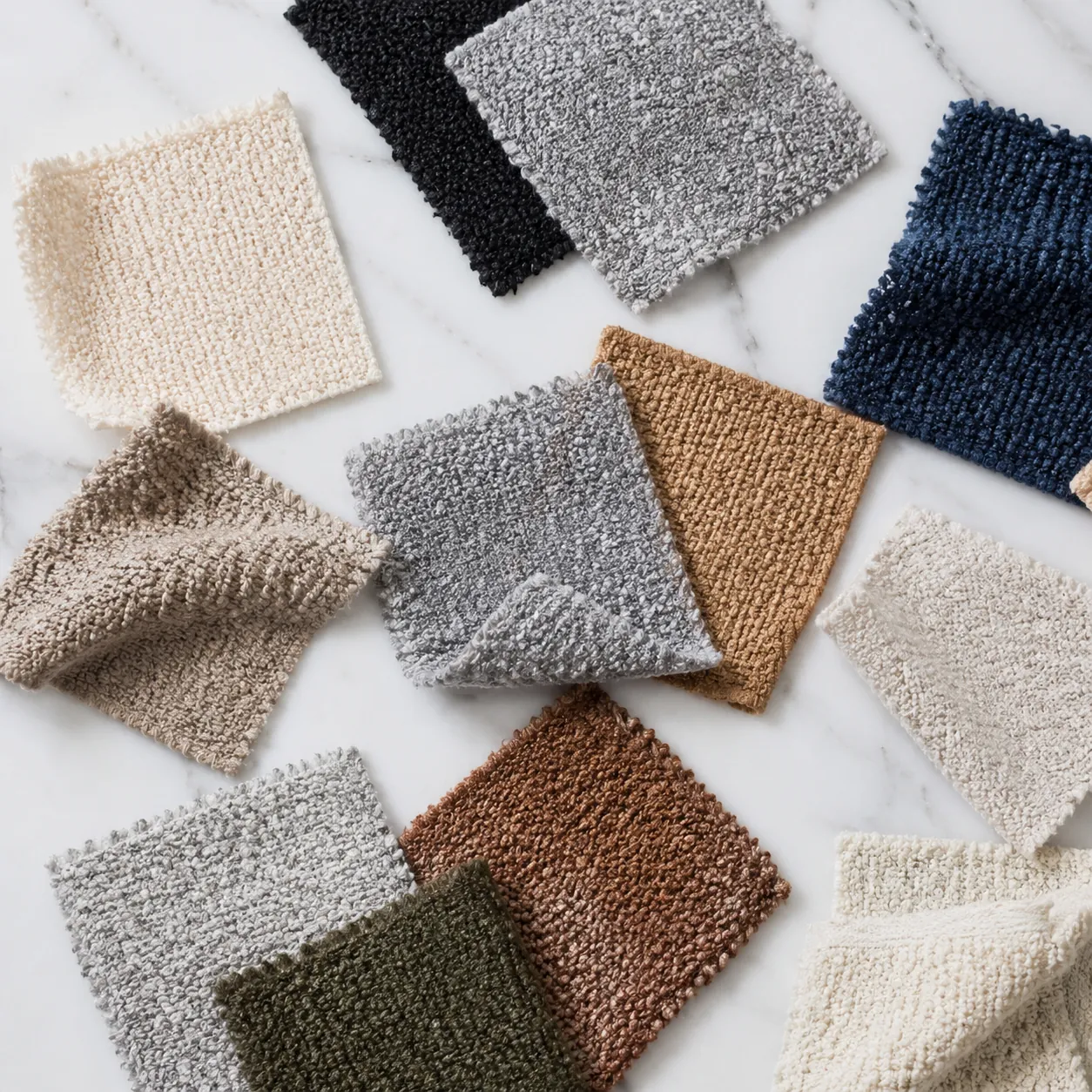
Take the same boucle asked for two ways. Version one: “Please quote your nice cream boucle, around 400 grams, for a jacket program.” The mill assumes a wool-nylon blend at a stock weight, quotes a safe number, and three emails later you are still agreeing on width. Version two: “Boucle, 62% wool / 36% nylon / 2% other, 420 GSM at 150 cm usable, Pantone 12-0605 TCX lab dip to match, anti-pilling finish, sample 20 metres then 800 metres production, FOB Ningbo, colourfastness to AATCC methods, sample in 15 days.” One email, one quotation, one sample round. The second version is not longer because the writer is thorough; it is longer because the twelve fields give every detail a slot.
Jak utrwalić szablon w praktyce
A template only works if it survives the reply-all chaos of a real sourcing inbox. Save it as a form with one field per line, attach it to every new enquiry, and refuse to forward quotes internally until the twelve lines are filled. Teams that enforce this report the same side effect: half the questions they used to ask suppliers get answered by their own form, because writing “weight: measured” forces someone to actually measure. The template also becomes your onboarding document – a new sourcing hire who can fill all twelve fields knows what matters in a fabric specification.
Typowe błędy, którym zapobiega szablon
The most expensive mistake is asking for “something like this photo” with no composition. The mill assumes a construction, quotes it, and the sample arrives heavy or limp. The second is skipping test requirements, which surfaces at the buyer’s third-party inspection as a surprise failure. The third is mixing incoterms across quotes, which makes a higher unit price look cheaper once freight lands on your account. Compare quotes on identical terms, and our checklist on porównywanie ofert dostawców poza samą ceną pokazuje pełną siatkę porównawczą.
Jeśli testujesz nową przędzalnię, pierwsze RFQ złóż małe i weryfikowalne. Nasze trzyetapowe podejście w sample-first sourcing dobrze współgra z tym szablonem, a przegląd próbek kieruje w co sprawdzić na próbce tkaniny powiedzą Państwu, co ocenić, gdy dotrze próbka.
Wideo: szablon zapytania ofertowego (RFQ) na tkaninę
Zapisz dwanaście pól jako jednostronicowy formularz i wysyłaj go z każdym nowym zapytaniem, a wycena terminu realizacji stanie się procesem, a nie negocjacjami. Fursone rozwija tkaniny fancy z Wenzhou od 2020 roku na ponad 300 krosnach; wyślij wypełniony formularz RFQ na info@fursone.com, a w ciągu dwóch dni roboczych zwrócimy wycenioną, szczegółową ofertę.
Powiązane lektury: Dzianina athleisure: czego potrzebują marki

Powiązane spostrzeżenia

Czytanie wzornika jak strategię: łączenie tweedu ze stanu i na zamówienie
A fabric wholesaler’s swatch book is not a catalog, it is a sourcing strategy printed...
How Long Does a Custom Fabric Order Take? The 5-Stage Timeline Buyers Can Negotiate
A custom fabric order takes 30 to 60 days from confirmed spec to ex-factory, and...

What Certifications to Ask a Fabric Supplier For
Asking a fabric supplier for certificates is not paperwork ritual; it is how a brand...