

calculate tweed yardage collection is the first checkpoint buyers should lock before they approve a supplier, budget, or production slot. Ever had that sinking feeling when you unroll the first bolt from a bulk order and it just doesn’t match the swatch from your sample approval? It’s a quiet disaster that happens more than you think, and it’s especially painful when you’ve meticulously tried to calculate tweed yardage for a collection and now face a shortage or dead stock. I’ve seen designers get burned on this, stuck with thousands of dollars of fabric that doesn’t meet their quality tolerance, all because the initial order math was based on a perfect-world scenario.
The problem is that tweed isn’t a simple poplin. Most online calculators treat all fabric the same, and that’s where the budget gets blown. They don’t account for the aggressive fraying on a loose weave that demands a wider seam allowance, the pattern matching waste for a large bouclé, or the 5-7% shrinkage that can happen during production pressing. Getting the fabric yardage formula for a collection right isn’t just about multiplying garment consumption by unit count; it’s about pre-empting the material’s behavior on the cutting table.
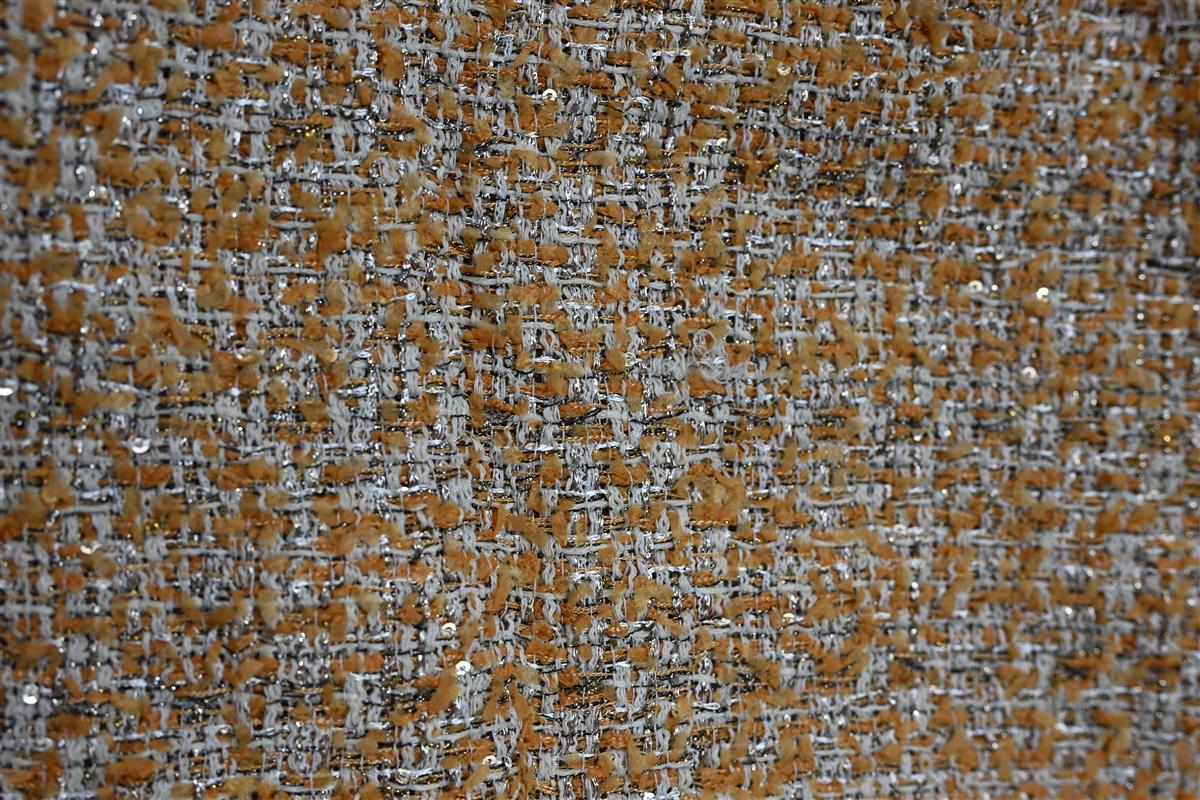
Waarom precisie belangrijk is voor kleine collecties
Online fabric calculators don’t account for tweed’s most expensive flaw: fraying.
Stop met het gebruik van die generieke yardage-calculators. Ze zijn ontworpen voor stabiele katoenen stoffen, niet voor de open, losse weefsels van tweed. Ik heb in meerdere landen op snijvloeren gestaan en kan je vertellen dat rafelende en uitrafelende randen kan alleen al een materiaalverlies van 10 % veroorzaken dat rekenmodellen volledig negeren. Bij een order van 100 meter is dat 10 meter van uw budget weg voordat er één kledingstuk is gesneden.
For a small capsule collection of 50 units, this isn’t a rounding error—it’s the difference between profit and loss. An extra 20cm of waste per jacket doesn’t sound like much, but multiply it by 50 and you’ve just paid for 10 extra meters of fabric you can’t use. This is precisely how the fabric budget for a small batch production spirals out of control.
Een nauwkeurige berekening is wat productie in kleine oplagen kosteneffectief maakt. Het gaat niet om goedkoop zijn; het gaat om professioneel zijn. Daarom is een gedetailleerde sample approval process is critical. You must confirm exactly how your pattern lays out on the fabric’s true width to establish a reliable consumption figure. This number is the foundation of your entire collection’s profitability.
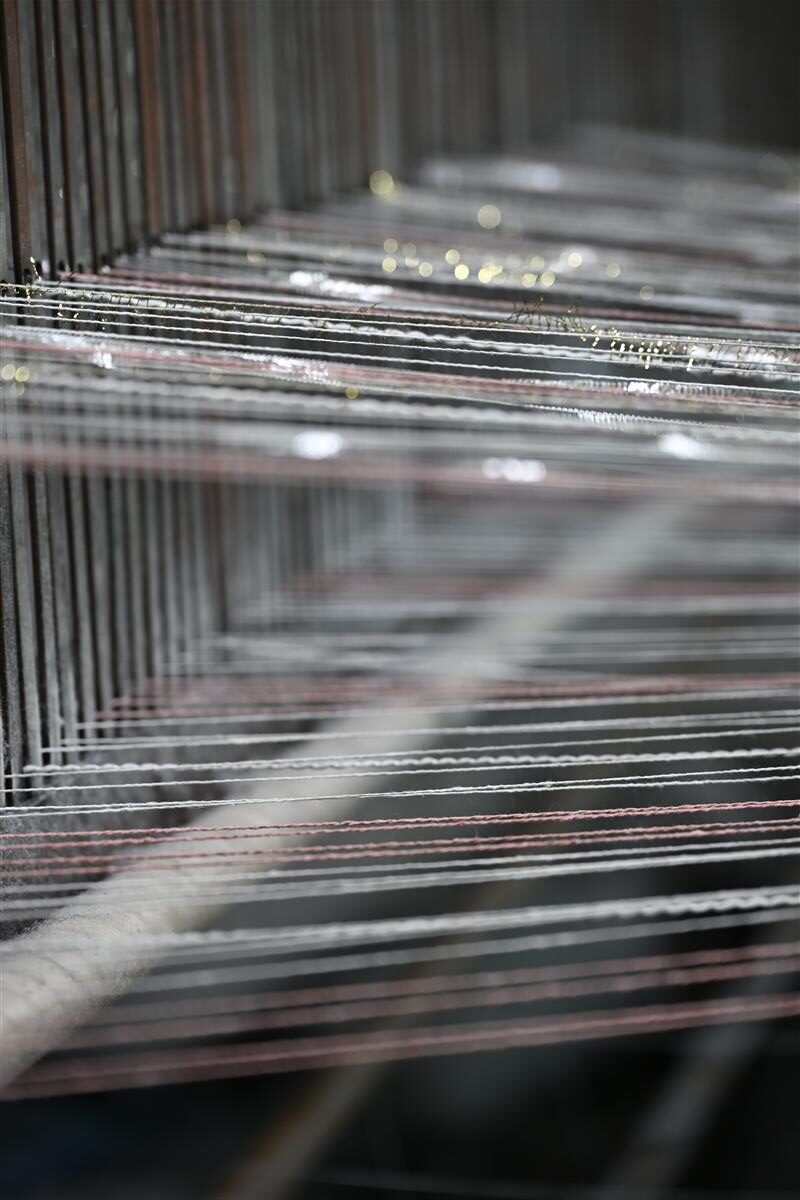
Tweedbreedtes: impact van 150 cm vs 140 cm
The real issue isn’t 140cm vs 150cm.
Don’t get fooled by the spec sheet. That 10-centimeter difference between a 140cm European tweed and a 150cm Asian tweed isn’t a minor detail. For a small batch of 50 jackets, this mistake can easily lead to a surprise re-order and a dye lot that doesn’t match.
Here’s the cutting room reality. Your pattern maker can often nest two jacket fronts side-by-side on a 150cm width. On a 140cm width, they can’t. Worse, that 140cm roll might only have a usable width of 135-138cm, forcing a less efficient layout and creating significantly more waste.
For the same 50-piece collection, this forces you to order 8% to 12% more material. That’s wasted cash. This is why our standard tweed production is on a true 150cm width. When you’re doing sample approval, always confirm the bulk production width, not just the sample swatch dimensions.
Stapsgewijze berekening voor 50 stuks
Uw calculator-app klopt niet.
Let’s use a real-world example: a classic tweed jacket, size medium. On a standard 150cm width fabric, your pattern will consume about 1.8 linear meters. For your 50-piece capsule collection, the simple math is 1.8m x 50 = 90 meters. This is the number most novices use, and it’s where the financial pain begins.
Nu de eerste dosis realiteit: snijefficiëntie. Tweed’s rijke textuur en lossere weefsel voorkomen een 100% efficiënte patroonindeling. Je snijkamer kan stukken niet rand-aan-rand nesten zoals bij een simpele katoen. Als inkoopstandaard begroten we voor 80% materiaalgebruik bij dit soort stoffen. Je 90 meter stof vereist nu een bestelling van 112,5 meter (90 ÷ 0,80).
Finally, we add the non-negotiable buffers that protect your production run. We build in 5% for potential shrinkage during pressing and finishing, and a further 3% to cover any minor weaving flaws that might fall outside the agreed quality tolerance. This isn’t waste; it’s your production insurance policy.
- Base Consumption: 1,8 meter per kledingstuk × 50 stuks = 90 meter.
- Factor voor snijefficiëntie: 90 meter ÷ 0,80 = 112,5 meter.
- Add Production Buffers: 112,5 m × 1,05 (krimp) × 1,03 (defecten) ≈ 121,7 meter.
- Final Order Quantity: Rond naar boven af op 122 meter. Dit is het werkelijke aantal meters dat u moet bestellen om veilig 50 kledingstukken te produceren.
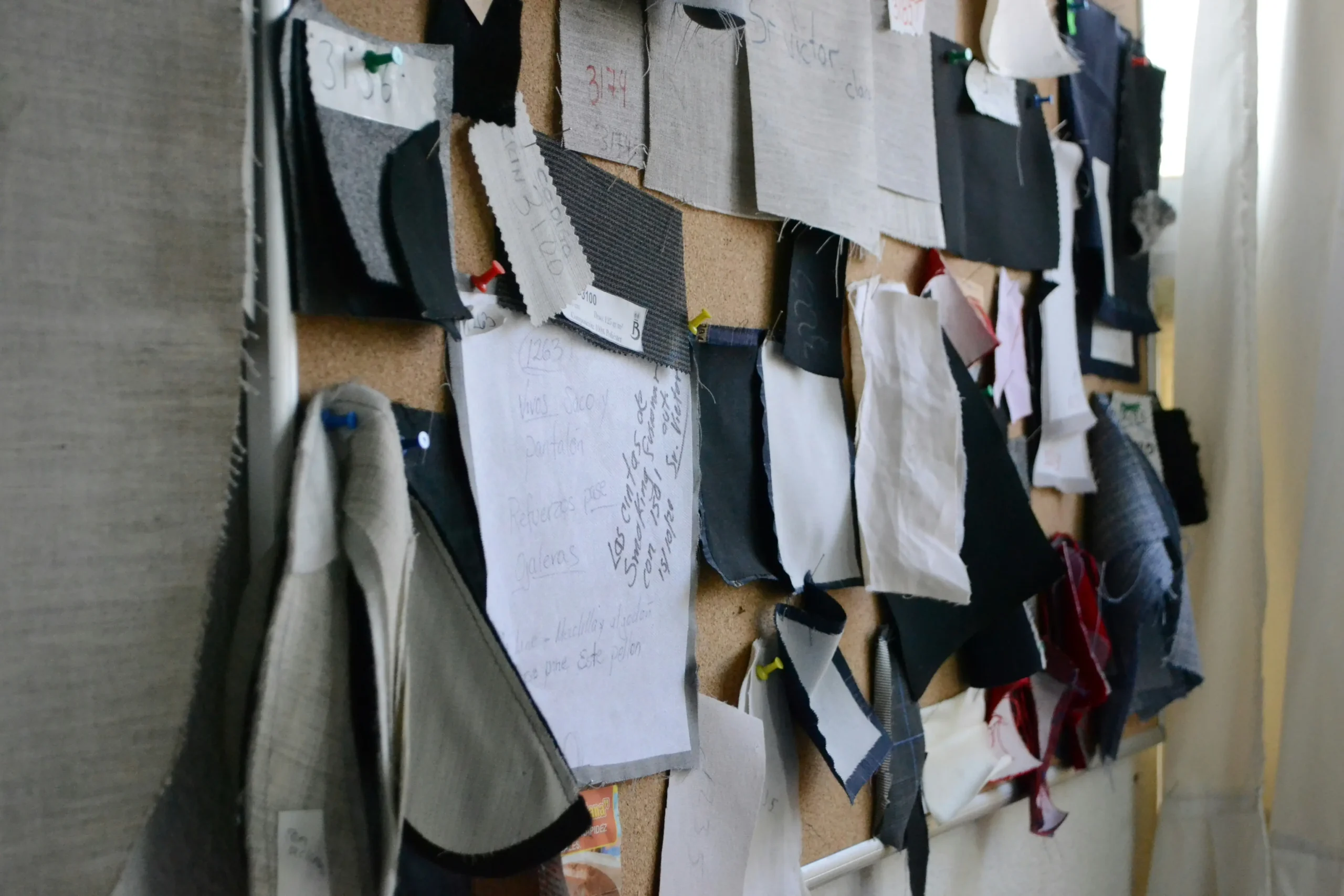
Marges die u geld besparen: krimp & patroonherhaling
Your biggest fabric costs aren’t on the invoice; they’re in the cutting room waste bin.
Don’t get burned by online fabric calculators. They use a generic 3% waste factor that’s fine for stable cottons, but dangerously wrong for tweed. The loose, open weave of a classic bouclé tweed can easily shrink 5-7% after its first encounter with a production steam iron. On a 100-meter order for your 50-piece collection, that’s 7 meters of fabric gone before your cutter even lays out a pattern.
- The Proactive Fix: Specify ‘pre-shrunk’ or ‘steam-stabilized’ fabric in your purchase order. This forces the mill to perform this step, delivering you dimensionally stable yardage.
- The Backup Test: If you can’t get it pre-shrunk, you must test it. Cut a 1×1 meter swatch from your sample approval roll, steam it thoroughly, let it rest for 24 hours, and remeasure. This is your true shrinkage rate. De standaardtest in de branche is AATCC 135, maar een stoomstrijkijzer geeft u een goed genoeg alternatief.
The second budget killer is pattern repeat. This isn’t a defect; it’s the cost of aesthetic consistency. If your tweed has a visible plaid or a repeating bouclé texture, your cutter can’t just place pattern pieces anywhere. They must align the pattern across seams, which creates significant, unavoidable waste.
Mismanaging this can easily double your cutting waste from a standard 10% to over 20%. For a large 15cm pattern repeat, your cutter might have to discard huge chunks of fabric just to align the front panels of a jacket. Your quality tolerance for mismatched patterns on a luxury garment is zero, so this buffer isn’t optional.
Voor elke tweed met een opvallend patroon voeg je een speciale buffer van 10-15% toe aan je totale yardage, je toeslag voor krimp en defecten. Dit is de echte stofyardage-formule voor een collectie die je budget beschermt.
Slim bestellen: wanneer u extra rollen koopt
A 120-meter order is not one roll; it’s often two, and they might not match.
Uw productiemetrage is uitsluitend voor productie bedoeld. Het komt voor dat ontwerpers een snijschema ontregelen omdat ze wilden
You have to think like the mill. Fabric isn’t cut to your exact meterage from an infinite bolt. It comes off the loom in standard roll lengths, which are typically around 50 meters. If your formule voor stofmetrage voor een collectie op 116 meter uitkomt, is het bestellen van precies dat aantal een amateuristische zet die problemen oplevert voor zowel u als de leverancier.
- The Dye Lot Trap: Een order van 116 meter wordt geleverd uit twee rollen (bijv. 50 m + 50 m + 16 m). Als die rollen afkomstig zijn uit different dye batches, your kwaliteitstolerantie for color is shot. The sleeves on 20 jackets will be a micro-shade different from the bodies—a disaster that’s completely avoidable.
- The Smart Order: For a 116m need, order 120m. More importantly, specify on the purchase order: ‘120 meters required, must be supplied from a single, continuous dye lot.’ This forces your supplier to confirm their stock and guarantees consistency across your entire 50-piece production run.
Conclusie
Van een schatting naar een definitieve inkooporder gaan vraagt vertrouwen. Voordat je je aan een leverancier vastlegt, gebruik je deze checklist met drie punten om je budget en je productietijdlijn te beschermen. Dit zijn precies de vragen die ik stel bij het auditen van een nieuwe weverij.
1. Sample Integrity: Komt de bulkorder expliciet overeen met het gewicht, de afwerking en de verfpartij van het staal van de eerste monstergoedkeuring? Laat dit schriftelijk bevestigen. 2. Waste & Tolerance: What is your standard kwaliteitstolerantie for defects, and does my quote account for a 15% buffer specifically for tweed’s fraying and shrinkage? 3. Final Landed Cost: Is het totale aantal meters in deze offerte definitief, en zijn bij de FOB-prijs alle kosten inbegrepen, zonder toeslagen voor het snijden van specifieke rollengtes?
Getting clear answers here is non-negotiable. It’s how you ensure the fabric that arrives is the fabric you paid for, in the quantity you actually need. When you’re ready, you can use this framework to evaluate partners and explore low-MOQ tweed programs that align with your collection’s goals.
Veelgestelde vragen
Hoe berekent u de benodigde meters stof?
Om de benodigde meters te berekenen, bepaalt u het stofverbruik per kledingstuk op basis van uw patroon, vermenigvuldigt u dat met het aantal stuks en telt u een buffer op. Voor tweed is die buffer. Maak altijd een digitale markerindeling voor het meest precieze verbruikscijfer voordat u bestelt.
Hoe berekent u het totale aantal meter?
Bereken de totale metrage door de behoeften per style in je collectie op te tellen, nadat je het verbruik per kledingstuk met de aantallen hebt vermenigvuldigd. Tel bij elk daarvan een buffer van 10-15 % op. Bundel orders voor dezelfde stof om MOQ's van weverijen te halen, zoals ons minimum van 100 m uit voorraad.
Hoe berekent u het metrage met een patroonherhaling?
Om het metrage te berekenen voor een stof met een rapport, moet je voor elk kledingstuk dat je eruit snijdt de lengte van één volledig patroonrapport bijtellen. Hoe groter het rapport, hoe meer afval, dus bevestig de exacte rapportgrootte aan de hand van een fysiek staal.
Hoe bepaal ik hoeveel materiaal ik nodig heb?
Maak een professionele markerindeling op basis van je patronen voor de meest nauwkeurige stofconsumptie per kledingstuk. Voor een snelle schatting is voor een standaard tweed jasje doorgaans 2,2 meter nodig. Deze schatting is exclusief de buffer van 10-15% voor afval en krimp.
Wat is het moeilijkste kledingstuk om te maken?
From a fabric standpoint, a perfectly tailored and pattern-matched tweed jacket is exceptionally difficult. The loose, textured weave requires expert handling to prevent fraying and distortion during production. Success depends heavily on the fabric’s stability and the skill of your manufacturing partner.
Gezaghebbende bronnen

Gerelateerde inzichten
Backup Mill: What to Duplicate, What to Skip?
A backup mill is a second plant, not a second development. A buyer who already...
What Can a 10 cm Cutting Bind a Mill To, and What Not?
A 10 cm cutting is a record of structure, not a record of process. Count...
From One Photo to a Quotable Wool Specification Pack
A photo of a coat fabric can start a conversation with a wool mill, but...