Material costs often dictate a product’s profitability, making precise price analysis crucial for B2B buyers.
This article explores how different material compositions shape your overall product cost, moving beyond surface-level figures. We’ll break down the financial impact of choices, like how materials account for 50-75% of your cost of goods sold, and why wool production can be 4-7 times more expensive than other fibers. We will cover key cost drivers and provide insights for optimizing expenses.
Deconstructing the Cost Sheet
Deconstructing a cost sheet involves systematically breaking down total costs into measurable elements using hierarchical structures like WBS and CBS. This process differentiates between direct and indirect costs, leveraging specific analytical frameworks and robust data validation to identify cost drivers, optimize expenses, and ensure transparency in textile manufacturing.
Principles of Cost Sheet Decomposition
Utilizing hierarchical structures like `Work Breakdown Structure (WBS)` and `Cost Breakdown Structure (CBS)` for breaking down total project scope and costs in fabric production.
The role of `Product Breakdown Structure (PBS)` in assigning costs to components such as specific fabric materials, labor, and energy consumption.
Distinguishing between `variable costs` (e.g., raw materials, direct labor, energy) and `fixed costs` (e.g., depreciation, rent, insurance) within a textile cost sheet.
Enabling identification of primary cost drivers, opportunities for optimization, and enhancing transparency for all stakeholders.
Analytical Frameworks and Validation
Calculating `Prime Cost` as the sum of direct materials, direct labor, and direct expenses for a given textile production run.
Applying `Activity-Based Costing (ABC)` to accurately allocate overheads to specific manufacturing activities, such as dyeing processes, weaving, or finishing.
Leveraging standardized cost codes, similar to `CSI` and `NAHB` in construction, for consistent categorization of textile manufacturing costs.
Ensuring data reliability through `Bill of Materials (BOM)`, labor standards, and historical performance data for accurate cost validation.
Using `Standard Cost Sheets` to set predetermined benchmarks for production elements, facilitating the identification and analysis of cost variances.
Top 3 Cost Drivers
Manufacturing costs are primarily driven by labor inefficiencies, often linked to a lack of employee know-how, and issues with equipment reliability, including outdated technology and frequent machine breakdowns. Additionally, complex product designs, characterized by tight tolerances or intricate features, significantly escalate expenses by necessitating specialized processes and tooling.
| Cost Driver | Description | Impact & Data |
|---|---|---|
| Labor Inefficiencies & Lack of Employee Know-how | Production errors, lower productivity, and increased rework stemming from inadequate training. | Labor is a significant expense; inadequate training causes errors and rework. |
| Outdated Technology & Machine Breakdowns | High operating costs, frequent maintenance, and interruptions in production. | U.S. businesses lose up to $1.8 billion annually from obsolete technology; increases downtime and maintenance. |
| Complex Design Features & Tight Tolerances | Designs incorporating varying radii, very tight tolerances, or features requiring five-axis machining. | Varying radii increase cycle times by 200-400%; tolerances tighter than ±0.13 mm multiply part costs 3-10x. Design influences 80% of total product cost. |
In manufacturing, the main cost drivers relate to human factors, equipment reliability, and design complexity. When employees lack knowledge or processes are inefficient, it causes errors, rework, and even safety concerns. Machine breakdowns from older technology further amplify downtime and maintenance expenses. These operational problems worsen if processes are manual or inconsistent, leading to inefficient workflows and higher reject rates.
Hidden costs are significantly shaped by product design. Design choices impact 80% of total expenses, particularly through features like non-orthogonal geometries or tight tolerances that require advanced machining or specialized tools. Material choice and the number of parts also increase expenses, as using premium or non-standard components prevents economies of scale. For example, a part might drop from $20 per unit at 100 units to $2 per unit at 5,000 units through standardization. Quality control that is separate from the production process often increases rework, while integrating measurement with CAD data reduces costs.
Benchmarks show consistent patterns: materials typically account for 50-75% of the cost of goods sold. Total manufacturing costs should stay below 65% of total revenue. High production yields, above 95%, minimize waste. Supply chain risks, such as fluctuating raw material availability, affect 71% of companies. This highlights the importance of Design for Manufacturability (DFM) early in the process to achieve 15-30% cost savings without sacrificing functionality.
Cost Impact of Wool Percentage
Increased wool content in blends directly correlates with higher fabric costs. Wool is significantly more expensive to produce and process than other fibers. Key factors like fiber diameter, clean yield, and staple length profoundly influence raw wool prices, with premium blends reflecting these quality-driven costs.
| Trait | Influence on Price | Quantified Impact |
|---|---|---|
| Fiber Diameter | Primary cost driver; accounts for 55-83% of clean price variation. | 1 micron increase reduces price by 0.331 R/kg. |
| Clean Yield | Directly impacts raw material value. | 1% increase adds 0.115 R/kg to raw material cost. |
| Staple Length | Minor influence on raw material price. | 1 unit increase adds 0.018 R/kg. |
| Vegetable Matter (VM) | Leads to price discounts, especially for finer wool. | Accounts for 2-5% of price variation. |
Wool Percentage: The Core Cost Driver
Higher wool content in blends (e.g., 70/30 or 60/40) directly increases fabric cost.
Wool production and processing costs are 4-7 times higher than manmade or other natural fibers.
This cost difference significantly amplifies the per-percentage impact of wool in fabric blends.
Key Fiber Traits and Market Price Dynamics
Fiber diameter is the primary cost driver, explaining 55-83% of clean wool price variation; a 1-micron increase reduces price by 0.331 R/kg.
Clean yield influences price, with a 1% increase adding 0.115 R/kg to the raw material cost.
Premium wool-polyester blends cost $10-25 per yard in high-quality markets (e.g., U.S.), contrasting with standard blends at $3-8 per yard.
Global Textile Excellence: Our Operational Pillars
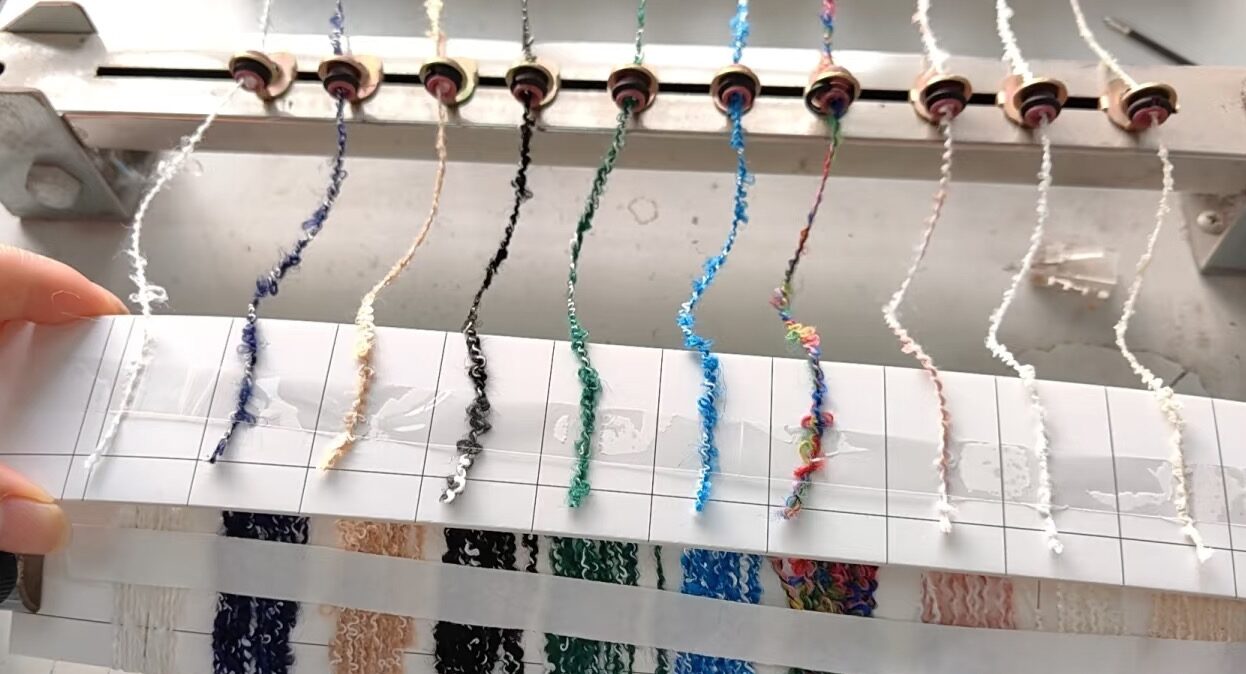
Fancy Yarn Economics
Fancy yarn is a specialty textile input experiencing mid-single-digit growth, driven by design innovation and complex production. Its economics are characterized by a price premium over commodity yarns, costs tied to fiber type and advanced manufacturing, and sensitivity to consumer disposable income and global economic volatility.
Global Market Dynamics and Value Drivers
The global fancy yarn market is projected to reach USD 6.7–9.1 billion by 2033.
Market growth is estimated at approximately 3.8–4.7% CAGR, significantly higher than mature commodity yarns.
Fancy yarn commands a price premium due to its aesthetic effects, specialized design, and complex spinning operations.
Innovation, with 35% of new developments focusing on durability, sustainability, and design flexibility, drives market value.
Cost Structure and Macroeconomic Sensitivities
Fiber class significantly influences cost, with natural fibers commanding premiums and synthetics offering affordability.
Conversion costs are elevated by advanced manufacturing processes, including air-jet/vortex spinning and automated weaving.
Demand is sensitive to discretionary consumer spending and currency volatility, given its classification as a non-essential, high-end product.
Economic fluctuations can increase raw material prices, particularly for imported inputs, leading to higher unit costs and more frequent contract price revisions.
Dyeing Economics
Dyeing economics are primarily driven by achieving right-first-time quality, as rework dramatically increases costs. Compliance with environmental regulations and standards like OEKO-TEX adds overhead but reduces risk. Advanced technologies such as waterless CO₂ dyeing offer significant operational savings by 2026.
Quality Control and Regulatory Cost Drivers
Each color correction or production add can increase dyeing costs by up to 30% over the original cost in 2026.
Stripping and re-dyeing a lot can add 170% to the normal dyeing cost by 2026.
Eco-regulations in 2026 limit wastewater parameters (e.g., COD, pH, temperature) and heavy-metal impurities in dyes (e.g., Ba 100 ppm, Cd 50 ppm, Cr 100 ppm, Pb 100 ppm).
Compliance with standards like ISO 105 (colorfastness) and OEKO-TEX STANDARD 100 dictates required testing and chemical portfolios by 2026.
Process Innovation and Efficiency Gains
Functional cost basis is normalized to 1 kg of textile product under ISO 139 standard conditions (20 °C ± 2 °C and 65 % RH ± 2 %) for technical calculations by 2026.
High-pressure disperse dyeing for polyester at 130–135 °C improves dye uptake and colorfastness, reducing rework in 2026.
Advanced technologies like digital textile dyeing or supercritical CO₂ dyeing can cut operating costs by up to 50% by 2026.
Supercritical CO₂ dyeing for polyester eliminates water, enabling solvent recovery and shifting cost structures from water/effluent to capital expenditure and CO₂ compression/recirculation by 2026.
Cost-Benefit: Wool vs. Blends
Choosing between pure wool and blends involves balancing raw material cost, performance attributes, and market positioning. While 100% wool offers luxury and superior drape at a higher price, blends provide enhanced durability, easier care, and better cost efficiency, making them suitable for diverse market segments in 2026.
| Feature | 100% Wool | Wool Blends |
|---|---|---|
| Raw Material Cost | Significantly higher; cost drivers include micron, length, strength. | Lower due to synthetic/other fiber inclusion; cost rises with wool percentage. |
| Luxury/Perceived Value | High, superior drape, premium positioning. | Maintains wool perception while balancing cost. |
| Durability/Abrasion | More durable, retains appearance longer. | Enhanced abrasion resistance due to blend components. |
| Wrinkle Resistance | Good, but blends can offer further enhancement. | Improved wrinkle resistance. |
| Care Instructions | Often requires specialized cleaning. | Easier care, often machine washable. |
| Thermal/Moisture | Excellent insulation and moisture-wicking. | Retains core wool thermal/moisture properties. |
| Market Positioning | Luxury, high-end garments, bespoke tailoring. | Mass to mid-premium markets, volume production. |
| U.S. Price (per yard) | Higher (not specified but above blends). | High-wool: $10–25; 50/50: $6–12. |
| China Price (per yard) | Higher (not specified but above blends). | High-wool: $6–15; 50/50: $3–8. |
| Typical GSM Range | Wide range, often 200-400+ gsm. | Light: 200–260; Mid: 260–320; Heavy: 320–400+. |
| Wool Content | 100% | Typically 20–80% (common 30–70%). |
| Lifecycle Value | Longer wear, better appearance retention, higher resale value. | Lower upfront cost, easier care, optimized cost per wear. |
The Value Equation: Pure Wool vs. Blended Fabrics
Raw wool’s significantly higher cost compared to synthetics directly impacts fabric unit cost, rising with increased wool percentage. Factors like fineness (micron), staple length, strength, and color are central to raw wool pricing.
Pure wool provides a luxury market position, superior drape, longer wear life, and a higher perceived value. In contrast, wool blends maintain wool’s thermal and moisture-wicking properties while adding benefits such as increased abrasion resistance, wrinkle resistance, and easier care.
Market Pricing and Strategic Application
Current market benchmarks for wool-polyester blends in 2026 show high-wool blends (70/30, 60/40) priced from USD $10–25 per yard in the U.S., while 50/50 blends are typically USD $6–12 per yard. In the Chinese market, comparable high-wool blends are USD $6–15 per yard, and 50/50 blends are USD $3–8 per yard.
Commercial wool blends usually contain 20% to 80% wool by fiber weight, with fabric weights commonly ranging from 200–400+ gsm. Pure wool is the choice for luxury or high-end garments. For volume production, 50–70% wool blends are often selected to manage cost and care requirements effectively.
Final Thoughts
Cost engineering in textiles means closely examining every production element. Material choices, like wool percentage and specialty yarns, directly impact the final price. Design complexity, along with operational issues such as labor inefficiencies and equipment reliability, also drives up manufacturing costs. Businesses need to analyze these factors to effectively manage expenses and improve transparency.
For businesses, this translates into a need for strategic material selection and process optimization. The choice between pure wool and blends must align with market positioning and product performance goals. Early integration of Design for Manufacturability (DFM) offers substantial cost reductions. Furthermore, investing in employee training, modern equipment, and advanced dyeing technologies significantly cuts waste and improves overall efficiency. Focusing on these areas helps companies make informed production decisions and maintain a competitive edge.
Frequently Asked Questions
Is 100% wool a worthwhile investment?
Yes, 100% wool is worth it for products needing verified fineness and quality. USDA standards define premium grades starting at 17.69 microns average fiber diameter (finer than 80’s) with low dispersion (≤3.59 microns SD). This allows for superior softness, durability, and labeling under FTC rules up to Super 250’s at 11.25 microns. This standard applies in 2026.
Why is piece-dyed fabric generally more affordable?
Piece-dyed fabric is typically cheaper because dyeing occurs in large, continuous lots at the fabric stage. This process minimizes handling, labor, and waste. Mills spread dyeing setup, chemical, and energy costs over hundreds of yards, driving the per‑yard dye cost down to well under $1/yd in industrial runs. In 2026, custom piece-dye rates for apparel fabrics commonly range from $0.50–$1.00 per yard with a 500‑yard minimum, compared to about $3.50 per pound with a 250‑unit minimum for garment dyeing.
What is the cost of fancy yarn waste?
In bulk B2B trade in 2026, fancy yarn waste (mixed/recycled yarn waste suitable for reprocessing) typically sells in the same range as other yarn waste: about US $0.40–0.50 per kg for synthetic (e.g., polyester) yarn waste. Cotton/polyester recycled yarn waste is generally offered in the sub‑US $1.00 per kg range on FOB terms for container-load quantities. This positions fancy yarn waste at a small fraction of the cost of virgin fancy yarn (often US $1.1–1.5 per kg for low‑end polyester/cotton fancy yarns). A common figure is US $0.45–0.48 per kg for 100% polyester yarn waste in container-loads (FOB, Vietnam/China, B2B wholesale).
What is the best budget-friendly alternative for industrial equipment?
For industrial and heavy equipment purchases in 2026, the best budget alternative in B2B practice is typically well‑maintained used or refurbished equipment. This cuts capital cost by roughly 30–50% versus new while still meeting production and safety requirements when sourced from reputable dealers and, where needed, retrofitted with modern controls. Used machines often have shorter lead times, can be upgraded, and comply with safety standards if properly inspected.
How does weight influence shipping costs?
In parcel and LTL freight in 2026, shipping charges are based on the higher of actual (scale) weight or dimensional/volumetric weight. Dimensional weight calculates from package volume using a carrier “DIM factor” (e.g., 139–166 in³/lb for parcels or L×W×H ÷ 6,000 in cm³/kg in air/sea freight). Increasing either actual mass or outer dimensions directly increases the billable weight used for pricing. For example, DIM weight (lb) = L×W×H (in³) ÷ 166 for parcels, and the billable weight is the maximum of actual or DIM weight.